


4 months 2 weeks ago
Suso has even left a diagrammatic picture of the relations subsisting between Godhead, triune God and creatures. In this very curious and interesting drawing a chain of manifestation connects the mysterious symbol of the Divine Ground with the three Persons of the Trinity, and the Trinity in turn is connected in a descending scale with angels and human beings. These last, as the drawing vividly shows, may make one of two choices. They can either live the life of the outer man, the life of the separative selfhood; in which case they are lost (for, in the words of the Theologia Germanica, "nothing burns in hell but the self"). Or else they can identify themselves with the inner man, in which case it becomes possible for them, as Suso shows, to ascend again, through unitive knowledge, to the Trinity and even, beyond the Trinity, to the ultimate Unity of the Divine Ground.

4 months 1 week ago
People nowadays think that scientists exist to instruct them, poets, musicians, etc. to give them pleasure. The idea that these have something to teach them - that does not occur to them.
▼
Source
source
p. 36e
2 months 2 weeks ago
Darwin's 'survival of the fittest' is really a special case of a more general law of survival of the stable. The universe is populated by stable things. The universe is populated by stable things. A stable thing is a collection of atoms that is permanent enough or common enough to deserve a name. It may be a unique collection of atoms, such as the Matterhorn, that lasts long enough to be worth naming. Or it may be a class of entities, such as rain drops, that come into existence at a sufficiently high rate to deserve a collective name, even if any one of them is short-lived.
▼
Source
source
Ch. 2. The replicators
3 months 1 week ago
The present contains nothing more than the past, and what is found in the effect was already in the cause.
▼
Source
source
Creative Evolution (1907), Chapter I, as translated by Arthur Mitchell (1911), p. 14.; italicized in the original.
2 weeks ago
In a sense, people are our proper occupation. Our job is to do them good and put up with them. But when they obstruct our proper tasks, they become irrelevant to us--like sun, wind, and animals. Our actions may be impeded by them, but there can be no impeding our intentions or our dispositions. Because we can accommodate and adapt. The mind adapts and converts to its own purposes the obstacle to our acting. The impediment to action advances action. What stands in the way becomes the way.
▼
Source
source
(Hays translation) V.20

4 months 3 weeks ago
The ceaseless labour of your life is to build the house of death.
▼
Source
source
Book I, Ch. 20

3 months 4 weeks ago
As soon as laws are necessary for men, they are no longer fit for freedom.
▼
Source
source
As quoted in Short Sayings of Great Men: With Historical and Explanatory Notes (1882) by Samuel Arthur Bent, p. 454
4 months 2 weeks ago
The concept of space, therefore, is a pure intuition, being a singular concept, not made up by sensations, but itself the fundamental form of all external sensation.
2 months 1 week ago
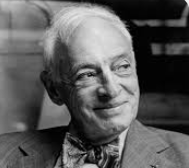
Apparently the rise of consciousness is linked to certain kinds of privation. It is the bitterness of self-consciousness that we knowers know best. Critical of the illusions that sustained mankind in earlier times, this self-consciousness of ours does little to sustain us now. The question is: which is disenchanted, the world itself or the consciousness we have of it?
▼
Source
source
A Matter of the Soul (1975), pp. 75-76
1 month 2 days ago
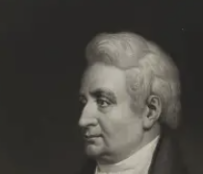
We know nothing of tomorrow; our business is to be good and happy today.
▼
Source
source
Vol. I, ch. 12, p. 472
3 months 1 week ago
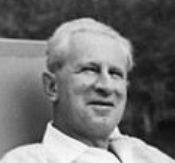
The notion contradicts reality when the latter has become self-contradictory. Hegel says that a prevailing social form can be successfully attacked by thought only if this form has come into open contradiction with its own 'truth,' in other words, if it can no longer fulfill the demands of its own contents.
4 months 1 week ago
What I hold fast to is not one proposition but a nest of propositions.
1 month 1 week ago
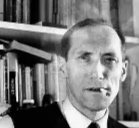
The social conditions that nourished and made use of this ideology can still revive; perhaps - who knows? - the virus is dormant, waiting for the next opportunity. Dreams about the perfect society belong to the enduring stock of civilization.
▼
Source
source
New Preface, p. vi
5 months 3 days ago
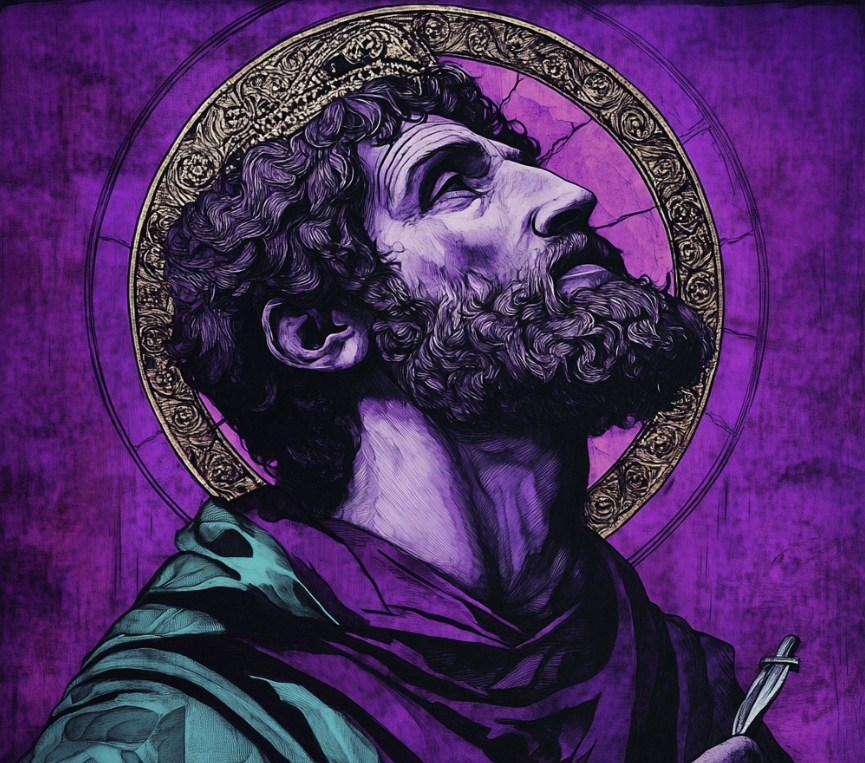
When the Head and members are despised, then the whole Christ is despised, for the whole Christ, Head and body, is that just man against whom deceitful lips speak iniquity (Ps. 30:19).
▼
Source
source
p.425

4 months 2 weeks ago
All movements go too far.
2 weeks 1 day ago
It is necessary that every man be surpassingly temperate. That person would most of all be a man of this sort if he were superior to money, which is what corrupts all men, and if, without caring about his life, he bestowed his pains on things that are just and pursued virtue.
▼
Source
source
p. 149

2 months 2 weeks ago
Science is meaningless because it gives no answer to our question, the only question important for us: 'what shall we do and how shall we live.
▼
Source
source
Quoted by Max Weber in his lecture "Science as a Vocation"; in Lynda Walsh (2013)

3 months ago
I do not believe that woman will make politics worse; nor can I believe that she could make it better. If, then, she cannot improve on man's mistakes, why perpetrate the latter?

3 months 2 weeks ago
Bad laws are the worst sort of tyranny.
▼
Source
source
Speech at Bristol Previous to the Election (6 September 1780), quoted in The Works of the Right Honourable Edmund Burke, Vol. II (1855), p. 148
2 weeks 4 days ago
In order to succeed, we must first believe that we can.
▼
Source
source
Michael Korda, in Success! (1977), p. 284

3 months 3 days ago
It is the aim of public life to arrange that all forms of power are entrusted, so far as possible, to men who effectively consent to be bound by the obligation towards all human beings which lies upon everyone, and who understand the obligation. Law is the quality of the permanent provisions for making this aim effective.

4 months 3 weeks ago
And as every present state of a simple substance is naturally a consequence of its preceding state, so its present is pregnant with its future.
▼
Source
source
La monadologie (22).
3 months ago
I spoke after Sasha, for an hour. I discussed the farce of a government undertaking to carry democracy abroad by suppressing the last vestiges of it at home. I took up the contention of Judge Mayer that only such ideas are permissible as are "within the law." Thus he had instructed the jurymen when he had asked them if they were prejudiced against those who propagate unpopular ideas. I pointed out that there had never been an ideal, however humane and peaceful, which in its time had been considered "within the law." I named Jesus, Socrates, Galileo, Giordano Bruno. "Were they 'within the law"?" I asked. "And the men who set America free from British rule, the Jeffersons and the Patrick Henrys? The William Lloyd Garrisons, the John Browns, the David Thoreaus and Wendell Phillipses-were they within the law?"
▼
Source
source
chapter 45
3 months 2 weeks ago
In the same way as philosophy loses sight of its true object and appropriate matter, when either it passes into and merges in theology, or meddles with external politics, so also does it mar its proper form when it attempts to mimic the rigorous method of mathematics.
▼
Source
source
Philosophy of Life, Lecture 1

5 months 2 weeks ago
Great feelings take with them their own universe, splendid or abject. They light up with their passion an exclusive world in which they recognize their climate. There is a universe of jealousy, of ambition, of selfishness or generosity. A universe in other words a metaphysic and an attitude of mind.
4 months 2 weeks ago
Whoever heard me assert that the grey cat playing just now in the yard is the same one that did jumps and tricks there five hundred years ago will think whatever he likes of me, but it is a stranger form of madness to imagine that the present-day cat is fundamentally an entirely different one.
▼
Source
source
Quoted by Jorge Luis Borges in his essay "A History of Eternity"

4 months 2 weeks ago
The wise through excess of wisdom is made a fool.
▼
Source
source
Experience

4 months 2 weeks ago
If a victory is told in detail, one can no longer distinguish it from a defeat.
▼
Source
source
Act 1

1 month 2 days ago
Just as an enemy is more dangerous to a retreating army, so every trouble that fortune brings attacks us all the harder if we yield and turn our backs.
2 months 2 weeks ago
Nothing can be done at once hastily and prudently.
▼
Source
source
Maxim 557

4 months 1 day ago
Not much younger than these (sc. Hermotimus of Colophon and Philippus of Mende) is Euclid, who put together the Elements, collecting many of Eudoxus' theorems, perfecting many of Theaetetus', and also bringing to irrefragable demonstration the things which were only somewhat loosely proved by his predecessors. This man lived in the time of the first Ptolemy. For Archimedes, who came immediately after the first (Ptolemy), makes mention of Euclid: and, further, they say that Ptolemy once asked him if there was in geometry any shorter way than that of the elements, and he answered that there was no royal road to geometry. He is then younger than pupils of Plato but older than Eratosthenes and Archimedes; for the latter were contemporary with one another, as Eratosthenes somewhere says.
▼
Source
source
As quoted by Sir Thomas Little Heath, The Thirteen Books of Euclid's Elements (1908) Vol.1 Introduction and Books I, II p.1, citing Proclus ed. Friedlein, p. 68, 6-20.
4 months 2 weeks ago
It is because the method of physics does not satisfy the comprehension that we have to go on further.

5 months 2 days ago
Life is one long struggle in the dark.
▼
Source
source
Book II, line 54 (tr. Rouse)
2 weeks ago
Nature has had regard in everything no less to the end than to the beginning and the continuance, just like a man who throws up a ball. What good is it then for the ball to be thrown up, or harm for it to come down... what good is it to the bubble while it holds together, or what harm when it is burst?
▼
Source
source
VIII, 20
2 months 2 weeks ago
I do feel that evolution is being controlled by some sort of divine engineer. I can't help thinking that. And this engineer knows exactly what he or she is doing and why, and where evolution is headed. That's why we've got giraffes and hippopotami and the clap.
▼
Source
source
On evolution vs. "intelligent design", interviewed by Jon Stewart, The Daily Show
3 months 2 weeks ago
In a word, we reject all legislation, all authority, and all privileged, licensed, official, and legal influence, even though arising from universal suffrage, convinced that it can turn only to the advantage of a dominant minority of exploiters against the interest of the immense majority in subjection to them. This is the sense in which we are really Anarchists.
3 months ago
Government exists but to maintain special privilege and property rights; it coerces man into submission and therefore robs him of dignity, self-respect, and life.
1 month 3 weeks ago
Nietzsche's problem is how to be a philosopher once he has grasped the finitude of philosophy.
▼
Source
source
Chapter 5, Nietzsche's Styles, p. 96

1 month 3 weeks ago
Universal Humanism:
1) Preserve Life (end)
Precludes those who think they get to decide who lives and who dies.
2) Avoid and limit suffering (means)
Precludes those who use absurd exceptions to turn their backs on functional rules.
3 weeks 5 days ago
The great extension of our experience in recent years has brought light to the insufficiency of our simple mechanical conceptions and, as a consequence, has shaken the foundation on which the customary interpretation of observation was based.
▼
Source
source
Niels Bohr, "Atomic Physics and the Description of Nature"
4 months 1 day ago
The Pythagoreans made kindness to beasts a training in humanity and pity.
▼
Source
source
3, 20, 7
2 weeks ago
Take away your opinion, and there is taken away the complaint. Take away the complaint, and the hurt is gone.
▼
Source
source
IV. 7, trans. George Long

5 months 2 weeks ago
I simply don't think it is reasonable to use IQ tests to produce results of questionable value, which may then serve to justify racists in their own minds and to help bring about the kinds of tragedies we have already witnessed earlier in this century.
2 weeks 1 day ago
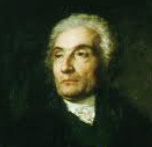
The mixture of children and men is precisely one of the most beautiful features of aristocratic government. All roles are distributed wisely in the world: that of the young is to do good, and that of old age is to prevent evil. The impetuosity of young men, who demand only action and creation, is very useful to the State; but they are too likely to innovate and destroy, and they would do much evil without the elderly, who are there to stop them. The latter in their turn oppose even useful reforms; they are too inflexible, they do not know how to accommodate themselves to circumstances, and sometimes a twenty-year old senator can very well be placed beside another of eighty.
▼
Source
source
p. 137
1 month 2 days ago
A great fortune is a great slavery.
▼
Source
source
From Ad Polybium De Consolatione (Of Consolation, To Polybius), chap. VI, line 5
3 months 3 days ago
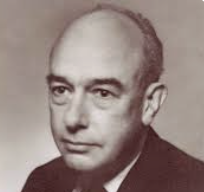
Logic chases truth up the tree of grammar.
▼
Source
source
Philosophy of Logic
4 months 2 weeks ago
The Communist Party has one objective: the creation of a socialist economy; and one means: the utilization of the class struggle.
▼
Source
source
Hugo, Act 5, sc. 3
4 weeks ago
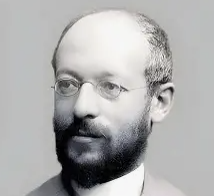
All relationships of people to each other rest, as a matter of course, upon the precondition that they know something about each other. The merchant knows that his correspondent wants to buy at the lowest price and to sell at the highest price. The teacher knows that he may credit to the pupil a certain quality and quantity of information. Within each social stratum the individual knows approximately what measure of culture he has to presuppose in each other individual.
▼
Source
source
p. 441: First lines of the article.

3 months 2 weeks ago
Architecture, sculpture, painting, music, and poetry, may truly be called the efflorescence of civilised life.
▼
Source
source
Education: What Knowledge Is of Most Worth?
4 months 2 weeks ago
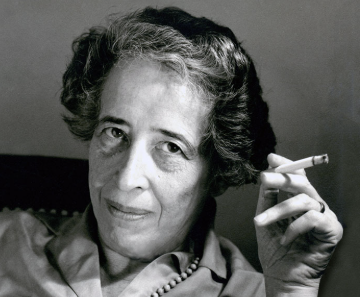
If the inner psychic ground of our individual appearance were not always the same, there could be no science of psychology, which qua science relies on a psychic "inside we are all alike," just as the science of physiology and medicine relies on the sameness of our inner organs. The monstrous sameness and pervasive ugliness so highly characteristic of the findings of modern psychology, and contrasting so obviously with the enormous variety and richness of overt human conduct, witness to the radical difference between the inside and the outside of the human body.
▼
Source
source
pp. 34-35
CivilSimian.com created by AxiomaticPanic, CivilSimian, Kalokagathia