


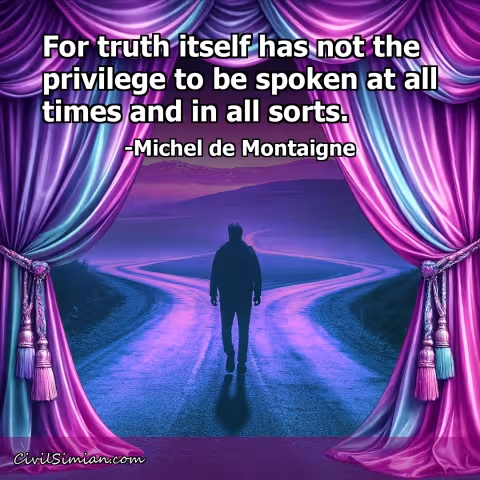
7 months 1 week ago
Be not swept off your feet by the vividness of the impression, but say, "Impression, wait for me a little. Let me see what you are and what you represent. Let me try you."
▼
Source
source
Book II, ch. 18, § 24, Reported in Bartlett's Quotations (1919) as "Be not hurried away by excitement, but say, "Semblance, wait for me a little".

6 months 3 weeks ago
But such a straight identification of religion with any and every form of happiness leaves the essential peculiarity of religious happiness out. The more commonplace happinesses which we get are 'reliefs,' occasioned by our momentary escapes from evils either experienced or threatened. But in its most characteristic embodiments, religious happiness is no mere feeling of escape. It cares no longer to escape. It consents to the evil outwardly as a form of sacrifice - inwardly it knows it to be permanently overcome. ... In the Louvre there is a picture, by Guido Reni, of St. Michael with his foot on Satan's neck. The richness of the picture is in large part due to the fiend's figure being there. The richness of its allegorical meaning also is due to his being there - that is, the world is all the richer for having a devil in it, so long as we keep our foot upon his neck.
▼
Source
source
Lecture II, "Circumscription of the Topic"

6 months 3 weeks ago
What is a weed? A plant whose virtues have yet to be discovered.
▼
Source
source
Fortune of the Republic, 1878
4 months 2 weeks ago
In one way or another, all my books have been devoted to expounding and exploring the almost limitless power of the Darwinian principle-power unleashed whenever and wherever there is enough time for the consequences of primordial self-replication to unfold. Preface

6 months 2 weeks ago
So we do sometimes think because it has been found to pay.
▼
Source
source
§ 470

5 months 1 week ago
Reason perhaps teaches certain bourgeois virtues, but it does not make either heroes or saints.
5 months 2 weeks ago
It seems that I have spent my entire time trying to make life more rational and that it was all wasted effort.
▼
Source
source
As quoted in The Observer (17 August 1986).
5 months 3 weeks ago
Evil always turns up in this world through some genius or other.
▼
Source
source
As quoted in Dictionary of Foreign Quotations (1980) by Mary Collison, Robert L. Collison, p. 98
3 months 1 week ago
...Lucretius talked epicureanism stoically (like Heine's Englishman taking his pleasures sadly), and concluded on his stren gospel of pleasure by committing suicide. His noble epic "on the Nature of Things", follows Epicurus in damning pleasure with faint praise. Almost contemporary with Caesar and Pompey, he lived in the midst of turmoil and alarms; his nervous pen is forever inditing prayers to tranquility and peace. One pictures him as a timid soul whose youth had been darkened with religious fears; for he never tires of telling his readers that there's no hell, except here, and there are no gods except gentlemanly ones who live in a garden of Epicurus in the clouds, and never intrude in the affairs of men.

6 months 3 weeks ago
An atheist, like a Christian, holds that we can know whether or not there is a God. The Christian holds that we can know there is a God; the atheist, that we can know there is not. The Agnostic suspends judgment, saying that there are not sufficient grounds either for affirmation or for denial. At the same time, an Agnostic may hold that the existence of God, though not impossible, is very improbable; he may even hold it so improbable that it is not worth considering in practice. In that case, he is not far removed from atheism. His attitude may be that which a careful philosopher would have towards the gods of ancient Greece. If I were asked to prove that Zeus and Poseidon and Hera and the rest of the Olympians do not exist, I should be at a loss to find conclusive arguments. An Agnostic may think the Christian God as improbable as the Olympians; in that case, he is, for practical purposes, at one with the atheists.
▼
Source
source
What is an Agnostic?, 1953

5 months 4 weeks ago
Do not know the truth by the men, but know the truth, and then you will know who are truthful.
▼
Source
source
III. The Classes of Seekers, p. 29.
4 months 2 weeks ago
Wherever a man is, there will be a lie.
▼
Source
source
Episodes in the Story of a Mine.
5 months 3 weeks ago
The statue of Freedom has not been cast yet, the furnace is hot, we can all still burn our fingers.
▼
Source
source
Act I.

5 months 2 weeks ago
When I happen to be busy, I never give a moment's thought to the "meaning" of anything, particularly of whatever it is I am doing. A proof that the secret of everything is in action and not abstention, that fatal cause of consciousness.

5 months 5 days ago
And at once I saw with great clarity that human beings possess two bodies. One is the physical body, the other -- just as real, just as self-contained -- is the emotional body. Like the physical body, the emotional body reaches a certain level of growth, and then stops. But it stops rather sooner than the physical body. So most of us possess the emotional body of a retarded adolescent.
▼
Source
source
p. 23
6 months 3 weeks ago
The intolerant can be viewed as free-riders, as persons who seek the advantages of just institutions while not doing their share to uphold them.
▼
Source
source
Chapter VI, Section 59, pg. 388
7 months ago
Saturninus said, "Comrades, you have lost a good captain to make him an ill general."
▼
Source
source
Book III, Ch. 9. Of Vanity
6 months 3 weeks ago
A propensity to hope and joy is real riches: One to fear and sorrow, real poverty.
▼
Source
source
Part I, Essay 18: The Sceptic
2 months 3 weeks ago
Whoever asserts a value, must bring its influence to bear. Whoever maintains that it has value regardless of the influence brought to bear by any individual human being who endorses it, is simply cheating.
5 months 4 days ago
Fairness means not to use fraud and trickery in the exchange of commodities and services and the exchange of feelings.
3 months 1 week ago
The art of medicine has its roots in the heart. If your heart is false, then also the doctor in you is false. If it is fair, then also the doctor is fair.

6 months 3 weeks ago
A spider conducts operations that resemble those of a weaver, and a bee puts to shame many an architect in the construction of her cells. But what distinguishes the worst of architects from the best of bees is this, that the architect raises his structure in imagination before he erects it in reality.
▼
Source
source
Vol. I, Ch. 7, pg. 198.
6 months 3 weeks ago
Money is therefore not only the object but also the fountainhead of greed.
▼
Source
source
Notebook II, The Chapter on Money, p. 142.
5 months 1 week ago
Religion is better described than defined and better felt than described. But if there is any one definition that latterly has obtained acceptance, it is that of Schleiermacher, to the effect that religion consists in the simple feeling of a relationship of dependence upon something above us and a desire to establish relations with this mysterious power.

3 months 1 week ago
I here, on the very threshold, protest against it in reference to Paganism, and to all other isms by which man has ever for a length of time striven to walk in this world. They have all had a truth in them, or men would not have taken them up. Quackery and dupery do abound; in religions, above all in the more advanced decaying stages of religions, they have fearfully abounded: but quackery was never the originating influence in such things; it was not the health and life of such things, but their disease, the sure precursor of their being about to die! Let us never forget this.
4 months 2 weeks ago
The lowest stage of humanity is experienced when the individual must labour for a small pittance of wages from others.
▼
Source
source
Paper Dedicated to the Governments of Great Britain, Austria, Russia, France, Prussia and the United States of America
3 months 1 week ago
Nay, am not I also the humble James Carlyle's work? I owe him much more than existence, I owe him a noble inspiring example (now that I can read it in that rustic character). It was he exclusively that determined on educating me; that from his small hard-earned funds sent me to school and college, and made me whatever I am or may become. Let me not mourn for my father, let me do worthily of him. So shall he still live even here in me, and his worth plant itself honorably forth into new generations.
6 months 3 weeks ago
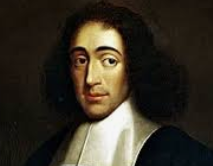
All the better; they do not force me to do anything that I would not have done of my own accord if I did not dread scandal. But since they want it that way, I enter gladly on the path that is opened to me, with the consolation that my departure will be more innocent than was the exodus of the early Hebrews from Egypt.
▼
Source
source
Statement after his excommunication from Jewish society, attributed by Lucas, in The Oldest Biography of Spinoza (1970) by A. Wolf; also in Spinoza: A Life (1999) by Steven Nadler
3 months 1 week ago
The young are of age when they twitter like the old; they are driven through school to learn the old song, and, when they have this by heart, they are declared of age.
▼
Source
source
Cambridge 1995, pp. 61-62
4 months 2 weeks ago
We do not go to cowards for tender dealing; there is nothing so cruel as panic; the man who has least fear for his own carcase, has most time to consider others.
▼
Source
source
314
4 months 2 weeks ago
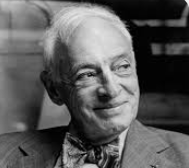
Conquered people tend to be witty.
▼
Source
source
Mr. Sammler's Planet, (1976), p. 98

2 months 3 weeks ago
I, however, place economy among the first and most important republican virtues, and public debt as the greatest of the dangers to be feared.
▼
Source
source
Letter to William Plumer

2 months 2 weeks ago
Is it not better to use what is in thy power like a free man than to desire in a slavish and abject way what is not in thy power?
▼
Source
source
IX, 40
3 months 3 weeks ago
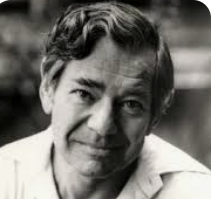
Of course, not everything old is beautiful, any more than everything black, or everything white, or everything young. But the notion that old means ugly is every bit as harmful as the prejudice that black is ugly. In one way it is even more pernicious. The notion that only what is new and young is beautiful poisons our relationship to the past and to our own future. It keeps us from understanding our roots and the greatest works of our culture and other cultures. It also makes us dread what lies ahead of us and leads many to shirk reality.
▼
Source
source
Time is an Artist (1978) Epilogue : Old is Beautiful
4 months 6 days ago
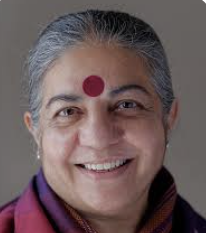
Properties perceived in nature will depend on how one looks and how one looks depends on the economic interest one has in the resources of nature. The value of profit maximization is thus linked to reductionist systems, while the value of life and the maintenance of life is linked to holistic and ecological systems.
▼
Source
source
Staying Alive: Women, Ecology, and Development
7 months 2 weeks ago
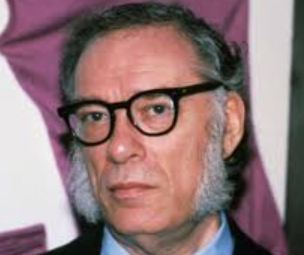
A robot may not injure a human being, or, through inaction, allow a human being to come to harm.
2 months 2 weeks ago
A cucumber is bitter. Throw it away. There are briars in the road. Turn aside from them. This is enough. Do not add, "And why were such things made in the world?"
▼
Source
source
VIII. 50, trans. George Long
6 months 3 weeks ago
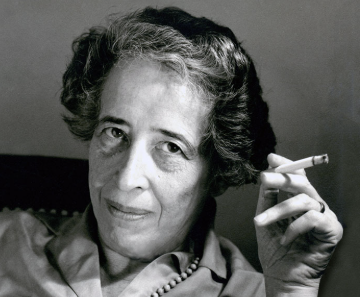
If the ability to tell right from wrong should turn out to have anything to do with the ability to think, then we must be able to "demand" its exercise from every sane person, no matter how erudite or ignorant, intelligent or stupid, he may happen to be. Kant-in this respect almost alone among the philosophers-was much bothered by the common opinion that philosophy is only for the few, precisely because of its moral implications.
▼
Source
source
p. 13

6 months 3 weeks ago
The fate of the country does not depend on how you vote at the polls - the worst man is as strong as the best at that game; it does not depend on what kind of paper you drop into the ballot-box once a year, but on what kind of man you drop from your chamber into the street every morning.
▼
Source
source
"Slavery in Massachusetts", 1854

5 months 1 week ago
"A man thinks he is dying for his country," said Anatole France, "but he is dying for a few industrialists." But even that is saying too much. What one dies for is not even so substantial and tangible as an industrialist.
▼
Source
source
p. 224

4 months 2 weeks ago
World War I a railway war of centralization and encirclement. World War II a radio war of decentralization concluded by the Bomb. World War III a TV guerrilla war with no divisions between civil and military fronts.
▼
Source
source
(p. 152)
4 months 5 days ago
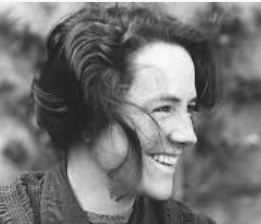
I have been overcome by the beauty and richness of our life together, those early mornings setting out, those evenings gleaming with rivers and lakes below us, still holding the last light. ... Those fields of daisies we landed on, and dusty fields and desert stretches. Memories of many skies and earths beneath us - many days, many nights of stars.
CivilSimian.com created by AxiomaticPanic, CivilSimian, Kalokagathia