


6 months 3 weeks ago
Radical black feminists have never confined their vision to just the emancipation of black women or women in general, or all black people for that matter. Rather, they are the theorists and proponents of a radical humanism committed to liberating humanity and reconstructing social relations across the board. When bell hooks says "Feminism is for everybody," she is echoing what has always been a basic assumption of black feminists. We are not talking about identity politics but a constantly developing often contested, revolutionary conversation about how all of us might envision and remake the world.
▼
Source
source
Robin Kelley Freedom Dreams

8 months 1 week ago
We have to learn to think in a new way. We have to learn to ask ourselves, not what steps can be taken to give military victory to whatever group we prefer, for there no longer are such steps; the question we have to ask ourselves is: what steps can be taken to prevent a military contest of which the issue must be disastrous to all parties?

6 months 6 days ago
The Age of Writing has passed. We must invent a new metaphor, restructure our thoughts and feelings.
▼
Source
source
(p. 14)

6 months 3 weeks ago
If we want a love which will protect the soul from wounds we must love something other than God.
▼
Source
source
p. 62
6 months 3 weeks ago
When television screens had only rare images of black folks, black people were more critically vigilant about these representations. Even when blackness was represented 'positiviely,' as it was in early black television shows like Julia, which focused on the life of a black nurse, the beauty standard was a reflection of white supremacist aesthetics.

8 months 1 week ago
A genuine first-hand religious experience like this is bound to be a heterodoxy to its witnesses, the prophet appearing as a mere lonely madman. If his doctrine prove contagious enough to spread to any others, it becomes a definite and labeled heresy. But if it then still prove contagious enough to triumph over persecution, it becomes itself an orthodoxy; and when a religion has become an orthodoxy, its day of inwardness is over: the spring is dry; the faithful live at second hand exclusively and stone the prophets in their turn. The new church, in spite of whatever human goodness it may foster, can be henceforth counted on as a staunch ally in every attempt to stifle the spontaneous religious spirit, and to stop all later bubblings of the fountain from which in purer days it drew its own supply of inspiration.
▼
Source
source
Lectures XIV and XV, "The Value of Saintliness"
7 months 1 week ago
The mind understands something only insofar as it absorbs it like a seed into itself, nurtures it, and lets it grow into blossom and fruit. Therefore scatter holy seeds into the soil of the spirit.
▼
Source
source
"Ideas," Lucinde and the Fragments, P. Firchow, trans. (1991), § 5
7 months 4 days ago
The more I think about it, the more obvious it becomes to me that the Poles are une nation foutue [a finished nation] who can only continue to serve a purpose until such time as Russia herself becomes caught up into the agrarian revolution. From that moment Poland will have absolutely no raison d'étre any more. The Poles' sole contribution to history has been to indulge in foolish pranks at once valiant and provocative. Nor can a single moment be cited when Poland, even if only by comparison with Russia, has successfully represented progress or done anything of historical significance.
▼
Source
source
Letter to Karl Marx
4 months 1 week ago
The moment is ripe: leave the heart and the mind behind you, go forward, take the third step. Free yourself from the simple complacency of the mind that thinks to put all things in order and hopes to subdue phenomena. Free yourself from the terror of the heart that seeks and hopes to find the essence of things. Conquer the last, the greatest temptation of all: Hope. This is the third duty.

4 months 4 weeks ago
The Noble in the high place, the Ignoble in the low; that is, in all times and in all countries, the Almighty Maker's Law.

6 months 3 weeks ago
The STATE IDEA, the authoritarian principle, has been proven bankrupt by the experience of the Russian Revolution. If I were to sum up my whole argument in one sentence I should say: The inherent tendency of the State is to concentrate, to narrow, and monopolize all social activities; the nature of revolution is, on the contrary, to grow, to broaden, and disseminate itself in ever-wider circles. In other words, the State is institutional and static; revolution is fluent, dynamic. These two tendencies are incompatible and mutually destructive. The State idea killed the Russian Revolution and it must have the same result in all other revolutions, unless the libertarian idea prevail.
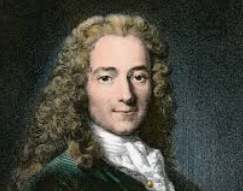
8 months 1 week ago
Where is the prince sufficiently educated to know that for seventeen hundred years the Christian sect has done nothing but harm?
▼
Source
source
Letters of Voltaire and Frederick the Great (New York: Brentano's, 1927), transl. Richard Aldington, letter 160 from Voltaire to Frederick II of Prussia, 6 April 1767
6 months 3 weeks ago
Conformity is an imitation of grace.
▼
Source
source
p. 146
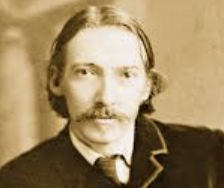
6 months 4 days ago
He and his tyrannicide! I am in a mad fury about these explosions. If that is the new world! Damn O'Donovan Rossa; damn him behind and before, above, below, and roundabout; damn, deracinate, and destroy him, root and branch, self and company, world without end. Amen. I write that for sport if you like, but I will pray in earnest, O Lord, if you cannot convert, kindly delete him!
▼
Source
source
Letter to Sidney Colvin, 2 August 1881. Quoted in Terrorism and Literature Chapter 12 - "Parliament Is Burning" by Deaglán Ó Donghaile ISBN 9781316987292
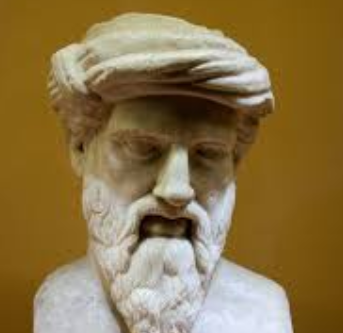
7 months 2 weeks ago
Be not hasty to speak; nor slow to hear!

8 months 3 days ago
Meaning created links so numerous, so rich and involved that only esoteric knowledge could possibly have the necessary key. Objects became so weighed down with attributes, connections and associations that they lost their own original face. Meaning was no longer read in an immediate perception, and accordingly objects ceased to speak directly: between the knowledge that animated the figures of objects and the forms they were transformed into, a divide began to appear, opening the way for a symbolism more often associated with the world of dreams.
▼
Source
source
Part One: 1. Stultifera Navis

5 months 1 week ago
Universality is the foundation for law. Individuals are treated as ends in themselves, symmetry is applied and justice emerges. Ideologically, we don't have to try to be "good". This kind of kills freedom. We just have to avoid the worst of the bad, like killing, to preserve universality and justice.
8 months 1 week ago
Hatred, as well as love, renders its votaries credulous.
▼
Source
source
V

8 months 1 week ago
Legal and economic equality are absolutely necessary remedies for the Fall, and protection against cruelty.
9 months 1 week ago
To what extent can truth endure incorporation? That is the question; that is the experiment.

8 months 3 weeks ago
O saving Victim, opening wideThe gate of heaven to man below,Our foes press on from every side,Thine aid supply, Thy strength bestow.
▼
Source
source
Verbum Supernum Prodiens (hymn for Lauds on Corpus Christi), stanza 5 (O Salutaris Hostia)
8 months 3 days ago
When a philosopher addresses himself to... a tyrant, and tells him... tyranny is incompatible with justice, then the philosopher speaks... and believes he is speaking the truth, and... takes a risk...
▼
Source
source
[T]hat was Plato's situation with Dionysius in Syracuse... reference... Plato's Seventh Letter, and... The Life of Dion by Plutarch. Ref: 1) Ludwig Edelstein, Plato's seventh letter (1966) 2) Plutarch, Life of Dion
4 months 1 week ago
God cries to my heart: "Save me!" God cries to men, to animals, to plants, to matter: "Save me!" Listen to your heart and follow him. Shatter your body and awake: We are all one. Love man because you are he. Love animals and plants because you were they, and now they follow you like faithful co-workers and slaves. Love your body; only with it may you fight on this earth and turn matter into spirit. Love matter. God clings to it tooth and nail, and fights. Fight with him. Die every day. Be born every day. Deny everything you have every day. The superior virtue is not to be free but to fight for freedom. Do not condescend to ask: "Shall we conquer? Shall we be conquered?" Fight on!
9 months 6 days ago
Milton Ashe is not the type to marry a head of hair and a pair of eyes.
6 months 2 weeks ago
Definition of design = Everyone designs who devise courses of action aimed at changing existing situations into preferred ones. The intellectual activity that produces material artifacts is no different fundamentally from the one that prescribes remedies for a sick patient or the one that devises a new sales plan for a company or a social welfare policy for a state.
▼
Source
source
p. 130.

6 months 3 weeks ago
The progress of human knowledge depends on maintaining that touch of scepticism even about the most "unquestionable" truths. A century ago, Darwin's theory of evolution by natural selection was regarded as scientifically unshakeable; today, most biologists have their reservations about it. Fifty years ago, Freud's sexual theory of neurosis was accepted by most psychiatrists; today, it is widely recognized that his methods were highly questionable. At the turn of this century, a scientist who questioned Newton's theory of gravity would have been regarded as insane; twenty years later, it had been supplanted by Einstein's theory, although, significantly, few people actually understood it. It seems perfectly conceivable that our descendants of the twenty-second century will wonder how any of us could have been stupid enough to have been taken in by Darwin, Freud or Einstein.
▼
Source
source
p. 4
8 months 1 week ago
I have tried to set forth a theory that enables us to understand and to assess these feelings about the primacy of justice. Justice as fairness is the outcome: it articulates these opinions and supports their general tendency.
▼
Source
source
Chapter IX, Section 87, p. 586
4 months 5 days ago
When the empirical investigator glories in his refusal to go beyond the specialized observation dictated by the traditions of his discipline, be they ever so inclusive, he is making a virtue out of a defense mechanism which insures him against questioning his presuppositions.
6 months 1 week ago
Guilt has to be understood not only as a way of checking one's own destructiveness, but as a mechanism for safeguarding the life of the other, one that emerges from our own need and dependency, from a sense that this life is not a life without another life. Indeed, when it turns into a safeguarding action, I am not sure it should still be called "guilt." If we do still use that term, we could conclude that "guilt" is strangely generative or that its productive form is reparation.
▼
Source
source
p. 93
8 months 1 week ago
What is serious about excitement is that so many of its forms are destructive. It is destructive in those who cannot resist excess in alcohol or gambling. It is destructive when it takes the form of mob violence. And above all it is destructive when it leads to war. It is so deep a need that it will find harmful outlets of this kind unless innocent outlets are at hand. There are such innocent outlets at present in sport, and in politics so long as it is kept within constitutional bounds. But these are not sufficient, especially as the kind of politics that is most exciting is also the kind that does most harm. Civilized life has grown altogether too tame, and, if it is to be stable, it must provide harmless outlets for the impulses which our remote ancestors satisfied in hunting.
7 months 1 day ago
Man is a thinking being. His reason enables him to recognize his own potentialities and those of his world. He is thus not at the mercy of the facts that surround him, but is capable of subjecting them to a higher standard, that of reason.
▼
Source
source
P. 6
7 months 1 week ago
It was under Catholic Feudalism that they were first united; a union for which their incorporation into the Roman empire had prepared them, and which was finally organized by the incomparable genius of Charlemagne.
▼
Source
source
p. 88

7 months 4 days ago
I think of so many people who are no more, and I pity them. Yet they are not so much to be pitied, for they have solved every problem, beginning with the problem of death.

6 months 1 week ago
The savage recognizes life only in himself and his personal desires. His interest in life is concentrated on himself alone. The highest happiness for him is the fullest satisfaction of his desires. The motive power of his life is personal enjoyment. His religion consists in propitiating his deity and in worshiping his gods, whom he imagines as persons living only for their personal aims.
▼
Source
source
Chapter IV, Christianity Misunderstood by Men of ScienceChapter IV, Christianity Misunderstood by Men of Science

7 months 1 day ago
And as in other things, so in men, not the seller, but the buyer determines the Price.
▼
Source
source
The First Part, Chapter 10, p. 42
8 months 1 week ago
Not my idea of God, but God.

4 months 3 weeks ago
Other vices can be concealed and cherished in secret; anger shows itself openly and appears in the countenance, and the greater it is, the more plainly it boils forth. Do you not see how in all animals certain signs appear before they proceed to mischief, and how their entire bodies put off their usual quiet appearance and stir up their ferocity? Boars foam at the mouth and sharpen their teeth by rubbing them against trees, bulls toss their horns in the air and scatter the sand with blows of their feet

6 months 3 weeks ago
Glorious is the risk! - καλος γαρ ο κινδυνος, glorious is the risk that we are able to run of our souls never dying ... Faced with this risk, I am presented with arguments designed to eliminate it, arguments demonstrating the absurdity of the belief in the immortality of the soul; but these arguments fail to make any impression on me, for they are reasons and nothing more than reasons, and it is not with reasons that the heart is appeased. I do not want to die - no; I neither want to die nor do I want to want to die; I want to live for ever and ever and ever. I want this "I" to live - this poor "I" that I am and that I feel myself to be here and now, and therefore the problem of the duration of my soul, of my own soul, tortures me.
8 months 1 week ago
"Then those people are right who say that Heaven and Hell are only states of mind?" "Hush," he said sternly. "Do not blaspheme. Hell is a state of mind - ye never said a truer word. And every state of mind, left to itself, every shutting up of the creature within the dungeon of its own mind - is, in the end, Hell. But Heaven is not a state of mind. Heaven is reality itself. All that is fully real is Heavenly."
▼
Source
source
Ch. 9
7 months 1 week ago
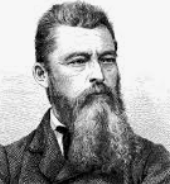
The secret of Hegel's dialectic lies ultimately in this alone, that it negates theology through philosophy in order then to negate philosophy through theology. Both the beginning and the end are constituted by theology; philosophy stands in the middle as the negation of the first positedness, but the negation of the negation is again theology. At first everything is overthrown, but then everything is reinstated in its old place, as in Descartes. The Hegelian philosophy is the last grand attempt to restore a lost and defunct Christianity through philosophy, and, of course, as is characteristic of the modern era, by identifying the negation of Christianity with Christianity itself.
▼
Source
source
Part II, Section 21
6 months 6 days ago
Violence, whether spiritual or physical, is a quest for identity and the meaningful.
▼
Source
source
The less identity, the more violence. "Violence in the media." Canadian Forum. Volume 56, 1976, p. 9
6 months 3 weeks ago
Behind man lies the abyss, nothingness; the Outsider knows this; it is his business to sink claws of iron into life to grasp it tighter than the indifferent bourgeois, to build, to Will, in spite of the abyss.
▼
Source
source
Chapter Seven, The Great Synthesis…
6 months 1 week ago
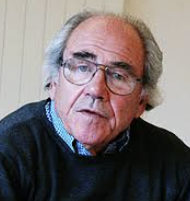
For nothing can be greater than seduction itself, not even the order that destroys it.
▼
Source
source
Seduction
9 months 5 days ago
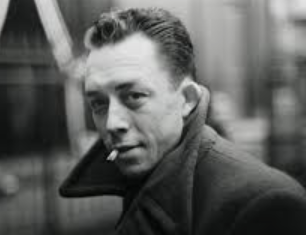
There is no mystery in humans creation. Will performs this miracle. But at least there is no true creation without a secret.
6 months 1 week ago
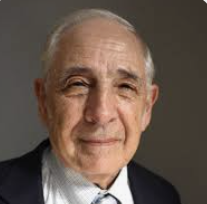
There is probably no more abused a term in the history of philosophy than "representation," and my use of this term differs both from its use in traditional philosophy and from its use in contemporary cognitive psychology and artificial intelligence.... The sense of "representation" in question is meant to be entirely exhausted by the analogy with speech acts: the sense of "represent" in which a belief represents its conditions of satisfaction is the same sense in which a statement represents its conditions of satisfaction. To say that a belief is a representation is simply to say that it has a propositional content and a psychological mode.
▼
Source
source
P. 12.
CivilSimian.com created by AxiomaticPanic, CivilSimian, Kalokagathia