


6 months 2 weeks ago
Science does not rest upon solid bedrock. The bold structure of its theories arises, as it were, above a swamp. It is like a building erected on piles. The piles are driven down from above into the swamp, but not down to any natural or 'given' base; and if we stop driving the piles deeper, it is not because we have reached firm ground. We simply stop when we are satisfied that the piles are firm enough to carry the structure, at least for the time being.
▼
Source
source
Ch. 5 "The Problem of the Empirical Basis", Section 30: Theory and Experiment, p. 94.
7 months 1 week ago
With rebellion, awareness is born.
4 months 2 weeks ago
Either be silent or say something better than silence.
▼
Source
source
Maxim 960

3 months 6 days ago
Power dements even more than it corrupts, lowering the guard of foresight and raising the haste of action.
▼
Source
source
Ch. IV : The Convention: September 21, 1792 - October 26, 1795, Part V : The Reign of Terror: September 17, 1793 - July 28, 1794, § 4 : The Revolution Eats Its Children

2 months 1 week ago
Because most of what we say and do is not essential. If you can eliminate it, you'll have more time, and more tranquillity. Ask yourself at every moment, "Is this necessary?" But we need to eliminate unnecessary assumptions as well. To eliminate the unnecessary actions that follow.
▼
Source
source
(Hays translation) IV, 24

5 months 2 weeks ago
Paper, they say, does not blush, but I assure you it's not true and that it's blushing just as I am now, all over.
5 months 2 weeks ago
Why count the days, when even one days is enough for a man to know all happiness?

3 months 1 week ago
Hadst thou not Greek enough to understand thus much: The end of man is an Action, and not a Thought, though it were the noblest.
▼
Source
source
Bk. II, ch. 5 The words Carlyle put in italics are a quotation from Book 1 of Aristotle's Nicomachean Ethics.
3 months 1 week ago
I think I have already said somewhere that mathematics is the art of giving the same name to different things.
▼
Source
source
Part I. Ch. 2 : The Future of Mathematics, p. 31
5 months 1 week ago
When we are told, in the same tone, that these people will be rewarded in "heaven" for their distress, and that "heaven" is the exact reverse of the earthly order ("the first shall be last"), we distinctly feel how the ressentiment-laden man transfers to God the vengeance he himself cannot wreak on the great. In this way, he can satisfy his revenge at least in imagination, with the aid of an other-worldly mechanism of rewards and punishments.
▼
Source
source
L. Coser, trans. (1961), p. 97

6 months 2 weeks ago
Aeschylus had a clear eye for the commonest things. His genius was only an enlarged common sense. He adverts with chaste severity to all natural facts. His sublimity is Greek sincerity and simpleness, naked wonder which mythology had not helped to explain... Whatever the common eye sees at all and expresses as best it may, he sees uncommonly and describes with rare completeness. The multitude that thronged the theatre could no doubt go along with him to the end... The social condition of genius is the same in all ages. Aeschylus was undoubtedly alone and without sympathy in his simple reverence for the mystery of the universe.
▼
Source
source
January 29, 1840
3 months 1 week ago
But oppression by your Mock-Superiors well shaken off, the grand problem yet remains to solve: That of finding government by your Real-Superiors! Alas, how shall we ever learn the solution of that, benighted, bewildered, sniffing, sneering, godforgetting unfortunates as we are? It is a work for centuries; to be taught us by tribulations, confusions, insurrections, obstructions; who knows if not by conflagration and despair! It is a lesson inclusive of all other lessons; the hardest of all lessons to learn.

6 months 2 weeks ago
The politician may change sides so frequently as to find himself always in the majority, but most politicians have a preference for one party to the other, and subordinate their love of power to this preference.

5 months 3 weeks ago
When we desire to confine our words, we commonly say they are spoken under the rose.
▼
Source
source
Pseudodoxia Epidemica Book 5, Ch. 22, sect. 6
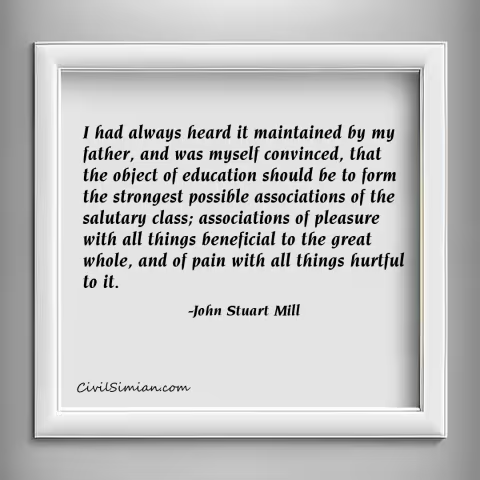
4 months 1 week ago
To hold the same views at forty as we held at twenty is to have been stupefied for a score of years, and take rank, not as a prophet, but as an unteachable brat, well birched and none the wiser. It is as if a ship captain should sail to India from the Port of London; and having brought a chart of the Thames on deck at his first setting out, should obstinately use no other for the whole voyage.
▼
Source
source
Crabbed Age and Youth.
5 months 1 day ago
We cannot think first and act afterwards. From the moment of birth we are immersed in action, and can only fitfully guide it by taking thought.
▼
Source
source
Ch. 12: "Religion and Science", p. 261
5 months 1 week ago
Reason is like an open secret that can become known to anyone at any time; it is the quiet space into which everyone can enter through his own thought.
▼
Source
source
As quoted in Philosophy for a Time of Crisis : An Interpretation, with Key Writings by Fifteen Great Modern Thinkers (1959) by Adrienne Koch, Ch. 18, "Karl Jaspers : A New Humanism"
6 months 2 weeks ago
For want of the apparatus of propositional functions, many logicians have been driven to the conclusion that there are unreal objects. It is argued, e.g., by Meinong, that we can speak about "the golden mountain," "the round square," and so on; we can make true propositions of which these are the subjects; hence they must have some kind of logical being, since otherwise the propositions in which they occur would be meaningless. In such theories, it seems to me, there is a failure of that feeling for reality which ought to be preserved even in the most abstract studies. Logic, I should maintain, must no more admit a unicorn than zoology can; for logic is concerned with the real world just as truly as zoology, though with its more abstract and general features.
▼
Source
source
Ch. 16: Descriptions
3 months 1 week ago
Close thy Byron; open thy Goethe.
▼
Source
source
Bk. I, ch. 9.
3 months 1 week ago
What is all Knowledge too but recorded Experience, and a product of History; of which, therefore, Reasoning and Belief, no less than Action and Passion, are essential materials?
▼
Source
source
Carlyle, Essays, On History. Quote reported in Hoyt's New Cyclopedia Of Practical Quotations (1922), p. 419-23.
4 months 2 weeks ago
"If he is this good at acting crazy, it's because he is." Nor is military psychology mistaken in this regard: in this sense, all crazy people simulate, and this lack of distinction is the worst kind of subversion. It is against this lack of distinction that classical reason armed itself in all its categories. But it is what today again outflanks them, submerging the principle of truth.
▼
Source
source
"The Precession of Simulacra," p. 4
4 months 4 weeks ago
In the dominant Western religious system, the love of God is essentially the same as the belief in God, in God's existence, God's justice, God's love. The love of God is essentially a thought experience. In the Eastern religions and in mysticism, the love of God is an intense feeling experience of oneness, inseparably linked with the expression of this love in every act of living.
▼
Source
source
Ch. 2
5 months 1 week ago
Our questions and answers are in part determined by the historical tradition in which we find ourselves. We apprehend truth from our own source within the historical tradition. The content of our truth depends upon our appropriating the historical foundation. Our own power of generation lies in the rebirth of what has been handed down to us. If we do not wish to slip back, nothing must be forgotten; but if philosophising is to be genuine our thoughts must arise from our own source. Hence all appropriation of tradition proceeds from the intentness of our own life. The more determinedly I exist, as myself, within the conditions of the time, the more clearly I shall hear the language of the past, the nearer I shall feel the glow of its life.
2 months 1 week ago
The mind is the ruler of the soul. It should remain unstirred by agitations of the flesh--gentle and violent ones alike. Not mingling with them, but fencing itself off and keeping those feelings in their place. When they make their way into our thoughts, through the sympathetic link between mind and body, don't try to resist the sensation. The sensation is natural. But don't let the mind start in with judgments, calling it 'good' or 'bad.'
▼
Source
source
(Hays translation) V, 26

5 months 1 week ago
You are forgiven everything provided you have a trade, a subtitle to your name, a seal on your nothingness.
6 months 2 weeks ago
All true metaphysics is taken from the essential nature of the thinking faculty itself, and therefore in nowise invented, since it is not borrowed from experience, but contains the pure operations of thought, that is, conceptions and principles à priori, which the manifold of empirical presentations first of all brings into legitimate connection, by which it can become empirical knowledge, i.e. experience. ...mathematical physicists were thus quite unable to dispense with such metaphysical principles...
▼
Source
source
Preface, Tr. Bax, 1883
2 months 2 weeks ago
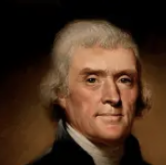
Never spend your money before you have it.
2 months 2 weeks ago
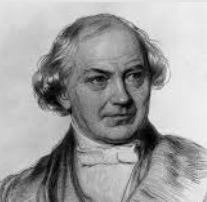
There are, in the Palætiological Sciences, two antagonist doctrines: 'Catastrophes' and 'Uniformity'. The doctrine of a 'uniform course of nature' is tenable only when we extend the notion of uniformity so far that it shall include catastrophes.
3 months 1 week ago
To fall into mere unreasoning deliquium of love and admiration, was not good; but such unreasoning, nay irrational supercilious no-love at all is perhaps still worse!-It is a thing forever changing, this of Hero-worship: different in each age, difficult to do well in any age. Indeed, the heart of the whole business of the age, one may say, is to do it well.
6 months 6 days ago
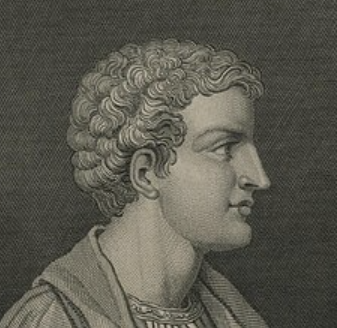
He will through life be master of himself and a happy man who from day to day can have said, "I have lived: tomorrow the Father may fill the sky with black clouds or with cloudless sunshine."
▼
Source
source
Book III, ode xxix, line 41

6 months 2 weeks ago
These labourers, who must sell themselves piecemeal, are a commodity, like every other article of commerce, and are consequently exposed to all the vicissitudes of competition, to all the fluctuations of the market.
▼
Source
source
Section 1, Paragraph 30
3 months 1 week ago
It is the simple hypotheses of which one must be most wary; because these are the ones that have the most chances of passing unnoticed.
▼
Source
source
Thermodynamique: Leçons professées pendant le premier semestre 1888-1889 (1892), Preface

5 months 2 weeks ago
One that confounds good and evil is an enemy to the good.
▼
Source
source
Speech in opening the impeachment of Warren Hastings (18 February 1788), quoted in The Works of the Right Honourable Edmund Burke, Volume the Tenth (1899), p. 48

6 months 2 weeks ago
Propaganda in favor of action that is consonant with enlightened self-interest appeals to reason by means of logical arguments based upon the best available evidence fully and honestly set forth. Propaganda in favor of action dictated by the impulses that are below self-interest offers false, garbled or incomplete evidence, avoids logical argument and seeks to influence its victims by the mere repetition of catchwords, by the furious denunciation of foreign or domestic scapegoats, and by cunningly associating the lower passions with the highest ideals, so that atrocities come to be perpetrated in the name of God and the most cynical kind of Realpolitik is treated as a matter of religious principle and patriotic duty.
▼
Source
source
Chapter 4 (p. 33)
2 months 2 weeks ago
The distinction of Fact and Theory is only relative. Brute animals have a practical knowledge of relations of space and force; but they have no knowledge of Geometry or Mechanicks.
7 months 2 weeks ago
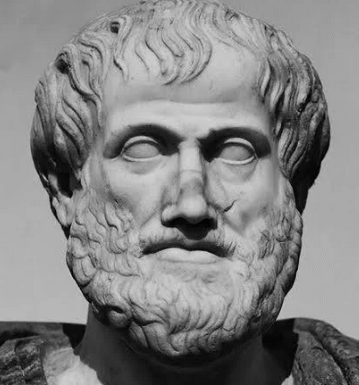
Every art, and every system, and in like manner every action and purpose aims, it is thought, at some good; for which reason a common and by no means a bad description of the good is, that at which all things aim.

5 months ago
Indeed much of the literature written about black folks in the post-civil rights era emphasized the need for jobs. Material advancement was deemed the pressing agenda. Mental health concerns were not a high priority.

5 months 3 weeks ago
Perchance you who pronounce my sentence are in greater fear than I who receive it.
▼
Source
source
His famous response to his judges upon his conviction as a heretic, prior to his transfer to the civil authorities for execution. (16 February 1600); as quoted by Gaspar Schopp of Breslau in a letter to Conrad Rittershausen

6 months 1 week ago
The harmony between word and deed in Socrates' life is Dorian... manifested in the courage he showed at Delium. This harmonic accord... distinguishes Socrates from a sophist... [who] can give... fine and beautiful discourses on courage, but is not courageous... [U]nlike the sophist, he can use parrhesia and speak freely because what he says accords... with what he thinks... [which] accords... with what he does.
5 months 1 week ago
To repeat to yourself a thousand times a day: 'Nothing on Earth has any worth,' to keep finding yourself at the same point, to circle stupidly as a top, eternally...

6 months 3 weeks ago
One ought to fast, watch, and labor to the extent that such activities are needed to harness the body's desires and longings; however, those who presume that they are justified by works pay no attention to the need for self-discipline but see the works themselves as the way to righteousness. They believe that if they do a great number of impressive works all will be well and righteousness will be the result. Sometimes this is pursued with such zeal that they become mentally unstable and their bodies are sapped of all strength. Such disastrous consequences demonstrate that the belief that we are justified and saved by works without faith is extremely foolish.
▼
Source
source
p. 73
5 months 1 day ago
Religion is the vision of something which stands beyond, behind and within the passing flux of immediate things; something which is real, and yet waiting to be realized; something which is a remote possibility, and yet the greatest of present facts; something that gives meaning to all that passes, and yet eludes apprehension; something whose possession is the final good, and yet is beyond all reach; something which is the ultimate ideal, and the hopeless quest.
▼
Source
source
Ch. 12: "Religion and Science", pp. 267-268
7 months 6 days ago
The superior man, when resting in safety, does not forget that danger may come. When in a state of security he does not forget the possibility of ruin. When all is orderly, he does not forget that disorder may come. Thus his person is not endangered, and his States and all their clans are preserved.
5 months 2 weeks ago
Man consists in Truth. If he exposes Truth, he exposes himself. If he betrays Truth, he betrays himself. We speak not here of lies, but of acting against Conviction.
6 months 3 weeks ago
I do not speak the minds of others except to speak my own mind better.
▼
Source
source
Ch. 26. On the Education of Children
CivilSimian.com created by AxiomaticPanic, CivilSimian, Kalokagathia