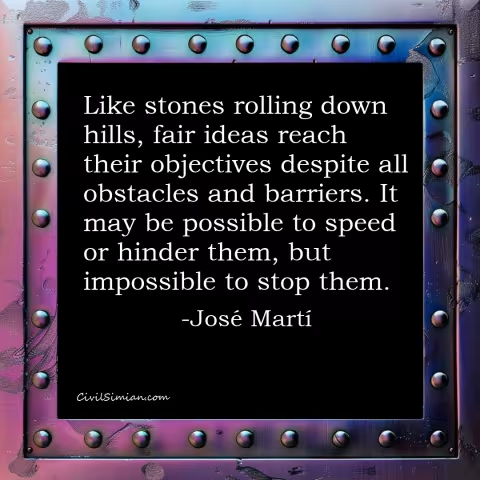
This is how I feel about universality. It's a final description of what is. It will be realized eventually....even if resisted, avoided or obstructed....


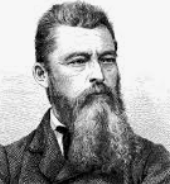
Though I myself am an atheist, I openly profess religion in the sense just mentioned, that is, a nature religion. I hate the idealism that wrenches man out of nature; I am not ashamed of my dependency on nature; I openly confess that the workings of nature affect not only my surface, my skin, my body, but also my core, my innermost being, that the air I breathe in bright weather has a salutary effect not only on my lungs but also on my mind, that the light of the sun illumines not only my eyes but also my spirit and my heart. And I do not, like a Christian, believe that such dependency is contrary to my true being or hope to be delivered from it. I know further that I am a finite moral being, that I shall one day cease to be. But I find this very natural and am therefore perfectly reconciled to the thought.
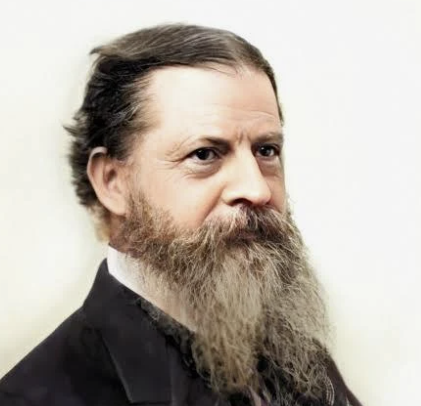
In the case of colors, there is a tridimensional spread of feelings. Originally all feelings may have been connected in the same way, and the presumption is that the number of dimensions was endless. For development essentially involves a limitation of possibilities. But given a number of dimensions of feeling, all possible varieties are obtainable by varying the intensities of the different elements.

Whenever the people are well informed, they can be trusted with their own government; that whenever things get so far wrong as to attract their notice, they may be relied on to set them to rights.
Declining from the public ways, walk in unfrequented paths.
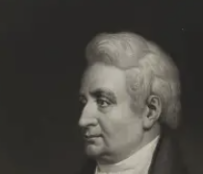
Ah, you flavour everything; you are the vanilla of society.
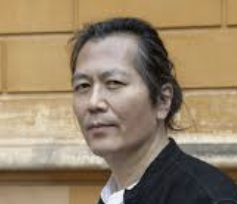
God functions like a stabilizer of time.
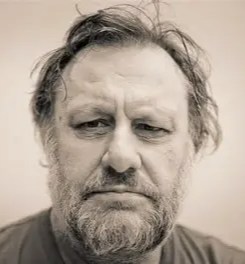
Canned laughter: After some supposedly funny or witty remark you can hear the laughter and applause included in the soundtrack of the show itself - here we have the exact counterpart of the Chorus in classical tragedy; it is here that we have to look for 'living Antiquity.' That is to say, why this laughter? The first possible answer - that it serves to remind us when to laugh - is interesting enough, because it implies the paradox that laughter is a matter of duty and not of some spontaneous feeling; but this answer is not sufficient because we do not usually laugh. The only correct answer would be that the Other - embodied in the television set - is relieving us even of our duty to laugh - is instead laughing for us. So even if, tired from a hard days stupid work, all evening we did nothing but gaze drowsily into the television screen, we can say afterwards that objectively, through the medium of the other, we had a really good time.

We reason deeply, when we forcibly feel.

My desire for knowledge is intermittent; but my desire to bathe my head in atmospheres unknown to my feet is perennial and constant. The highest that we can attain to is not Knowledge, but Sympathy with Intelligence. I do not know that this higher knowledge amounts to anything more definite than a novel and grand surprise on a sudden revelation of the insufficiency of all that we called Knowledge before - a discovery that there are more things in heaven and earth than are dreamed of in our philosophy.

"You really should come to the house - one of these days we might die without having seen each other again." - "Since we have to die in any case, what's the use of seeing each other again?"
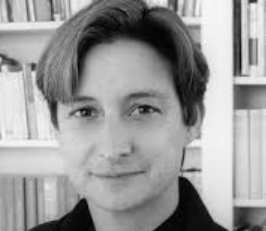
Nonviolence does not make sense without a commitment to equality. The reason why nonviolence requires a commitment to equality can best be understood by considering that in this world some lives are more clearly valued than others, and that this inequality implies that certain lives will be more tenaciously defended than others. If one opposes the violence done to human lives-or, indeed, to other living beings-this presumes that it is because those lives are valuable. Our opposition affirms those lives as valuable. If they were to be lost as a result of violence, that loss would be registered as a loss only because those lives were affirmed as having a living value, and that, in turn, means we regard those lives as worthy of grief.

Foxes have their dens and birds have their nests, but human beings have no place to lay down and rest.

It is written, By me kings reign. This is not a phrase of the church, a metaphor of the preacher; it is a literal truth, simple and palpable. It is a law of the political world. God makes kings in the literal sense. He prepares royal races; maturing them under a cloud which conceals their origin. They appear at length crowned with glory and honour; they take their places; and this is the most certain sign of their legitimacy.
Skepticism is the sadism of embittered souls.

The new media are not bridges between man and nature - they are nature...The new media are not ways of relating us to the old world; they are the real world and they reshape what remains of the old world at will.
That passivity was the essence of the problem. The human being was intended to be passive only in a condition of fatigue, and not always then. Too much passivity of body produced surplus fat, short-windedness, indigestion: passivity of mind produced the same symptoms on the mental level. a feeling of spiritual dyspepsia. Since the average human being has no purposes that are not connected with the activities of keeping alive, the black room was bound to produce passivity, increasing dullness, a state in which the mind is at once awake and static, motionless, stagnant. This sense of dullness was nothing less than the collapse of the sense of reality and of values, the retreat into one's inner world.
There is something in human history like retribution; and it is a rule of historical retribution that its instrument be forged not by the offended, but by the offender himself. The first blow dealt to the French monarchy proceeded from the nobility, not from the peasants. The Indian revolt does not commence with the ryots, tortured, dishonoured and stripped naked by the British, but with the sepoys, clad, fed and petted, fatted and pampered by them.
Poetry must have something in it that is barbaric, vast and wild.
Long live the king,' cry the loving and the loyal, beside themselves with joy. 'Long live the king,' responds the republican hypocrite in dire terror. What does it matter? There is only one cry. And the king is crowned.
History shows that the thinkers who mounted on the top of the ladder of questions, who set their foot on the last rung, that of the absurd, have bequeathed to posterity only an example of sterility.
Mercy to the guilty is cruelty to the innocent.

The man who renounces himself, comes to himself.

Boundless compassion for all living beings is the surest and most certain guarantee of pure moral conduct, and needs no casuistry. Whoever is filled with it will assuredly injure no one, do harm to no one, encroach on no man's rights; he will rather have regard for every one, forgive every one, help every one as far as he can, and all his actions will bear the stamp of justice and loving-kindness. ... In former times the English plays used to finish with a petition for the King. The old Indian dramas close with these words: "May all living beings be delivered from pain." Tastes differ; but in my opinion there is no more beautiful prayer than this.
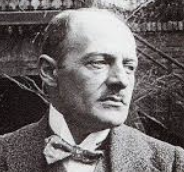
The precepts "Love your enemies, do good to them which hate you, bless them that curse you" ... are born from the Gospel's profound spirit of individualism, which refuses to let one's own actions and conduct depend in any way on somebody else's acts. The Christian refuses to let his acts be mere reactions-such conduct would lower him to the level of his enemy. The act is to grow organically from the person, "as the fruit from the tree." ... What the Gospel demands is not a reaction which is the reverse of the natural reaction, as if it said: "Because he strikes you on the cheek, tend the other"-but a rejection of all reactive activity, of any participation in common and average ways of acting and standards of judgment.

"They are slaves," people declare. Nay, rather they are men. "Slaves!" No, comrades. "Slaves!" No, they are unpretentious friends. "Slaves!" No, they are our fellow-slaves, if one reflects that Fortune has equal rights over slaves and free men alike.
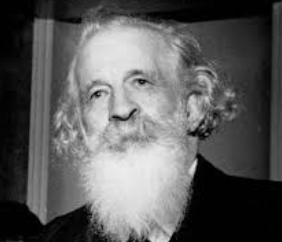
The words of the world want to make sentences.

Ridden with conflicts and lacking the industrial base of communism and nazism, Islamism is nowhere near a danger of the magnitude of those that were faced down in the 20th century.

A great revolution is on the point of being accomplished. It is a revolution not in human affairs, but in man himself.
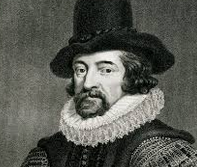
Libraries are as the shrine where all the relics of the ancient saints, full of true virtue, and that without delusion or imposture, are preserved and reposed.

They made me take cod liver oil: that is the height of luxury: a medicine to make you hungry while the others, in the street, would have sold themselves for a beefsteak. I saw them passing my window with their signs: "Give me bread".
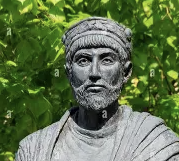
Must we then speak of this subject also: and shall we write concerning things that are not to be told, and shall we publish things not to be divulged, and secrets not to be spoken aloud? Who indeed is Attis or Gallos; who the Mother of the Gods; what is the reason of this rule of Chastity; moreover for what cause has such an institution been established among us from remote antiquity; handed down to us indeed from the most ancient of the Phrygians, but accepted in the first place by the Greeks - and those not the vulgar herd, but the Athenians - taught by the event that they had not done well in ridiculing him that was performing the rites of the Great Mother. For they are said to have insulted and driven off the Gallos, as one who was making innovations in religion: because they did not understand the character of the goddess, or how that she was the very "Deo", "Rhea," and " "Demeter" so much honoured amongst them themselves.
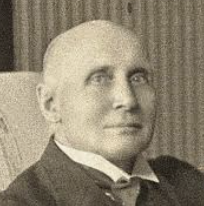
Philosophy is the self-correction by consciousness of its own initial excess of subjectivity. Each actual occasion contributes to the circumstances of its origin additional formative elements deepening its own peculiar individuality. Consciousness is only the last and greatest of such elements by which the selective character of the individual obscures the external totality from which it originates and which it embodies. An actual individual, of such higher grade, has truck with the totality of things by reason of its sheer actuality; but it has attained its individual depth of being by a selective emphasis limited to its own purposes. The task of philosophy is to recover the totality obscured by the selection.
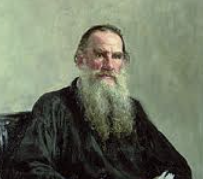
You worldly-minded people are most unfortunate! You are surrounded with sorrows and troubles overhead and underfoot and to the right and to the left, and you are enigmas even to yourselves.
Dissimulation is innate in woman, and almost as much a quality of the stupid as of the clever.
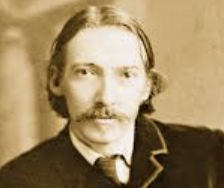
In anything fit to be called by the name of reading, the process itself should be absorbing and voluptuous; we should gloat over a book, be rapt clean out of ourselves, and rise from the perusal, our mind filled with the busiest, kaleidoscopic dance of images, incapable of sleep or of continuous thought. The words, if the book be eloquent, should run thenceforward in our ears like the noise of breakers, and the story, if it be a story, repeat itself in a thousand coloured pictures to the eye.
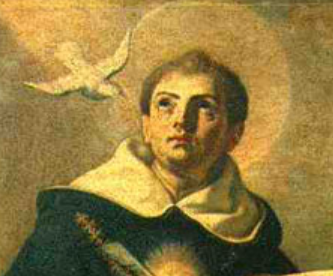
To become like God is the ultimate end of all.

Not to be absolutely certain is, I think, one of the essential things in rationality.
It may possibly be true that, to continue to live on and to act in a world like ours, it is vitally necessary to seek a way out of this uncertainty of multiple alternatives; and accordingly people may be led to embrace some immediate goal as if it were absolute, by which they hope to make their problems appear concrete and real. But it is not primarily the man of action who seeks the absolute and immutable, but rather it is he who wishes to induce others to hold on to the status quo because he feels comfortable and smug under conditions as they are.
What do you say to the elections in the factory districts? Once again the proletariat has discredited itself terribly... [I]t cannot be denied that the increase of working-class voters has brought the Tories more than their mere additional percentage and has improved their relative position.

As to the people; in all these countries the greater part of the people certainly detest war, and most devoutly wish for peace. A very few of them, indeed, whose unnatural happiness depends upon the public misery, may wish for war; but be it yours to decide, whether it is equitable or not, that the unprincipled selfishness of such wretches should have more weight than the anxious wishes of all good men united.
Hatred is a feeling which leads to the extinction of values.
Any loss of identity prompts people to seek reassurance and rediscovery of themselves by testing, and even by violence. Today, the electric revolution, the wired planet, and the information environment involve everybody in everybody to the point of individual extinction.

Obviously, Anarchism, or any other social theory, making man a conscious social unit, will act as a leaven for rebellion.

I can control my thoughts as necessary; then how can I be troubled?
CivilSimian.com created by AxiomaticPanic, CivilSimian, Kalokagathia