

5 months 1 week ago
What the public wants is the image of passion, not passion itself.
▼
Source
source
"Le monde où l'on catche"
7 months 2 weeks ago
To the rest of the Galaxy, if they are aware of us at all, Earth is but a pebble in the sky. To us it is home, and all the home we know.

5 months 2 weeks ago
Paradise was unendurable, otherwise the first man would have adapted to it; this world is no less so, since here we regret paradise or anticipate another one. What to do? Where to go? Do nothing and go nowhere, easy enough.
7 months 3 weeks ago
Now men seem, not unreasonably, to form their notions of the supreme good and of happiness from the lives of men.
3 months 2 weeks ago
It is only through science and art that civilization is of value. Some have wondered at the formula: science for its own sake; an yet it is as good as life for its own sake, if life is only misery; and even as happiness for its own sake, if we do not believe that all pleasures are of the same quality...Every act should have an aim. We must suffer, we must work, we must pay for our place at the game, but this is for seeing's sake; or at the very least that others may one day see.
5 months 4 days ago
In its mad passion for power, the Communist State even sought to strengthen and deepen the very ideas and conceptions which the Revolution had come to destroy. It supported and encouraged all the worst antisocial qualities and systematically destroyed the already awakened conception of the new revolutionary values.The sense of justice and equality, the love of liberty and of human brotherhood - these fundamentals of the real regeneration of society - the Communist State suppressed to the point of extermination. Man's instinctive sense of equity was branded as weak sentimentality; human dignity and liberty became a bourgeois superstition; the sanctity of life, which is the very essence of social reconstruction, was condemned as unrevolutionary, almost counter-revolutionary. This fearful perversion of fundamental values bore within itself the seed of destruction.

3 months 1 week ago
Besides, he who follows another not only discovers nothing but is not even investigating.
3 months 2 weeks ago
I have been in my bed for five weeks, oppressed with weakness and other infirmities from which my age, seventy four years, permits me not to hope release.
▼
Source
source
Compiled primarily from his correspondence and that of his eldest daughter, Sister Maria Celeste (1870) by Mary Allan-Olney, p. 278

6 months 3 weeks ago
The great writers to whom the world owes what religious liberty it possesses, have mostly asserted freedom of conscience as an indefeasible right, and denied absolutely that a human being is accountable to others for his religious belief.
▼
Source
source
Ch. 1: Introductory
2 months 2 weeks ago
It may possibly be true that, to continue to live on and to act in a world like ours, it is vitally necessary to seek a way out of this uncertainty of multiple alternatives; and accordingly people may be led to embrace some immediate goal as if it were absolute, by which they hope to make their problems appear concrete and real. But it is not primarily the man of action who seeks the absolute and immutable, but rather it is he who wishes to induce others to hold on to the status quo because he feels comfortable and smug under conditions as they are.
5 months 1 week ago
The laws of Rome had wisely divided public power among a large number of magistracies, which supported, checked and tempered each other. Since they all had only limited power, every citizen was qualified for them, and the people - seeing many persons pass before them one after the other - did not grow accustomed to any in particular. But in these times the system of the republic changed. Through the people the most powerful men gave themselves extraordinary commissions - which destroyed the authority of the people and magistrates, and placed all great matters in the hands of one man, or a few.
▼
Source
source
Chapter XI.
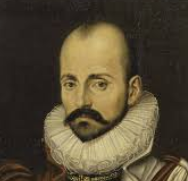
6 months 4 weeks ago
There must then be something that is better, and that must be God. When you see a stately and stupendous edifice, though you do not know who is the owner of it, you would yet conclude it was not built for rats. And this divine structure, that we behold of the celestial palace, have we not reason to believe that it is the residence of some possessor, who is much greater than we?
▼
Source
source
Ch. 12, tr. Cotton, rev. W. Carew Hazlitt, 1877
3 months 3 days ago
To recognize that some of the things our culture believes are not true imposes on us the duty of finding out which are true and which are not.
▼
Source
source
"Western Civ," p. 22.
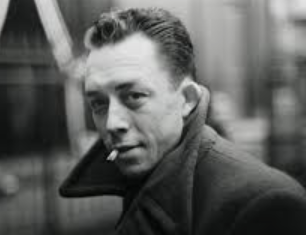
7 months 2 weeks ago
The absurd ... is an experience to be lived through, a point of departure, the equivalent, in existence of Descartes' methodical doubt. Absurdism, like methodical doubt, has wiped the slate clean. It leaves us in a blind alley. But, like methodical doubt, it can, by returning upon itself, open up a new field of investigation, and in the process of reasoning then pursues the same course. I proclaim that I believe in nothing and that everything is absurd, but I cannot doubt the validity of my proclamation and I must at least believe in my protest. The first and only evidence that is supplied me, within the terms of the absurdist experience, is rebellion ... Rebellion is born of the spectacle of irrationality, confronted with an unjust and incomprehensible condition.

6 months 3 weeks ago
The true function of logic ... as applied to matters of experience ... is analytic rather than constructive; taken a priori, it shows the possibility of hitherto unsuspected alternatives more often than the impossibility of alternatives which seemed prima facie possible. Thus, while it liberates imagination as to what the world may be, it refuses to legislate as to what the world is.
▼
Source
source
p. 8
4 months 4 weeks ago
If reason is both transcendent and immanent, then philosophy, as culture-bound reflection and argument about eternal questions, is both in time and eternity. We don't have an Archimedean point; we always speak the language of a time and place; but the rightness and wrongness of what we say is not just for a time and a place.
▼
Source
source
Why reason can't be naturalized
3 months ago
The virtuous who are prosperous must be exalted, and the virtuous who are not prosperous must be exalted too.
▼
Source
source
Book 2; Exaltation of the Virtuous I

6 months 3 weeks ago
Every crusader is apt to go mad. He is haunted by the wickedness which he attributes to his enemies; it becomes in some sort a part of him.
▼
Source
source
Aldous Huxley, The Devils of Loudon Chatto & Windus, London, (1951), ch. 9, p. 274

2 months 2 weeks ago
Often injustice lies in what you aren't doing, not only in what you are doing.
▼
Source
source
IX. 5:223

6 months 3 weeks ago
When the rich make war, it's the poor that die.

6 months 3 weeks ago
To found a great empire for the sole purpose of raising up a people of customers, may at first appear a project fit only for a nation of shopkeepers. It is however, a project altogether unfit for a nation of shopkeepers; but extremely fit for a nation whose government is influenced by shopkeepers.
▼
Source
source
Chapter VII, Part Third, p. 667.
3 months 2 weeks ago
Does the harmony the human intelligence thinks it discovers in nature exist outside of this intelligence? No, beyond doubt, a reality completely independent of the mind which conceives it, sees or feels it, is an impossibility. A world as exterior as that, even if it existed, would for us be forever inaccessible.
5 months 2 weeks ago
Of all that makes us suffer, nothing - so much as disappointment - gives us the sensation of at last touching Truth.
3 months 3 days ago
Trying to define yourself is like trying to bite your own teeth.
▼
Source
source
As quoted in Life magazine
6 months 3 weeks ago
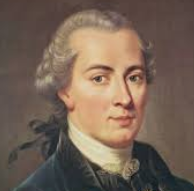
I do not, therefore, need any penetrating acuteness to see what I have to do in order that my volition be morally good. Inexperienced in the course of the world, incapable of being prepared for whatever might come to pass in it, I ask myself only: can you also will that your maxim become a universal law?
7 months 3 weeks ago
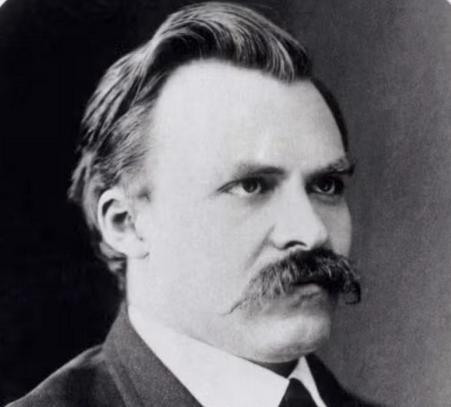
Although the most acute judges of the witches and even the witches themselves, were convinced of the guilt of witchery, the guilt nevertheless was non-existent. It is thus with all guilt.
6 months 1 week ago
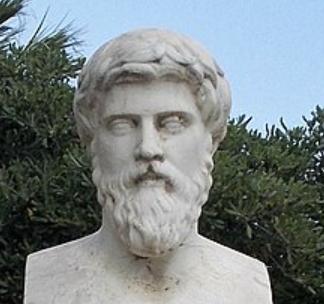
When Demaratus was asked whether he held his tongue because he was a fool or for want of words, he replied, "A fool cannot hold his tongue."
▼
Source
source
Of Demaratus
2 months 2 weeks ago
Another may be more expert in casting [throwing] his opponent; but he is not more social, nor more modest, nor better disciplined to meet all that happens, nor more considerate with respect to the faults of his neighbors.
▼
Source
source
VII, 52

3 months 4 weeks ago
Humans kill one another - and in some cases themselves - for many reasons, but none is more human than the attempt to make sense of their lives. More than the loss of life, they fear loss of meaning.
▼
Source
source
In the Puppet Theatre: Roof Gardens, Feathers and Human Sacrifice (p. 87)
2 months 3 weeks ago
Remember, then, that scientific thought is the guide of action; that the truth which it arrives at is not that which we can ideally contemplate without error, but that which we may act upon without fear; and you cannot fail to see that scientific thought is not an accompaniment or condition of human progress, but human progress itself. And for this reason the question what its characters are... is the question of all questions for the human race.
▼
Source
source
p. 157.
5 months 1 week ago
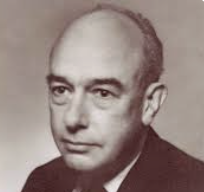
Modern empiricism has been conditioned in large part by two dogmas. One is a belief in some fundamental cleavage between truths which are analytic, or grounded in meanings independently of matters of fact, and truths which are synthetic, or grounded in fact. The other dogma is reductionism: the belief that each meaningful statement is equivalent to some logical construct upon terms which refer to immediate experience. Both dogmas, I shall argue, are ill-founded. One effect of abandoning them is, as we shall see, a blurring of the supposed boundary between speculative metaphysics and natural science. Another effect is a shift toward pragmatism.
▼
Source
source
"Two dogmas of Empiricism"
6 months 4 weeks ago
There is no man so good, who, were he to submit all his thoughts and actions to the laws, would not deserve hanging ten times in his life.
▼
Source
source
Book III, Ch. 9. Of Vanity
5 months 2 weeks ago
Skepticism is the sadism of embittered souls.

6 months 3 weeks ago
Thus heaven I've forfeited, I know it full well. My soul, once true to God, is chosen for hell.
▼
Source
source
"The Pale Maiden" (1837) ballad
5 months 5 days ago
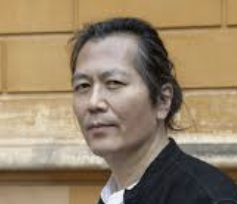
Sabbath rest does not follow creation; it brings creation to completion.
5 months 2 weeks ago
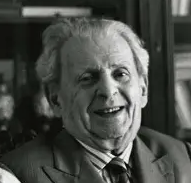
To be or not to be is not the question where transcendence is concerned. The statement of being's other, of the otherwise than being, claims to state a difference over and beyond that which separates being from nothingness - the very difference of the beyond, the difference of transcendence.
▼
Source
source
Otherwise than Being, or Beyond Essence (1974) Chapter I, Section 1.
7 months 3 weeks ago
Whereas the man of action binds his life to reason and its concepts so that he will not be swept away and lost, the scientific investigator builds his hut right next to the tower of science so that he will be able to work on it and to find shelter for himself beneath those bulwarks which presently exist. And he requires shelter, for there are frightful powers which continuously break in upon him, powers which oppose scientific "truth" with completely different kinds of "truths" which bear on their shields the most varied sorts of emblems.
5 months 1 week ago
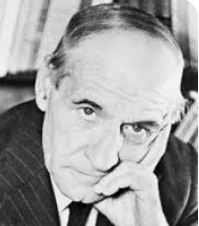
I have never said that human society ought to be aristocratic, but a great deal more than that. What I have said, and still believe with ever-increasing conviction, is that human society is always, whether it will or no, aristocratic by its very essence, to the extreme that it is a society in the measure that it is aristocratic, and ceases to be such when it ceases to be aristocratic. Of course I am speaking now of society and not of the State.
▼
Source
source
Chap.II: The Rise Of The Historic Level

5 months 1 week ago
Proceeding from ourselves, from our own human consciousness, the only consciousness which we feel from within and in which feeling is identical with being, we attribute some sort of consciousness, more or less dim, to all living things, and even to the stones themselves, for they also live. And the evolution of organic beings is simply the struggle to realize fullness of consciousness through suffering, a continual aspiration to be others without ceasing to be themselves, to break and yet to preserve their proper limits.
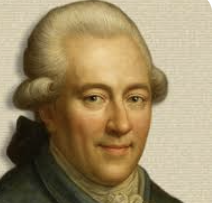
5 months 1 day ago
The most heated defenders of a science, who cannot endure the slightest sneer at it, are commonly those who have not made very much progress in it and are secretly aware of this defect.
▼
Source
source
F 8
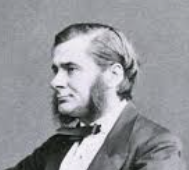
4 months 1 week ago
The extent of the region of the uncertain, the number of the problems the investigation of which ends in a verdict of not proven, will vary according to the knowledge and the intellectual habits of the individual agnostic. I do not very much care to speak of anything as unknowable. What I am sure about is that there are many topics about which I know nothing, and which, so far as I can see, are out of reach of my faculties. But whether these things are knowable by any one else is exactly one of those matters which is beyond my knowledge, though I may have a tolerably strong opinion as to the probabilities of the case.

5 months 1 week ago
Stars and blossoming fruit-trees: utter permanence and extreme fragility give an equal sense of eternity.
▼
Source
source
p. 277
5 months 2 weeks ago
A regret understood by no one: the regret to be a pessimist. It's not easy to be on the wrong foot with life
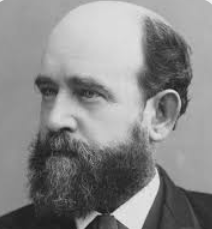
2 months 3 weeks ago
The tax upon land values is, therefore, the most just and equal of all taxes. It falls only upon those who receive from society a peculiar and valuable benefit, and upon them in proportion to the benefit they receive. It is the taking by the community, for the use of the community, of that value which is the creation of the community. It is the application of the common property to common uses. When all rent is taken by taxation for the needs of the community, then will the equality ordained by Nature be attained. No citizen will have an advantage over any other citizen save as is given by his industry, skill, and intelligence; and each will obtain what he fairly earns. Then, but not till then, will labor get its full reward, and capital its natural return.
▼
Source
source
Book VIII, Ch. 3
7 months 2 weeks ago
It's my belief that the Universe possesses, in its essence, fractal properties of a very complex sort and that the pursuit of science shares those properties. It follows that any part of the Universe that remains un-understood, and any part of scientific investigation that remains unresolved, however small that might be in comparison to what is understood and resolved, contains within it all the complexity of the original. Therefore, we'll never finish. No matter how far we go, the road ahead will be as long as it was at the start, and that's the secret of the Universe.

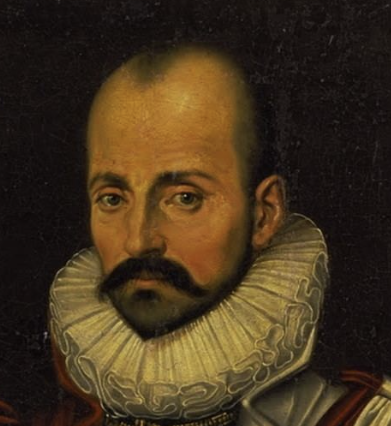
3 months 2 weeks ago
The good seed that nature plants in us is so slight and so slippery that it cannot withstand the least harm from wrong nourishment.
▼
Source
source
Part 2
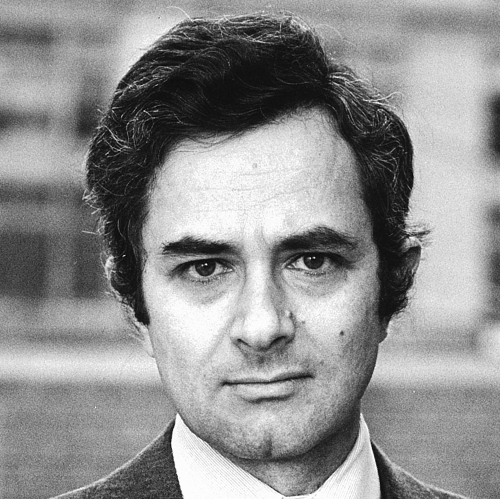
6 months 1 week ago
It is often remarked that nothing we do now will matter in a million years. But if that is true, then by the same token, nothing that will be the case in a million years matters now.
▼
Source
source
"The Absurd" (1971), p. 11.
6 months 3 weeks ago
Unlimited exploitation of cheap labour-power is the sole foundation of their power to compete.
▼
Source
source
Vol. I, Ch. 15, Section 8, pg. 520.
CivilSimian.com created by AxiomaticPanic, CivilSimian, Kalokagathia