


3 months 2 weeks ago
Justice is itself the great standing policy of civil society; and any eminent departure from it, under any circumstances, lies under the suspicion of being no policy at all.

1 week 3 days ago
Of my grandfather Verus I have learned to be gentle and meek, and to refrain from all anger and passion... I have learned both shamefastness and manlike behaviour. Of my mother I have learned to be religious, and bountiful; and to forbear, not only to do, but to intend any evil; to content myself with a spare diet, and to fly all such excess as is incidental to great wealth.
▼
Source
source
I, 1

4 months 3 days ago
False men and shams talk big and do nothing.



2 months 1 week ago
The successful scientist and the raving crank are separated by the quality of their inspirations. But I suspect that this amounts, in practice, to a difference, not so much in ability to notice analogies as in ability to reject foolish analogies and pursue helpful ones.
▼
Source
source
Chapter 8 "Explosions and Spirals" (pp. 195-196)

4 months 3 weeks ago
In the country of the blind the one-eyed man is king.
▼
Source
source
Adagia (first published 1500, with numerous expanded editions through 1536), III, IV, 96
3 months 5 days ago
The application of scientific formulations of the principle of probability statistically determined is thus a logical corollary of the principle already stated, that the subject matter of scientific findings is relational, not individual. It is for this reason that it is safe to predict the ultimate triumph of the statistical doctrine.

3 months 2 weeks ago
Nothing tends to materialize man and to deprive his work of the faintest trace of mind more than the extreme division of labor.
▼
Source
source
Chapter XVIII.

5 months 2 weeks ago
Everything which distinguishes man from the animals depends upon this ability to volatilize perceptual metaphors in a schema, and thus to dissolve an image into a concept. For something is possible in the realm of these schemata which could never be achieved with the vivid first impressions: the construction of a pyramidal order according to castes and degrees, the creation of a new world of laws, privileges, subordinations, and clearly marked boundaries, a new world, one which now confronts that other vivid world of first impressions as more solid, more universal, better known, and more human than the immediately perceived world, and thus as the regulative and imperative world.
2 months 3 weeks ago
If this is philosophy it is at any rate a philosophy that is not in its right mind.
▼
Source
source
L 23
1 week 3 days ago
But that which is useful is the better.
▼
Source
source
III, 6
3 months 4 days ago
Even after his conversion, the true 'apostate' is not primarily committed to the positive contents of his new belief and to the realization of its aims. He is motivated by the struggle against the old belief and lives on for its negation. The apostate does not affirm his new convictions for their own sake; he is engaged in a continuous chain of acts of revenge against his own spiritual past. In reality he remains a captive of this past, and the new faith is merely a handy frame of reference for negating and rejecting the old. As a religious type, the apostate is therefore at the opposite pole from the 'resurrected,' whose life is transformed by a new faith which is full of intrinsic meaning and value.
▼
Source
source
L. Coser, trans. (1973), pp. 66-67

5 months 1 week ago
A character is never the author who created him. It is quite likely, however, that an author may be all his characters simultaneously.

1 week 6 days ago
And for the support of this Declaration, with a firm reliance on the protection of divine Providence, we mutually pledge to each other our Lives, our Fortunes and our sacred Honor.
5 months 2 weeks ago
Is Wagner a human being at all? Is he not rather a disease? He contaminates everything he touches - he has made music sick.
2 months 3 weeks ago
Rationality requires a choice among all possible alternative behaviors. In actual behavior, only a very few of all these possible alternatives come to mind.


4 months 2 weeks ago
To expect, indeed, that the freedom of trade should ever be entirely restored in Great Britain, is as absurd as to expect that an Oceana or Utopia should never be established in it.
▼
Source
source
Chapter II, p. 505.

4 months 2 weeks ago
Though the managing ourselves well in this part of our behavior has the name good-breeding, as if a peculiar effect of education; yet... young children should not be much perplexed about it... Teach them humility, and to be good-natur'd, if you can, and this sort of manners will not be wanting; civility being in truth nothing but a care not to shew any slighting or contempt of any one in conversation.
▼
Source
source
Sec. 145

4 months 2 weeks ago
Human beings have faculties more elevated than the animal appetites, and when once made conscious of them, do not regard anything as happiness which does not include their gratification. I do not, indeed, consider the Epicureans to have been by any means faultless in drawing out their scheme of consequences from the utilitarian principle. To do this in any sufficient manner, many Stoic, as well as Christian elements require to be included. But there is no known Epicurean theory of life which does not assign to the pleasures of the intellect, of the feelings and imagination, and of the moral sentiments, a much higher value as pleasures than to those of mere sensation.
▼
Source
source
Ch. 2
4 months 3 days ago
Not from fear but from a sense of duty refrain from your sins.

4 months 1 week ago
"Fare well!" "A whole world of pain is contained in these words." How can it be contained in them? - It is bound up in them. The words are like an acorn from which an oak tree can grow.
▼
Source
source
p. 52e

1 month 2 weeks ago
Though the framework is libertarian and laissez-faire, individual communities within it need not be, and perhaps no community within it will choose to be so. Thus, the characteristics of the framework need not pervade the individual communities. In this laissez-faire system it could turn out that though they are permitted, there are no actually functioning "capitalist" institutions; or that some communities have them and others don't or some communities have some of them, or what you will.
▼
Source
source
Ch. 10 : A Framework for Utopia; The Framework as Utopian Common Ground, p. 320

4 months 4 days ago
How far down the evolutionary scale shall we go? Shall we eat fish? What about shrimps? Oysters? To answer these questions we must bear in mind the central principle on which our concern for other beings is based. As I said ... the only legitimate boundary to our concern for the interests of other beings is the point at which it is no longer accurate to say that the other being has interests. To have interests, in a strict, nonmetaphorical sense, a being must be capable of suffering or experiencing pleasure. If a being suffers, there can be no moral justification for disregarding that suffering, or for refusing to count it equally with the like suffering of any other being. But the converse of this is also true. If a being is not capable of suffering, or of enjoyment, there is nothing to take into account.
▼
Source
source
Ch. 4: Becoming a Vegetarian
3 months 1 week ago
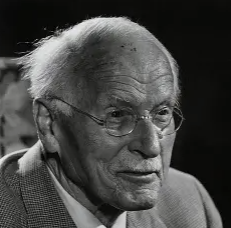
As far as we can discern, the sole purpose of human existence is to kindle a light in the darkness of mere being.
▼
Source
source
p. 326
4 months 1 day ago
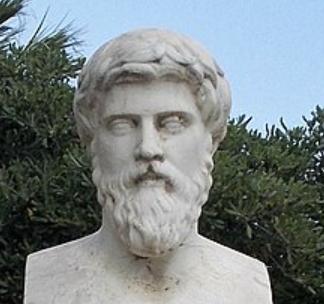
Cato instigated the magistrates to punish all offenders, saying that they that did not prevent crimes when they might, encouraged them. Of young men, he liked them that blushed better than those who looked pale.
▼
Source
source
Cato the Elder

3 months 6 days ago
The total victimization of the individual that takes place is encouraged for the specific benefit of the industrial and political bureaucracy. It therefore cannot be justified on the ground of the individual's true interest. National Socialist ideology simply states that true human existence consists in unconditional sacrifice, that it is of the essence of the individual's life to abbey and to serve-'service which never comes to an end because service and life coincide.'
▼
Source
source
P. 416

3 weeks 3 days ago
Plato ... says a multitude can never philosophize and hence can never recognize the seriousness of philosophy or who really philosophizes. Attempting to influence the multitude results in forced prostitution.
▼
Source
source
Commerce and Culture, p. 286.
4 weeks 1 day ago
War prosperity is like the prosperity that an earthquake or a plague brings.
▼
Source
source
p 186
3 months 1 week ago
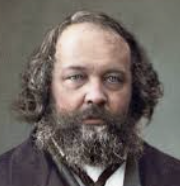
We wish, in a word, equality - equality in fact as a corollary, or rather, as primordial condition of liberty. From each according to his faculties, to each according to his needs; that is what we wish sincerely and energetically.
▼
Source
source
As quoted in The Old Order and the New (1890) by J. Morris Davidson
3 months 6 days ago
The Value or WORTH of a man, is as of all other things, his Price; that is to say, so much as would be given for the use of his Power...
▼
Source
source
The First Part, Chapter 10, p. 42
3 months 4 days ago
God ... desires His creature to be able to oppose Him. He has given that creature freedom. ... When man turns away from evil with that whole measure of power with which he is able to rebel against God, then he has truly turned to God.
▼
Source
source
p. 44

4 months 4 days ago
Complaints about the social irresponsibility of the intellectual typically concern the intellectual's tendency to marginalize herself, to move out from one community by interior identification of herself with some other community-for example, another country or historical period. ... It is not clear that those who thus marginalize themselves can be criticized for social irresponsibility. One cannot be irresponsible toward a community of which one does not think of oneself as a member. Otherwise runaway slaves and tunnelers under the Berlin Wall would be irresponsible.
▼
Source
source
"Postmodernist bourgeois liberalism," Objectivity, Relativism and Truth (Cambridge: 1991), p. 197

2 months 1 week ago
The first effect of modernism was to make high culture difficult: to surround beauty with a wall of erudition.
▼
Source
source
Avant-garde and Kitsch (p. 85)
4 months 3 weeks ago
Do not be guilty of possessing a library of learned books while lacking learning yourself.
▼
Source
source
Letter to Christian Northoff (1497), as translated in Collected Works of Erasmus (1974), p. 115
1 month 3 days ago
The death of Alexander (323 BC) quickened this process of decay. The boy-emperor, barbarian though he remained after all of Aristotle's tutoring, had yet learned to revere the rich culture of Greece, and had dreamed of spreading that culture through the Orient in the wake of his victorious armies.... But he had underrated the inertia and resistance of the Oriental mind, and the mass and depth of Oriental culture. It was only a youthful fancy, after all, to suppose that so immature and unstable a civilization as that of Greece could be imposed upon a civilization immeasurably more widespread, and rooted in the most venerable traditions. The quantity of Asia proved too much for the quality of Greece.


3 months 1 week ago
If, at the limit, you can rule without crime, you cannot do so without injustices.
4 months 4 days ago
Consciousness is what makes the mind-body problem really intractable.
▼
Source
source
p. 165.
1 week 6 days ago
A lively and lasting sense of filial duty is more effectually impressed on the mind of a son or daughter by reading King Lear, than by all the dry volumes of ethics, and divinity, that ever were written.
▼
Source
source
Letter to Robert Skipwith (3 August 1771) ; also in The Writings of Thomas Jefferson (19 Vols., 1905) edited by Andrew A. Lipscomb and Albert Ellery Bergh, Vol. 4, p. 239

3 months 1 week ago
Let us apply these principles to adultery. The state can no more prohibit it or punish it by law than any other illegitimate satisfaction of the sexual impulse.
▼
Source
source
P. 431

2 months 3 weeks ago
The motto should not be: Forgive one another; rather, Understand one another.
3 months 1 week ago
The voice in my soul in which I will have faith, and for the sake of which I have faith in all else, does not merely command me generally to act, but in every particular situation it declares what I shall do and what leave undone; it accompanies me through every event of my life, and it is impossible for me to contend against it. To listen to it and obey it honestly and impartially, without fear or equivocation, is the business of my existence. My life is no longer an empty I play without truth or significance. It is appointed that what I conscience ordains me shall be done, and for this purpose am I here. I have understanding to know, and power to execute it. By conscience alone comes truth and reality into my representations.
▼
Source
source
Jane Sinnett, trans 1846 p. 77

3 months 5 days ago
Perhaps when distant people on other planets pick up some wave-length of ours all they hear is a continuous scream.
▼
Source
source
The Message to the Planet (1989) p. 509.

1 week 6 days ago
When the possessions and households of citizens are no longer honored by the acts, as well as the principles, of their government, then the concentration camp ceases to be one of the possibilities of human nature and becomes one of its likelihoods.
▼
Source
source
The Landscaping of Hell : Strip-Mine Morality

5 months 1 week ago
There is more to a science fiction story than the science it contains.
4 months 2 weeks ago
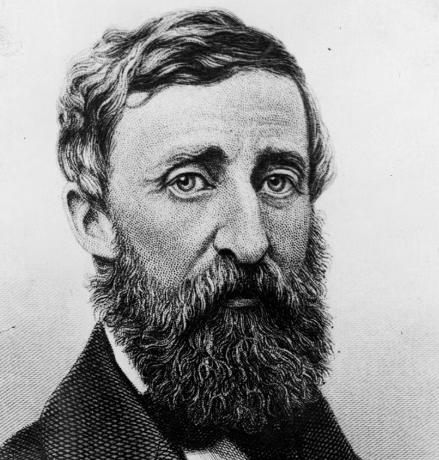
Most of the luxuries, and many of the so-called comforts of life, are not only not indispensable, but positive hindrances to the elevation of mankind.
▼
Source
source
p. 18
2 months 1 week ago
A civilization is a social entity that manifests religious, political , legal, and customary uniformity over an extended period, and which confers on its members the benefits of socially accumulated knowledge.
▼
Source
source
"What is Culture?" (p. 2)

4 weeks ago
Socrates is reported to have replied, when a certain person complained of having received no benefit from his travels: "It serves you right! You travelled in your own company!"
3 months 4 days ago
Life, in that it is life, necessarily entails justice.
▼
Source
source
"Politics and Morality" in Be'ayot (April 1945), as published in A Land of Two Peoples : Martin Buber on Jews and Arabs (1983) edited by Paul Mendes-Flohr, p. 169
CivilSimian.com created by AxiomaticPanic, CivilSimian, Kalokagathia