


7 months 1 week ago
We must not always judge of the generality of the opinion by the noise of the acclamation.
▼
Source
source
No. 1

8 months 3 weeks ago
This art, which I call the art of persuading, and which, properly speaking, is simply the process of perfect methodical proofs, consists of three essential parts: of defining the terms of which we should avail ourselves by clear definitions, of proposing principles of evident axioms to prove the thing in question; and of always mentally substituting in the demonstrations the definition in the place of the thing defined.
7 months 2 days ago
Instead of defining the word, let us briefly characterize or describe the phenomenon. Ressentiment is a self-poisoning of the mind which has quite definite causes and consequences. It is a lasting mental attitude, caused by the systematic repression of certain emotions and affects which, as such, are normal components of human nature. Their repression leads to the constant tendency to indulge in certain kinds of value delusions and corresponding value judgments. The emotions and affects primarily concerned are revenge, hatred, malice, envy, the impulse to detract, and spite.

8 months 1 week ago
The great majority of men and women, in ordinary times, pass through life without ever contemplating or criticising, as a whole, either their own conditions or those of the world at large. They find themselves born into a certain place in society, and they accept what each day brings forth, without any effort of thought beyond what the immediate present requires. Almost as instinctively as the beasts of the field, they seek the satisfaction of the needs of the moment, without much forethought, and without considering that by sufficient effort the whole conditions of their lives could be changed.
▼
Source
source
Introduction, p. 4
8 months 2 weeks ago
The question here is not, "How conscience ought to be guided? For Conscience is its own General and Leader; it is therefore enough that each man have one. What we want to know is, how conscience can be her own Ariadne, and disentangle herself from the mazes even of the most raveled and complicated casuistical theology. Here is an ethical proposition that stands in need of no proof: No Action May At Any Time Be Hazarded On The Uncertainty That Perchance It May Not Be Wrong (Quod dubitas, ne feceris! Pliny - which you doubt, then neither do) Hence the Consciousness, that Any Action I am about to perform is Right, is in itself a most immediate and imperative duty. What actions are right, - what wrong - is a matter for the understanding, not for conscience.
▼
Source
source
p. 251 Book IV, Part 2, Section 4
8 months 1 week ago
Our words tend to conceal what is private and particular in our impressions, and to make us believe that different people live in a common world to a greater extent than is in fact the case.
▼
Source
source
An Outline of Philosophy Ch.15 The Nature of our Knowledge of Physics, 1927
9 months 1 week ago
Scientific theories can always be improved and are improved. That is one of the glories of science. It is the authoritarian view of the Universe that is frozen in stone and cannot be changed, so that once it is wrong, it is wrong forever.

9 months 1 week ago
To stand on one leg and prove God's existence is a very different thing from going on one's knees and thanking Him.
4 months 3 weeks ago
With competition is connected less the intention to do the thing best than the intention to make it as profitable, as productive, as possible. Hence people study to get into the civil service (study in order to get a well-paid job), study cringing and flattery, routine and 'acquaintance with business', work 'for appearance'. Hence, while it is apparently a matter of doing 'good service', in truth only a 'good business' and earning of money are looked out for. The job is done only ostensibly for the job's sake, but in fact on account of the gain that it yields. One would indeed prefer not to be censor, but one wants to be - advanced; one would like to judge, administer, etc., according to his best convictions, but one is afraid of transfer or even dismissal; one must, above all things - live.
▼
Source
source
Cambridge 1995, p. 237

6 months 4 weeks ago
It has been said a thousand times and in a thousand books that ancestor-worship is for the most part the source of primitive religions, and it may be strictly said that what most distinguishes man from the other animals is that, in one form or another, he guards his dead and does not give them over to the neglect of teeming mother earth; he is an animal that guards its dead.

6 months 1 week ago
World War I a railway war of centralization and encirclement. World War II a radio war of decentralization concluded by the Bomb. World War III a TV guerrilla war with no divisions between civil and military fronts.
▼
Source
source
(p. 152)

8 months 2 weeks ago
All the entertainment and talk of history is nothing almost but fighting and killing: and the honour and renown that is bestowed on conquerers (who for the most part are but the great butchers of mankind) farther mislead growing youth, who by this means come to think slaughter the laudible business of mankind, and the most heroick of virtues. By these steps unnatural cruelty is planted in us; and what humanity abhors, custom reconciles and recommends to us, by laying it in the way to honour. Thus, by fashioning and opinion, that comes to be a pleasure, which in itself neither is, nor can be any.
▼
Source
source
Sec. 116

6 months 3 weeks ago
I have always noticed that deeply and truly religious persons are fond of a joke, and I am suspicious of those who aren't.
▼
Source
source
As quoted in Church and Home, Vol. 1 (1964) by United Methodist Church, and Evangelical United Brethren Church, p. 21.
5 months 3 weeks ago
What J.P. Morgan and John D. Rockefeller were to the Age of Robber Barons, Microsoft's Bill Gates and Berkshire Hathaway's Warren Buffett, as well as digital moguls like Mark Zuckerberg and Jeff Bezos are to the contemporary age of the rule of the 1%. Then as now, the super-rich used governments to write laws and rules to allow them to accumulate unlimited wealth; then as now, creating monopolies by enclosing the commons and killing competition is the strategy for becoming the 1%.
4 months 3 weeks ago
No furniture so charming as books.
▼
Source
source
Vol. I, ch. 9, p. 289

8 months 1 week ago
If the stars should appear one night in a thousand years, how would men believe and adore, and preserve for many generations the remembrance of the city of God which had been shown! But every night come out these envoys of beauty, and light the universe with their admonishing smile.
▼
Source
source
Nature


7 months 4 days ago
Blessed is the lion which becomes man when consumed by man; and cursed is the man whom the lion consumes, and the lion becomes man. (7) This saying has been interpreted by some as referring to such anger as consumes a man…(rather than is consumed by him, through his reason and love), 'til that man is the lion of Anger. Other more mystical interpretations might also be found or devised that have merit.
9 months 1 week ago
Titles are an important part of a story and I take considerable care in choosing one. In fact, I cannot start a story until I have chosen a title.
8 months 1 week ago
There is no logical impossibility in the hypothesis that the world sprang into being five minutes ago, exactly as it then was, with a population that "remembered" a wholly unreal past. There is no logically necessary connection between events at different times; therefore nothing that is happening now or will happen in the future can disprove the hypothesis that the world began five minutes ago.
▼
Source
source
The Analysis of Mind (1921), Lecture IX: Memory, p. 159
7 months 1 week ago
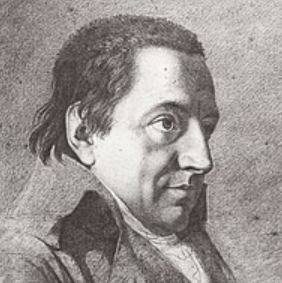
The subject must distinguish itself through opposition from the rational being, which it has assumed outside of itself. The subject has posited itself as one, which contains in itself the last ground of something that is in it, (for this is the condition of Egohood, or of Rationality generally;) but it has also posited a being outside of itself, as the last ground of this something in it. It is to have the power of distinguishing itself from this other being; and this is, under our presupposition, possible only, if the subject can distinguish in that given something how far the ground of this something lies in itself and how far it lies outside of itself.
▼
Source
source
P. 63
8 months 2 weeks ago
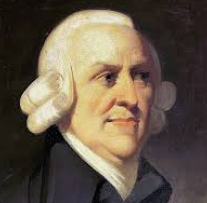
Oatmeal indeed supplies the common people of Scotland with the greatest and best part of their food, which is in general much inferior to that of their neighbours of the same rank in England.
▼
Source
source
Chapter VIII, p. 91 (Oatmeal in England makes for great horses, in Scotland Great Men).

7 months 3 days ago
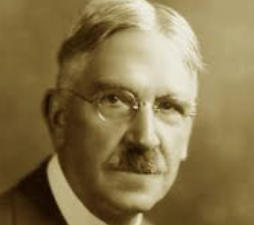
But the individual butterfly or earthquake remains just the unique existence which it is. We forget in explaining its occurrence that it is only the occurrence that is explained, not the thing itself.
9 months 1 day ago
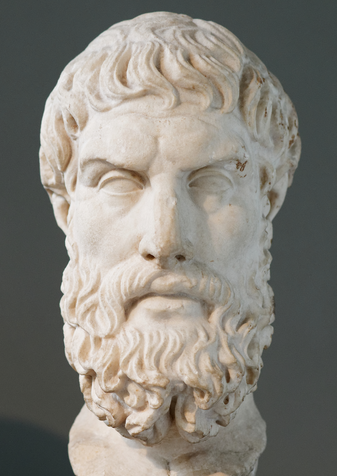
The end of living, or the ultimate good, which is to be sought for its own sake, according to the universal opinion of mankind, is happiness; yet men, for the most part, fail in the pursuit of this end, either because they do not form a right idea of the nature of happiness, or because they do not make use of proper means to attain it.
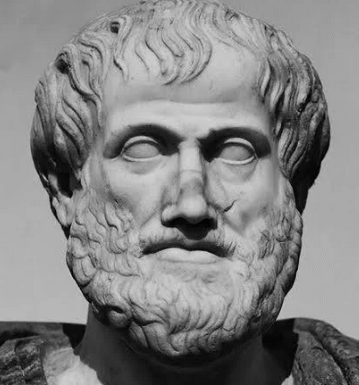
9 months 1 week ago
Nature does not do anything in vain.
4 months 2 weeks ago
As a social bond, now one does not find even a faith of the warrior kind, that is, relationships of loyalty and honour. The social bond assumes a utilitarian and economic character; it is an agreement based on convenience and material interest - a type only a merchant would accept.
▼
Source
source
p. 34

7 months 2 weeks ago
We are all instruments endowed with feeling and memory. Our senses are so many strings that are struck by surrounding objects and that also frequently strike themselves.
▼
Source
source
"Conversation Between D'Alembert and Diderot"

6 months 4 weeks ago
Alexander is to a peasant proprietor what Don Juan is to a happily married husband.
▼
Source
source
p. 78,

8 months 1 week ago
The dreamer must contaminate the others by his dream, he must make them fall into it.
▼
Source
source
p. 399
4 months 1 week ago
Your first duty, in completing your service to your race, is to feel within you all your ancestors. Your second duty is to throw light on their onrush and to continue their work. Your third duty is to pass on to your son the great mandate to surpass you.
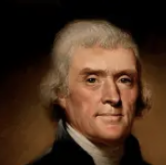
4 months 1 week ago
Merchants have no country. The mere spot they stand on does not constitute so strong an attachment as that from which they draw their gains. In every country and in every age, the priest has been hostile to liberty. He is always in alliance with the despot, abetting his abuses in return for protection to his own. It is easier to acquire them, and to effect this, they have perverted the best religion ever preached to man into mystery and jargon, unintelligible to all mankind, and therefore the safer engine for their purposes. With the lawyers it is a new thing. They have, in the mother country, been generally the primest supporters of the free principles of their constitution. But there, too, they have changed.
▼
Source
source
Letter to Horatio G. Spafford

8 months 1 week ago
The truth can wait, for she lives a long life.
▼
Source
source
Willen in der Natur (On the Will in Nature), 1836;

7 months 1 week ago
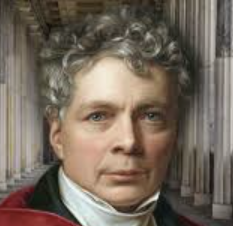
Yes! We believe in a higher principle than your virtue and the kind of morality you speak of so paltrily and without much conviction. We believe that there is no imperative or reward for virtue for the soul because it simply acts according to the necessity of its inherent nature. The moral imperative expresses itself in an ought and presupposes the concept of an evil next to that of good.
▼
Source
source
P. 43

4 months 1 week ago
To be like the rock that the waves keep crashing over. It stands unmoved and the raging of the sea falls still around it.
▼
Source
source
IV, 49
9 months 1 week ago
The true discovery of America by mankind came when those first hunting bands crossed over from Siberia 25,000 years ago. This, however, never seems to count. When people speak of the "discovery of America" they invariably mean its discovery by Europeans.

4 months 3 weeks ago
Next, if you choose to view its results and the mischief that it does, no plague has cost the human race more dear
8 months 2 weeks ago
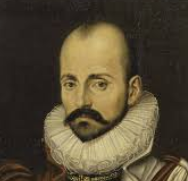
The world is but a perpetual see-saw.

5 months 2 weeks ago
From a Darwinian point of view, human beliefs are adaptations to our part of the world. No doubt much of what we believe must be roughly accurate, or else we would not have survived. But the beliefs we have evolved might latch on to the world only enough to help us stumble our way through it, and then only for the time being. Human belief-systems could be useful illusions, appearing and disappearing as they prove to be more or less advantageous in the random walk of natural selection. Might not evolution be one of these illusions? Scientific naturalism is the theory that human beliefs are evolutionary adaptations whose survival has nothing to do with their truth. But in that case scientific naturalism is self-defeating, since on its own premises scientific theories cannot be known to be true.
▼
Source
source
Cross-correspondences (p. 69)


6 months 3 weeks ago
You', the ego, live in your left brain. When we say that man is the only creature who spends 99 per cent of his time inside his own head, we mean, in fact, inside his left cerebral hemisphere. And in the basement of the left hemisphere is the library full of filing cabinets -- the stuffy room that we mistake for reality.
▼
Source
source
p. 9
5 months 3 weeks ago
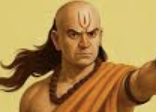
Lakshmi, the Goddess of wealth, comes of Her own accord where fools are not respected, grain is well stored up, and the husband and wife do not quarrel.
9 months 1 week ago
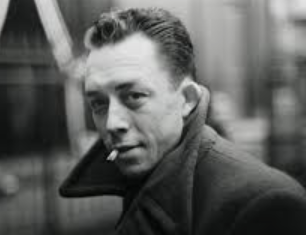
Homer tells us also that Sisyphus had put Death in chains. Pluto could not endure the sight of his deserted, silent empire. He dispatched the god of war, who liberated Death from the hands of her conqueror.

8 months 3 weeks ago
The most disadvantageous peace is better than the most just war.
▼
Source
source
Adagia, 1508

7 months 4 days ago
The avant-garde and the beatniks share in the function of entertaining without endangering the good conscience of the men of good will.
▼
Source
source
p. 70
9 months 1 week ago
For the things we have to learn before we can do, we learn by doing.

7 months 1 week ago
But the extraordinary insight which some persons are able to gain of others from indications so slight that it is difficult to ascertain what they are, is certainly rendered more comprehensible by the view here taken.
6 months ago
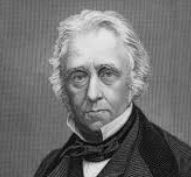
I believe that the progress of experimental science, the free intercourse of nation with nation, the unrestricted influx of commodities from countries where they are cheap, and the unrestricted efflux of labour towards countries where it is dear, will soon produce, nay, I believe that they are beginning to produce, a great and most blessed social revolution.
▼
Source
source
Speech in Edinburgh (2 November 1852), quoted in Speeches of the Right Honourable T. B. Macaulay, M.P. (1854), p. 517
CivilSimian.com created by AxiomaticPanic, CivilSimian, Kalokagathia