


8 months 1 week ago
Justice does not require that men must stand idly by while others destroy the basis of their existence.
▼
Source
source
Chapter IV, Section 35, p. 218

7 months 1 week ago
No one commits suicide for external reasons, only because of inner disequilibrium. Under similar adverse circumstances, some are indifferent, some are moved, some are driven to suicide.
6 months 3 weeks ago
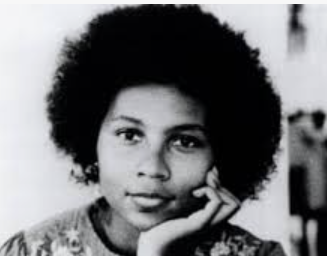
Feminism is the struggle to end sexist oppression. Therefore, it is necessarily a struggle to eradicate the ideology of domination that permeates Western culture on various levels, as well as a commitment to reorganizing society so that the self-development of people can take precedence over imperialism, economic expansion, and material desires.

6 months 4 weeks ago
There may be a rationalist who has never wavered in his conviction of the mortality of the soul, and there may be a vitalist who has never wavered in his faith in immortality; but at the most this would prove that just as there are natural monstrosities, so there are those who are stupid as regards heart and feeling, however great their intelligence, and those who are stupid intellectually, however great their virtue. But, in normal cases, I cannot believe those who assure me that never, not in a fleeting moment, not in the hours of direst loneliness and grief, has this murmur of uncertainty breathed upon their consciousness.

4 months 1 week ago
You see how few things you have to do to live a satisfying and reverent life? If you can manage this, that's all even the gods can ask of you. Thou seest how few be the things, the which if a man has at his command his life flows gently on and is divine.
▼
Source
source
II, 5

8 months 1 week ago
Reading the Socratic dialogues one has the feeling: what a frightful waste of time! What's the point of these arguments that prove nothing and clarify nothing?
▼
Source
source
p. 14e
5 months 3 weeks ago
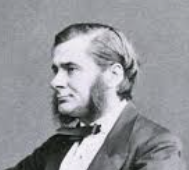
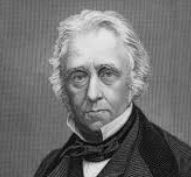
The life, the fortune, and the happiness of every one of us, and, more or less, of those who are connected with us, do depend upon our knowing something of the rules of a game infinitely more difficult and complicated than chess. It is a game which has been played for untold ages, every man and woman of us being one of the two players in a game of his or her own. The chessboard is the world, the pieces are the phenomena of the universe, the rules of the game are what we call the laws of Nature. The player on the other side is hidden from us. We know that his play is always fair, just, and patient. But also we know, to our cost, that he never overlooks a mistake, or makes the smallest allowance for ignorance. To the man who plays well, the highest stakes are paid, with that sort of overflowing generosity with which the strong shows delight in strength. And one who plays ill is checkmated - without haste, but without remorse.
6 months ago
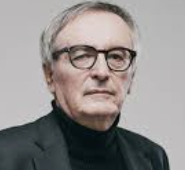
Perhaps no person can be a poet, or even enjoy poetry, without a certain unsoundness of mind.
▼
Source
source
p. 7
5 months 2 weeks ago
Tyranny offers relief from the burden of sanity and a licence to enact forbidden impulses of hatred and violence. By acting on these impulses and releasing them in their subjects tyrants give people a kind of happiness, which as individuals they may be incapable of achieving.
▼
Source
source
An Old Chaos: What a Tyrant Can Do For You (p. 57)

7 months 4 days ago
Behold, we go up to Jerusalem; and the Son of man shall be betrayed unto the chief priests and unto the scribes, and they shall condemn him to death, And shall deliver him to the Gentiles to mock, and to scourge, and to crucify him: and the third day he shall rise again.
▼
Source
source
20:18-19 (KJV)
8 months 1 day ago
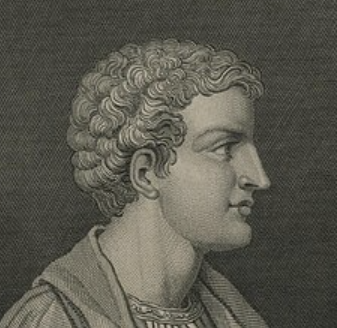
As for me, when you want a good laugh, you will find me in fine state... fat and sleek, a true hog of Epicurus' herd.
▼
Source
source
Book I, epistle iv, lines 15-16
6 months 4 weeks ago
"God does not think, He creates; He does not exist, He is eternal," wrote Kierkegaard (Afslutende uvidenskabelige Efterskrift); but perhaps it is more exact to say with Mazzini, the mystic of the Italian city, that "God is great because his thought is action" (Ai giovani d'Italila), because with Him to think is to create, and He gives existence to that which exists in His thought by the mere fact of thinking it, and the impossible is unthinkable by God. It is not written in the Scriptures that God creates with His word - that is to say, with His thought - and that by this, by His Word, He made everything that exists? And what God has once made does He ever forget? May it not be that all the thoughts that have ever passed through the Supreme Consciousness still subsist therein? In Him, who is eternal, is not all existence eternalized?

8 months 2 weeks ago
The end of the republic is to enervate and to weaken all other bodies so as to increase its own body.
▼
Source
source
Book 2, Ch. 3 (translation by Mansfield and Tarcov)
6 months 4 days ago
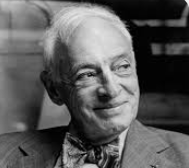
There is simply too much to think about. It is hopeless - too many kinds of special preparation are required. In electronics, in economics, in social analysis, in history, in psychology, in international politics, most of us are, given the oceanic proliferating complexity of things, paralyzed by the very suggestion that we assume responsibility for so much. This is what makes packaged opinion so attractive.
▼
Source
source
There Is Simply Too Much to Think About (1992), pp. 173-174
5 months 4 days ago
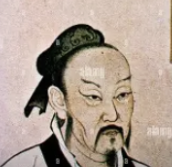
He who exerts his mind to the utmost knows his nature.
▼
Source
source
7A:1, as translated by Wing-tsit Chan in A Source Book in Chinese Philosophy (1963), p. 62
6 months 4 weeks ago
Faith makes us live by showing us that life, although it is dependent upon reason, has its well spring and source of power elsewhere, in something supernatural and miraculous. Cournot the mathematician, a man of singularly well-balanced and scientifically equipped mind has said that it is this tendency towards the supernatural and miraculous that gives life, and that when it is lacking, all the speculations of reason lead to nothing but affliction of the spirit. ...And in truth we wish to live.
6 months 1 week ago
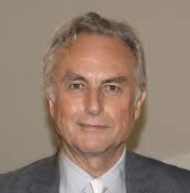
Such delusions of grandeur to think that a God with a hundred billion galaxies on his mind would give a tuppenny damn who you sleep with, or indeed whether you believe in him.
▼
Source
source
Richard Dawkins debates Rowan Williams

8 months 2 weeks ago
Mother love is stronger than the filth and scabbiness on a child, and so the love of God toward us is stronger than the dirt that clings to us.
▼
Source
source
94
7 months 4 weeks ago
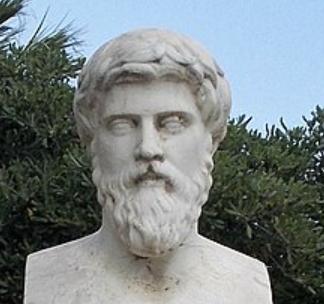
Lysander, when Dionysius sent him two gowns, and bade him choose which he would carry to his daughter, said, "She can choose best," and so took both away with him.
▼
Source
source
Of Lysander

8 months 6 days ago
There is hardly a philosophy which has not invoked something like the will or desire to know, the love of truth, etcetera. But, in truth, very few philosophers-apart, perhaps, from Spinoza and Schopenhauer-have accorded it more than a marginal status; as if there was no need for philosophy to say first of all what the name that it bears actually refers to. As if placing at the head of its discourse the desire to know, which it repeats in its name, was enough to justify its own existence and show-at a stroke-that it is necessary and natural: All men desire to know. Who, then, is not a philosopher, and how could philosophy not be the most necessary thing in the world?
▼
Source
source
pp. 4-5
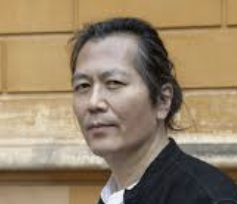
6 months 3 weeks ago
If things are deprived of memory, they become information or commodities. They are pushed into a time-free, ahistorical place.
6 months 4 weeks ago
The philosophical thought of Kant, the supreme flower of the Germanic people, has its roots in the religious feeling of Luther, and it is not possible for Kantism, especially the practical part of it, to take root and bring forth flower and fruit in peoples who have not undergone the experience of the Reformation and who perhaps were incapable of experiencing it. Kantism is Protestant, and we Spaniards are fundamentally Catholic. And if Krause struck some roots here - more numerous and more permanent than is commonly supposed - it is because Krause has roots in pietism, and pietism, as Ritschl has demonstrated in his Geschichte des Pietismus, has specifically Catholic roots and may be described as the irruption, or rather the persistence of Catholic mysticism in the heart of Protestant rationalism. And this explains why not a few Catholic thinkers in Spain became followers of Krause.

8 months 1 week ago
The cheapest sort of pride is national pride; for if a man is proud of his own nation, it argues that he has no qualities of his own of which he can be proud; otherwise he would not have recourse to those which he shares with so many millions of his fellowmen. The man who is endowed with important personal qualities will be only too ready to see clearly in what respects his own nation falls short, since their failings will be constantly before his eyes. But every miserable fool who has nothing at all of which he can be proud adopts, as a last resource, pride in the nation to which he belongs; he is ready and glad to defend all its faults and follies tooth and nail, thus reimbursing himself for his own inferiority.
▼
Source
source
Vol. 1, Ch. 3, Section 2: Pride

7 months 1 week ago
Freedom and not servitude is the cure of anarchy; as religion, and not atheism, is the true remedy for superstition.
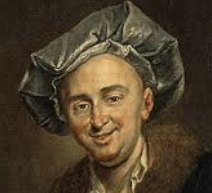
4 months 1 week ago
Imagination is the soul, since it plays all the roles of the soul.
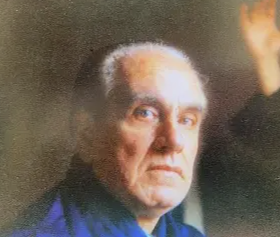
4 months 2 weeks ago
In dealing with relationships, not only man-to-man, but also State-to-State and race-to-race, it is necessary to be able to conceive again of that obedience which does not humiliate but exalts, that command or leadership which commits one to superiority and a precise responsibility.
▼
Source
source
p. 117
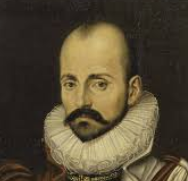
8 months 2 weeks ago
Every rich man is avaricious, in my opinion.
▼
Source
source
Ch. 14
7 months 1 week ago
Everyone must destroy their life. According to the way they do it, they're either triumphants or failures.

8 months 1 week ago
"I don't want to! Why should I?" "Because more people will be happier if you do than if you don't." "So what? I don't care about other people." "You should." "But why?" "Because more people will be happier if you do than if you don't."
▼
Source
source
Dialogue between Russell and his daughter Katharine, as quoted in My Father - Bertrand Russell, 1975
4 months 1 week ago
Objective judgment, now, at this very moment. Unselfish action, now, at this very moment. Willing acceptance-now, at this very moment-of all external events. That's all you need.
▼
Source
source
(Hays translation) IX, 6

6 months 3 weeks ago
Needless to say, I am not opposed to woman suffrage on the conventional ground that she is not equal to it. I see neither physical, psychological, nor mental reasons why woman should not have the equal right to vote with man. But that can not possibly blind me to the absurd notion that woman will accomplish that wherein man has failed. If she would not make things worse, she certainly could not make them better. To assume, therefore, that she would succeed in purifying something which is not susceptible of purification, is to credit her with supernatural powers. Since woman's greatest misfortune has been that she was looked upon as either angel or devil, her true salvation lies in being placed on earth; namely, in being considered human, and therefore subject to all human follies and mistakes. Are we, then, to believe that two errors will make a right? Are we to assume that the poison already inherent in politics will be decreased, if women were to enter the political arena?
6 months 2 weeks ago
Rationality requires a choice among all possible alternative behaviors. In actual behavior, only a very few of all these possible alternatives come to mind.
8 months 1 week ago
He asked my religion and I replied 'agnostic'. He asked how to spell it, and remarked with a sigh: 'Well, there are many religions, but I suppose they all worship the same God. This remark kept me cheerful for about a week.
6 months 4 days ago
Any artist should be grateful for a naïve grace which puts him beyond the need to reason elaborately.
▼
Source
source
Foreword to The Closing of the American Mind by Allan Bloom
7 months 2 days ago
I am I and my circumstance, and if I don't save it I don't save myself.

6 months 1 week ago
War is never anything less than accelerated technological change.
▼
Source
source
(p. 102)
8 months 1 day ago
Ah, Postumus! they fleet away, our years, nor piety one hour can win from wrinkles and decay, and Death's indomitable power.
▼
Source
source
Book II, ode xiv, line 1 (trans. John Conington)
8 months 1 week ago
If someone is merely ahead of his time, it will catch up to him one day.
▼
Source
source
p. 8e
6 months 4 weeks ago
Philosophy and religion are enemies, and because they are enemies they have need of one another. There is no religion without some philosophical basis, no philosophy without roots in religion. ... the attacks which are directed against religion from a presumed scientific or philosophical point of view are merely attacks from another but opposing religious point of view.

8 months 1 week ago
John - I'm trying to find the Island in the West. Sensible - You refer, no doubt to some aesthetic experience.
▼
Source
source
Pilgrim's Regress 77
9 months 1 week ago
History is a story without an end.

4 months 3 weeks ago
Would you know what makes men greedy for the future? It is because no one has yet found himself.
8 months 1 week ago
That books do not take the place of experience, and that learning is no substitute for genius, are two kindred phenomena; their common ground is that the abstract can never take the place of the perceptive.
▼
Source
source
E. Payne, trans., Vol. II, Ch. 7, p. 74
7 months 2 weeks ago
The most dangerous madmen are those created by religion, and ... people whose aim is to disrupt society always know how to make good use of them on occasion.

8 months 1 week ago
The finest manners in the world are awkwardness and fatuity, when contrasted with a finer intelligence.
▼
Source
source
p. 493

6 months 3 weeks ago
The full expression of personality depends upon its being inflated by social prestige; it is a social privilege.
▼
Source
source
p. 64

8 months 2 weeks ago
To teach him betimes to love and be good-natur'd to others, is to lay early the true foundation of an honest man; all injustice generally springing from too great love of ourselves and too little of others.
▼
Source
source
Sec. 139

5 months 1 week ago
Every identity, such (third) critics say, even the multitude, must be defined by its remained, those outside of it, call them excluded, the abject, or the subaltern. ... There can certainly be points or nodes outside a network but none are necessarily outside. Its boundaries are indefinite and open. ... None is necessarily excluded but this inclusion is not guaranteed: the expansion of the common is a practical, political manner.
▼
Source
source
226
CivilSimian.com created by AxiomaticPanic, CivilSimian, Kalokagathia