

7 months 2 weeks ago
I have needed God every day to defend myself against the abundance of thoughts.
6 months 1 week ago
The political triumph of Donald Trump is a symbol and symptom-not cause or origin-of our imperial meltdown. Trump is neither alien nor extraneous to American culture and history. In fact, he is as American as apple pie. Yet he is a sign of our spiritual bankruptcy-all spectacle and no substance, all narcissism and no empathy, all appetite and greed and no wisdom and maturity. Yet his triumph flows from the implosion of a Republican Party establishment beholden to big money, big military, and big scapegoating of vulnerable peoples of color, LGBTQ peoples, immigrants, Muslims, and women; from a Democratic Party establishment beholden to big money, big military, and the clever deployment of peoples of color, LGBTQ peoples, immigrants, Muslims, and women to hide and conceal the lies and crimes of neoliberal policies here and abroad; and from a corporate media establishment that aided and abetted Trump owing to high profits and revenues.
▼
Source
source
2017 introduction


4 months 2 days ago
For myself I say deliberately, it is better to have a millstone tied round the neck and be thrown into the sea than to share the enterprises of those to whom the world has turned, and will turn, because they minister to its weaknesses and cover up the awful realities which it shudders to look at.
▼
Source
source
Aphorism #367, in Aphorisms and Reflections (1907) edited by Henrietta A. Huxley, his widow
2 months 2 weeks ago
I am firmly convinced, as I have already said, that to effect any great social improvement, it is sympathy rather than self-interest, the sense of duty rather than the desire for self-advancement, that must be appealed to. Envy is akin to admiration, and it is the admiration that the rich and powerful excite which secures the perpetuation of aristocracies.
▼
Source
source
Ch. 21 : Conclusion
3 months 4 weeks ago
Compared with the life-span of a human being the time-span of a civilization is so vast that a human observer cannot hope to take the measure of its curve unless he is in a position to view it in a distant perspective; and he can only obtain this perspective vis-a-vis some society that is extinct. He can never stand back sufficiently far from the history of the society in which he himself lives and moves and has his being. In other words, to assert of any living society, at any moment in its life, that it is the consummation of human history is to hazard a guess which is intrinsically unsusceptible of immediate verification. When we find that a majority of the members of all societies at all times make this assertion about their own civilizations, it becomes evident that their guesses have really nothing to do with any objective calculation of probabilities but are pure expressions of the egocentric illusion.
▼
Source
source
Vol. 1
3 months 4 weeks ago
The history of almost every civilization furnishes examples of geographical expansion coinciding with deterioration in quality.
▼
Source
source
Abridgement of Vols. 1-6 by D. C. Somervell

5 months 3 days ago
Every peasant has a lawyer inside of him, just as every lawyer, no matter how urbane he may be, carries a peasant within himself.
▼
Source
source
Civilization is Civilism
3 months 4 weeks ago
Religion holds the solution to all problems of human relationship, whether they are between parents and children or nation and nation. Sooner or later, man has always had to decide whether he worships his own power or the power of God. When threats force him to look at the limitations of his human power, he's often ready to seek his spiritual one. What we need is patience and awe of God's plan in human history!
▼
Source
source
In Quote: The Weekly Digest, vol. 38, no. 19 (8 November 1959) p. 13
5 months 1 week ago
So long as a man's power, that is, his capacity to realize what he has in mind, is bound to the goal, to the work, to the calling, it is, considered in itself, neither good nor evil, it is only a suitable or unsuitable instrument. But as soon as this bond with the goal is broken off or loosened, and the man ceases to think of power as the capacity to do something, but thinks of it as a possession, that is, thinks of power in itself, then his power, being cut off and self-satisfied, is evil; it is power withdrawn from responsibility, power which betrays the spirit, power in itself.
▼
Source
source
p. 152
4 months 4 weeks ago
There can be no freedom in the large sense of the word, no harmonious development, so long as mercenary and commercial considerations play an important part in the determination of personal conduct.
2 months 3 weeks ago
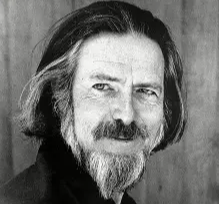
It is especially important for Westerners to understand that high lamas, Zen masters, and Hindu gurus in the discipline of yoga are human beings, not supermen. We must not put them, as we have put Jesus Christ, on pedestals of reverence so high that we automatically exclude ourselves from their states of consciousness.
▼
Source
source
Foreward to The Secret Oral Teachings in the Tibetan Buddhist Sects (1964)], by Alexandra David Neel

6 months 3 weeks ago
I assert once again as a truth to which history as a whole bears witness that men may second their fortune, but cannot oppose it; that they may weave its warp, but cannot break it. Yet they should never give up, because there is always hope, though they know not the end and more towards it along roads which cross one another and as yet are unexplored; and since there is hope, they should not despair, no matter what fortune brings or in what travail they find themselves.
▼
Source
source
Book 2, Ch. 29 (as translated by LJ Walker and B Crick)

6 months 2 weeks ago
Although usury is itself a form of credit in its bourgeoisified form, the form adapted to capital, in its pre-bourgeois form it is rather the expression of the lack of credit.
▼
Source
source
Notebook V, The Chapter on Capital, p. 455.

6 months 2 weeks ago
The question of "unreality," which confronts us at this point, is a very important one. Misled by grammar, the great majority of those logicians who have dealt with this question have dealt with it on mistaken lines. They have regarded grammatical form as a surer guide in analysis than, in fact, it is. And they have not known what differences in grammatical form are important.
▼
Source
source
Ch. 16: Descriptions
6 months 6 days ago
This to the right, that to the left hand strays, and all are wrong, but wrong in different ways.
▼
Source
source
Book II, satire iii, line 50 (trans. Conington)
7 months 6 days ago
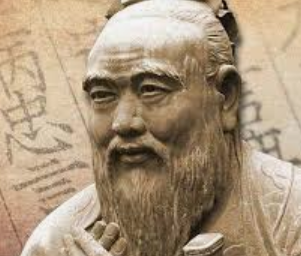
It is only the individual possessed of the most entire sincerity that can exist under Heaven, who can adjust the great invariable relations of mankind, establish the great fundamental virtues of humanity, and know the transforming and nurturing operations of Heaven and Earth; shall this individual have any being or anything beyond himself on which he depends? Call him man in his ideal, how earnest is he! Call him an abyss, how deep is he! Call him Heaven, how vast is he! Who can know him, but he who is indeed quick in apprehension, clear in discernment, of far-reaching intelligence, and all-embracing knowledge, possessing all Heavenly virtue?

4 months 4 weeks ago
Phenomenology is not a philosophy; it is a philosophical method, a tool. It is like an adjustable spanner that can be used for dismantling a refrigerator or a car, or used for hammering in nails, or even for knocking somebody out.
▼
Source
source
p. 92
5 months 3 days ago
Reason perhaps teaches certain bourgeois virtues, but it does not make either heroes or saints.
6 months 2 weeks ago
Either we must have war against Russia, before she has the atom bomb, or we will have to lie down and let them govern us. ... Anything is better than submission.
▼
Source
source
Speech quoted in The Observer (21 November 1948), quoted in Robert Skildesky, Oswald Mosley (1981), p. 542 and Martin Ceadel, Thinking about Peace and War (1987), p. 52

3 months 1 week ago
In the same way that the figure of the peasant tends to disappear, so too does the figure of the industrial worker, the service industry worker and all other separate categories.
▼
Source
source
125
3 months 1 day ago
Avoid shame, but do not seek glory: nothing so expensive as glory.
▼
Source
source
Vol. I, ch. 4, pp. 134-135
5 months 1 week ago
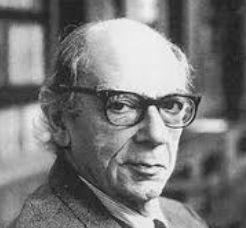
If, as I believe, the ends of men are many, and not all of them are in principle compatible with each other, then the possibility of conflict - and of tragedy - can never wholly be eliminated from human life, either personal or social. The necessity of choosing between absolute claims is then an inescapable characteristic of the human condition. This gives its value to freedom as Acton conceived of it - as an end in itself, and not as a temporary need, arising out of our confused notions and irrational and disordered lives, a predicament which a panacea could one day put right.
5 months 1 week ago
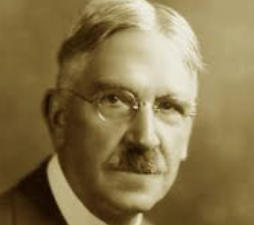
The mystery is that the world is at it is -- a mystery that is the source of all joy and all sorrow, of all hope and fear, and the source of development both creative and degenerative. The contingency of all into which time enters is the source of pathos, comedy, and tragedy.


7 months 2 days ago
Charity is no substitute for justice withheld.
▼
Source
source
As quoted in Majority of One (1957) by Sydney J. Harris, p. 283
2 months 2 weeks ago
Blessed are those eyes that have seen more water than any man! Blessed be that haughty mind that aimed at the greatest hope! May you be blessed who row the current your life longand now with dry unfreshened lips descend to Hadesto find the hidden deathless springs and slake your thirst! My son, it's death who keeps and pours the deathless waters.
▼
Source
source
Voice of the Nile, from Odysseus' story, Book VIII, line 1290 (the first line is taken from an Egyptian hieroglyph.)

5 months 2 weeks ago
...my extreme anxiety about the Object of our common sollicitude and my clear and decided conviction, that there is one part of the War, which instead of being postponed and considered in a secondary light, ought to have priority over every other, and requires our most early and our most careful attention; I mean La Vendée. ... This is a War directly against Jacobinism and its principles. It strikes at the Enemy in his weakest and most vulnerable part. At La Vendée with infinitely less Charge, we may make an impression likely to be decisive. This goes to the heart of the Business.
▼
Source
source
Letter to the Home Secretary Henry Dundas (8 October 1793), quoted in P. J. Marshall and John A. Woods (eds.)
7 months 2 weeks ago
The objective of all human arrangements is through distracting one's thoughts to cease to be aware of life.
6 months 2 weeks ago
If anything is certain, it is that I myself am not a Marxist.
▼
Source
source
Marx quoted and translated by Engels (in an 1882 letter to Eduard Bernstein) about the peculiar Marxism which arose in France 1882.

6 months 2 weeks ago
Do not allow your dreams of a beautiful world to lure you away from the claims of men who suffer here and now.
▼
Source
source
p. 485

2 months 2 weeks ago
The more local and settled a culture, the better it stays put, the less the damage. It is the foreigner whose road of excess leads to a desert ... a man with a machine and inadequate culture ... is a pestilence. He shakes more than he can hold.
▼
Source
source
Damage
4 months 3 weeks ago
The sure conviction that we could if we wanted to is the reason so many good minds are idle.
▼
Source
source
K 27

6 months 1 week ago
All these present struggles revolve around the question: Who are we? They are a refusal of these abstractions, of economic and ideological state violence, which ignore who we are individually, and also a refusal of a scientific or administrative inquisition which determines who one is.
▼
Source
source
p. 781
7 months 2 weeks ago
It is by the Imperial Capital that contemporaries (and posterity, too) judge an Empire, and its magnificence impresses them mightily and leads them to judge the Emperor a great man and hero, even though it may all be based on robbery, and though the provinces of the Empire may be sunk in misery.
5 months 2 weeks ago
Denotation by means of sounds and markings is a remarkable abstraction. Three letters designate God for me; several lines a million things. How easy becomes the manipulation of the universe here, how evident the concentration of the intellectual world! Language is the dynamics of the spiritual realm. One word of command moves armies; the word Liberty entire nations.
▼
Source
source
Fragment No. 2
6 months 3 weeks ago
Again, we should notice the force, effect, and consequences of inventions, which are nowhere more conspicuous than in those three which were unknown to the ancients; namely, printing, gunpowder, and the compass. For these three have changed the appearance and state of the whole world; first in literature, then in warfare, and lastly in navigation: and innumerable changes have been thence derived, so that no empire, sect, or star, appears to have exercised a greater power and influence on human affairs than these mechanical discoveries.
▼
Source
source
Aphorism 129

3 months 1 week ago
So this is something... we see happening... in the war in Ukraine. A lot of people raise the question, "Why are Ukrainians resisting the Russian invasion as ferociously as they are?" and there's been a little bit of a debate over whether this is due to the fact that Ukrain is democratic, a liberal democracy, and Russia is not, or whether it's simply a fight over sovereignty... I think that that's a false dichotomy because you really don't fight for liberalism as an abstract principle. You fight for it as it is embedded in... your nation... From my... frequent visits to Ukraine... I believe... that's what's really going on, that Ukrainians want their sovereignty, but the reason they want it so desperately is that they want to have a free Ukraine and not Putin's Ukraine, not a... centralized dictatorship, and that's why they're willing to fight so tenaciously.
▼
Source
source
25:44:00
6 months 1 week ago
"Here is the chalk." This is a truth; and here and the now hereby characterize the chalk so that we emphasize by saying; the chalk, which means "this." We take a scrap of paper and we write the truth down: "Here is the chalk." We lay this written statement beside the thing of which it is the truth. After the lecture is finished both doors are opened, the classroom is aired, there will be a draft, and the scrap of paper, let us suppose, will flutter out into the corridor. A student finds it on his way to the cafeteria, reads the sentence. "Here is the chalk," and ascertains that this is not true at all. Through the draft the truth has become an untruth. Strange that a truth should depend on a gust of wind. ... We have made the truth about the chalk independent of us and entrusted it to a scrap of paper.
▼
Source
source
p. 29-30

3 months 1 week ago
If you are in a strait, a very good indication as to choice-perhaps the best you could get-is a book you have a great curiosity about. You are then in the readiest and best of all possible conditions to improve by that book.

5 months 2 days ago
The collective is the object of all idolatry, this it is which chains us to the earth. In the case of avarice: gold is of the social order. In the case of ambition: power is of the social order. Science and art are full of the social element also. And love? Love is more or less of an exception: that is why we can go to God through love, not through avarice and ambition.
▼
Source
source
p. 121
2 months 2 weeks ago
"Since we cannot change reality, let us change the eyes which see reality," says one of my favorite Byzantine mystics. I did this when a child; I do it now as well in the most creative moments of my life.
▼
Source
source
"The Son", Ch. 4, p. 45
6 months 2 weeks ago
Psychologists have hitherto failed to realize that imagination is a necessary ingredient of perception itself.
▼
Source
source
A 120
3 months 1 week ago
There is only one purpose to which a whole society can be directed by a deliberate plan. That purpose is war, and there is no other.
▼
Source
source
Ch. V: "The Totalitarian Regimes", §7, p. 90
2 months 2 weeks ago
Gather together in your heart all terrors, recompose all details. Salvation is a circle; close it!
6 months 2 weeks ago
To plead the organic causation of a religious state of mind, then, in refutation of its claim to possess superior spiritual value, is quite illogical and arbitrary, unless one have already worked out in advance some psycho-physical theory connecting spiritual values in general with determinate sorts of physiological change. Otherwise none of our thoughts and feelings, not even our scientific doctrines, not even our dis-beliefs, could retain any value as revelations of the truth, for every one of them without exception flows from the state of their possessor's body at the time.
▼
Source
source
Lecture I, "Religion and Neurology"
CivilSimian.com created by AxiomaticPanic, CivilSimian, Kalokagathia