

3 months 6 days ago
Great also are the souls of the defenders-men who know that, as long as the path to death lies open, the blockade is not complete, men who breathe their last in the arms of liberty.
6 months 3 weeks ago
My father was as well aware as anyone that Christians do not, in general, undergo the demoralizing consequences which seem inherent in such a creed, in the manner or to the extent which might have been expected from it. The same slovenliness of thought, and subjection of the reason to fears, wishes, and affections, which enable them to accept a theory involving a contradiction in terms, prevents them from perceiving the logical consequences of the theory. Such is the facility with which mankind believe at one and the same time things inconsistent with one another, and so few are those who draw from what they receive as truths, any consequences but those recommended to them by their feelings, that multitudes have held the undoubting belief in an Omnipotent Author of Hell, and have nevertheless identified that being with the best conception they were able to form of perfect goodness.
▼
Source
source
(pp. 41-42)
4 months 1 week ago
I neither deny nor affirm the immortality of man. I see no reason for believing in it, but, on the other hand, I have no means of disproving it.
6 months 2 weeks ago
Is anything more certain than that in all those vast times and spaces, if I were allowed to search them, I should nowhere find her face, her voice, her touch? She died. She is dead. Is the word so difficult to learn?

5 months 2 weeks ago
The ideal being? An angel ravaged by humor.

6 months 3 weeks ago
That which parents should take care of... is to distinguish between the wants of fancy, and those of nature.
▼
Source
source
Sec. 107
3 months 1 week ago
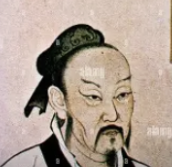
The superior man has three things in which he delights, and to be ruler over the kingdom is not one of them. That his father and mother are both alive, and that the condition of his brothers affords no cause for anxiety;-this is one delight. That, when looking up, he has no occasion for shame before Heaven, and, below, he has no occasion to blush before men;-this is a second delight. That he can get from the whole kingdom the most talented individuals, and teach and nourish them;-this is the third delight.
▼
Source
source
7A:20, as translated by James Legge in The Chinese Classics, Vol. II (1861), p. 335
3 months 2 weeks ago
A large plural society cannot be governed without recognizing that, transcending its plural interests, there is a rational order with a superior common law.
▼
Source
source
pp. 106-107
6 months 4 weeks ago
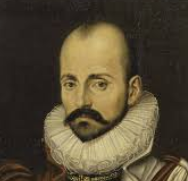
If you press me to say why I loved him, I can say no more than it was because he was he, and I was I. Variants: If a man urge me to tell wherefore I loved him, I feel it cannot be expressed but by answering: Because it was he, because it was myself. If a man should importune me to give a reason why I loved him, I find it could no otherwise be expressed, than by making answer: because it was he, because it was I.
▼
Source
source
Ch. 28

6 months 3 weeks ago
It is likely that America will be more important during the next century or two, but after that it may well be the turn of China.
▼
Source
source
Letter to Rachel Gleason Brooks, May 5, 1930

5 months 2 weeks ago
Keep on, then, seeking first the Kingdom and his righteousness, and all these other things will be added to you. So never be anxious about the next day, for the next day will have its own anxieties. Each day has enough of its own troubles.
▼
Source
source
Matthew 6:33-34, New World Translation of the Holy Scriptures
6 months 3 weeks ago
Two very different ideas are usually confounded under the name democracy. The pure idea of democracy, according to its definition, is the government of the whole people by the whole people, equally represented. Democracy, as commonly conceived and hitherto practiced, is the government of the whole people by a mere majority of the people exclusively represented. The former is synonymous with the equality of all citizens; the latter, strangely confounded with it, is a government of privilege in favor of the numerical majority, who alone possess practically any voice in the state. This is the inevitable consequence of the manner in which the votes are now taken, to the complete disfranchisement of minorities.
▼
Source
source
Ch. VII: Of True and False Democracy; Representation of All, and Representation of the Majority only (p. 247)
6 months 3 weeks ago
Thee will find out in time that I have a great love of professing vile sentiments, I don't know why, unless it springs from long efforts to avoid priggery.
▼
Source
source
Letter to Alys Pearsall Smith (1894). Smith was a Quaker, thus the archaic use of "Thee" in this and other letters to her.

6 months 1 week ago
Herbert Spencer is little read now. Philosophers do not regard him as a major thinker.
▼
Source
source
Social Darwinism has long been in disrepute. Chapter 3, From Evolution To Ethics?, p. 61

2 months 2 weeks ago
Then what should we work for? Only this: proper understanding; unselfish action; truthful speech. A resolve to accept whatever happens as necessary and familiar, flowing like water from that same source and spring.
▼
Source
source
(Hays translation) IV, 33
2 months 2 weeks ago
Faith is nothing else than reason grown courageous - reason raised to its highest power, expanded to its widest vision.
▼
Source
source
"Religious Perplexities" (1922), his Hibbert Lecture.
6 months 3 weeks ago
Love is a severe critic. Hate can pardon more than love.
▼
Source
source
Pearls of Thought (1881) p. 159
6 months 2 weeks ago
Not till then did his controllers allow him to suspect that death itself might not after all cure the illusion of being a soul-nay, might prove the entry into a world where that illusion raged infinite and unchecked. Escape for the soul, if not for the body, was offered him. He became able to know (and simultaneously refused the knowledge) that he had been wrong from the beginning, that souls and personal responsibility existed. He half saw: he wholly hated. The physical torture of the burning was not fiercer than his hatred of that.
▼
Source
source
Ch. 16 : Banquet at Belbury, section 6
6 months 3 weeks ago
Real life is, to most men, a long second-best, a perpetual compromise between the ideal and the possible; but the world of pure reason knows no compromise, no practical limitations, no barrier to the creative activity embodying in splendid edifices the passionate aspiration after the perfect from which all great work springs. Remote from human passions, remote even from the pitiful facts of nature, the generations have gradually created an ordered cosmos, where pure thought can dwell as in its natural home, and where one, at least, of our nobler impulses can escape from the dreary exile of the actual world.
7 months 2 weeks ago
The saddest aspect of life right now is that science gathers knowledge faster than society gathers wisdom.
4 months 2 weeks ago
Human vanity cherishes the absurd notion that our species is the final goal of evolution.
▼
Source
source
Chapter 3 "Accumulating Small Change" (p. 50)
3 months 2 days ago
A genius doesn't adjust his treatment of a theme to a tyrant's taste.

3 months 1 week ago
There should be 2 systems. One for needs and one for wants. We shouldn't have to compete for needs, and we shouldn't expect the things we want. An ideal system would definitely be a seriously regulated capitalism with an uncompromised safety net that we focus on with automation and AI. But, those with just want those without to die. In the end, they will lose.
3 months ago
To ascend to the origin of things and speculate on the creation, is not the business of the natural philosopher. An humbler field is sufficient for him in the endeavor to discover, as far as our faculties will permit; what are these primary qualities impressed on matter, and to discover the spirit of the laws of nature


7 months ago
Like the body the soul can be healthy, youthful, and so on. It can undergo pain, thirst, and hunger. In this physical life, that is, in the visible world, we avoid whatever would defile or deform the body; how much more, then, ought we to avoid that which would tarnish the soul?
2 months 3 weeks ago
'Induction' is a term applied to describe the 'process' of a true Colligation of Facts by means of an exact and appropriate Conception. 'An Induction' is also employed to denote the 'proposition' which results from this process. An Induction is not the mere sum of the Facts which are colligated. The Facts are not only brought together, but seen in a new point of view. 'The Consilience of Inductions' takes place when an Induction, obtained from one class of facts, coincides with an Induction, obtained from another different class.

6 months 3 weeks ago
Rascals are always sociable - more's the pity! and the chief sign that a man has any nobility in his character is the little pleasure he takes in others' company.
▼
Source
source
Vol. 1, Ch. 5, § 9
5 months 1 week ago
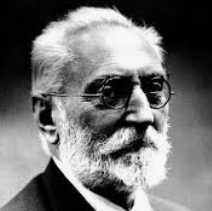
There are pretenses which are very sincere, and marriage is their school.
▼
Source
source
Tres novelas ejemplares y un prólogo [Three Exemplary Novels and a Prologue] (1920); Two Mothers
3 months 2 weeks ago
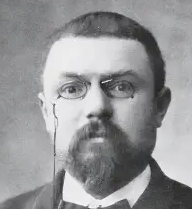
Does the harmony the human intelligence thinks it discovers in nature exist outside of this intelligence? No, beyond doubt, a reality completely independent of the mind which conceives it, sees or feels it, is an impossibility. A world as exterior as that, even if it existed, would for us be forever inaccessible.
5 months 2 weeks ago
Sleep on now, and take your rest: behold, the hour is at hand, and the Son of man is betrayed into the hands of sinners. Rise, let us be going: behold, he is at hand that doth betray me.
▼
Source
source
26:45-46 (KJV)
2 months 2 weeks ago
The controlling Intelligence understands its own nature, and what it does, and whereon it works.
▼
Source
source
VI, 5

3 months 4 weeks ago
Rather than trying to escape violence, human beings more often become habituated to it. History abounds with long conflicts - the Thirty Years' War in early seventeenth-century Europe, the Time of Troubles in Russia, twentieth-century guerrilla conflicts - in which continuous slaughter has been accepted as normal. Famously adaptable, the human animal quickly learns to live with violence and soon comes to find satisfaction in it.
▼
Source
source
In the Puppet Theatre: Roof Gardens, Feathers and Human Sacrifice (p. 80)
6 months 3 weeks ago
Every poet has trembled on the verge of science.
▼
Source
source
July 18, 1852
4 months 3 weeks ago
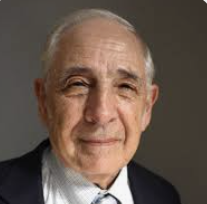
Whatever is referred to must exist. Let us call this the axiom of existence.
▼
Source
source
P. 77.
5 months 2 weeks ago
There exists, I grant you, a clinical depression, upon which certain remedies occasionally have effect; but there exists another kind, a melancholy underlying our very outbursts of gaiety and accompanying us everywhere, without leaving us alone for a single moment. And there is nothing that can rid us of this lethal omnipresence: the self forever confronting itself.
4 months 2 weeks ago
Speech is a mirror of the soul; as a man speaks, so is he.
▼
Source
source
Maxim 1073
5 months 1 week ago
Spirit is never an object; nor a spiritual reality an objective one. In the so-called objective world there's no such nature, thing, or objective reality as spirit. Hence it is easy to deny the reality of spirit. God is spirit because he is not object, because he is subject.
▼
Source
source
p. 10
6 months 1 week ago
"These Macedonians," said he, "are a rude and clownish people, that call a spade a spade."
▼
Source
source
39 Philip
7 months 2 weeks ago
Idleness is only fatal to the mediocre.
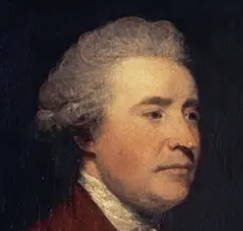
5 months 3 weeks ago
The person who grieves, suffers his passion to grow upon him; he indulges it, he loves it; but this never happens in the case of actual pain, which no man ever willingly endured for any considerable time.
▼
Source
source
Part I Section V
6 months 4 weeks ago
We must not attach knowledge to the mind, we have to incorporate it there.
▼
Source
source
Ch. 25

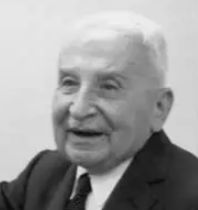
3 months 1 week ago
It is a fact that Mussolini entered the scene of world politics as an ally of the democracies, while Lenin entered it as a virtual ally of imperial Germany.

2 months 3 weeks ago
Whether we and our politicians know it or not, Nature is party to all our deals and decisions, and she has more votes, a longer memory, and a sterner sense of justice than we do.
▼
Source
source
Part of an endorsement statement for The Dying of the Trees (1997) by Charles E. Little
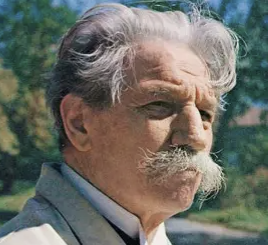
3 months 2 days ago
It is the fate of every truth to be an object of ridicule when it is first acclaimed. It was once considered foolish to suppose that black men were really human beings and ought to be treated as such. What was once foolish has now become a recognized truth. Today it is considered as exaggeration to proclaim constant respect for every form of life as being the serious demand of a rational ethic. But the time is coming when people will be amazed that the human race existed so long before it recognized that thoughtless injury to life is incompatible with real ethics. Ethics is in its unqualified form extended responsibility to everything that has life.
5 months 2 weeks ago
I don't understand why we must do things in this world, why we must have friends and aspirations, hopes and dreams. Wouldn't it be better to retreat to a faraway corner of the world, where all its noise and complications would be heard no more? Then we could renounce culture and ambitions; we would lose everything and gain nothing; for what is there to be gained from this world?
CivilSimian.com created by AxiomaticPanic, CivilSimian, Kalokagathia