

4 months 1 week ago
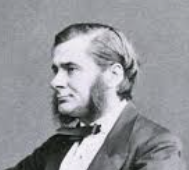
My convictions, positive and negative, on all the matters of which you speak, are of long and slow growth and are firmly rooted. But the great blow which fell on me seemed to stir them to their foundation, and had I lived a couple of centuries earlier I could have fancied a devil scoffing at me and them - and asking me what profit it was to have stripped myself of the hopes and consolations of the mass of mankind? To which my only reply was and is - Oh devil! Truth is better than much profit. I have searched over the grounds of my belief, and if wife and child and name and fame were all to be lost to me one after the other as the penalty, still I will not lie.



6 months 3 weeks ago
Covetousness, and the desire of having in our possession, and under our dominion, more than we have need of, being the root of all evil, should be early and carefully weeded out, and the contrary quality of a readiness to impart to others, implanted. This should be encourag'd by great commendation and credit, and constantly taking care that he loses nothing by his liberality.
▼
Source
source
Sec. 110

5 months 2 weeks ago
Some minds will jump here jump to the conclusion that a past idea cannot in any sense be present. But that is hasty and illogical. How extravagant too, to pronounce our whole knowledge of the past to be mere delusion! Yet it would seem that the past is completely beyond the bounds of possible experience as a Kantian thing-in-itself.

6 months 4 weeks ago
I assert once again as a truth to which history as a whole bears witness that men may second their fortune, but cannot oppose it; that they may weave its warp, but cannot break it. Yet they should never give up, because there is always hope, though they know not the end and more towards it along roads which cross one another and as yet are unexplored; and since there is hope, they should not despair, no matter what fortune brings or in what travail they find themselves.
▼
Source
source
Book 2, Ch. 29 (as translated by LJ Walker and B Crick)
5 months 1 week ago
All the world's not a stage.
▼
Source
source
E. Jephcott, trans. (1974), § 94

5 months 3 weeks ago
I assert, that the ancient Whigs held doctrines, totally different from those I have last mentioned. I assert, that the foundations laid down by the Commons, on the trial of Doctor Sacheverel, for justifying the revolution of 1688, are the very same laid down in Mr. Burke's Reflections; that is to say,-a breach of the original contract, implied and expressed in the constitution of this country, as a scheme of government fundamentally and inviolably fixed in King, Lords, and Commons.-That the fundamental subversion of this antient constitution, by one of its parts, having been attempted, and in effect accomplished, justified the Revolution. That it was justified only upon the necessity of the case; as the only means left for the recovery of that antient constitution, formed by the original contract of the British state; as well as for the future preservation of the same government. These are, the points to be proved.
▼
Source
source
p. 411

2 months 3 weeks ago
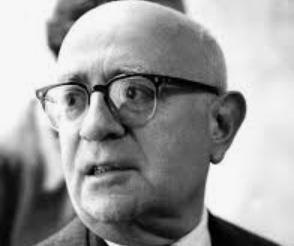
What a stupendous, what an incomprehensible machine is man! Who can endure toil, famine, stripes, imprisonment and death itself in vindication of his own liberty, and the next moment, be deaf to all those motives whose powers supported him through his trial, and inflict on his fellow men a bondage, one hour of which is fraught with more misery than ages of that which he rose in rebellion to oppose.
▼
Source
source
Letter to Jean Nicholas Demeunier (24 January 1786) Bergh 17:103
3 months ago
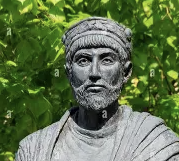
The same things, therefore, does the Sun communicate to things intelligible, over whom he was appointed by the Good to reign and to command: although these were created and began to exist at the same moment with himself.

2 months 2 weeks ago
Waste no more time arguing what a good man should be. Be one.
▼
Source
source
X, 16

6 months 3 weeks ago
Capacity for the nobler feelings is in most natures a very tender plant, easily killed, not only by hostile influences, but by the mere want of sustenance; and in the majority of young persons it speedily dies away if the occupations to which their position in life has devoted them, and the society into which it has thrown them, are not favourable to keeping that higher capacity in existence.
▼
Source
source
Ch. 2

5 months 1 week ago
Science is a cemetery of dead ideas, even though life may issue from them.

6 months 3 weeks ago
The impulse to take life strivingly is indestructible in the race.
▼
Source
source
Ch. 21

5 months 3 weeks ago
Unlike private enterprise which quickly modifies its actions to meet emergencies - unlike the shopkeeper who promptly finds the wherewith to satisfy a sudden demand - unlike the railway company which doubles its trains to carry a special influx of passengers; the law-made instrumentality lumbers on under all varieties of circumstances at its habitual rate. By its very nature it is fitted only for average requirements, and inevitably fails under unusual requirements.
▼
Source
source
Vol. 3, Ch. VII, Over-Legislation
2 months 3 weeks ago
The priests have so disfigured the simple religion of Jesus that no one who reads the sophistications they have engrafted on it, from the jargon of Plato, of Aristotle & other mystics, would conceive these could have been fathered on the sublime preacher of the sermon on the mount.
▼
Source
source
Letter to Benjamin Waterhouse (13 October 1815). Published in The Works of Thomas Jefferson in Twelve Volumes, Federal Edition, Paul Leicester Ford, ed., New York: G. P. Putnam's Sons, 1904, Vol. 11, p. 492
5 months 1 day ago
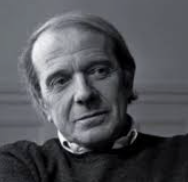
There's no need to fear or hope, but only to look for new weapons.
▼
Source
source
from Postscript on the Societies of Control
2 months 3 weeks ago
The monopoly of a single bank is certainly an evil. The multiplication of them was intended to cure it; but it multiplied an influence of the same character with the first, and completed the supplanting the precious metals by a paper circulation. Between such parties the less we meddle the better.
▼
Source
source
Letter to Albert Gallatin, 1802. ME 10:323
6 months 3 weeks ago
In these frequent talks about the books I read, he used, as opportunity offered, to give me explanations and ideas respecting civilization, government, morality, mental cultivation, which he required me afterwards to restate to him in my own words. He also made me read, and give him a verbal account of, many books which would not have interested me sufficiently to induce me to read them of myself: among others, Millar's Historical View of the English Government, a book of great merit for its time, and which he highly valued; Mosheim's Ecclesiastical History, McCrie's Life of John Knox, and even Sewel's and Rutty's Histories of the Quakers. He was fond of putting into my hands books which exhibited men of energy and resource in unusual circumstances, struggling against difficulties and overcoming them: of such works I remember Beaver's African Memoranda, and Collins's account of the first settlement of New South Wales.
▼
Source
source
(p. 8)
3 months 2 days ago
If I first see a tree in the winter, I might assume that it is not a fruit-tree. But when I return in the summer to find it covered with plums, I must exclaim, 'Excuse me! You were a fruit-tree after all.' Imagine, then, that a billion years ago some beings from another part of the galaxy made a tour through the solar system in their flying saucer and found no life. They would dismiss it as 'Just a bunch of old rocks!' But if they returned today, they would have to apologize: 'Well - you were peopling rocks after all!' You may, of course, argue that there is no analogy between the two situations. The fruit-tree was at one time a seed inside a plum, but the earth - much less the solar system or the galaxy - was never a seed inside a person. But, oddly enough, you would be wrong.
▼
Source
source
p. 74
6 months 3 weeks ago
Beings who are so uniquely constituted must necessarily express themselves in other ways than ordinary men. It is impossible that with souls so differently modified, they should not carry over into the expression of their feelings and ideas the stamp of those modifications.
▼
Source
source
First Dialogue; translated by Judith R. Bush, Christopher Kelly, Roger D. Masters
6 months 1 week ago
Leading a human life is a full-time occupation, to which everyone devotes decades of intense concern.
▼
Source
source
"The Absurd" (1971), p. 15.

6 months 4 weeks ago
Lend yourself to others, but give yourself to yourself.
▼
Source
source
Ch. 10. Of Managing the Will

6 months 3 weeks ago
Each man is a hero and an oracle to somebody.
▼
Source
source
Quotation and Originality
3 months 6 days ago
Correspondences are like small clothes before the invention of suspenders; it is impossible to keep them up.
▼
Source
source
Vol. II, letter to Catherine Crowe (31 January 1841), pp. 441-442

6 months 1 week ago
The resolute one who moved by the principles of Thy FaithExtends the prosperity of order to his neighbors And works the land the evil now hold desolate, Earns through Righteousness, the Blessed Recompense Thy Good Mind has promised in Thy Kingdom of Heaven.
▼
Source
source
Spenta Mainyu Gatha; Yasna 50, 3.

5 months 2 weeks ago
Suicide is a sudden accomplishment, a lightning-like deliverance: it is nirvana by violence.
5 months ago
Roughly speaking, rationality is concerned with the selection of preferred behavior alternatives in terms of some system of values, whereby the consequences of behavior can be evaluated.
▼
Source
source
p. 84.
6 months 2 weeks ago
Do the essences of proposition and of the truth determine themselves from out of the essence of the thing, or does the essence of the thing determine itself from out of the essence of the proposition? The question is posed as an either/or. However does this either/or itself suffice? Are the essence of the thing and the essence of the proposition only built as mirror images because both of them together determine themselves from out of the same but deeper lying root? However, what and where can be this common ground for the essence of the thing and of the proposition and of their origin? The unconditioned (Unbedingt)? We stated at the beginning that what conditions the essense of the thing in its thingness can no longer itself be thing and conditioned, it must be an unconditioned (Un-bedingtes).
▼
Source
source
p. 47

5 months 4 days ago
It is a conceded fact that woman is being reared as a sex commodity, and yet she is kept in absolute ignorance of the meaning and importance of sex.

7 months 2 weeks ago
The absurd does not liberate; it binds. It does not authorize all actions. "Everything is permitted" does not mean that nothing is forbidden.
5 months 1 week ago
Bourgeois norms are experienced as the evident laws of a natural order-the further the bourgeois class propagates its representations, the more naturalized they become.
▼
Source
source
p. 140

3 months 6 days ago
You must lay aside the burdens of the mind; until you do this, no place will satisfy you.
2 months 3 weeks ago
My religious reading has long been confined to the moral branch of religion, which is the same in all religions; while in that branch which consists of dogmas, all differ.
▼
Source
source
Letter to Thomas Leiper (21 January 1809).

6 months 3 weeks ago
In all ages of the world, priests have been enemies to liberty; and it is certain, that this steady conduct of theirs must have been founded on fixed reasons of interest and ambition. Liberty of thinking, and of expressing our thoughts, is always fatal to priestly power, and to those pious frauds, on which it is commonly founded; and, by an infallible connexion, which prevails among all kinds of liberty, this privilege can never be enjoyed, at least has never yet been enjoyed, but in a free government.
▼
Source
source
Part I, Essay 9: Of The Parties of Great Britain

2 months 2 weeks ago
Reason can make little headway on its own and struggles to be heard; often it has to be - so to speak - armed by the fearsome epigram. French wit pricks like a needle, so that the thread goes through the hole.
▼
Source
source
Sixth Dialogue, p. 160

5 months 1 week ago
It is only by entering the transcendental, the supernatural, the authentically spiritual order that man rises above the social. Until then, whatever he may do, the social is transcendent in relation to him.
▼
Source
source
p. 123
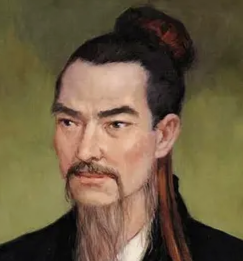
2 months 4 weeks ago
Suppose we try to locate the cause of disorder, we shall find it lies in the want of mutual love.
▼
Source
source
Book 4; Universal Love I
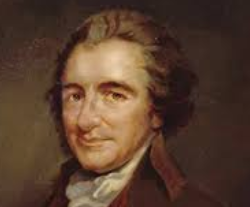
6 months 3 weeks ago
Our Traders in Men (an unnatural commodity!) must know the wickedness of that Slave-Trade, if they attend to reasoning, or the dictates of their own hearts; and such as shun and stiffle all these, wilfully sacrifice Conscience, and the character of integrity to that golden Idol.
5 months 6 days ago
Einstein analyses the ideas of time-order and of simultaneity. Primarily (according to his analysis) time-order only refers to the succession of events at a given place. Accordingly each given place has its own time-order. But these time-orders are not independent in the system of nature, and their correlation is known to us by means of physical measurement. Now ultimately all physical measurement depends upon coincidence in time and place.
▼
Source
source
p. 51
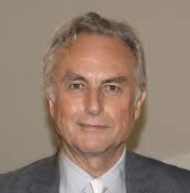
4 months 2 weeks ago
However many ways there may be of being alive, it is certain that there are vastly more ways of being dead.
▼
Source
source
Chapter 1 "Explaining the Very Improbable"
6 months 3 weeks ago
It is evident that this, among many other of the purposes of my father's scheme of education, could not have been accomplished if he had not carefully kept me from having any great amount of intercourse with other boys. He was earnestly bent upon my escaping not only the ordinary corrupting influence which boys exercise over boys, but the contagion of vulgar modes of thought and feeling; and for this he was willing that I should pay the price of inferiority in the accomplishments which schoolboys in all countries chiefly cultivate. The deficiencies in my education were principally in the things which boys learn from being turned out to shift for themselves, and from being brought together in large numbers.
▼
Source
source
(p. 35)
6 months 4 weeks ago
At the very beginning of my fevers and sicknesses that cast me down, whilst still entire, and but little, disordered in health, I reconcile myself to Almighty God by the last Christian, offices, and find myself by so doing less oppressed and more easy, and have got, methinks, so much the better of my disease. And I have yet less need of a notary or counsellor than of a physician.
▼
Source
source
Ch. 9
6 months 3 weeks ago
The only fence against the world is a thorough knowledge of it, into which a young gentleman should be enter'd by degrees, as he can bear it; and the earlier the better, so he be in safe and skillful hands to guide him.
▼
Source
source
Sec. 94
5 months 3 weeks ago
Resolved to die in the last dike of prevarication.
▼
Source
source
Speech on the sixth article of charge in the impeachment of Warren Hastings (7 May 1789), quoted in The Works of the Right Honourable Edmund Burke, Volume the Tenth (1899), p. 406

2 months 3 weeks ago
One cannot reduce terror by holding over the world the threat of what it most fears.

7 months 4 days ago
Of the truths within our reach... the mind and the heart are as doors by which they are received into the soul, but... few enter by the mind, whilst they are brought in crowds by the rash caprices of the will, without the council of reason.
2 months 2 weeks ago
You could leave life right now. Let that determine what you do and say and think.
▼
Source
source
(Hays translation) II, 11
5 months 2 weeks ago
To try curing someone of a "vice," of what is the deepest thing he has, is to attack his very being, and this is indeed how he himself understands it, since he will never forgive you for wanting him to destroy himself in your way and not his.

CivilSimian.com created by AxiomaticPanic, CivilSimian, Kalokagathia