

2 months 3 weeks ago
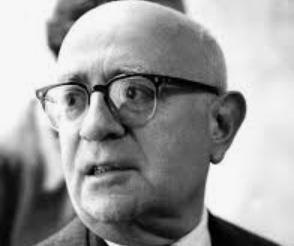
We are really no longer ourselves a part of nature at the moment when we notice, when we recognize, that we are a part of nature.
▼
Source
source
Probleme der Moralphilosophie (Frankfurt: Suhrkamp, 1996), p. 154; as quoted in Andrew Bowie, Adorno and the Ends of Philosophy (Cambridge: Polity, 2013), p. 94


4 months 2 weeks ago
We are born to inquire after truth; it belongs to a greater power to possess it. It is not, as Democritus said, hid in the bottom of the deeps, but rather elevated to an infinite height in the divine knowledge.
▼
Source
source
Book III, Ch. 8. Of the Art of Conversation

3 months 3 days ago
It is not meet to take the children's bread, and to cast it to dogs.
▼
Source
source
15:26 (KJV)
1 week 3 days ago
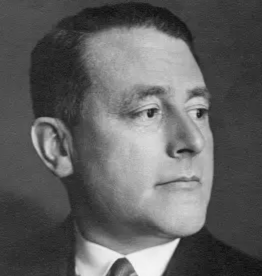
That the state is an entity and in fact the decisive entity rests upon its political character.
1 week 1 day ago
In the Koran as in the Bible, politics is divinized, and human reason, crushed by the religious ascendancy, cannot insinuate its isolating and corrosive poison into the mechanisms of government, so that citizens are believers whose loyalty is exalted to faith, and obedience to enthusiasm and fanaticism.
▼
Source
source
p. 78
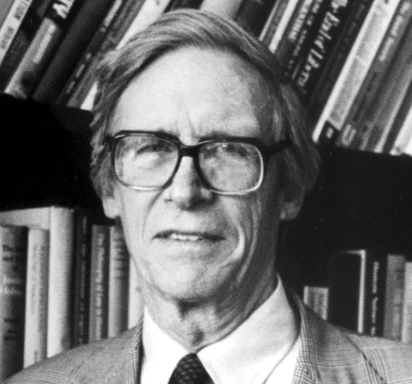
4 months 1 week ago
First of all, principles should be general. That is, it must be possible to formulate them without use of what would be intuitively recognized as proper names, or rigged definite descriptions.
▼
Source
source
Chapter III, Section 23, pg. 131

2 months 3 weeks ago
But Zarathustra made it clear in which direction the answer lay; it is towards the artist-psychologist, the intuitional thinker. There are very few such men in the world's literature; the great artists are not thinkers, the great thinkers are seldom artists.
▼
Source
source
p. 158
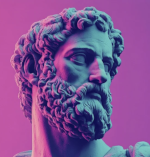
5 months 1 week ago
All men by nature desire to know. An indication of this is the delight we take in our senses; for even apart from their usefulness they are loved for themselves; and above all others the sense of sight. For not only with a view to action, but even when we are not going to do anything, we prefer sight to almost everything else. The reason is that this, most of all the senses, makes us know and brings to light many differences between things.
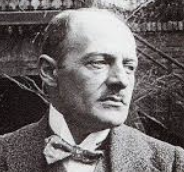
3 months 1 day ago
To a lesser degree, a secret ressentiment underlies every way of thinking which attributes creative power to mere negation and criticism. Thus modern philosophy is deeply penetrated by a whole type of thinking which is nourished by ressentiment. I am referring to the view that the "true" and the "given" is not that which is self-evident, but rather that which is "indubitable" or "incontestable," which can be maintained against doubt and criticism.
▼
Source
source
L. Coser, trans. (1973), p. 67
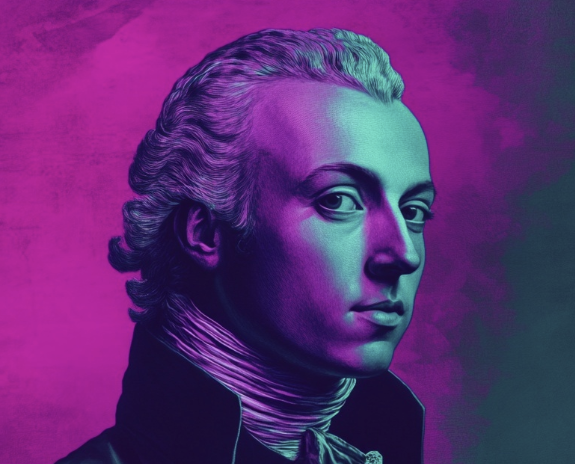
4 months 2 weeks ago
Habit... makes the endurance of evil easy (which, under the name of patience, is falsely honored as a virtue), because sensations of the same type, when continued without alteration for a long time, draw our attention away from the senses so that we are scarcely conscious of them at all. On the other hand, habit also makes the consciousness and the remembrance of good that has been received more difficult, which then gradually leads to ingratitude (a real vice). [...] Acquired habit deprives good actions of their moral value because it undermines mental freedom and, moreover, it leads to thoughtless repetitions of the same acts (monotony), and thus becomes ridiculous.
▼
Source
source
Kant, Immanuel (1996), pages 34-35

3 months 1 week ago
Dreams, as we all know, are very queer things: some parts are presented with appalling vividness, with details worked up with the elaborate finish of jewellery, while others one gallops through, as it were, without noticing them at all, as, for instance, through space and time. Dreams seem to be spurred on not by reason but by desire, not by the head but by the heart, and yet what complicated tricks my reason has played sometimes in dreams, what utterly incomprehensible things happen to it!
4 months 2 weeks ago
Plato says, "'Tis to no purpose for a sober man to knock at the door of the Muses;" and Aristotle says "that no excellent soul is exempt from a mixture of folly."
▼
Source
source
Book II, Ch. 2. Of Drunkenness
3 months 3 days ago
So watch yourselves. If your brother sins, rebuke him, and if he repents, forgive him. If he sins against you seven times in a day, and seven times comes back to you and says, 'I repent,' forgive him.
▼
Source
source
(Luke 17:3-4) (NIV)
4 months 1 day ago
Virtue cannot dwell with wealth either in a city or in a house.
▼
Source
source
Stobaeus, iv. 31c. 88
3 months 1 week ago
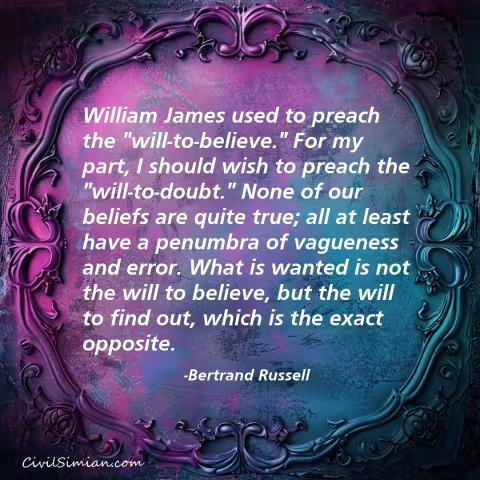
If there be such a thing as truth, it must infallibly be struck out by the collision of mind with mind.
▼
Source
source
Vol. 1, bk. 1, ch.4
4 months 3 weeks ago
The fellow who eggs you on to avenge yourself will rob you of what you were going to say, as we forgive our debtors. When you have forfeited that, all your sins will be held against you; absolutely nothing is forgiven.
▼
Source
source
2.382673611
2 months 3 weeks ago
I now come to the second reason for the modern fading of interest in religion. Religion is the reaction of human nature to its search for God. The presentation of God under the aspect of power awakens every modern instinct of critical reaction. This is fatal; for religion collapses unless its main positions command immediacy of assent. In this respect the old phraseology is at variance with the psychology of modern civilisations. This change in psychology is largely due to science, and is one of the chief ways in which the advance of science has weakened the hold of the old religious forms of expression.
▼
Source
source
Ch. 12: "Religion and Science", pp. 266-267

4 months 1 week ago
What strikes one here above all is the crudely empirical conception of profit derived from the outlook of the ordinary capitalist, which wholly contradicts the better esoteric understanding of Adam Smith.
▼
Source
source
Vol. II, Ch. X, p. 202.
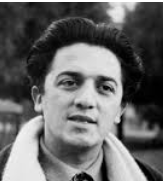
1 month 2 weeks ago
Talking about dreams is like talking about movies, since the cinema uses the language of dreams; years can pass in a second and you can hop from one place to another. It's a language made of image. And in the real cinema, every object and every light means something, as in a dream.
▼
Source
source
As quoted in Rolling Stone no. 421

3 weeks 5 days ago
One crime has to be concealed by another.
3 months 3 days ago
A Covenant not to defend my selfe from force, by force, is always voyd.
▼
Source
source
The First Part, Chapter 14, p. 69
4 months 3 weeks ago
Do you suppose that you can do the things you do now, and yet be a philosopher? Do you suppose that you can eat in the same fashion, drink in the same fashion, give way to anger and to irritation, just as you do now?
▼
Source
source
Book III, ch. 15, 10 (= Enchiridion 29, 10).
1 month 4 weeks ago
Free trade, one of the greatest blessings which a government can confer on a people, is in almost every country unpopular.
▼
Source
source
p. 161
3 months 2 weeks ago
Every man has his dignity. I'm willing to forget mine, but at my own discretion and not when someone else tells me to.
4 months 1 week ago
The foundation of irreligious criticism is: Man makes religion, religion does not make man.

4 months 1 week ago
Our great democracies still tend to think that a stupid man is more likely to be honest than a clever man, and our politicians take advantage of this prejudice by pretending to be even more stupid than nature made them.
▼
Source
source
Part III: Man and Himself, Ch. 16: Ideas Which Have Become Obsolete, p. 158
1 week 4 days ago
Considering the general tendency to multiply offices and dependencies and to increase expense to the ultimate term of burden which the citizen can bear, it behooves us to avail ourselves of every occasion which presents itself for taking off the surcharge; that it never may be seen here that, after leaving to labor the smallest portion of its earnings on which it can subsist, Government shall itself consume the whole residue of what it was instituted to guard.
▼
Source
source
Thomas Jefferson's First State of the Union Address
3 months 1 week ago
The idea of an all-powerful divine Being is present everywhere, unconsciously if not consciously, because it is an archetype. There is in the psyche some superior power, and if it is not consciously a god, it is the "belly" at least, in St. Paul's words. I therefore consider it wiser to acknowledge the idea of God consciously, for, if we do not, something else is made God, usually something quite inappropiate and stupid such as only an "enlightened" intellect could hatch forth.
▼
Source
source
C. G. Jung. 2014. Collected Works of C.G. Jung, Volume 7: Two Essays in Analytical Psychology. Princeton University Press. p. 71
2 months 1 week ago
But perhaps the rest of us could have separate classes in science appreciation, the wonder of science, scientific ways of thinking, and the history of scientific ideas, rather than laboratory experience.
1 week 1 day ago
What matter and opportunity [for thy activity] art thou avoiding? For what else are all these things, except exercises for the reason, when it has viewed carefully and by examination into their nature the things which happen in life? Persevere then until thou shalt have made these things thy own, as the stomach which is strengthened makes all things its own, as the blazing fire makes flame and brightness out of everything that is thrown into it.
▼
Source
source
X, 31

2 months 2 weeks ago
We are obliged to regard many of our original minds as crazy - at least until we have become as clever as they are.
▼
Source
source
D 97
3 weeks 5 days ago
We must admit, however, that neither wild beasts nor any other creature except man is subject to anger: for, whilst anger is the foe of reason, it nevertheless does not arise in any place where reason cannot dwell. Wild beasts have impulses, fury, cruelty, combativeness: they have not anger any more than they have luxury: yet they indulge in some pleasures with less self-control than human beings.

4 months 1 week ago
Generally speaking there is no irreducible taste or inclination. They all represent a certain appropriative choice of being. It is up to existential psychoanalysis to compare and classify them. Ontology abandons us here; it has merely enabled us to determine the ultimate ends of human reality, its fundamental possibilities, and the value which haunts it.
4 months 1 week ago
Money is therefore not only the object but also the fountainhead of greed.
▼
Source
source
Notebook II, The Chapter on Money, p. 142.

2 months 1 week ago
Several times I asked myself, "Can it be that I have overlooked something, that there is something which I have failed to understand? Is it not possible that this state of despair is common to everyone?" And I searched for an answer to my questions in every area of knowledge acquired by man. For a long time I carried on my painstaking search; I did not search casually, out of mere curiosity, but painfully, persistently, day and night, like a dying man seeking salvation. I found nothing.
▼
Source
source
Pt. I, ch. 5
1 month 3 weeks ago
We have always thought that Mr. Darwin has unnecessarily hampered himself by adhering so strictly to his favourite "Natura non facit saltum." We greatly suspect that she does make considerable jumps in the way of variation now and then, and that these saltations give rise to some of the gaps which appear to exist in the series of known forms.

2 months 1 week ago
Media are means of extending and enlarging our organic sense lives into our environment.
▼
Source
source
"The Care and Feeding of Communication Innovation", Dinner Address to Conference on 8 mm Sound Film and Education, Teachers College, Columbia University, 8 November 1961
4 months 6 days ago
Technology is in its essence something that human beings cannot master of their own accord.
1 week 3 days ago
'Natural History' ought to form a part of intellectual education, in order to correct certain prejudices which arise from cultivating the intellect by means of mathematics alone and in order to lead the student to see that the division of things into kinds, and the attribution and use of names, are processes susceptible of great precision.

3 months 3 weeks ago
To use Virtue is perfect blessedness.

3 months 1 week ago
The Republican form of government is the highest form of government; but because of this it requires the highest type of human nature - a type nowhere at present existing.
▼
Source
source
Vol. 3, Ch. XV, The Americans
4 months 1 day ago
Count all wickedness foreign and alien.
▼
Source
source
§ 5

5 months 1 week ago
Well, then, arrest him. You can accuse him of something or other afterward.
3 months 2 weeks ago
Do you see this egg? With this you can topple every theological theory, every church or temple in the world. What is it, this egg, before the seed is introduced into it? An insentient mass. And after the seed has been introduced to into it? What is it then? An insentient mass. For what is the seed itself other than a crude and inanimate fluid? How is this mass to make a transition to a different structure, to sentience, to life? Through heat. And what will produce that heat in it? Motion. "Conversation Between D'Alembert and Diderot", as quoted in Selected Writings (1966) edited by Lester G. Crocker, and The Enlightenment and the Intellectual Foundations of Modern Culture (2004) by Louis K Dupré, p. 30 Variant translation: See this egg. It is with this that all the schools of theology and all the temples of the earth are to be overturned.
▼
Source
source
As quoted in Diderot, Reason and Resonance (1982) by Élisabeth de Fontenay, p. 217
3 weeks 1 day ago
The old view was that delicacy of language was part of the nature, the sacred nature, of eros and that to speak about it in any other way would be to misunderstand it. What has disappeared is the risk and the hope of human connectedness embedded in eros. Ours is a language that reduces the longing for an other to the need for individual, private satisfaction and safety.
▼
Source
source
pp. 13-14.
4 months 1 day ago
Animal Liberation is Human Liberation too.
▼
Source
source
Preface
4 months 1 week ago
Justice as fairness provides what we want.
▼
Source
source
Chapter III, Section 30, pg. 190

3 months 1 week ago
We must not always judge of the generality of the opinion by the noise of the acclamation.
▼
Source
source
No. 1
CivilSimian.com created by AxiomaticPanic, CivilSimian, Kalokagathia