


5 months 2 weeks ago
Crime in full glory consolidates authority by the sacred fear it inspires.
5 months 1 week ago
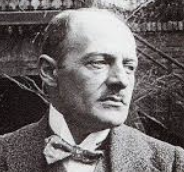
If the awareness of our limitations begins to limit or to dim our value consciousness as well-as happens, for instance, in old age with regard to the values of youth-then we have already started the movement of devaluation which will end with the defamation of the world and all its values. Only a timely act of resignation can deliver us from this tendency toward self-delusion.
▼
Source
source
L. Coser, trans. (1973), p. 59
7 months ago
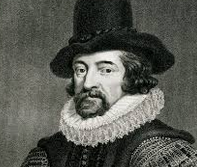
Jews hate the name of Christ and have a secret and innate rancor against the people among whom they live.
▼
Source
source
See Silent Truth by Mark Edwards

6 months 3 weeks ago
We are reformers in spring and summer; in autumn and winter we stand by the old - reformers in the morning, conservatives at night. Reform is affirmative, conservatism is negative; conservatism goes for comfort, reform for truth.
▼
Source
source
p. 223

6 months 2 weeks ago
Every poet and musician and artist, but for Grace, is drawn away from love of the thing he tells to love of the telling till, down in Deep Hell, they cannot be interested in God at all but only in what they say about Him.
▼
Source
source
Ch. 9

7 months ago
A speech comes alive only if it rises from the heart, not if it floats on the lips.
▼
Source
source
in The Erasmus Reader (1990), p. 130.
7 months 1 week ago
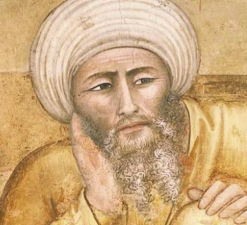
It is quite clear to you that all the people see that lower kinds of creation could have been made in a different way from that in which they really are, and as they see this lower degree in many things they think that they must have been made by chance.
7 months 3 weeks ago
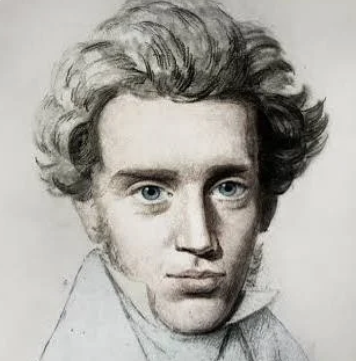
I was brought up in the Christian religion, and although I can scarcely sanction all the improper attempts to gain the emancipation of woman, all paganlike reminiscences also seem foolish to me. My brief and simple opinion is that woman is certainly as good as man-period. Any more discursive elaboration of the difference between the sexes or deliberation on which sex is superior is an idle intellectual occupation for loafers and bachelors.



5 months 2 weeks ago
Thought is led, by the situation of its objects, to measure their truth in terms of another logic, another universe of discourse. And this logic projects another mode of existence: the realization of the truth in the words and deeds of man. And inasmuch as this project involves man as societal animal," the polis, the movement of thought has a political content. Thus, the Socratic discourse is political discourse inasmuch as it contradicts the established political institutions. The search for the correct definition, for the "concept" of virtue, justice, piety, and knowledge becomes a subversive undertaking, for the concept intends a new polis.
▼
Source
source
pp. 133-134
6 months 3 weeks ago
Great men, great nations, have not been boasters and buffoons, but perceivers of the terror of life, and have manned themselves to face it.
▼
Source
source
Fate

6 months 2 weeks ago
It was an important moment. The old partners of the spectacle of punishment, the body and the blood, gave way. A new character came of the scene, masked. It was the end of a certain kind of tragedy; comedy began, with shadow play, faceless voices, impalpable entities. The apparatus of punitive justice must now bite into this bodiless reality.
▼
Source
source
pp. 17
4 months 1 week ago
I would not give up the keys to the granary, because I know that, by doing so, I should turn scarcity into a famine.
▼
Source
source
Sullivan, p. 266


5 months 6 days ago
Modern science has imposed on humanity the necessity for wandering. Its progressive thought and its progressive technology make the transition through time, from generation to generation, a true migration into uncharted seas of adventure.
▼
Source
source
Ch. 13: "Requisites for Social Progress", p. 291
6 months 2 weeks ago
Justice is happiness according to virtue.
▼
Source
source
Chapter V, Section 48, p. 310
4 months 2 weeks ago
A woman can earn her pardon for a good year of disobedience by a single adroit submission.
▼
Source
source
The Rajah's Diamond, Story of the Bandbox.

2 months 2 weeks ago
Put an end once for all to this discussion of what a good man should be, and be one.
▼
Source
source
X. 16,
3 months 1 week ago
Feuerbach ... recognizes ... "even love, in itself the truest, most inward sentiment, becomes an obscure, illusory one through religiousness, since religious love loves man only for God's sake, therefore loves man only apparently, but in truth God only." Is this different with moral love? Does it love the man, this man for this man's sake, or for morality's sake, for Man's sake, and so-for homo homini Deus-for God's sake?
▼
Source
source
Cambridge 1995, p. 56
7 months ago
You worry whether the drought will end. It is far better that you pray that God may water your mind lest virtue wither away in it. You are greatly concerned with money that is lost or being wasted, or you worry about the advance of old age. I think it much to be desired that you provide first of all for the needs of your soul.
2 months 2 weeks ago
No matter what anyone says or does, my task is to be good.
▼
Source
source
(Hays translation) VII, 15

4 months 3 weeks ago
If nonviolence is to make sense as an ethical and political position, it cannot simply repress aggression or do away with its reality; rather, nonviolence emerges as a meaningful concept precisely when destruction is most likely or seems most certain.
▼
Source
source
p. 39

5 months 2 weeks ago
Now I am about to take my last voyage, a great leap in the dark.
▼
Source
source
Last words
5 months 1 week ago
The ground of democratic ideas and practices is faith in the potentialities of individuals, faith in the capacity for positive developments if proper conditions are provided. The weakness of the philosophy originally advanced to justify the democratic movement was that it took individuality to be something given ready-made, that is, in abstraction from time, instead of as a power to develop.

5 months 3 weeks ago
I think that the principal and most basic spiritual need of the Russian People is the need for suffering, incessant and unslakeable suffering, everywhere and in everything. I think the Russian People have been infused with this need to suffer from time immemorial. A current of martyrdom runs through their entire history, and it flows not only from external misfortunes and disasters but springs from the very heart of the People themselves. There is always an element of suffering even in the happiness of the Russian People, and without it their happiness is incomplete.
▼
Source
source
A Writer's Diary, Vol. 1: 1873-1876 (1994), pp. 161-162
6 months 2 weeks ago
Navigation brought man face to face with the uncertainty of destiny, where each is left to himself and every departure might always be the last. The madman on his crazy boat sets sail for the other world, and it is from the other world that he comes when he disembarks. This enforced navigation is both rigorous division and absolute Passage, serving to underline in real and imaginary terms the liminal situation of the mad in medieval society. It was a highly symbolic role, made clear by the mental geography involved, where the madman was confined at the gates of the cities. His exclusion was his confinement, and if he had no prison other than the threshold itself he was still detained at this place of passage. In a highly symbolic position he is placed on the inside of the outside, or vice versa. A posture that is still his today, if we admit that what was once the visible fortress of social order is now the castle of our own consciousness.
▼
Source
source
Part One: 1. Stultifera Navis
5 months 2 weeks ago
What am I, other than a chance in the infinite probabilities of not having been!
2 months 2 weeks ago
Art thou angry with him whose arm-pits stink? art thou angry with him whose mouth smells foul? What good will this anger do thee?
▼
Source
source
V, 28

3 months 2 weeks ago
We share bodies with two eyes, ten fingers, ten toes; we share life on this earth; we share capitalist regimes of production and exploitation; we share common dreams of a better future.
▼
Source
source
128
6 months 3 weeks ago
No man can have society upon his own terms. If he seeks it, he must serve it too.
▼
Source
source
1833
5 months 2 weeks ago
What can be said, lacks reality. Only what fails to make its way into words exists and counts.

7 months 1 week ago
Choose to love whomsoever thou wilt: all else will follow. Thou mayest say, "I love only God, God the Father." Wrong! If Thou lovest Him, thou dost not love Him alone; but if thou lovest the Father, thou lovest also the Son. Or thou mayest say, "I love the Father and I love the Son, but these alone; God the Father and God the Son, our Lord Jesus Christ who ascended into heaven and sitteth at the right hand of the Father, the Word by whom all things were made, the Word who was made flesh and dwelt amongst us; only these do I love." Wrong again! If thou lovest the Head, thou lovest also the members; if thou lovest not the members, neither dost thou love the Head.
▼
Source
source
p 438


6 months 1 week ago
Sweet exists by convention, bitter by convention, colour by convention; atoms and Void [alone] exist in reality.
▼
Source
source
(trans. Freeman 1948), p. 92.

4 months 2 weeks ago
The mosaic form of the TV image demands participation and involvement in depth, of the whole being, as does the sense of touch.
▼
Source
source
(p. 334)


3 months 6 days ago
You will thus understand that what you fear is either insignificant or short-lived.
6 months 3 weeks ago
Hatred, as well as love, renders its votaries credulous.
▼
Source
source
V
5 months 2 weeks ago
One of the most marked features about the law of mind is that it makes time to have a definite direction of flow from past to future. ...This makes one of the great contrasts between the law of mind and the law of physical force, where there is no more distinction between the two opposite directions in time than between moving northward and moving southward.
5 months 3 weeks ago
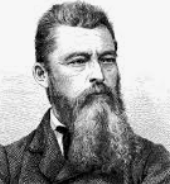
Hegel determines and presents only the most striking differences of various religions, philosophies, time and peoples, and in a progressive series of stages, but he ignores all that is common and identical in all of them. ... His system knows only subordination and succession; coordination and coexistence are unknown to it.
▼
Source
source
Z. Hanfi, trans., in The Fiery Brook (1972), p. 54
6 months 2 weeks ago
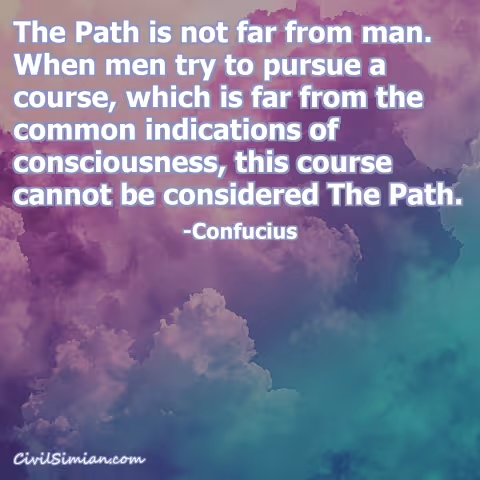
What is now common to all men is a mere abstract universal, an H.C.F. [Highest Common Factor], and Man's conquest of himself means simply the rule of the Conditioners over the conditioned human material, the world of post-humanity which, some knowingly and some unknowingly, nearly all men in all nations are at present labouring to produce.
6 months 2 weeks ago
If our intention now is to reveal classical unreason on its own terms, outside of its ties with dreams and error, it must be understood not as a form of reason that is somehow diseased, lost or mad, but quite simply as reason dazzled.
▼
Source
source
Part Two: 2. The Transcendence of Delirium
5 months 1 week ago
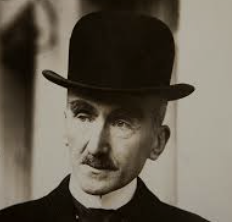
Sex-appeal is the keynote of our whole civilization.
▼
Source
source
Chapter IV
2 months 2 weeks ago
Thou mayest foresee... the things which will be. For they will certainly be of like form, and it is not possible that they should deviate from the order of things now: accordingly to have contemplated human life for forty years is the same as to have contemplated it for ten thousand years.
▼
Source
source
VII, 49
2 months 3 weeks ago
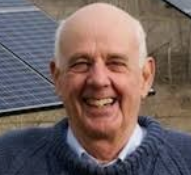
Eating is an agricultural act.
▼
Source
source
The Pleasures of Eating
6 months 1 week ago
Verily we know nothing. Truth is buried deep.
▼
Source
source
(Another translation: "Of truth we know nothing, for truth is in a well." Diogenes Laertius, Lives of Eminent Philosophers R.D. Hicks, Ed.)
5 months 2 weeks ago
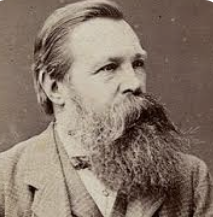
Since the communists cannot enter upon the decisive struggle between themselves and the bourgeoisie until the bourgeoisie is in power, it follows that it is in the interest of the communists to help the bourgeoisie to power as soon as possible in order the sooner to be able to overthrow it.
2 months 3 weeks ago
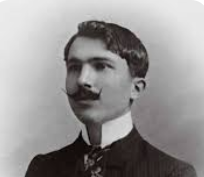
This is the Supreme Duty of the man who struggles - to set out for the lofty peak which Christ, the first-born sone of salvation, attained. How can we begin? If we are to follow him we must have a profound knowledge of his conflict, we must relive his anguish: his victory over the blossoming snares of the earth, his sacrifice of the great and small joys of men and his ascent from sacrifice to sacrifice, exploit to exploit, to martyrdom's summit, the Cross.
CivilSimian.com created by AxiomaticPanic, CivilSimian, Kalokagathia