


8 months 1 week ago
Ever since the war began, I have felt that I could no longer go on being a pacifist, but I have hesitated to say so, because of the responsibility involved. If I were young enough to fight myself, I should do so, but it is more difficult to urge others. Now, however, I feel that I ought to announce that I have changed my mind.
▼
Source
source
Letter to Kingsley Martin (June 1940), quoted in Kingsley Martin, Editor: A Second Volume of Autobiography, 1931-45 (1968), p. 207
4 months 2 weeks ago
Self-respect is the cornerstone of all virtue.
▼
Source
source
As quoted in A Toolbox for Humanity : More Than 9000 Years of Thought (2004) by Lloyd Albert Johnson, p. 147

6 months 4 weeks ago
And thus the soul pities God and feels itself pitied by him; loves Him and feels loved by Him, sheltering its misery in the bosom of the eternal and infinite misery, which, in eternalizing itself and infinitizing itself, is the supreme happiness itself.


8 months 6 days ago
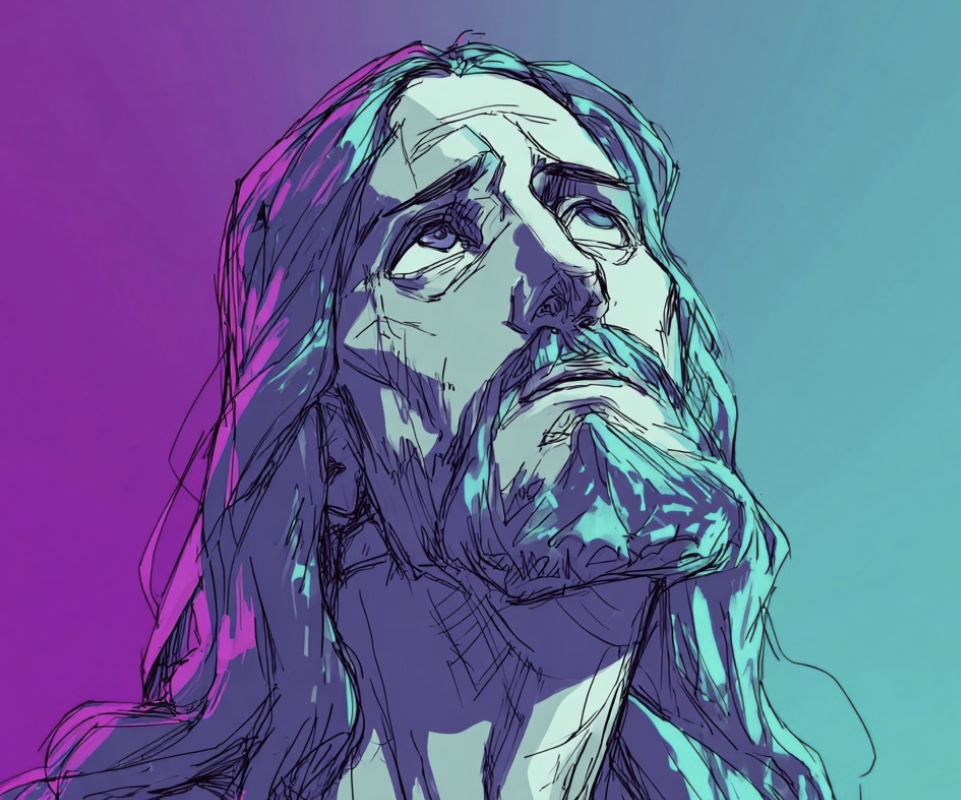
To be a Christian - a follower of Jesus Christ - is to love wisdom, love justice, and love freedom.
▼
Source
source
(p172)
7 months 4 days ago
Are ye also yet without understanding? Do not ye yet understand, that whatsoever entereth in at the mouth goeth into the belly, and is cast out into the draught? But those things which proceed out of the mouth come forth from the heart; and they defile the man. For out of the heart proceed evil thoughts, murders, adulteries, fornications, thefts, false witness, blasphemies: These are the things which defile a man: but to eat with unwashen hands defileth not a man.
▼
Source
source
15:16-20 (KJV)
8 months 2 weeks ago
The commodities of Europe were almost all new to America, and many of those of America were new to Europe. A new set of exchanges, therefore, began..and which should naturally have proved as advantageous to the new, as it certainly did to the old continent. The savage injustice of the Europeans rendered an event, which ought to have been beneficial to all, ruinous and destructive to several of those unfortunate countries.
▼
Source
source
Chapter I, p. 481.

7 months 1 week ago
What place do we occupy in the "universe"? A point, if that! Why reproach ourselves when we are evidently so insignificant? Once we make this observation, we grow calm at once: henceforth, no more bother, no more frenzy, metaphysical or otherwise. And then that point dilates, swells, substitutes itself for space. And everything begins all over again.

8 months 1 week ago
I exist, that is all, and I find it nauseating.

8 months 1 week ago
In a field of ripening corn I came to a place which had been trampled down by some ruthless foot; and as I glanced amongst the countless stalks, every one of them alike, standing there so erect and bearing the full weight of the ear, I saw a multitude of different flowers, red and blue and violet. How pretty they looked as they grew there so naturally with their little foliage! But, thought I, they are quite useless; they bear no fruit; they are mere weeds, suffered to remain only because there is no getting rid of them. And yet, but for these flowers, there would be nothing to charm the eye in that wilderness of stalks. They are emblematic of poetry and art, which, in civic life-so severe, but still useful and not without its fruit-play the same part as flowers in the corn.
▼
Source
source
"Similes, Parables and Fables" Parerga and Paralipomena, vol. 2, § 380A
4 months 3 weeks ago
On the contrary, to educate rational people, that should be sufficient; it is not really intended for sensible people; to understand things and conditions, there is the matter ended,-to understand oneself does not seem to be everyman's concern.
▼
Source
source
p. 22
4 months 1 week ago
I need not tell you, what complaints the more candid and judicious of the Chymists themselves are wont to make of those boasters, that confidently pretend, that they have extracted the salt or sulphur of quicksilver, when they have disguised it by additaments, wherewith it resembles the concretes, whose names are given it; whereas by a skilful and rigid examen, it may be easily enough stripped of its disguises, and made to appear again in the pristine form of running mercury. The pretended salts and sulphurs being so far from being elementary parts extracted out of the body of mercury, that they are rather... de-compound bodies, made up of the whole metal and the menstruum, or other additaments employed to disguise it.
9 months 1 day ago
I do not open up the truth to one who is not eager to get knowledge, nor help out any one who is not anxious to explain himself. When I have presented one corner of a subject to any one, and he cannot from it learn the other three, I do not repeat my lesson.

8 months 2 weeks ago
Religion is not 'doctrinal knowledge,' but wisdom born of personal experience.
▼
Source
source
Holborn, Hajo; A HISTORY OF MODERN GERMANY: The Reformation; 1959/1982 Princeton university Press
7 months 1 week ago
If I were to go blind, what would bother me the most would be no longer to be able to stare idiotically at the passing clouds.

7 months 2 weeks ago
Sleep is a death; oh, make me try By sleeping what it is to die, And as gently lay my head On my grave as now my bed.
▼
Source
source
Section 12
4 months 1 week ago
Only the actual participants can correctly recognize, understand, and judge the concrete situation and settle the extreme case of conflict.

8 months 1 week ago
To be shaken out of the ruts of ordinary perception, to be shown for a few timeless hours the outer and inner world, not as they appear to an animal obsessed with survival or to a human being obsessed with words and notions, but as they are apprehended, directly and unconditionally, by Mind at Large - this is an experience of inestimable value to everyone and especially to the intellectual.
9 months 1 week ago
My lectures are published and not published; they will be intelligible to those who heard them, and to none beside.

6 months 1 week ago
The precise reason why abstinence from animal food will be the first act ... of a moral life is admirably explained in the book, The Ethics of Diet [by Howard Williams]; and not by one man only, but by all mankind in the persons of its best representatives during all the conscious life of humanity. ... the moral progress of humanity - which is the foundation of every other kind of progress - is always slow; but ... the sign of true, not casual, progress is its uninterruptedness and its continual acceleration. And the progress of vegetarianism is of this kind. That progress, is expressed both in the words of the writers cited in the above-mentioned book and in the actual life of mankind, which from many causes is involuntarily passing metre and more from carnivorous habits to vegetable food, and is also deliberately following the same path in a movement which shows evident strength, and which is growing larger and larger - viz., vegetarianism.
▼
Source
source
Ch. X

5 months 2 weeks ago
The belief in unity that has fuelled so many utopian dreams is an effort to reconcile the irreconcilable that ends in repression. Berlin suggests we renounce this venerable faith, and learn how to live with intractable conflict.
▼
Source
source
'Isaiah Berlin: The Value of Decency' (p.106-7)
5 months 2 weeks ago
A good opening and a good ending make for a good film provided they come close together.
▼
Source
source
Recipe for a Good Film

8 months 1 week ago
Nothing is so difficult as not deceiving oneself.
▼
Source
source
p. 34e

6 months 1 week ago
Evidence is the only good reason to believe anything.
▼
Source
source
Interview shown in AlJazeera ,

8 months 2 days ago
Indulge in no wrathfulness, for a man when he indulges in wrath becomes then forgetful of his duty and good works . . . and sin and crime of every kind occur unto his mind, and until the subsiding of the wrath he is said to be just like Ahareman.
6 months 1 week ago
He and his tyrannicide! I am in a mad fury about these explosions. If that is the new world! Damn O'Donovan Rossa; damn him behind and before, above, below, and roundabout; damn, deracinate, and destroy him, root and branch, self and company, world without end. Amen. I write that for sport if you like, but I will pray in earnest, O Lord, if you cannot convert, kindly delete him!
▼
Source
source
Letter to Sidney Colvin, 2 August 1881. Quoted in Terrorism and Literature Chapter 12 - "Parliament Is Burning" by Deaglán Ó Donghaile ISBN 9781316987292
7 months 1 week ago
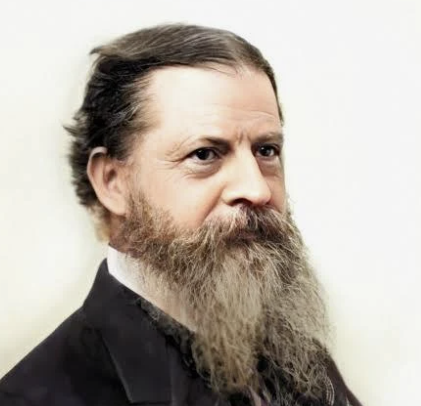
The tendency to regard continuity, in the sense in which I shall define it, as an idea of prime importance in philosophy conveniently may be be termed synechism. The present paper is intended chiefly to show what synechism is, and what it leads to.
4 months 2 weeks ago
But let us now dismiss these poetical fictions; because with what is divine they have mingled much of human alloy; and let us now consider what the deity has declared concerning himself and the other gods. The region surrounding the Earth has its existence in virtue of birth. From whom then does it receive its eternity and imperishability, if not from him who holds all things together within defined limits, for it is impossible that the nature of bodies (material) should be without a limit, inasmuch as they cannot dispense with a Final Cause, nor exist through themselves.

5 months 1 week ago
Contemporary capitalist production is characterized by a series of passages that name different faces of the same shift: from the hegemony of industrial labor to that of immaterial labor, from Fordism to post-Fordism, and from the modern to the postmodern.

4 months 1 week ago
If mind is common to us, then also the reason, whereby we are reasoning beings, is common. If this be so, then also the reason which enjoins what is to be done or left undone is common. If this be so, law also is common; if this be so, we are citizens; if this be so, we are partakers in one constitution; if this be so, the Universe is a kind of Commonwealth.
▼
Source
source
IV, 4 (as translated by ASL Farquharson)
7 months 4 days ago
Freed from the sublimated form which was the very token of its irreconcilable dreams-a form which is the style, the language in which the story is told-sexuality turns into a vehicle for the bestsellers of oppression. ... This society turns everything it touches into a potential source of progress and of exploitation, of drudgery and satisfaction, of freedom and of oppression. Sexuality is no exception.
▼
Source
source
pp. 77-78

6 months 3 weeks ago
No revolution can ever succeed as a factor of liberation unless the MEANS used to further it be identical in spirit and tendency with the PURPOSES to be achieved. Revolution is the negation of the existing, a violent protest against man's inhumanity to man with all the thousand and one slaveries it involves. It is the destroyer of dominant values upon which a complex system of injustice, oppression, and wrong has been built up by ignorance and brutality. It is the herald of NEW VALUES, ushering in a transformation of the basic relations of man to man, and of man to society.
6 months 3 weeks ago
No period of history has ever been great or ever can be that does not act on some sort of high, idealistic motives, and idealism in our time has been shoved aside, and we are paying the penalty for it.
▼
Source
source
Ch. 32, January 13, 1944.
8 months 2 weeks ago
It appears, accordingly, from the experience of all ages and nations, I believe, that the work done by freemen comes cheaper in the end than that performed by slaves.
▼
Source
source
Chapter VIII.
4 months 1 week ago
Good wine is a necessity of life for me.
▼
Source
source
As quoted in The Man from Monticello : An Intimate Life of Thomas Jefferson (1969) by Thomas J. Fleming, p. 250
6 months 1 week ago
We no longer have to resort to superstition when faced with the deep problems: Is there a meaning to life? What are we for? What is man?
▼
Source
source
Ch. 1. Why Are People?
4 months 2 weeks ago
I truly cannot say what the person who still has hope for man should think of the imminence of quasi-apocalyptic destruction. It would certainly force many to face the existential problem in all its nakedness, and subject them to extreme trials; but is this a worse evil than that of mankind's safe, secure, satisfied, and total consignment to the kind of happiness that befits Nietzsche's "last man": a comfortable consumer civilization of socialized human animals, aided by all the discoveries of science and industry and reproducing demographically in a squirming, catastrophic crescendo?
▼
Source
source
p. 140

6 months 3 weeks ago
We must wish either for that which actually exists or for that which cannot in any way exist - or, still better, for both. That which is and that which cannot be are both outside the realm of becoming.
▼
Source
source
p. 154
8 months 1 week ago
The trouble with Eichmann was precisely that so many were like him, and that the many were neither perverted nor sadistic, that they were, and still are, terribly and terrifyingly normal. From the viewpoint of our legal institutions and of our moral standards of judgment, this normality was much more terrifying than all the atrocities put together, for it implied - as had been said at Nuremberg over and over again by the defendants and their counsels - that this new type of criminal, who is in actual fact hostis generis humani, commits his crimes under circumstances that make it well-nigh impossible for him to know or to feel that he is doing wrong.
▼
Source
source
Epilogue

7 months 1 week ago
The body of all true religion consists, to be sure, in obedience to the will of the Sovereign of the world, in a confidence in His declarations, and in imitation of His perfections.
7 months 1 week ago
France has always more or less influenced manners in England; and when your fountain is choked up and polluted, the stream will not run long, or not run clear, with us, or perhaps with any nation. This gives all Europe, in my opinion, but too close and connected a concern in what is done in France. Excuse me, therefore, if I have dwelt too long on the atrocious spectacle of the 6th of October, 1789, or have given too much scope to the reflections which have arisen in my mind on occasion of the most important of all revolutions, which may be dated from that day, I mean a revolution in sentiments, manners, and moral opinions.
8 months 2 weeks ago
Every faculty in one man is the measure by which he judges of the like faculty in another. I judge of your sight by my sight, of your ear by my ear, of your reason by my reason, of your resentment by my resentment, of your love by my love. I neither have, nor can have, any other way of judging about them.
▼
Source
source
Section I, Chap. III.
4 months 1 week ago
Men by their constitutions are naturally divided into two parties: 1. Those who fear and distrust the people, and wish to draw all powers from them into the hands of the higher classes. 2. Those who identify themselves with the people, have confidence in them, cherish and consider them as the most honest and safe, although not the most wise depositary of the public interests. In every country these two parties exist, and in every one where they are free to think, speak, and write, they will declare themselves. Call them, therefore, liberals and serviles, Jacobins and Ultras, whigs and tories, republicans and federalists, aristocrats and democrats, or by whatever name you please, they are the same parties still and pursue the same object. The last appellation of aristocrats and democrats is the true one expressing the essence of all.
▼
Source
source
Letter to Henry Lee
8 months 2 weeks ago
The sneaking arts of underling tradesmen are thus erected into political maxims for the conduct of a great empire; for it is the most underling tradesmen only who make it a rule to employ chiefly their own customers. A great trader purchases his good always where they are cheapest and best, without regard to any little interest of this kind.
▼
Source
source
Chapter III, Part II, p. 530.
7 months 4 days ago
He that dippeth his hand with me in the dish, the same shall betray me. The Son of man goeth as it is written of him: but woe unto that man by whom the Son of man is betrayed! it had been good for that man if he had not been born.
▼
Source
source
26:23-24 (KJV)

8 months 1 week ago
We cannot overstate our debt to the Past, but the moment has the supreme claim. The Past is for us; but the sole terms on which it can become ours are its subordination to the Present. Only an inventor knows how to borrow, and every man is or should be an inventor. We must not tamper with the organic motion of the soul.
▼
Source
source
Quotation and Originality
5 months 1 day ago
Middle age begins with marriage; for then work and responsibility replace carefree play, passion surrenders to the limitations of social order, and poetry yields to prose.
▼
Source
source
Ch. 3 : On Middle Age
CivilSimian.com created by AxiomaticPanic, CivilSimian, Kalokagathia