

4 months 4 weeks ago
Times are bad. Children no longer obey their parents, and everyone is writing a book.
▼
Source
source
As quoted in InfoWorld, Vol. 23, No. 16, 16 April 2001, p. 49. This had been attributed previously to many other sources from 1908 on, according to this analysis by Quote Investigator.

3 months 2 weeks ago
That Vulcan gave arrows unto Apollo and Diana the fourth day after their Nativities, according to Gentile Theology, may pass for no blind apprehension of the Creation of the Sun and Moon, in the work of the fourth day.
▼
Source
source
Opening lines of Ch. 1

3 months 3 days ago
When it is evening, ye say, It will be fair weather: for the sky is red. And in the morning, It will be foul weather to day: for the sky is red and lowring. O ye hypocrites, ye can discern the face of the sky; but can ye not discern the signs of the times? A wicked and adulterous generation seeketh after a sign; and there shall no sign be given unto it, but the sign of the prophet Jonas.
▼
Source
source
16:2-4 (KJV)

4 months 5 days ago
The judges of normality are present everywhere. We are in the society of the teacher-judge, the doctor-judge, the educator-judge, the social worker-judge; it is on them that the universal reign of the normative is based; and each individual, wherever he may find himself, subjects to it his body, his gestures, his behavior, his aptitudes, his achievements.
3 months 2 weeks ago
Time which antiquates Antiquities, and hath an art to make dust of all things.
▼
Source
source
Chapter V
4 months 3 weeks ago
There are hardly any truths upon which we always remain agreed, and still fewer objects of pleasure which we do not change every hour, I do not know whether there is a means of giving fixed rules for adapting discourse to the inconstancy of our caprices.

3 months 6 days ago
Each time I fail to think about death, I have the impression of cheating, of deceiving someone in me.

2 months 3 weeks ago
He who bases or thinks he bases his conduct - his inward or his outward conduct, his feeling or his action - upon a dogma or a principle which he deems incontrovertible, runs the risk of becoming a fanatic, and moreover, the moment that this dogma is weakened or shattered, the morality based upon it gives way. If the earth that he thought firm begins to rock, he himself trembles at the earthquake, for we do not all come up to the standard of the ideal Stoic who remains undaunted among the ruins of a world shattered into atoms. Happily the stuff that is underneath a man's ideas will save him. For if a man should tell you that he does not defraud or cuckold his best friend only because he is afraid of hell, you may depend upon it that neither would he do so even if he were to cease to believe in hell, but that he would invent some other excuse instead. And this is all to the honor of the human race.
1 week 3 days ago
We may say with truth and meaning that governments are more or less republican, as they have more or less of the element of popular election and control in their composition; and believing, as I do, that the mass of the citizens is the safest depository of their own rights, and especially, that the evils flowing from the duperies of the people are less injurious than those from the egoism of their agents, I am a friend to that composition of government which has in it the most of this ingredient. And I sincerely believe, with you, that banking establishments are more dangerous than standing armies; and that the principle of spending money to be paid by posterity, under the name of funding, is but swindling futurity on a large scale.
▼
Source
source
Letter to John Taylor (28 May 1816) ME 15:23
1 week ago
Everything is in a state of metamorphosis. Thou thyself art in everlasting change and in corruption to correspond; so is the whole universe.
▼
Source
source
Meditations. ix. 19.

4 months 1 week ago
You could send your soul after the good you had expected, instead of turning it to the good you had got. You could refuse the real good; you could make the real fruit taste insipid by thinking of the other.

5 months ago
If you reject absolutely any single sensation without stopping to discriminate with respect to that which awaits confirmation between matter of opinion and that which is already present, whether in sensation or in feelings or in any immediate perception of the mind, you will throw into confusion even the rest of your sensations by your groundless belief and so you will be rejecting the standard of truth altogether. If in your ideas based upon opinion you hastily affirm as true all that awaits confirmation as well as that which does not, you will not escape error, as you will be maintaining complete ambiguity whenever it is a case of judging between right and wrong opinion.
2 months 3 weeks ago
The vanity of the passing world and love are the two fundamental and heart-penetrating notes of true poetry. And they are two notes of which neither can be sounded without causing the other to vibrate. The feeling of the vanity of the passing world kindles love in us, the only thing that triumphs over the vain and transitory, the only thing that fills life again and eternalizes it.
1 month 3 weeks ago
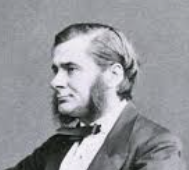
The absolute justice of the system of things is as clear to me as any scientific fact. The gravitation of sin to sorrow is as certain as that of the earth to the sun, and more so-for experimental proof of the fact is within reach of us all-nay, is before us all in our own lives, if we had but the eyes to see it.
3 months 3 days ago
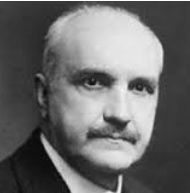
Never since the heroic days of Greece has the world had such a sweet, just, boyish master.
▼
Source
source
"The British Character"
3 months 3 days ago
Suffer little children, and forbid them not, to come unto me: for of such is the kingdom of heaven. Verily I say unto you, Whosoever shall not receive the kingdom of God as a little child shall in no wise enter therein.
▼
Source
source
18:16-17 (KJV) Variant translation: Let the little children come to me, and do not hinder them, for the kingdom of God belongs to such as these. I tell you the truth, anyone who will not receive the kingdom of God like a little child will never enter it.
4 months 1 week ago
Can a mortal ask questions which God finds unanswerable? Quite easily, I should think. All nonsense questions are unanswerable. How many hours are there in a mile? Is yellow square or round? Probably half the questions we ask - half our great theological and metaphysical problems - are like that.
1 month 3 weeks ago
If a well were sunk at our feet in the midst of the city of Norwich, the diggers would very soon find themselves at work in that white substance almost too soft to be called rock, with which we are all familiar as "chalk".
1 week 4 days ago
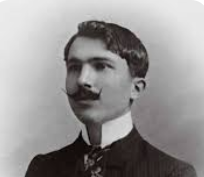
Nothing exists! Neither life nor death. I watch mind and matter hunting each other like two nonexistent erotic phantasms - merging, begetting, disappearing - and I say: "This is what I want!" I know now: I do not hope for anything. I do not fear anything, I have freed myself from both the mind and the heart, I have mounted much higher, I am free. This is what I want. I want nothing more. I have been seeking freedom.
▼
Source
source
This passage was used for Kazantzakis' epitaph: "Δεν ελπίζω τίποτα, δε φοβούμαι τίποτα, είμαι λεύτερος." I hope for nothing. I fear nothing. I am free.
3 weeks ago
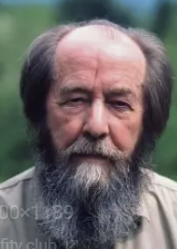
Violence, less and less embarrassed by the limits imposed by centuries of lawfulness, is brazenly and victoriously striding across the whole world, unconcerned that its infertility has been demonstrated and proved many times in history. What is more, it is not simply crude power that triumphs abroad, but its exultant justification. The world is being inundated by the brazen conviction that power can do anything, justice nothing.
4 months 3 weeks ago
Appearances to the mind are of four kinds. Things either are what they appear to be; or they neither are, nor appear to be; or they are, and do not appear to be; or they are not, and yet appear to be. Rightly to aim in all these cases is the wise man's task.
▼
Source
source
Book I, ch. 27, § 1.
2 months 3 weeks ago
We live in a nightmare of falsehoods, and there are few who are sufficiently awake and aware to see things as they are. Our first duty is to clear away illusions and recover a sense of reality. If war should come, it will do so on account of our delusions, for which our hag-ridden conscience attempts to find moral excuses. To recover a sense of reality is to recover the truth about ourselves and the world in which we live, and thereby to gain the power of keeping this world from flying asunder.
▼
Source
source
p. 80
2 months 2 weeks ago
Probability fractions arise from our knowledge and from our ignorance.
▼
Source
source
Chapter 14, Equipossibility, p. 132.
4 months 1 week ago
This art is music. It stands quite apart from all the others. In it we do not recognize the copy, the repetition, of any Idea of the inner nature of the world. Yet it is such a great and exceedingly fine art, its effect on man's innermost nature is so powerful, and it is so completely and profoundly understood by him in his innermost being as an entirely universal language, whose distinctness surpasses even that of the world of perception itself, that in it we certainly have to look for more than that.
▼
Source
source
Vol. I, Ch. III, The World As Representation: Second Aspect, as translated by Eric F. J. Payne, 1958

1 month 1 day ago
Blessed is he who has found his work; let him ask no other blessedness.
▼
Source
source
Bk. III, ch. 11.

4 months 1 week ago
The remedies for all our diseases will be discovered long after we are dead; and the world will be made a fit place to live in, after the death of most of those by whose exertions it will have been made so. It is to be hoped that those who live in those days will look back with sympathy to their known and unknown benefactors.
▼
Source
source
Diary, April 15, 1854, in The Collected Works of John Stuart Mill, Toronto, 1988, vol. 27, p. 668
2 months 1 week ago
Pain will force even the truthful to speak falsely.
▼
Source
source
Maxim 232
5 months 1 week ago
We may assume the superiority ceteris paribus [all things being equal] of the demonstration which derives from fewer postulates or hypotheses—in short from fewer premisses; for... given that all these are equally well known, where they are fewer knowledge will be more speedily acquired, and that is a desideratum. The argument implied in our contention that demonstration from fewer assumptions is superior may be set out in universal form...

4 months ago
False men and shams talk big and do nothing.
1 month 3 weeks ago
Our reverence for the nobility of manhood will not be lessened by the knowledge, that Man, is in substance and in structure, one with the brutes; for, he alone possesses the marvellous endowment of intelligible and rational speech, whereby, in the secular period of his existence, he has slowly accumulated and organized the experience which is almost wholly lost with the cessation of every individual life in other animals; so that now he stands raised upon it as on a mountain top, far above the level of his humble fellows, and transfigured from his grosser nature by reflecting, here and there, a ray from the infinite source of truth.
▼
Source
source
Ch.2, p. 132

4 months 1 week ago
Now in all of us, however constituted, but to a degree the greater in proportion as we are intense and sensitive and subject to diversified temptations, and to the greatest possible degree if we are decidedly psychopathic, does the normal evolution of character chiefly consist in the straightening out and unifying of the inner self. The higher and the lower feelings, the useful and the erring impulses, begin by being a comparative chaos within us - they must end by forming a stable system of functions in right subordination. Unhappiness is apt to characterize the period of order-making and struggle.
▼
Source
source
Lecture VIII, "The Divided Self, and the Process of its Unification"
4 months 1 week ago
In Mohammedanism the narrow principle of the Jews is expanded into universality and thereby overcome. Here, God is no longer, as in the Far East, regarded as existent in an immediately sensory way but is conceived as the one infinite power elevated above all the multiplicity of the world. Mohammedanism is, therefore, in the strictest sense of the word, the religion of sublimity.
▼
Source
source
Hegel, Philosophy of Mind (quoted by W. Wallace & A. V. Miller in Philosophy of Mind, Oxford 2010; also quoted in other words by Slavoj Žižek in A Glance into the Archives of Islam, Lacan dot com, 1997).

5 months 1 week ago
O light! This is the cry of all the characters of ancient drama brought face to face with their fate. This last resort was ours, too, and I knew it now. In the middle of winter I at last discovered that there was in me an invincible summer. Return to Tipasa (1954) Variant translation: In the depths of winter, I finally learned that within me there lay an invincible summer.


4 months 1 week ago
This sacrifice of common sense is the certain badge which distinguishes slavery from freedom; for when men yield up the privilege of thinking, the last shadow of liberty quits the horizon.
▼
Source
source
"Reflections on Titles", Pennsylvania Magazine

2 months 3 weeks ago
Yet its essence was the certitude that his life was not totally at the mercy of chance. Somehow, it was more important than that. This sense of power inside his head - which he could intensify by pulling a face and wrinkling up the muscles of his forehead - aroused a glow of optimism, an expectation of exciting events. He knew that for him, fate held something special in store.
▼
Source
source
p. 26
3 weeks 5 days ago
Apart from any other basis which might justify a superiority, education, as a power, raised him who possessed it over the weak, who lacked it, and the educated man counted in his circle, however large or small it was, as the mighty, the powerful, the imposing one: for he was an authority.
▼
Source
source
p. 12
5 months 1 week ago
In the New Testament sense, to be a Christian is, in an upward sense, as different from being a man as, in a downward sense, to be a man is different from being a beast. A Christian in the sense of the New Testament, although he stands suffering in the midst of life's reality, has yet become completely a stranger to this life; in the words of the Scripture and also of the Collects (which still are read-O bloody satire!-by the sort of priests we now have, and in the ears of the sort of Christians that now live) he is a stranger and a pilgrim-just think, for example of the late Bishop Mynster intoning, We are strangers and pilgrims in this world! A Christian in the New Testament sense is literally a stranger and a pilgrim, he feels himself a stranger, and everyone involuntarily feels that this man is a stranger to him.

2 months 3 weeks ago
One could count on one's fingers the number of scientists in the entire world who have a general idea of the history and development of their own particular science; there is not one who is really competent as regards sciences other than his own. As science forms an indivisible whole, one may say that there are no longer, strictly speaking, any scientists, but only drudges doing scientific work. . . .
▼
Source
source
p. 13 (as quoted in On Science, Necessity, and the Love of God (1968), p.1)
2 months 2 weeks ago
There are two ways in which a science develops; in response to problems which is itself creates, and in response to problems that are forced on it from the outside.
▼
Source
source
Chapter 1, An Absent Family Of Ideas, p. 4.
5 months 1 week ago
[I]t's gravity is the cause; and that which is heavy abides in the middle, and the earth is in the middle: in like manner also, the infinite will abide in itself, through some other cause... and will itself support itself. ...[T]he places of the whole and the part are of the same species; as of the whole earth and a clod, the place is downward; and of the whole of fire, and a spark, the place is upward. So that if the place of the infinite is in itself, there will be the same place also of a part of the infinite.
2 months 3 weeks ago
Just as a vagrant accused of stealing a carrot from a field stands before a comfortably seated judge who keeps up an elegant flow of queries, comments and witticisms while the accused is unable to stammer a word, so truth stands before an intelligence which is concerned with the elegant manipulation of opinions.
▼
Source
source
p. 68
2 months 3 weeks ago
Morally, it is wrong to suppose the source of evil is outside oneself, that one is a vessel of holiness running over with virtue. Such a disposition is the best soil for a hateful and cruel fanaticism. It is as wrong to impute every wickedness to Jews, Freemasons, "intellectuals," as it is to blame all crimes on the bourgeoisie, the nobility, and the powers that were. No; the root of evil is in me as well, and I must take my share of the responsibility and the blame. That was true before the revolution and it is true still.
▼
Source
source
p. 128
2 months 2 weeks ago
It is said that truth comes from the mouths of fools and children: I wish every good mind which feels an inclination for satire would reflect that the finest satirist always has something of both in him.
▼
Source
source
J 157
1 month 2 weeks ago
Is there really someone who, searching for a group of wise and sensitive persons to regulate him for his own good, would choose that group of people that constitute the membership of both houses of Congress?
▼
Source
source
Ch. 2 : The State of Nature; Protective Associations, p. 14

4 months 1 week ago
Three passions, simple but overwhelmingly strong, have governed my life: the longing for love, the search for knowledge, and unbearable pity for the suffering of mankind. These passions, like great winds, have blown me hither and thither, in a wayward course, over a deep ocean of anguish, reaching to the very verge of despair.
4 months 3 weeks ago
Rules for Axioms. I. Not to omit any necessary principle without asking whether it is admittied, however clear and evident it may be. II. Not to demand, in axioms, any but things that are perfectly evident in themselves.
4 months 4 weeks ago
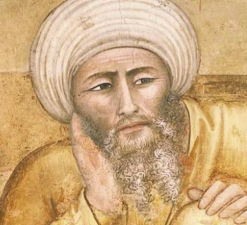
The Law teaches that the universe was invented and created by God, and that it did not come into being by chance or by itself.
4 months 1 week ago
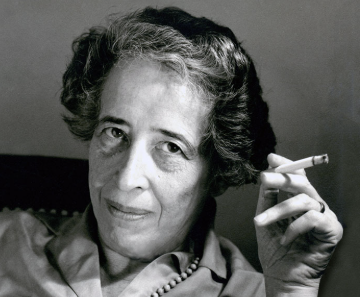
The emotions I feel are no more meant to be shown in their unadulterated state than the inner organs by which we live.
▼
Source
source
pp. 31-32
CivilSimian.com created by AxiomaticPanic, CivilSimian, Kalokagathia