

8 months 2 weeks ago
The plague of man is boasting of his knowledge.
▼
Source
source
Ch. 12 (tr. ?)

8 months 1 week ago
What cannot be imagined cannot even be talked about.
▼
Source
source
Journal entry (12 October 1916), p. 84e

7 months 2 weeks ago
I intend no Monopoly, but a Community in Learning; I study not for my own sake only, but for theirs that study not for themselves.
▼
Source
source
Section 3
7 months 1 week ago
I think that I have succeeded in making it clear that this doctrine gives room for explanations of many facts which without it are absolutely and hopelessly inexplicable; and further that it carries along with it the following doctrines: first, a logical realism of the most pronounced type; second, objective idealism; third, tychism, with its consequent thoroughgoing evolutionism. We also notice that the doctrine presents no hindrences to spiritual influences, such as some philosophies are felt to do.
7 months 3 days ago
All the cases in which means and ends are external to one another are non-esthetic.
▼
Source
source
p. 205
7 months 3 weeks ago
Declining from the public ways, walk in unfrequented paths.
▼
Source
source
Symbol 5

7 months 1 week ago
No one commits suicide for external reasons, only because of inner disequilibrium. Under similar adverse circumstances, some are indifferent, some are moved, some are driven to suicide.
8 months 2 weeks ago
The community is a fictitious body, composed of the individual persons who are considered as constituting as it were its members. The interest of the community then is what? The sum of the interests of the several members who compose it.
▼
Source
source
Ch. 1: Of the Principle of Utility
5 months 3 weeks ago
The human race's prospects of survival were considerably better when we were defenceless against tigers than they are today when we have become defenceless against ourselves.
▼
Source
source
"Man and Hunger: The Perspectives of History", Speech to the World Food Congress (4 June 1963)
7 months 1 week ago
The modern state, in its essence and objectives, is necessarily a military state, and a military state necessarily becomes an aggressive state. If it does not conquer others it will itself be conquered, for the simple reason that wherever force exists, it absolutely must be displayed or put into action. From this again it follows that the modern state must without fail be huge and powerful; that is the indispensable condition for its preservation.
8 months 1 week ago
Nothing is more important than the formation of fictional concepts, which teach us at last to understand our own.
▼
Source
source
p. 85e
8 months 1 day ago
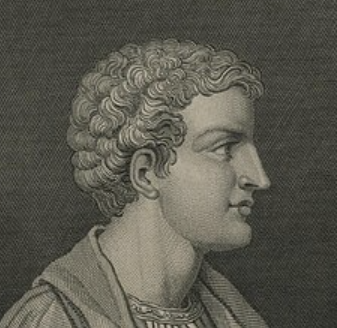
When you wish to instruct, be brief; that men's minds may take in quickly what you say, learn its lesson, and retain it faithfully. Every word that is unnecessary only pours over the side of a brimming mind.
▼
Source
source
Lines 335-337; Edward Charles Wickham translation

8 months 2 weeks ago
Lastly, we must also know what Baptism signifies, and why God has ordained just such external sign and ceremony for the Sacrament by which we are first received into the Christian Church. But the act or ceremony is this, that we are sunk under the water, which passes over us, and afterwards are drawn out again. These two parts, to be sunk under the water and drawn out again, signify the power and operation of Baptism, which is nothing else than putting to death the old Adam, and after that the resurrection of the new man, both of which must take place in us all our lives, so that a truly Christian life is nothing else than a daily baptism, once begun and ever to be continued.
▼
Source
source
On Infant Baptism, Large Catechism

7 months 4 days ago
One who seeks will find, and for one who knocks it will be opened.
7 months 1 week ago
True science is distinctively the study of useless things. For the useful things will get studied without the aid of scientific men.

7 months 2 weeks ago
Given that annihilation of nature in its entirety is impossible, and that death and dissolution are not appropriate to the whole mass of this entire globe or star, from time to time, according to an established order, it is renewed, altered, changed, and transformed in all its parts.
▼
Source
source
Fifth Dialogue

6 months 3 weeks ago
Shakespeare wrote better poetry for not knowing too much; Milton, I think, knew too much finally for the good of his poetry.
▼
Source
source
Ch. 43, November 11, 1947.
7 months 1 week ago
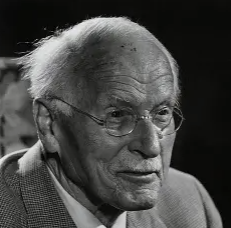
My soul, my soul, where are you? Do you hear me? I speak, I call you-are you there? I have returned, here I am again. I have shaken the dust of all the lands from my feet, and I have come to you again, I am with you. After long years of long wandering, I have come to you anew. Shall I tell you everything I have seen, experienced, and drunk in? Or do you not want to hear about all the noise of life and the world? But one thing you must know, the one thing I have learned is that one must live this life. This life is the way, the long sought-after way to the unfathomable, which we call "divine". There is no other way. All other ways are false paths.
▼
Source
source
Book 2, 12. Nov. 1913
7 months 2 weeks ago
I have often admired the mystical way of Pythagoras, and the secret Magic of numbers.
▼
Source
source
Section 12

8 months 1 week ago
Since he is unable to be the beloved, he will become the lover.
▼
Source
source
p. 90
4 months 1 week ago
To SEE and accept the boundaries of the human mind without vain rebellion, and in these severe limitations to work ceaselessly without protest - this is where man's first duty lies.
8 months 1 week ago
It is one of the chief skills of the philosopher not to occupy himself with questions which do not concern him.
▼
Source
source
Journal entry

6 months 3 weeks ago
If countries were named after the words you first hear when you go there, England would have to be called Damn It.
▼
Source
source
F 33
4 months 2 weeks ago
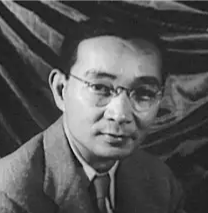
The Chinese believe that when there are too many policemen, there can be no individual liberty, when there are too many lawyers, there can be no justice, and when there are too many soldiers, there can be no peace.
▼
Source
source
Between Tears And Laughter (1943), p. 71.

4 months 1 week ago
Remember that man lives only in the present, in this fleeting instant; all the rest of his life is either past and gone, or not yet revealed. Short, therefore, is man's life, and narrow is the corner of the earth wherein he dwells.
▼
Source
source
III, 10
9 months 1 week ago
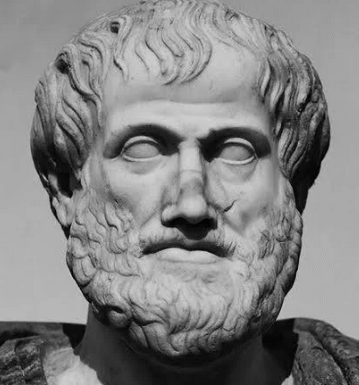
Hope is the dream of a waking man.
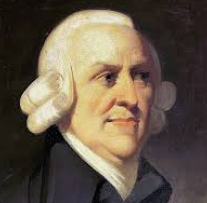
8 months 2 weeks ago
No fixed capital can yield any revenue but by means of a circulating capital.
▼
Source
source
Chapter I, p. 311.
4 months 3 weeks ago
It is the greatest of all mistakes to do nothing because you can only do little.
▼
Source
source
Lecture XIX : On the Conduct of the Understanding, Part II

8 months 2 weeks ago
In the land of the blind the one-eyed man is lord.
▼
Source
source
Act III, scene ix
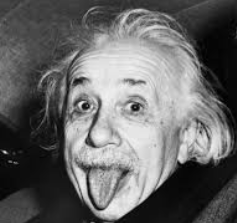
4 months 1 day ago
I do not think that religion is the most important element. We are held together rather by a body of tradition, handed down from father to son, which the child imbibes with his mother's milk. The atmosphere of our infancy predetermines our idiosyncrasies and predilections.
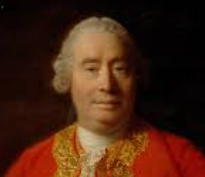
8 months 2 weeks ago
Morality is a subject that interests us above all others: We fancy the peace of society to be at stake in every decision concerning it; and 'tis evident, that this concern must make our speculations appear more real and solid, than where the subject is, in a great measure, indifferent to us. What affects us, we conclude can never be a chimera; and as our passion is engag'd on the one side or the other, we naturally think that the question lies within human comprehension; which, in other cases of this nature, we are apt to entertain some doubt of. Without this advantage I never should have ventur'd upon a third volume of such abstruse philosophy, in an age, wherein the greatest part of men seem agreed to convert reading into an amusement, and to reject every thing that requires any considerable degree of attention to be comprehended.
▼
Source
source
Part 1, Section 1

6 months 2 weeks ago
There's no objective morality, but that's not the real point. It's not the point that morality has to somehow be a stone, or something that can be touched.
The options that are available to choose are determined to a point, and this is the objective aspect of morality, ethics, goodness, fairness, justice.
The subjective aspect can still remain subjective, but that doesn't mean goodness is relative.....at all. The measure of a man is a man.
7 months 1 week ago
In every man sleeps a prophet, and when he wakes there is a little more evil in the world
5 months 3 days ago
The virtues are not poured into us, they are natural. Seek, and you will find them: neglect, and you will lose them.
▼
Source
source
Uses and Sanctions, no. 22
9 months 1 week ago
What, then, is that incalculable feeling that deprives the mind of the sleep necessary to life? A world that can be explained even with bad reasons is a familiar world. But, on the other hand, in a universe suddenly divested of illusions and lights, man feels an alien, a stranger. His exile is without remedy since he is deprived of the memory of a lost home or the hope of a promised land. This divorce between man and his life, the actor and his setting, is properly the feeling of absurdity.

4 months 1 week ago
Let what will be said or done, preserve your sang-froid immovably, and to every obstacle, oppose patience, perseverance, and soothing language.
▼
Source
source
Letter to William Short
8 months 2 days ago
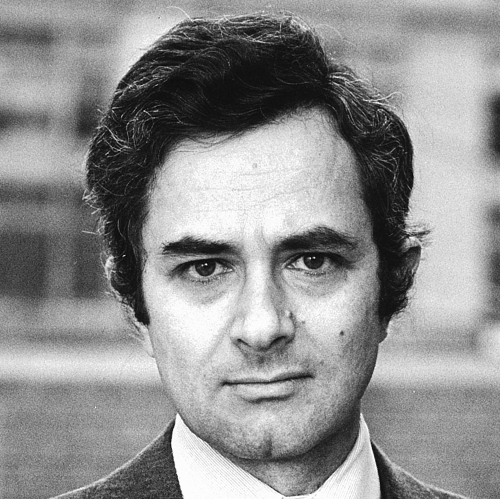
In speaking of the fear of religion, I don't mean to refer to the entirely reasonable hostility toward certain established religions and religious institutions, in virtue of their objectionable moral doctrines, social policies, and political influence. Nor am I referring to the association of many religious beliefs with superstition and the acceptance of evident empirical falsehoods. I am talking about something much deeper-namely, the fear of religion itself. I speak from experience, being strongly subject to this fear myself: I want atheism to be true and am made uneasy by the fact that some of the most intelligent and well-informed people I know are religious believers. It isn't just that I don't believe in God and, naturally, hope that I'm right in my belief. It's that I hope there is no God! I don't want there to be a God; I don't want the universe to be like that.
▼
Source
source
The Last Word, Oxford University Press, 1997, pp. 130-131.
6 months 3 weeks ago
A clever child brought up with a foolish one can itself become foolish. Man is so perfectable and corruptible he can become a fool through good sense.
▼
Source
source
F 69

8 months 1 week ago
There is much pleasure to be gained from useless knowledge.
▼
Source
source
Ch. 2: 'Useless' Knowledge

7 months 1 week ago
In the interval between his campaigns Agricola was employed in the great labours of peace. He knew that the general must be perfected by the legislator; and that the conquest is neither permanent nor honourable, which is only an introduction to tyranny... In short, he subdued the Britons by civilizing them; and made them exchange a savage liberty for a polite and easy subjection. His conduct is the most perfect model for those employed in the unhappy, but sometimes necessary, task of subduing a rude and free people.
▼
Source
source
An Essay towards an Abridgment of English History (1757-c. 1763)
7 months 2 days ago
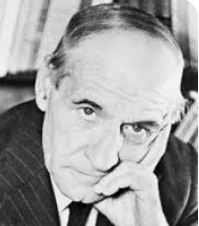
The nineteenth century, utilitarian throughout, set up a utilitarian interpretation of the phenomenon of life which has come down to us and may still be considered as the commonplace of everyday thinking. ... An innate blindness seems to have closed the eyes of this epoch to all but those facts which show life as a phenomenon of utility.
▼
Source
source
p. 16

7 months 2 weeks ago
Americans of all ages, all stations of life, and all types of disposition are forever forming associations... In democratic countries knowledge of how to combine is the mother of all other forms of knowledge; on its progress depends that of all the others.
▼
Source
source
Book Two, Chapter V.
8 months 6 days ago
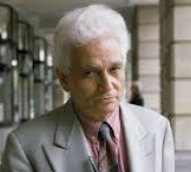
Amy Kofman: Have you read all the books in here?Derrida: No, only four of them. But I read those very, very carefully.
▼
Source
source
Derrida (2003 documentary), referring to his personal library

8 months 1 week ago
There are, besides, eternal truths, such as Freedom, Justice, etc., that are common to all states of society. But Communism abolishes eternal truths, it abolishes all religion, and all morality, instead of constituting them on a new basis; it therefore acts in contradiction to all past historical experience.
▼
Source
source
Section 2, paragraph 63
CivilSimian.com created by AxiomaticPanic, CivilSimian, Kalokagathia