


6 months 2 weeks ago
Truth happens to an idea. It becomes true, is made true by events. Its verity is in fact an event, a process: the process namely of its verifying itself, its veri-fication. Its validity is the process of its valid-ation.
▼
Source
source
Lecture VI, Pragmatism's Conception of Truth
4 months 6 days ago
Let us have "sweet girl graduates" by all means. They will be none the less sweet for a little wisdom; and the "golden hair" will not curl less gracefully outside the head by reason of there being brains within.
▼
Source
source
Emancipation - Black and White

5 months 3 weeks ago
I could never stand more than three months of dreaming at a time without feeling an irresistible desire to plunge into society. To plunge into society meant to visit my superior, Anton Antonich Syetochkin. He was the only permanent acquaintance I have had in my life, and I even wonder at the fact myself now. But I even went to see him only when that phase came over me, and when my dreams had reached such a point of bliss that it became essential to embrace my fellows and all mankind immediately. And for that purpose I needed at least one human being at hand who actually existed. I had to call on Anton Antonich, however, on Tuesday - his at-home day; so I always had to adjust my passionate desire to embrace humanity so that it might fall on a Tuesday.
▼
Source
source
Part 2, Chapter 2
6 months 2 days ago
A fool is known by his Speech; and a wise man by Silence.
3 months 2 weeks ago
This shows, perhaps, why we have tried to put all physical phenomena into the same frame. But that can not pass for a definition of simultaneity, since this hypothetical intelligence, even if it existed, would be for us impenetrable. It is... necessary to seek something else.
4 months 4 weeks ago
In short, analytic statements are statements which we all accept and for which we do not give reasons. This is what we mean when we say that they are true by 'implicit convention'. The problem is then to distinguish them from other statements that we accept, and do not give reasons for, in particular from the statements that we unreasonably accept. To resolve this difficulty, we have to point out some of the crucial distinguishing features of analytic statements (e.g. the fact that the subject concept is not a law-cluster concept), and we have to connect these features with what, in the preceding section, was called the 'rationale' of the analytic-synthetic distinction. Having done this, we can see that the acceptance of analytic statements is rational, even though there are no reasons (in the sense of' evidence') in connection with them.
▼
Source
source
The analytic and the synthetic
6 months 1 week ago
For many, as Cranton tells us, and those very wise men, not now but long ago, have deplored the condition of human nature, esteeming life a punishment, and to be born a man the highest pitch of calamity; this, Aristotle tells us, Silenus declared when he was brought captive to Midas.

5 months 6 days ago
The capacity to give one's attention to a sufferer is a very rare and difficult thing; it is almost a miracle; it is a miracle. Nearly all those who think they have this capacity do not possess it. Warmth of heart, impulsiveness, pity are not enough.
5 months 2 weeks ago
You are of all my friends the one who illustrates pragmatism in its most needful forms. You are a jewel of pragmatism.
▼
Source
source
Letter to William James (16 March 1903), published in The thought and character of William James, as revealed in unpublished correspondence and notes (1935) by Ralph Barton Perry, Vol. 2, p. 427

5 months 1 week ago
Master, we saw one casting out devils in thy name, and he followeth not us: and we forbad him, because he followeth not us. But Jesus said, Forbid him not: for there is no man which shall do a miracle in my name, that can lightly speak evil of me. For he that is not against us is on our part.
▼
Source
source
Mark 9:38-40 (KJV)
6 months 4 weeks ago
There is a plague on Man, the opinion that he knows something.
7 months 1 week ago
The greatest states have been overthrown by the young and sustained and restored by the old. ... Rashness is the product of the budding-time of youth, prudence of the harvest-time of age.
▼
Source
source
section 20
6 months 1 week ago
Nowadays, to say that we are clever animals is not to say something philosophical and pessimistic but something political and hopeful - namely, if we can work together, we can make ourselves into whatever we are clever and courageous enough to imagine ourselves becoming. This is to set aside Kant's question "What is man?" and to substitute the question "What sort of world can we prepare for our great grandchildren?"
▼
Source
source
"Human Rights, Rationality, and Sentimentality." Truth and Progress: Philosophical Papers, Volume 3 (1998).
5 months 1 week ago
Verily I say unto you, All sins shall be forgiven unto the sons of men, and blasphemies wherewith soever they shall blaspheme: But he that shall blaspheme against the Holy Ghost hath never forgiveness, but is in danger of eternal damnation.
▼
Source
source
Mark 3:28-29 (KJV)
7 months 3 weeks ago
Misfortune shows those who are not really friends.


5 months 1 week ago
The Son of man shall be betrayed into the hands of men: And they shall kill him, and the third day he shall be raised again.
▼
Source
source
17:22-23 (KJV)
2 months 2 weeks ago
A mind that has confronted ruin for years Is half or more a ruined mind.
7 months 1 week ago
How abundantly do spiritual beings display the powers that belong to them! We look for them, but do not see them; we listen to, but do not hear them; yet they enter into all things, and there is nothing without them.

6 months 4 weeks ago
It may be observed, that provinces amid the vicissitudes to which they are subject, pass from order into confusion, and afterward recur to a state of order again; for the nature of mundane affairs not allowing them to continue in an even course, when they have arrived at their greatest perfection, they soon begin to decline. In the same manner, having been reduced by disorder, and sunk to their utmost state of depression, unable to descend lower, they, of necessity, reascend; and thus from good they gradually decline to evil, and from evil again return to good. The reason is, that valor produces peace; peace, repose; repose, disorder; disorder, ruin; so from disorder order springs; from order virtue, and from this, glory and good fortune.
▼
Source
source
Book V, Chapter 1
3 months 1 day ago
Additionally, in the United States, we define manliness in terms of aggression. I think it must be because we're frightened. We put on a show of being tough guys, but it's completely unnecessary, you know. If you have what it takes, you don't need to put on an act, and you certainly don't need to beat nature into submission. Why be hostile to nature?
▼
Source
source
p. 8
7 months 2 weeks ago
He could almost wish he were superstitious. He could then console himself with the thought that the casual meaningless meeting had really been directed by a knowing and purposeful Fate.
7 months 1 week ago
The first duty of a man is the seeking after and the investigation of truth.
▼
Source
source
As quoted in A Crowd of One: The Future of Individual Identity (2007) by John Clippinger, p. 130 Compare: "The distinguishing property of man is to search for and to follow after truth." – De Officiis, Book I, 13

5 months 3 days ago
This, I feel, is missing a vital point: that the sceptic is often a totally honest person who, for perfectly good, sound reasons, simply cannot see a case for belief. In fact many -- like Courty Bryan -- admit that they would like to be convinced, but find it impossible.
▼
Source
source
p. 77
4 months 4 weeks ago
The capacity of the human mind for formulating and solving complex problems is very small compared with the size of the problems whose solution is required for objectively rational behavior in the real world-or even for a reasonable approximation to such objective rationality.
▼
Source
source
p. 198; Cited in: P. Slovic (1972) From Shakespeare to Simon: Speculations - And Some Evidence About Man's Ability to Process Information. Oregon Research Institute Monograph, 1972. p. 1.

3 months 2 weeks ago
The second failing of liberalism comes directly out of the fact that it attempts to lower the horizons of politics. Liberal societies do not want to tell you how to live. They do not want to define "the good life" because that is the source of conflict, but as a result liberal societies tend not to satisfy these very deep human cravings for community, because... there's something wrong with the basic liberal premise that we all start... as self-interested individuals. We're not self-interested individuals.
▼
Source
source
15:22
5 months 1 week ago
I think being a woman is like being Irish... Everyone says you're important and nice, but you take second place all the same.
▼
Source
source
The Red and the Green (1965), ch. 2, p. 30.

5 months ago
First we have to believe, and then we believe.
▼
Source
source
K 55
5 months 2 weeks ago
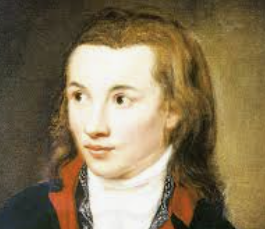
I was still blind, but twinkling stars did dance Throughout my being's limitless expanse, Nothing had yet drawn close, only at distant stages I found myself, a mere suggestion sensed in past and future ages.
▼
Source
source
As quoted in Romantic Vision, Ethical Context: Novalis and Artistic Autonomy (1987) by Géza von Molnár, p. 2
3 months 2 weeks ago
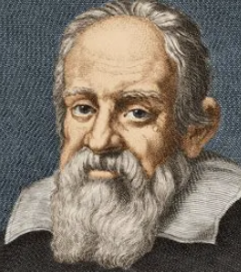
Alas! Your dear friend and servant Galileo has been for the last month hopelessly blind; so that this heaven, this earth, this universe, which I by my marvelous discoveries and clear demonstrations had enlarged a hundred thousand times beyond the belief of the wise men of bygone ages, henceforward for me is shrunk into such a small space as is filled by my own bodily sensations.
▼
Source
source
Letter to Élie Diodati (2 January 1638), as translated in The Private Life of Galileo : Compiled primarily from his correspondence and that of his eldest daughter, Sister Maria Celeste (1870) by Mary Allan-Olney, p. 279
6 months 2 weeks ago
There is no worse lie than a truth misunderstood by those who hear it.
▼
Source
source
Lectures XIV and XV, "The Value of Saintliness"

6 months 2 weeks ago
Your questions refer to words; so I have to talk about words. You say: The point isn't the word, but its meaning, and you think of the meaning as a thing of the same kind as the word, though also different from the word. Here the word, there the meaning.
▼
Source
source
§ 120

3 months 5 days ago
To animals not only human virtues but even human vices are forbidden: their whole constitution, mental and bodily, is unlike that of human beings...they possess intellect, the greatest attribute of all, but in a rough and inexact condition. It is, consequently, able to grasp those visions and semblances which rouse it to action, but only in a cloudy and indistinct fashion. Their impulses and outbreaks are violent, and that they do not feel fear, anxieties, grief, or anger, but some semblances of these feelings: wherefore they quickly drop them and adopt the converse of them: they graze after showing the most vehement rage and terror, and after frantic bellowing and plunging they straightaway sink into quiet sleep.

6 months 2 weeks ago
I think so badly of philosophy that I don't like to talk about it. ... I do not want to say anything bad about my dear colleagues, but the profession of teacher of philosophy is a ridiculous one. We don't need a thousand of trained, and badly trained, philosophers - it is very silly. Actually most of them have nothing to say.
▼
Source
source
As quoted in "At 90, and Still Dynamic : Revisiting Sir Karl Popper and Attending His Birthday Party" by Eugene Yue-Ching Ho, in Intellectus 23
6 months 3 weeks ago
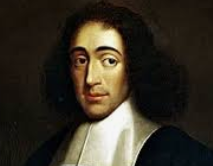
The ordinary surroundings of life which are esteemed by men (as their actions testify) to be the highest good, may be classed under the three heads - Riches, Fame, and the Pleasures of Sense: with these three the mind is so absorbed that it has little power to reflect on any different good.
▼
Source
source
I, 3 Variant translation: The things which ... are esteemed as the greatest good of all ... can be reduced to these three headings, to wit : Riches, Fame, and Pleasure. With these three the mind is so engrossed that it cannot scarcely think of any other
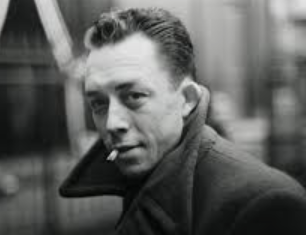
7 months 2 weeks ago
Happiness implied a choice, and within that choice a concerted will, a lucid desire.
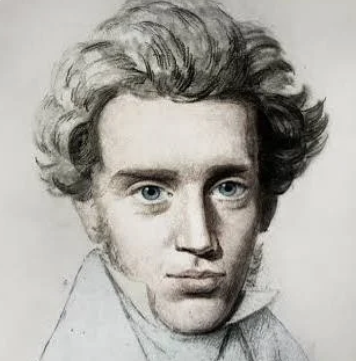
7 months 3 weeks ago
That a woman is presented as a teacher, as a prototype of piety, cannot amaze anyone who knows that piety or godliness is fundamentally womanliness. ... from a woman you learn concern for the one thing needful, from Mary, sister of Lazarus, who sat silent at Christ's feet with her heart's choice: the one thing needful.
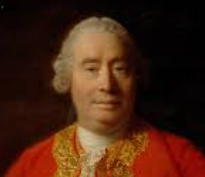
6 months 3 weeks ago
Look round this universe. What an immense profusion of beings, animated and organised, sensible and active! You admire this prodigious variety and fecundity. But inspect a little more narrowly these living existences, the only beings worth regarding. How hostile and destructive to each other! How insufficient all of them for their own happiness! How contemptible or odious to the spectator! The whole presents nothing but the idea of a blind Nature, impregnated by a great vivifying principle, and pouring forth from her lap, without discernment or parental care, her maimed and abortive children!
▼
Source
source
Philo to Cleanthes, Part XI
4 months 4 weeks ago
In Administrative Behavior, bounded rationality is largely characterized as a residual category - rationality is bounded when it falls short of omniscience. And the failures of omniscience are largely failures of knowing all the alternatives, uncertainty about relevant exogenous events, and inability to calculate consequences. There was needed a more positive and formal characterization of the mechanisms of choice under conditions of bounded rationality... Two concepts are central to the characterization: search and satisficing.
▼
Source
source
p. 502; As cited in Barros (2010, p. 464-5).
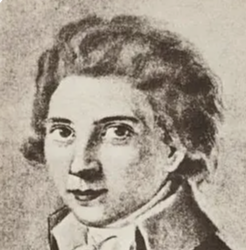
5 months 3 weeks ago
Virtue is reason which has become energy.
▼
Source
source
"Selected Ideas (1799-1800)", Dialogue on Poetry and Literary Aphorisms, Ernst Behler and Roman Struc, trans. (Pennsylvania University Press:1968) #23
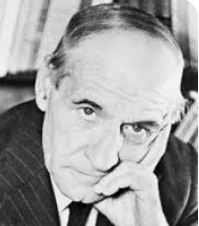
5 months 1 week ago
The direction of society has been taken over by a type of man who is not interested in the principles of civilisation. Not of this or that civilisation but - from what we can judge to-day - of any civilisation. ...The type of man dominant to-day is a primitive one, a Naturmensch rising up in the midst of a civilised world.
▼
Source
source
Chap.IX: The Primitive and the Technical

6 months 2 weeks ago
One always dies too soon - or too late. And yet, life is there, finished: the line is drawn, and it must all be added up. You are nothing other than your life.
▼
Source
source
Inès, Act 1, sc. 5
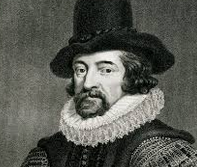
6 months 4 weeks ago
The unassisted hand and the understanding left to itself possess but little power. Effects are produced by the means of instruments and helps, which the understanding requires no less than the hand; and as instruments either promote or regulate the motion of the hand, so those that are applied to the mind prompt or protect the understanding.
▼
Source
source
Aphorism 2
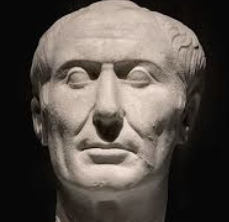
4 months 2 weeks ago
No one knows what he can do till he tries.
▼
Source
source
Maxim 786

6 months 3 weeks ago
I went to Salt Lake City and the Mormons tried to convert me, but when I found they forbade tea and tobacco I thought it was no religion for me.
▼
Source
source
Letter to C. P. Sanger, 23 December, 1929
6 months 3 weeks ago
I do like clarity and exact thinking and I believe that very important to mankind because when you allow yourself to think inexactly your prejudices, your bias, your self interest comes in in ways you don't notice and you do bad things without knowing that you are doing them: self deception is very easy. So that I do think clear thinking immensely important.
▼
Source
source
Television interview ("On clarity and exact thinking" - available on youtube)
5 months 2 days ago
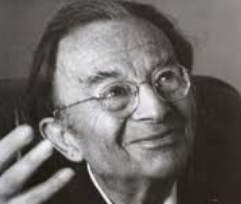
Man is born as a freak of nature, being within nature and yet transcending it. He has to find principles of action and decision-making which replace the principles of instincts. He has to have a frame of orientation which permits him to organize a consistent picture of the world as a condition for consistent actions. He has to fight not only against the dangers of dying, starving, and being hurt, but also against another danger which is specifically human: that of becoming insane. In other words, he has to protect himself not only against the danger of losing his life but also against the danger of losing his mind.
▼
Source
source
The Revolution of Hope: Toward a Humanized Technology (1968), p. 61

6 months 3 weeks ago
How every line is of such strong, determined, and consistent meaning! And on every page we encounter deep, original, lofty thoughts, while the whole world is suffused with a high and holy seriousness.
▼
Source
source
About Indian sacred scriptures. quoted in Londhe, S. (2008).
CivilSimian.com created by AxiomaticPanic, CivilSimian, Kalokagathia