


3 months 1 week ago
Applaud us when we run, console us when we fall, cheer us when we recover.
▼
Source
source
Speech at Bristol Previous to the Election (6 September 1780), quoted in The Works of the Right Honourable Edmund Burke, Vol. II (1855), p. 129

3 months 1 week ago
The Doctrine of Knowledge, apart from all special and definite knowing, proceeds immediately upon Knowledge itself, in the essential unity in which it recognises Knowledge as existing; and it raises this question in the first place - How this Knowledge can come into being, and what it is in its inward and essential Nature? The following must be apparent: - There is but One who is absolutely by and through himself, - namely, God; and God is not the mere dead conception to which we have thus given utterance, but he is in himself pure Life. He can neither change nor determine himself in aught within himself, nor become any other Being; for his Being contains within it all his Being and all possible Being, and neither within him nor out of him can any new Being arise.
1 month 1 week ago
The totalitarian states, whether of the fascist or the communist persuasion, are more than superficially alike as dictatorships, in the suppression of dissent, and in operating planned and directed economies. They are profoundly alike.
▼
Source
source
Ch. V: "The Totalitarian Regimes", §7, p. 89

4 months 1 week ago
For the purpose of acquiring gain, everything else is pushed aside or thrown overboard, for example, as is philosophy by the professors of philosophy.
▼
Source
source
E. Payne, trans. (1974) Vol. 1, p. 347

5 months 1 week ago
It is by the Imperial Capital that contemporaries (and posterity, too) judge an Empire, and its magnificence impresses them mightily and leads them to judge the Emperor a great man and hero, even though it may all be based on robbery, and though the provinces of the Empire may be sunk in misery.

2 months 1 week ago
All these people talk so eloquently about getting back to good old-fashioned values. Well, as an old poop I can remember back to when we had those old-fashioned values, and I say let's get back to the good old-fashioned First Amendment of the good old-fashioned Constitution of the United States-and to hell with the censors! Give me knowledge or give me death!
▼
Source
source
As quoted in "An Interview with Kurt Vonnegut, Jr., Carey Horwitz, Library Journal, Apr. 15, 1973: 1131

4 months 1 week ago
If the Jew did not exist, the anti-Semite would invent him.
▼
Source
source
p. 8
4 months 4 weeks ago
Times are bad. Children no longer obey their parents, and everyone is writing a book.
▼
Source
source
As quoted in InfoWorld, Vol. 23, No. 16, 16 April 2001, p. 49. This had been attributed previously to many other sources from 1908 on, according to this analysis by Quote Investigator.

1 month 3 weeks ago
God give me strength to face a fact though it slay me.
▼
Source
source
As quoted in Nature Vol. 149 (Jan-Jun) 1942 p. 291, and A Philosophy for Our Time (1954) by Bernard Mannes Baruch, p. 13

4 months 4 weeks ago
Pleasure and distress, fear and courage, desire and aversion, where have these affections and experiences their seat? Clearly, either in the Soul alone, or in the Soul as employing the body, or in some third entity deriving from both. And for this third entity, again, there are two possible modes: it might be either a blend or a distinct form due to the blending.

3 months 1 week ago
The idea of an all-powerful divine Being is present everywhere, unconsciously if not consciously, because it is an archetype. There is in the psyche some superior power, and if it is not consciously a god, it is the "belly" at least, in St. Paul's words. I therefore consider it wiser to acknowledge the idea of God consciously, for, if we do not, something else is made God, usually something quite inappropiate and stupid such as only an "enlightened" intellect could hatch forth.
▼
Source
source
C. G. Jung. 2014. Collected Works of C.G. Jung, Volume 7: Two Essays in Analytical Psychology. Princeton University Press. p. 71
4 months 3 weeks ago
There are hardly any truths upon which we always remain agreed, and still fewer objects of pleasure which we do not change every hour, I do not know whether there is a means of giving fixed rules for adapting discourse to the inconstancy of our caprices.
1 month 4 days ago
If we study the history of science we see happen two inverse phenomena... Sometimes simplicity hides under complex appearances; sometimes it is the simplicity which is apparent, and which disguises extremely complicated realities....No doubt, if our means of investigation should become more and more penetrating, we should discover the simple under the complex, then the complex under the simple, then again the simple under the complex, and so on, without our being able to foresee what will be the last term. We must stop somewhere, and that science may be possible, we must stop when we have found simplicity. This is the only ground on which we can rear the edifice of our generalizations.
1 month 3 days ago
It would be silly, of course, to be either 'for' or 'against' modernity tout court, not only because it is pointless to try to stop the development of technology, science, and economic rationality, but because both modernity and antimodernity may be expressed in barbarous and antihuman terms.
▼
Source
source
"Modernity on Endless Trial"

5 months 1 week ago
The words that reverberate for us at the confines of this long adventure of rebellion are not formulas for optimism, for which we have no possible use in the extremities of our unhappiness, but words of courage and intelligence which, on the shores of the eternal seas, even have the qualities of virtue.

2 months 1 week ago
Cultural dominance by either the left or the right hemisphere is largely dependent upon environmental factors.
▼
Source
source
p. 72
3 months 6 days ago
The third argument, enclosing and defending the other two, consists in the development of those principles of logic according to which the humble argument is the first stage of a scientific inquiry into the origin of the three Universes, but of an inquiry which produces, not merely scientific belief, which is always provisional, but also a living, practical belief, logically justified in crossing the Rubicon with all the freightage of eternity.
▼
Source
source
V
4 months 1 week ago
There are 80,000 prostitutes in London alone and what are they, if not bloody sacrifices on the altar of monogamy?
▼
Source
source
"Of Women"
3 weeks 4 days ago
The fox, when caught, is worth nothing: he is followed for the pleasure of following.
▼
Source
source
Vol. I, ch. 6, "Of Occupation", p. 177

5 months 1 week ago
So it happens at times that a person believes that he has a world-view, but that there is yet one particular phenomenon that is of such a nature that it baffles the understanding, and that he explains differently and attempts to ignore in order not to harbor the thought that this phenomenon might overthrow the whole view, or that his reflection does not possess enough courage and resolution to penetrate the phenomenon with his world-view.

4 months 2 weeks ago
I will first discuss images according to the Law of Moses, and then according to the gospel. And I say at the outset that according to the Law of Moses no other images are forbidden than an image of God which one worships. A crucifix, on the other hand, or any other holy image is not forbidden. Heigh now! you breakers of images, I defy you to prove the opposite!
▼
Source
source
pp. 85-86
3 months 1 week ago
It is a general popular error to suppose the loudest complainers for the publick to be the most anxious for its welfare.
▼
Source
source
Observations on a Late Publication on the Present State of the Nation
3 months 1 week ago
The power of discretionary disqualification by one law of Parliament, and the necessity of paying every debt of the Civil List by another law of Parliament, if suffered to pass unnoticed, must establish such a fund of rewards and terrors as will make Parliament the best appendage and support of arbitrary power that ever was invented by the wit of man. This is felt. The quarrel is begun between the Representatives and the People. The Court Faction have at length committed them. In such a strait the wisest may well be perplexed, and the boldest staggered. The circumstances are in a great measure new. We have hardly any land-marks from the wisdom of our ancestors, to guide us. At best we can only follow the spirit of their proceeding in other cases.
▼
Source
source
Volume i, p. 516

4 months 1 week ago
Most boys or youths who have had much knowledge drilled into them, have their mental capacities not strengthened, but over-laid by it. They are crammed with mere facts, and with the opinions or phrases of other people, and these are accepted as a substitute for the power to form opinions of their own: and thus the sons of eminent fathers, who have spared no pains in their education, so often grow up mere parroters of what they have learnt, incapable of using their minds except in the furrows traced for them. Mine, however, was not an education of cram. My father never permitted anything which I learnt to degenerate into a mere exercise of memory. He strove to make the understanding not only go along with every step of the teaching, but, if possible, precede it. Anything which could be found out by thinking I never was told, until I had exhausted my efforts to find it out for myself.
▼
Source
source
(p. 31)
3 months 1 week ago
The voice in my soul in which I will have faith, and for the sake of which I have faith in all else, does not merely command me generally to act, but in every particular situation it declares what I shall do and what leave undone; it accompanies me through every event of my life, and it is impossible for me to contend against it. To listen to it and obey it honestly and impartially, without fear or equivocation, is the business of my existence. My life is no longer an empty I play without truth or significance. It is appointed that what I conscience ordains me shall be done, and for this purpose am I here. I have understanding to know, and power to execute it. By conscience alone comes truth and reality into my representations.
▼
Source
source
Jane Sinnett, trans 1846 p. 77
2 months 3 weeks ago
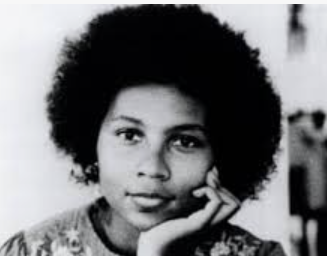
We need to recognize the destructive role played by the media in fanning the flames of the "Black-Jewish Conflict." Cornel West, bell hooks, Richard Green, Barbara Christian, Henry Louis Gates, Marian Wright Edelman, Nell Painter, Albert Raby....Why are these names not as well known outside the African American community as the names of Louis Farrakhan or Leonard Jeffries? Are they, in their diversity and dynamism, less representative of the African American community?
▼
Source
source
Melanie Kaye/Kantrowitz "Jews, Class, Color, and the Cost of Whiteness" in The Issue is Power
2 months 3 weeks ago
Oh, how empty is praise when it reflects back to its origin!
▼
Source
source
No. 50. (Rica writing to * * *)

1 month 1 day ago
Or indeed we may say again, it is in what I called Portrait-painting, delineating of men and things, especially of men, that Shakspeare is great. All the greatness of the man comes out decisively here. It is unexampled, I think, that calm creative perspicacity of Shakspeare. The thing he looks at reveals not this or that face of it, but its inmost heart and generic secret: it dissolves itself as in light before him, so that he discerns the perfect structure of it. Creative, we said: poetic creation, what is this too but seeing the thing sufficiently? The word that will describe the thing, follows of itself from such clear intense sight of the thing. And is not Shakspeare's morality, his valour, candour, tolerance, truthfulness; his whole victorious strength and greatness, which can triumph over such obstructions, visible there too? Great as the world!
4 months 1 week ago
I conceive that the description so often given of a Benthamite, as a mere reasoning machine, though extremely inapplicable to most of those who have been designated by that title, was during two or three years of my life not altogether untrue of me. ...There is nothing very extraordinary in this fact: no youth of the age I then was, can be expected to be more than one thing, and this was the thing I happened to be. Ambition and desire of distinction, I had in abundance; and zeal for what I thought the good of mankind was my strongest sentiment, mixing with and colouring all others. But my zeal was as yet little else, at that period of my life, than zeal for speculative opinions. It had not its root in genuine benevolence, or sympathy with mankind; though these qualities held their due place in my ethical standard. Nor was it connected with any high enthusiasm for ideal nobleness.
▼
Source
source
(pp. 109-110)
5 months 1 week ago
The Bible and science agree in being unable to say anything certainly about what happened before the beginning. There is this difference. The Bible will never be able to tell us. It has reached its final form, and it simply doesn't say. Science, on the other hand, is still developing, and the time may come when it can answer questions that, at present, it cannot.
3 months 1 week ago
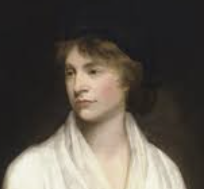
The same energy of character which renders a man a daring villain would have rendered him useful to society, had that society been well organized.
▼
Source
source
Letter 19

3 months 6 days ago
The more one has suffered, the less one demands. To protest is a sign one has traversed no hell.

2 months 3 weeks ago
The essence of education is that it be religious. Pray, what is religious education? A religious education is an education which inculcates duty and reverence. Duty arises from our potential control over the course of events. Where attainable knowledge could have changed the issue, ignorance has the guilt of vice. And the foundation of reverence is this perception, that the present holds within itself the complete sum of existence, backwards and forwards, that whole amplitude of time, which is eternity.

2 months 6 days ago
It is as natural and as right for a young man to be imprudent and exaggerated, to live in swoops and circles, and beat about his cage like any other wild thing newly captured, as it is for old men to turn gray, or mothers to love their offspring, or heroes to die for something worthier than their lives.
▼
Source
source
Crabbed Age and Youth.

3 months 3 days ago
Thou sayest that I am a king. To this end was I born, and for this cause came I into the world, that I should bear witness unto the truth. Every one that is of the truth heareth my voice.
▼
Source
source
18:37, (KJV)
2 months 2 weeks ago
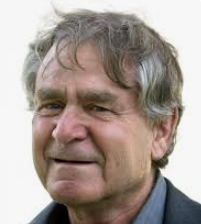
Pascal is called the founder of modern probability theory. He earns this title not only for the familiar correspondence with Fermat on games of chance, but also for his conception of decision theory, and because he was an instrument in the demolition of probabilism, a doctrine which would have precluded rational probability theory.
▼
Source
source
Chapter 3, Opinion, p. 23.
3 months 6 days ago
One would have to be as unenlightened as an angel or an idiot to imagine that the human escapade could turn out well.
1 month 1 day ago
"A fair day's wages for a fair day's work": it is as just a demand as governed men ever made of governing. It is the everlasting right of man.
▼
Source
source
Bk. I, ch. 3.
3 months 3 days ago
...whoever is not against us is for us.
▼
Source
source
9:40
3 weeks 4 days ago
Correspondences are like small clothes before the invention of suspenders; it is impossible to keep them up.
▼
Source
source
Vol. II, letter to Catherine Crowe (31 January 1841), pp. 441-442
3 months 3 weeks ago
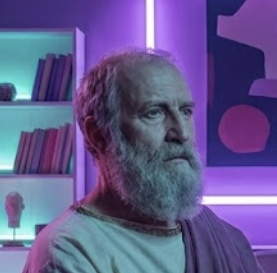
I think that when friendship and perception of kinship ruled everything, no one killed any creature, because people thought the other animals were related to them.
▼
Source
source
2, 22, 1

3 months 2 weeks ago
The public, therefore, among a democratic people, has a singular power, which aristocratic nations cannot conceive; for it does not persuade others to its beliefs, but it imposes them and makes them permeate the thinking of everyone by a sort of enormous pressure of the mind of all upon the individual intelligence.
▼
Source
source
Book One, Chapter II.


4 months 2 weeks ago
There are also Idols formed by the intercourse and association of men with each other, which I call Idols of the Market Place, on account of the commerce and consort of men there. For it is by discourse that men associate, and words are imposed according to the apprehension of the vulgar. And therefore the ill and unfit choice of words wonderfully obstructs the understanding. Nor do the definitions or explanations wherewith in some things learned men are wont to guard and defend themselves, by any means set the matter right. But words plainly force and overrule the understanding, and throw all into confusion, and lead men away into numberless empty controversies and idle fancies.
▼
Source
source
Aphorism 43
2 months 6 days ago
This is still the strangest thing in all man's travelling, that he should carry about with him incongruous memories.
▼
Source
source
Pt. II, ch. III.
1 week 4 days ago
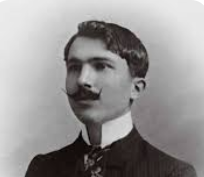
God confronts me with terror and love - for I am His only hope - and says: "This Ecstatic, who gives birth to all things, who rejoices in them all and yet destroys them, this Ecstatic is my Son!"
2 months 3 weeks ago
Our habitual experience is a complex of failure and success in the enterprise of interpretation. If we desire a record of uninterpreted experience, we must ask a stone to record its autobiography.
▼
Source
source
Pt. I, ch. 1, sec. 6.

3 months 2 weeks ago
Knowledge that is not Infallible is not certain knowledge.
▼
Source
source
I. Introduction, p. 7.
CivilSimian.com created by AxiomaticPanic, CivilSimian, Kalokagathia