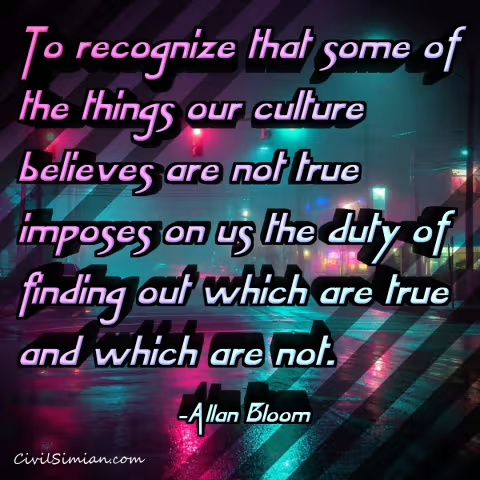
Faith only coincides with truth indirectly. It supports evil halfway. If you don't know the truth, you can't act in a just manner....



One might think that it must be quite clear to people not deprived of reason, that violence breeds violence; that the only means of deliverance from violence lies in not taking part in it. This method, one would think, is quite obvious. It is evident that a great majority of men can be enslaved by a small minority only if the enslaved themselves take part in their own enslavement. If people are enslaved, it is only because they either fight violence with violence or participate in violence for their own personal profit. Those who neither struggle against violence nor take part in it can no more be enslaved than water can be cut. They can be robbed, prevented from moving about, wounded or killed, but they cannot be enslaved: that is, made to act against their own reasonable will.

He who created you without you will not justify you without you.

A human being possessed by a belief and not eager to pass it on to others is a phenomenon alien to the earth, where our mania for salvation makes life unbreathable.
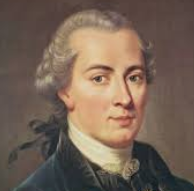
The universal and lasting establishment of peace constitutes not merely a part, but the whole final purpose and end of the science of right as viewed within the limits of reason.
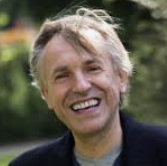
As well as seriously - indeed exhaustively - researching everything that could conceivably go wrong, I think we should also investigate what could go right. The world is racked by suffering. The hedonic treadmill might more aptly be called a dolorous treadmill. Hundreds of millions of people are currently depressed, pain-ridden or both. Hundreds of billions of non-human animals are suffering too. If we weren't so inured to a world of pain and misery, then the biosphere would be reckoned in the throes of a global medical emergency. Thanks to breakthroughs in biotechnology, pain-thresholds, default anxiety levels, hedonic range and hedonic set-points are all now adjustable parameters in human and non-human animals alike. We are living in the final century of life on Earth in which suffering is biologically inevitable. As a society, we need an ethical debate about how much pain and misery we want to preserve and create. How do you break the hedonic treadmill?"

I intend no Monopoly, but a Community in Learning; I study not for my own sake only, but for theirs that study not for themselves.

The philosophy of Bergson, which is a spiritualist restoration, essentially mystical, medieval, Quixotesque, has been called a demi-mondaine philosophy. Leave out the demi; call it mondaine, mundane. Mundane - yes, a philosophy for the world and not for philosophers, just as chemistry ought to be not for chemists alone. The world desires illusion (mundus vult decipi) - either the illusion antecedent to reason, which is poetry, or the illusion subsequent to reason, which is religion. And Machiavelli has said that whosoever wishes to delude will always find someone willing to be deluded. Blessed are they who are easily befooled!
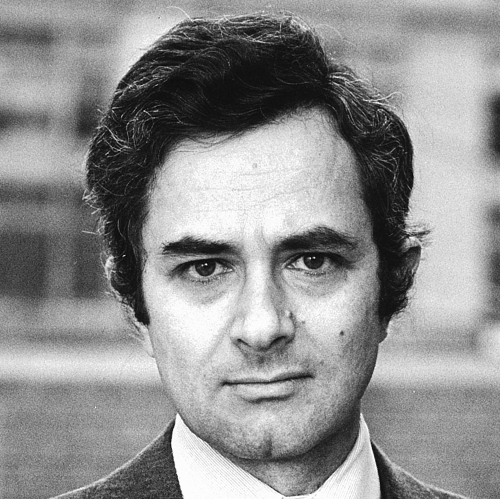
Any reductionist program has to be based on an analysis of what is to be reduced. If the analysis leaves something out, the problem will be falsely posed.
Once man loses his faculty of indifference he becomes a potential murderer; once he transforms his idea into a god the consequences are incalculable. We kill only in the name of a god or of his counterfeits: the excesses provoked by the goddess Reason, by the concept of nation, class, or race are akin to those of the Inquisition or of the Reformation.
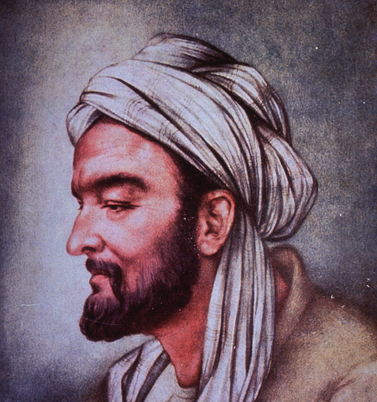
I prefer a short life with width to a narrow one with length.
Lamarck, sagacious as many of his views were, mingled them with so much that was crude and even absurd, as to neutralize the benefit which his originality might have effected had he been a more sober and cautious thinker…
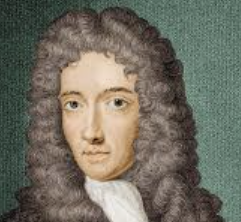
I fear that the chief Reason why Chymists have written so obscurely of their three Principles, may be, That not having Clear and Distinct Notions of them themselves, they cannot write otherwise then Confusedly of what they but Confusedly Apprehend. Not to say that divers of them, being Conscious to the Invalidity of their Doctrine, might well enough discerne that they could scarce keep themselves from being confuted, but by keeping themselves from being clearly understood.

The hearing ear is always found close to the speaking tongue.

The animals themselves are incapable of demanding their own liberation, or of protesting against their condition with votes, demonstrations, or boycotts. Human beings have the power to continue to oppress other species forever, or until we make this planet unsuitable for living beings. Will our tyranny continue, proving that morality counts for nothing when it clashes with selfinterest, as the most cynical of poets and philosophers have always said? Or will we rise to the challenge and prove our capacity for genuine altruism by ending our ruthless exploitation of the species in our power, not because we are forced to do so by rebels or terrorists, but because we recognize that our position is morally indefensible? The way in which we answer this question depends on the way in which each one of us, individually, answers it.

I should like you to consider that these functions (including passion, memory, and imagination) follow from the mere arrangement of the machine's organs every bit as naturally as the movements of a clock or other automaton follow from the arrangement of its counter-weights and wheels.
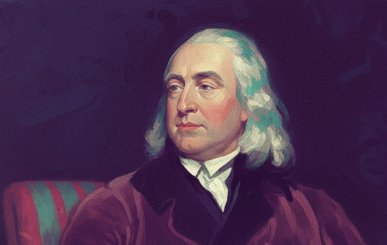
Figure to yourself the mixture of surprise and delight which has this instant been poured into my mind by the sound of my name, as uttered by you, in the speech just read to me out of the Morning Herald... By one and the same man, not only Parliamentary Reform, but Law Reform advocated. Advocated? and by what man? By one who, in the vulgar sense of profit and loss, has nothing to gain by it... Yes, only from Ireland could such self-sacrifice come; nowhere else: least of all in England, cold, selfish, priest-ridden, lawyer-ridden, lord-ridden, squire-ridden, soldier-ridden England, could any approach to it be found.
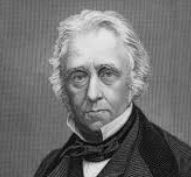
Hence it may be concluded that the happiest state of society is that in which supreme power resides in the whole body of a well-informed people. This is an imaginary, perhaps an unattainable, state of things. Yet, in some measure, we may approximate to it; and he alone deserves the name of a great statesman, whose principle it is to extend the power of the people in proportion to the extent of their knowledge, and to give them every facility for obtaining such a degree of knowledge as may render it safe to trust them with absolute power. In the mean time, it is dangerous to praise or condemn constitutions in the abstract; since, from the despotism of St. Petersburg to the democracy of Washington, there is scarcely a form of government which might not, at least in some hypothetical case, be the best possible.
What pride to discover that nothing belongs to you - what a revelation.
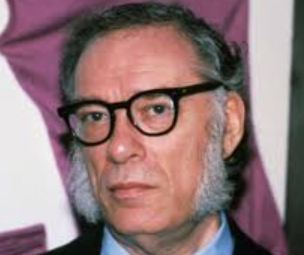
Without the interplay of human against human, the chief interest in life is gone; most of the intellectual values are gone; most of the reason for living is gone.

Keep the faculty of effort alive in you by a little gratuitous exercise every day. That is, be systematically ascetic or heroic in little unnecessary points, do every day or two something for no other reason than that you would rather not do it, so that when the hour of dire need draws nigh, it may find you not unnerved and untrained to stand the test. So with the man who has daily inured himself to habits of concentrated attention, energetic volition, and self-denial in unnecessary things. He will stand like a tower when everything rocks around him, and when his softer fellow-mortals are winnowed like chaff in the blast.
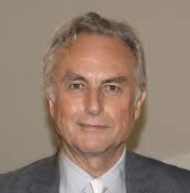
I don't want to sound callous. I mean, even if I have nothing to offer, that doesn't matter, because that still doesn't mean that what anybody else has to offer therefore has to be true.
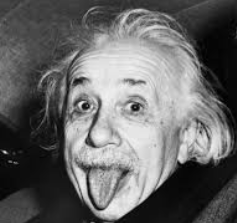
I believe in intuitions and inspirations. I sometimes feel that I am right. I do not know that I am. When two expeditions of scientists, financed by the Royal Academy, went forth to test my theory of relativity, I was convinced that their conclusions would tally with my hypothesis. I was not surprised when the eclipse of May 29, 1919, confirmed my intuitions. I would have been surprised if I had been wrong.
The most any one can do is to confess as candidly as he can the grounds for the faith that is in him, and leave his example to work on others as it may.
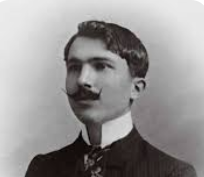
This is our epoch, good or bad, beautiful or ugly, rich or poor - we did not choose it. This is our epoch, the air we breathe, the mud given us, the bread, the fire, the spirit! Let us accept Necessity courageously. It is our lot to have fallen on fighting times. Let us tighten our belts, let us arm our hearts, our minds, and our bodies. Let us take our place in battle!

But the extraordinary insight which some persons are able to gain of others from indications so slight that it is difficult to ascertain what they are, is certainly rendered more comprehensible by the view here taken.
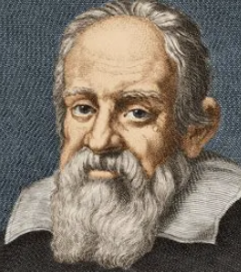
Among all the great men who have philosophized about this remarkable effect, I am more astonished at Kepler than at any other. Despite his open and acute mind, and though he has at his fingertips the motions attributed to the earth, he nevertheless lent his ear and his assent to the moon's dominion over the waters, to occult properties, and to such puerilities.

And O! how the mind is here washed clean of all its early ingrafted Jewish superstition ! It is the most profitable and elevating reading which is possible in the world. It has been the solace of my life, and will be the solace of my death.

People nowadays think that scientists exist to instruct them, poets, musicians, etc. to give them pleasure. The idea that these have something to teach them - that does not occur to them.
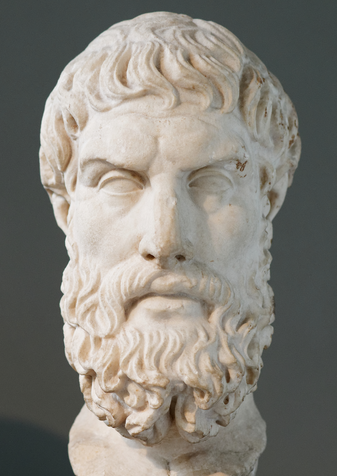
Of our desires some are natural and necessary, others are natural but not necessary; and others are neither natural nor necessary, but are due to groundless opinion.

By quarrelling amongst themselves, instead of confederating, Germans and Scandinavians, both of them belonging to the same great race, only prepare the way for their hereditary enemy, the Slav.

And having looked to Government for bread, on the very first scarcity they will turn and bite the hand that fed them.
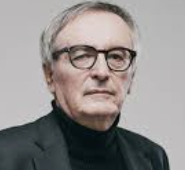
For those who live inside a myth, it seems a self-evident fact. Human progress is a fact of this kind. If you accept it you have a place in the grand march of humanity. Humankind is, of course, not marching anywhere. 'Humanity' is a fiction composed from billions of individuals for each of whom life is singular and final. But the myth of progress is extremely potent. When it loses its power those who have lived by it are - as Conrad put it, describing Kayerts and Carlier - 'like those lifelong prisoners who, liberated after many years, do not know what use to make of their freedoms'. When faith in the future is taken from them, so is the image they have of themselves. If they then opt for death, it is because without that faith they can no longer make sense of living.
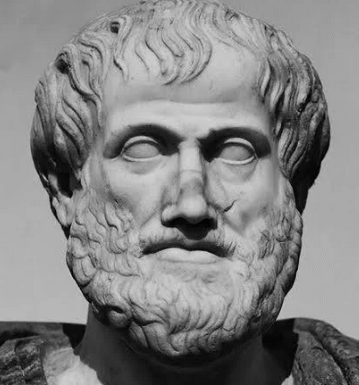
Hope is the dream of a waking man.

Either Man will abolish war, or war will abolish Man.
Animals are born and bred in litters. Solitude grows blessed and peaceful only in old age.
And if the immortality of the soul had been unable to find vindication in rational empiricism, neither is it satisfied with pantheism. To say that everything is God, and that when we die, we return to God, or more accurately, continue in Him, avails our longing nothing; for if this indeed be so, then we were in God before we were born, and if we die we return to where we were before being born, then the human soul, the individual consciousness, is perishable. And since we know very well that God, the personal and conscious God of Christian monotheism, is simply the provider, and above all the guarantor, of our immortality, pantheism is said, and rightly said to be merely atheism disguised; and in my opinion, undisguised.
The social product grows from year to year. Who is now the true creator of this surplus value which grows wildly and beyond any measure? Who can afford to figure out the profit yielded causally adequate by this immense wealth and the series of economic miracles? In concrete terms: who is the legitimate distributor of the social product and who actually assesses the shares in practical life? As long as the issue is about value, all such questions must above all be formulated as economic questions.

She is the sum of nature's universe.To her perfection all of beauty tends.
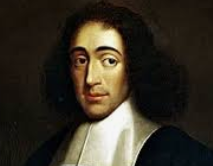
The ordinary surroundings of life which are esteemed by men (as their actions testify) to be the highest good, may be classed under the three heads - Riches, Fame, and the Pleasures of Sense: with these three the mind is so absorbed that it has little power to reflect on any different good.
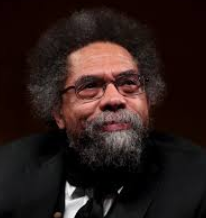
I remind young people everywhere I go, one of the worst things the older generation did was to tell them for twenty-five years "Be successful, be successful, be successful" as opposed to "Be great, be great, be great". There's a qualitative difference.
I think that I have succeeded in making it clear that this doctrine gives room for explanations of many facts which without it are absolutely and hopelessly inexplicable; and further that it carries along with it the following doctrines: first, a logical realism of the most pronounced type; second, objective idealism; third, tychism, with its consequent thoroughgoing evolutionism. We also notice that the doctrine presents no hindrences to spiritual influences, such as some philosophies are felt to do.
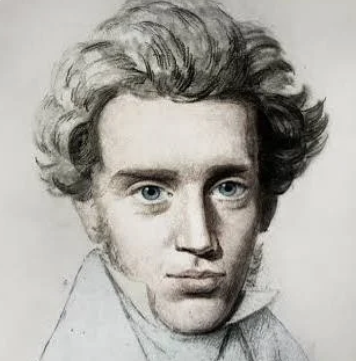
That which distinguishes the Christian narrow way from the common human narrow way is the voluntary. Christ was not someone who coveted earthly things but had to be satisfied with poverty, no, he chose poverty.
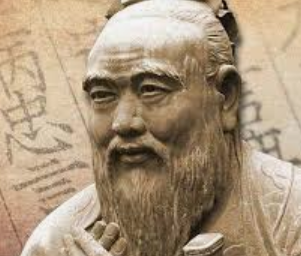
The Master said, "He who exercises government by means of his virtue may be compared to the north polar star, which keeps its place and all the stars turn towards it."
CivilSimian.com created by AxiomaticPanic, CivilSimian, Kalokagathia