

7 months 2 weeks ago
Throughout history there have been peasant rebellions which have followed always the same course. Blindly, the peasants sacked and destroyed, and when members of the "upper classes" fell into their hands, they killed ruthlessly and cruelly, for never in their lives had they been taught gentleness and mercy by those now in their power.

5 months 2 weeks ago
Who Rebels? Who rises in arms? Rarely the slave, but almost always the oppressor turned slave.
5 months 2 weeks ago
Skepticism is an exercise in defascination.

6 months 3 weeks ago
Is a fixed income not a good thing? Does not everyone love to count on a sure thing? Especially every petty-bourgeois, narrow-minded Frenchman? the 'ever needy' man?
▼
Source
source
(Bastiat and Carey), pp. 809-810.


5 months 3 days ago
Happiness is the proof that time can accommodate eternity.
6 months 3 weeks ago
Political Economy regards the proletarian ... like a horse, he must receive enough to enable him to work. It does not consider him, during the time when he is not working, as a human being. It leaves this to criminal law, doctors, religion, statistical tables, politics, and the beadle. ... (1) What is the meaning, in the development of mankind, of this reduction of the greater part of mankind to abstract labor? (2) What mistakes are made by the piecemeal reformers, who either want to raise wages and thereby improve the situation of the working class, or - like Proudhon - see equality of wages as the goal of social revolution?.
▼
Source
source
First Manuscript - Wages of Labour, p. 6.

6 months 3 weeks ago
To fear love is to fear life, and those who fear life are already three parts dead.

2 months 2 weeks ago
Very little is needed to make a happy life.
▼
Source
source
VII, 67
2 months 2 weeks ago
It might be said to the agitator, "However convinced you were of the justice of your cause and the truth of your convictions, you ought not to have made a public attack upon any man's character until you had examined the evidence on both sides with the utmost patience and care." In the first place, let us admit that, so far as it goes, this view of the case is right and necessary; right, because even when a man's belief is so fixed that he cannot think otherwise, he still has a choice in the action suggested by it, and so cannot escape the duty of investigating on the ground of the strength of his convictions; and necessary, because those who are not yet capable of controlling their feelings and thoughts must have a plain rule dealing with overt acts.
4 months 2 weeks ago
There is but one art, to omit.
▼
Source
source
As cited in The Harper Book of Quotations, Revised Edition (1993), Ed. R. Fitzhenry, HarperCollins, p. 498 : ISBN 0062732137, 9780062732132
4 months 3 days ago
Civilizations die from suicide, not by murder.
▼
Source
source
In Mark Steyn, "It's the Demography, Stupid!", Opinion Journal, WSJ (2006).

6 months 3 weeks ago
Truth never turns to rebuke falsehood; her own straightforwardness is the severest correction.
▼
Source
source
Pearls of Thought (1881) p. 264
6 months 1 week ago
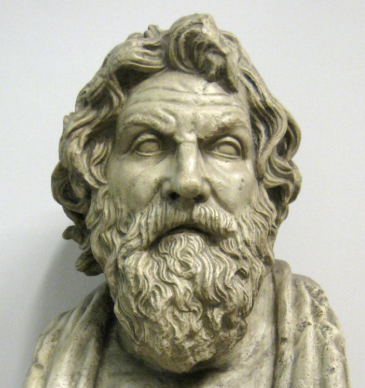
Antisthenes ... was asked on one occasion what learning was the most necessary, and he replied, "To unlearn one's bad habits."
▼
Source
source
§ 4

2 months 2 weeks ago
Our particular principles of religion are a subject of accountability to our god alone. I enquire after no man's and trouble none with mine; nor is it given to us in this life to know whether yours or mine, our friend's or our foe's, are exactly the right.
▼
Source
source
Letter to Miles King

4 months 4 weeks ago
The fact that goals may be dependent for their force on other more distant ends leads to the arrangement of these goals in a hierarchy - each level to be considered as an end relative to the levels below it and as a mean to the levels above it.
▼
Source
source
p. 62.

5 months 2 weeks ago
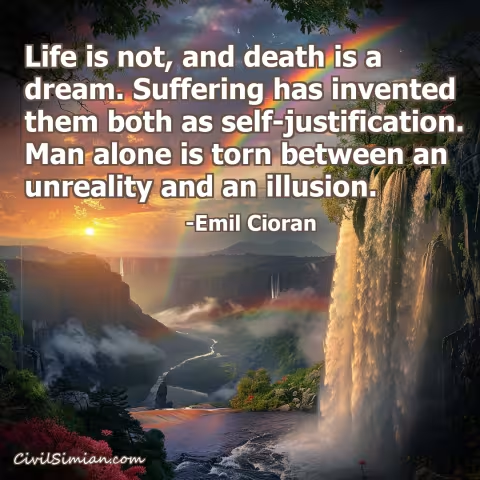
The obsession with suicide is characteristic of the man who can neither live nor die, and whose attention never swerves from this double impossibility.

6 months 2 weeks ago
Science is not a system of certain, or well established, statements; nor is it a statement which steadily advances towards state of finality. Our science is not knowledge (epistēmē): it can newer claim to have attained truth, or even substitute for it, such as probability. . . . We do not know; we can only guess.
▼
Source
source
Ch. 10 "Corroboration, or How a Theory Stands up to Tests", section 85: The Path of Science, p. 278.
2 months 4 weeks ago
A very weighty argument is this - namely, that neither does the light which descends from thence, chiefly upon the world, mix itself with anything, nor admit of dirtiness or pollution, but remains entirely, and in all things that are, free from defilement, admixture, and suffering. Besides, we must pay attention to the other kinds of phenomena, both to the Intelligible, and yet more to the Sensible - whatever are connected with matter, or will manifest themselves in relation to our subject.


6 months 1 week ago
Wise people are in want of nothing, and yet need many things. On the other hand, nothing is needed by fools, for they do not understand how to use anything, but are in want of everything.
▼
Source
source
As quoted in Moral Epistles by Seneca, iii. 10.
2 months 4 weeks ago
I pray the Sovereign Sun himself to grant me ability to explain the nature of the station that he holds amongst those in whose middle he is placed! By the term "middle" we are to understand not what is so defined in the case of things contrary to each other, as "equi-distant from the extremes," as orange and dark brown in the case of colours; lukewarm, in that of hot and cold, and other things of the sort; but the power that collects and unites into one things dispersed, like the "Harmony" of Empedocles, from which he completely excludes all discord and contention.
3 months 2 weeks ago
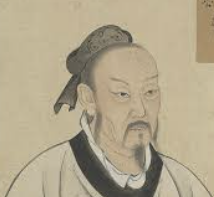
Learning proceeds until death and only then does it stop. ... Its purpose cannot be given up for even a moment. To pursue it is to be human, to give it up to be a beast.
▼
Source
source
Readings in Classical Chinese Philosophy (2001), p. 258

5 months 1 week ago
The range of socially permissible and desirable satisfaction is greatly enlarged, but through this satisfaction, the Pleasure Principle is reduced-deprived of the claims which are irreconcilable with the established society. Pleasure, thus adjusted, generates submission.
▼
Source
source
p. 75
5 months 6 days ago
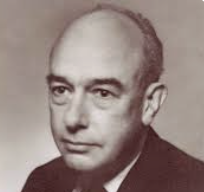
The issue over there being classes seems more a question of convenient conceptual scheme; the issue over there being centaurs, or brick houses on Elm Street, seems more a question of fact. But I have been urging that this difference is only one of degree, and that it turns upon our vaguely pragmatic inclination to adjust one strand of the fabric of science rather than another in accommodating some particular recalcitrant experience. Conservatism figures in such choices, and so does the quest for simplicity.
▼
Source
source
"Two Dogmas of Empiricism"

5 months 1 week ago
Passion is like suffering, and like suffering it creates its object. It is easier for the fire to find something to burn than for something combustible to find the fire.
3 months 4 weeks ago
A created thing is never invented and it is never true: it is always and ever itself.
▼
Source
source
Creation

7 months 1 week ago
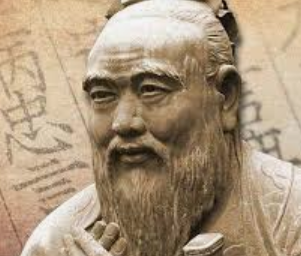
What the great learning teaches, is to illustrate illustrious virtue; to renovate the people; and to rest in the highest excellence. The point where to rest being known, the object of pursuit is then determined; and, that being determined, a calm unperturbedness may be attained to. To that calmness there will succeed a tranquil repose. In that repose there may be careful deliberation, and that deliberation will be followed by the attainment of the desired end.

6 months 2 weeks ago
People nowadays think that scientists exist to instruct them, poets, musicians, etc. to give them pleasure. The idea that these have something to teach them - that does not occur to them.
▼
Source
source
p. 36e
2 months 2 weeks ago
I learn with great satisfaction that you are about committing to the press the valuable historical and State papers you have been so long collecting. Time and accident are committing daily havoc on the originals deposited in our public offices. The late war has done the work of centuries in this business. The last cannot be recovered, but let us save what remains; not by vaults and locks which fence them from the public eye and use in consigning them to the waste of time, but by such a multiplication of copies, as shall place them beyond the reach of accident.
▼
Source
source
Letter to Mr. Hazard
6 months 3 weeks ago
On the death of a friend, we should consider that the fates through confidence have devolved on us the task of a double living, that we have henceforth to fulfill the promise of our friend's life also, in our own, to the world.
▼
Source
source
February 28, 1840

5 months 3 days ago
What excited me was the recognition that this was simply another version of the problem that had obsessed me all of my life -- the problem of those moments when life seems entirely delightful, when we experience a sensation of what G.K. Chesterton called "absurd good news." Life normally strikes most of us as hard, dull and unsatisfying; but in these moments, consciousness seems to glow and expand, and all the contradictions seem to be resolved. Which of the two visions is true? My own reflections had led me to conclude that the vision of "absurd good news" is somehow broader and more comprehensive than the feeling that life is dull, boring and meaningless. Boredom is basically a feeling of narrowness, and surely a narrow vision is bound to be less true than a broad one?
▼
Source
source
p. 16

5 months 3 weeks ago
The public, therefore, among a democratic people, has a singular power, which aristocratic nations cannot conceive; for it does not persuade others to its beliefs, but it imposes them and makes them permeate the thinking of everyone by a sort of enormous pressure of the mind of all upon the individual intelligence.
▼
Source
source
Book One, Chapter II.
5 months 3 weeks ago
"The will of the nation" is one of those expressions which have been most profusely abused by the wily and the despotic of every age.
▼
Source
source
Chapter IV.
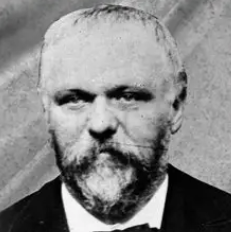
3 months ago
We must not always attach too much importance to violent attacks on the bourgeoisie; they may be motivated by the desire to reform and to perfect capitalism.
▼
Source
source
p. 125

3 months 1 week ago
His Religion is not an easy one: with rigorous fasts, lavations, strict complex formulas, prayers five times a day, and abstinence from wine, it did not "succeed by being an easy religion." As if indeed any religion, or cause holding of religion, could succeed by that! It is a calumny on men to say that they are roused to heroic action by ease, hope of pleasure, recompense, - sugar-plums of any kind, in this world or the next! In the meanest mortal there lies something nobler.

2 months 2 weeks ago
Descartes, a genius made to blaze new paths and to go astray in them, supposed with some other philosophers that God is the only efficient cause of motion, and that every instant He communicates motion to all bodies. But this opinion is but an hypothesis which he tried to adjust to the light of faith; and in so doing he was no longer attempting to speak as a philosopher or to philosophers. Above all he was not addressing those who can be convinced only by the force of evidence.
▼
Source
source
Ch. V Concerning the Moving Force of Matter
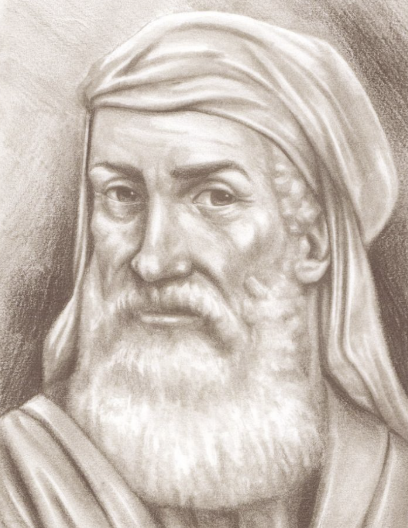
6 months 1 week ago
With deep roots Ether plunged into earth.
▼
Source
source
fr. 54

6 months 2 weeks ago
Every genuine work of art has as much reason for being as the earth and the sun.
▼
Source
source
Art
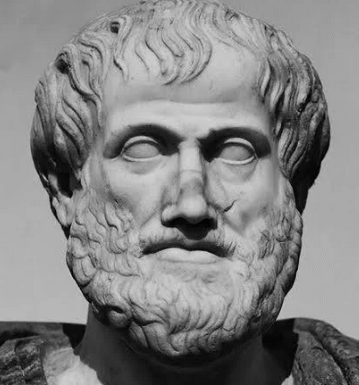
7 months 3 weeks ago
Now men seem, not unreasonably, to form their notions of the supreme good and of happiness from the lives of men.
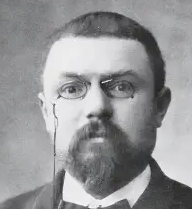
3 months 2 weeks ago
The principal aim of mathematical education is to develop certain faculties of the mind, and among these intuition is not the least precious. It is through it that the mathematical world remains in touch with the real world, and even if pure mathematics could do without it, we should still have to have recourse to it to fill up the gulf that separates the symbol from reality.
▼
Source
source
Part II. Ch. 2 : Mathematical Definitions and Education, p. 128

4 months 3 weeks ago
There was a brief moment after 9/11 when Colin Powell said "we should not rush to satisfy the desire for revenge." It was a great moment, an extraordinary moment, because what he was actually asking people to do was to stay with a sense of grief, mournfulness, and vulnerability.
▼
Source
source
Interview with Judith Butler. in: The Believer. May 2003
6 months 2 weeks ago
What we do is to bring words back from their metaphysical to their everyday use.
▼
Source
source
§ 116
CivilSimian.com created by AxiomaticPanic, CivilSimian, Kalokagathia