

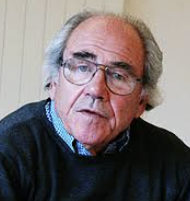
4 months 2 weeks ago
We live in a world where there is more and more information, and less and less meaning.
▼
Source
source
"The Implosion of Meaning in the Media," p. 79
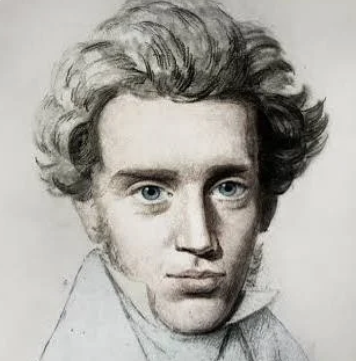
7 months 2 weeks ago
In the external, patience is some third element that must be added, and, humanly speaking, it would be better if it were not needed; some days it is needed more, some days less, all according to fortune, whose debtor a person becomes, even though he gained ever so little, because only when he wants to gain patience does he become one's debtor.

3 months 1 day ago
To be angry with a man is to hate him; to hate him is to wish him harm; but to wish him well, even if he has done you harm, is the mark of a great mind.
▼
Source
source
Seneca, On Anger (De Ira) 2.34.5 (translated by John W. Basore)
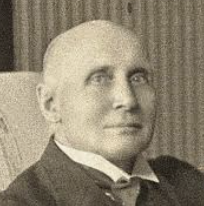
5 months 1 day ago
A general definition of civilization: a civilized society is exhibiting the five qualities of truth, beauty, adventure, art, peace.
▼
Source
source
p. 353.
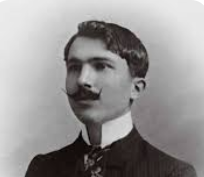
2 months 2 weeks ago
A person needs a little madness, or else they never dare cut the rope and be free.
▼
Source
source
As quoted in Wisdom for the Soul : Five Millennia of Prescriptions for Spiritual Healing (2006) by Larry Chang, p. 412


5 months 1 week ago
In the human reality, all existence that spends itself in procuring the prerequisites of existence is thus an "untrue" and unfree existence. Obviously this reflects the not at all ontological condition of a society based on the proposition that freedom is incompatible with the activity of procuring the necessities of life, that this activity is the "natural" function of a specific class, and that cognition of the truth and true existence imply freedom from the entire dimension of such activity. ... Society still is organized in such a way that procuring the necessities of life constitutes the full-time and life-long occupation of specific social classes, which are therefore unfree and prevented from a human existence. In this sense, the classical proposition according to which truth is incompatible with enslavement by socially necessary labor is still valid.
▼
Source
source
pp. 127-128
6 months 6 days ago
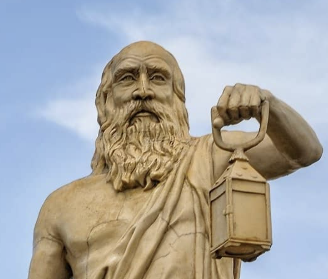
He once begged alms of a statue, and, when asked why he did so, replied, "To get practice in being refused."
▼
Source
source
Diogenes Laërtius, vi. 49

2 months 1 week ago
Keep this thought handy when you feel a bit of rage coming on - it isn't manly to be enraged. Rather, gentleness and civility are more human, and therefore manlier. A real person doesn't give way to anger and discontent, and such a person has strength, courage, and endurance - unlike the angry and complaining. The nearer a man comes to a calm mind, the closer he is to strength.
▼
Source
source
XI 11.18.5b:41

4 months 2 weeks ago
The Anarchists are right in everything; in the negation of the existing order, and in the assertion that, without authority, there could not be worse violence than that of authority under existing conditions. They are mistaken only in thinking that Anarchy can be instituted by a revolution. "To establish Anarchy." "Anarchy will be instituted." But it will be instituted only by there being more and more people who do not require protection from governmental power, and by there being more and more people who will be ashamed of applying this power.
▼
Source
source
"On Anarchy", in Pamphlets : Translated from the Russian (1900) as translated by Aylmer Maude, p. 22
5 months 2 weeks ago
Nature too remains, so far as we have yet come, ever a frightful Machine of Death: everywhere monstrous revolution, inexplicable vortices of movement; a kingdom of Devouring, of the maddest tyranny; a baleful Immense: the few light-points disclose but a so much the more appalling Night, and terrors of all sorts must palsy every observer.

6 months 1 week ago
It is so characteristic, that just when the mechanics of reproduction are so vastly improved, there are fewer and fewer people who know how the music should be played.
▼
Source
source
p. 96
4 months 1 week ago
Contrary to earlier prejudices, there is nothing inherently progressive about evolution.
▼
Source
source
Chapter 7 "Constructive Evolution" (p. 178)

4 months 2 weeks ago
Effects are perceived, whereas causes are conceived. Effects always preceed causes in the actual developmental order.
▼
Source
source
(p. 303)

5 months 2 days ago
If a captive mind is unaware of being in prison, it is living in error. If it has recognized the fact, even for the tenth of a second, and then quickly forgotten it in order to avoid suffering, it is living in falsehood. Men of the most brilliant intelligence can be born, live and die in error and falsehood. In them, intelligence is neither a good, nor even an asset. The difference between more or less intelligent men is like the difference between criminals condemned to life imprisonment in smaller or larger cells. The intelligent man who is proud of his intelligence is like a condemned man who is proud of his large cell.
▼
Source
source
p. 69
3 months 1 week ago
Scientists believe there is a hierarchy of facts and that among them may be made a judicious choice. They are right, since otherwise there would be no science...
3 months 6 days ago
The death of Alexander (323 BC) quickened this process of decay. The boy-emperor, barbarian though he remained after all of Aristotle's tutoring, had yet learned to revere the rich culture of Greece, and had dreamed of spreading that culture through the Orient in the wake of his victorious armies.... But he had underrated the inertia and resistance of the Oriental mind, and the mass and depth of Oriental culture. It was only a youthful fancy, after all, to suppose that so immature and unstable a civilization as that of Greece could be imposed upon a civilization immeasurably more widespread, and rooted in the most venerable traditions. The quantity of Asia proved too much for the quality of Greece.

6 months 2 weeks ago
The concrete man has but one interest - to be right. That to him is the art of all arts, and all means are fair which help him to it.

6 months 6 days ago
Disease of the home and of the life comes about in the same way as that of the body.
▼
Source
source
Freeman (1948), p. 170 Variant: Disease occurs in a household, or in a life, just as it does in a body.

5 months 1 week ago
His power to adore is responsible for all his crimes: a man who loves a god unduly forces other men to love his god, eager to exterminate them if they refuse.

2 months 2 weeks ago
One cannot reduce terror by holding over the world the threat of what it most fears.

6 months 2 weeks ago
I am not virtuous. Our sons will be if we shed enough blood to give them the right to be.
▼
Source
source
Act 3, sc. 5
4 months 2 weeks ago
The man who holds the divine theory of life recognizes life not in his own individuality, and not in societies of individualities (in the family, the clan, the nation, the tribe, or the government), but in the eternal undying source of life-in God; and to fulfill the will of God he is ready to sacrifice his individual and family and social welfare. The motor power of his life is love. And his religion is the worship in deed and in truth of the principle of the whole-God.
▼
Source
source
Chapter IV, Christianity Misunderstood by Men of Science

3 months 3 weeks ago
Darwinist thinkers such as Richard Dawkins and Daniel Dennett are militant opponents of Christianity. Yet their atheism and humanism are versions of Christian concepts. As a defender of Darwinism, Dawkins is committed to the view that humans are like other animal species in being 'gene machines' ruled by the laws of natural selection. He asserts nevertheless that humans, uniquely, can defy these natural laws: 'We, alone on earth, can rebel against the tyranny of the selfish replicators.' In affirming human uniqueness in this way, Dawkins relies on a Christian world-view.
▼
Source
source
Post-Apocalypse: After Secularism (pp. 265-6)
5 months 4 weeks ago
He is worst of all, that is malicious against his friends.
6 months 2 weeks ago
Let us read, and let us dance; these two amusements will never do any harm to the world.
7 months 1 week ago
Every ideology is contrary to human psychology.
3 months 1 day ago
That which Fortune has not given, she cannot take away.
4 months 2 weeks ago
For man to be able to live he must either not see the infinite, or have such an explanation of the meaning of life as will connect the finite with the infinite.
▼
Source
source
Ch. 9
5 months 2 weeks ago
All law relations are determined by this principle: each one must restrict his freedom by the possibility of the freedom of the other. ... My freedom is limited by the freedom of the other only on condition that he limits his freedom by the conception of mine. Otherwise he is lawless. Hence, if a law-relation is to result from my cognition of the other, the cognition and the consequent limitation of freedom must have been mutual. All law-relation between persons is, therefore, conditioned by their mutual cognition of each other, and is, at the same time, completely determined thereby.
▼
Source
source
P. 173-175
3 months 1 week ago
I would say here something that was heard from an ecclesiastic of the most eminent degree [probably Caesar Baronius]: "The intention of the Holy Ghost is to teach us how one goes to heaven, not how heaven goes.
▼
Source
source
Variant translation: I would say here something that was heard from an ecclesiastic of the most eminent degree: "That the intention of the Holy Spirit is to teach us how one goes to heaven, not how the heavens go."

3 months 1 week ago
We call that fire of the black thunder-cloud "electricity," and lecture learnedly about it, and grind the like of it out of glass and silk: but what is it? What made it? Whence comes it? Whither goes it? Science has done much for us; but it is a poor science that would hide from us the great deep sacred infinitude of Nescience, whither we can never penetrate, on which all science swims as a mere superficial film. This world, after all our science and sciences, is still a miracle; wonderful, inscrutable, magical and more, to whosoever will think of it.
5 months 2 days ago
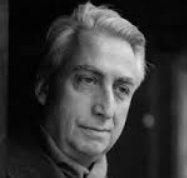
The bastard form of mass culture is humiliated repetition: content, ideological schema, the blurring of contradictions-these are repeated, but the superficial forms are varied: always new books, new programs, new films, news items, but always the same meaning.
▼
Source
source
Modern, in The Pleasure of the Text

5 months 3 weeks ago
Sleep is a death; oh, make me try By sleeping what it is to die, And as gently lay my head On my grave as now my bed.
▼
Source
source
Section 12

6 months 2 weeks ago
Human beings are not born identical. There are many different temperaments and constitutions; and within each psycho-physical class one can find people at very different stages of spiritual development. Forms of worship and spiritual discipline which may be valuable for one individual maybe useless or even positively harmful for another belonging to a different class and standing, within that class, at a lower or higher level of development.

3 months 2 weeks ago
From each as they choose, to each as they are chosen.
▼
Source
source
Ch. 7 : Distributive Justice, Section I, Patterning, p. 160

2 months 2 weeks ago
Take things always by their smooth handle.
3 months 3 weeks ago
The belief that there is some hidden cabal directing the course of events is a type of anthropomorphism - a way of finding agency in the entropy of history.
▼
Source
source
In the Puppet Theatre: Puppetry, Conspiracy and Ouija Boards (p. 133)

5 months 2 weeks ago
For my part for one, though I make no doubt of preferring the antient Course, or almost any other to this vile chimera, and sick mans dream of Government yet I could not actively, or with a good heart, and clear conscience, go to the establishment of a monarchical despotism in the place of this system of Anarchy.
▼
Source
source
Letter to Richard Burke (26 September 1791), quoted in Alfred Cobban and Robert A. Smith (eds.), The Correspondence of Edmund Burke, Volume VI: July 1789-December 1791 (1967), p. 414

6 months 2 weeks ago
Whatever bitterness and hate may be found in the movements which we are to examine, it is not bitterness or hate, but love, that is their mainspring. It is difficult not to hate those who torture the objects of our love. Though difficult, it is not impossible; but it requires a breadth of outlook and a comprehensiveness of understanding which are not easy to preserve amid a desperate contest. If ultimate wisdom has not always been preserved by Socialists and Anarchists, they have not differed in this from their opponents; and in the source of their inspiration they have shown themselves superior to those who acquiesce ignorantly or supinely in the injustices and oppressions by which the existing system is preserved.
▼
Source
source
Introduction, p. 10.
3 months 1 week ago
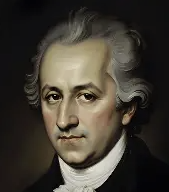
But among all the discoveries and corrections probably none has resulted in a deeper influence on the human spirit than the doctrine of Copernicus.... Possibly mankind has never been demanded to do more, for considering all that went up in smoke as a result of realizing this change: a second Paradise, a world of innocence, poetry and piety: the witness of the senses, the conviction of a poetical and religious faith. No wonder his contemporaries did not wish to let all this go and offered every possible resistance to a doctrine which in its converts authorized and demanded a freedom of view and greatness of thought so far unknown indeed not even dreamed of.
▼
Source
source
Zur Farbenlehre, Materialien zur Geschichte der Farbenlehre (1810), Frankfurt am Main, 1991, Seite 666.

6 months 1 week ago
Amy Kofman: Have you read all the books in here?Derrida: No, only four of them. But I read those very, very carefully.
▼
Source
source
Derrida (2003 documentary), referring to his personal library
2 months 3 weeks ago
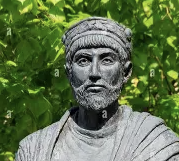
It is the season of the Kronia, during which the god allows us to make merry. But, my dear friend, as I have no talent for amusing or entertaining I must methinks take pains not to talk mere nonsense." "But, Caesar, can there be anyone so dull and stupid as to take pains over jesting? I always thought that such pleasantries were a relaxation of the mind and a relief from pains and cares." "Yes, and no doubt your view is correct, but that is not how the matter strikes me. For by nature I have no turn for raillery, or parody, or raising a laugh."
6 months 1 week ago
Philosophers are often like little children, who first scribble random lines on a piece of paper with their pencils, and now ask an adult "What is that?"
▼
Source
source
Ch. 9 : Philosophy, p. 193

6 months 2 weeks ago
I have no faith in precision: ...simplicity and clarity are values in themselves, but not... [of] precision or exactness...
CivilSimian.com created by AxiomaticPanic, CivilSimian, Kalokagathia