


3 months 1 week ago
I look upon you as a gem of the old rock. Dedication

2 months 6 days ago
There can be only one permanent revolution - a moral one; the regeneration of the inner man. How is this revolution to take place? Nobody knows how it will take place in humanity, but every man feels it clearly in himself. And yet in our world everybody thinks of changing humanity, and nobody thinks of changing himself.
▼
Source
source
"Three Methods Of Reform" in Pamphlets : Translated from the Russian (1900) as translated by Aylmer Maude, p. 29

3 months 3 weeks ago
We ought to regard the interests of the state as of far greater moment than all else, in order that they may be administered well; and we ought not to engage in eager rivalry in despite of equity, nor arrogate to ourselves any power contrary to the common welfare. For a state well administered is our greatest safeguard. In this all is summed up: When the state is in a healthy condition all things prosper; when it is corrupt, all things go to ruin.
2 weeks 1 day ago
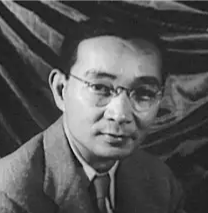
No one realizes how beautiful it is to travel until he comes home and rests his head on his old, familiar pillow.
▼
Source
source
"A Trip to Anhwei", in With Love And Irony (1940), p. 145

4 months 1 week ago
Most shocking of all is alledging the Sacred Scriptures to favour this wicked practice. One would have thought none but infidel cavillers would endeavour to make them appear contrary to the plain dictates of natural light, and Conscience, in a matter of common Justice and Humanity; which they cannot be. Such worthy men, as referred to before, judged otherways; Mr. Baxter declared, the Slave-Traders should be called Devils, rather than Christians; and that it is a heinous crime to buy them.

4 months 6 days ago
How can he [today's writer] be honored, when he does not honor himself; when he loses himself in the crowd; when he is no longer the lawgiver, but the sycophant, ducking to the giddy opinion of a reckless public.
▼
Source
source
Goethe; or, The Writer
2 months 3 weeks ago
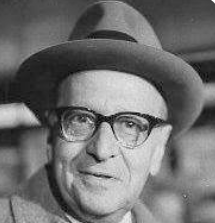
The hypostasis of the particular methods of procedure employed by natural science ... results in the view that all theoretical differences which rest on historically conditioned antagonisms of interest are to be settles by a "crucial experiment" rather than by struggle and counter-struggle. The harmonious relation of individuals to one another becomes a fact, therefore, that has even more general character than a law of nature.
▼
Source
source
p. 148.

2 months 3 weeks ago
Your own philosophy condemns you and supports us.
▼
Source
source
Salbatore Mitxelena (1958): Unamuno eta Abendats, Baiona: Darracq
4 weeks 1 day ago
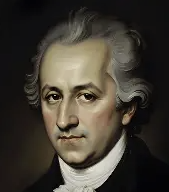
I am more and more convinced that poetry is the universal possession of mankind, revealing itself everywhere and at all times in hundreds and hundreds of men. ... I therefore like to look about me in foreign nations, and advise everyone to do the same. National literature is now a rather unmeaning term; the epoch of world literature is at hand, and everyone must strive to hasten its approach.
▼
Source
source
Conversations with Eckermann
3 months 1 week ago
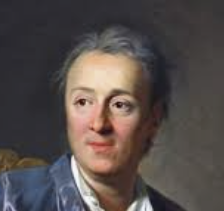
The most dangerous madmen are those created by religion, and ... people whose aim is to disrupt society always know how to make good use of them on occasion.

3 weeks 6 days ago
The true Church of England, at this moment, lies in the Editors of its Newspapers. These preach to the people daily, weekly; admonishing kings themselves; advising peace or war, with an authority which only the first Reformers, and a long-past class of Popes, were possessed of; inflicting moral censure; imparting moral encouragement, consolation, edification; in all ways diligently "administering the Discipline of the Church."

3 months 1 week ago
It is not calling the landed estates, possessed by old prescriptive rights, the 'accumulations of ignorance and superstition', that can support me in shaking that grand title, which supersedes all other title, and which all my studies of general jurisprudence have taught me to consider as one principal cause of the formation of states; I mean the ascertaining and securing prescription. But these are donations made in 'ages of ignorance and superstition'. Be it so. It proves that these donations were made long ago; and this is prescription; and this gives right and title.
▼
Source
source
Letter to Captain Thomas Mercer (26 February 1790), quoted in Alfred Cobban and Robert A. Smith (eds.), The Correspondence of Edmund Burke, Volume VI: July 1789-December 1791 (1967), p. 95
2 months 1 week ago
Nothing in this book is true.
3 months 3 weeks ago
Death takes the mean man with the proud; The fatal urn has room for all.
▼
Source
source
Book III, ode i, line 14 (trans. John Conington)

3 weeks ago
For no man is free who is a slave to his body.
2 months 6 days ago
Government is violence, Christianity is meekness, non-resistance, love. And, therefore, government cannot be Christian, and a man who wishes to be a Christian must not serve government.
▼
Source
source
Letter to Dr. Eugen Heinrich Schmitt (October 12, 1896), translated by Nathan Haskell Dole
3 weeks 6 days ago
Nothing that was worthy in the past departs; no truth or goodness realized by man ever dies, or can die.

4 months 3 weeks ago
He that in his studies wholly applies himself to labour and exercise, and neglects meditation, loses his time, and he that only applies himself to meditation, and neglects labour and exercise, only wanders and loses himself.
2 months 3 weeks ago
Often things realised in thought are more vivid than than the same things in inattentive physical experience. But the things apprehended as mental are always subject to the condition that we come to a stop when we come to explore ever higher grades of complexity in their realised relationships. We always find tat we have thought of just this - whatever it may be - and of no more.
▼
Source
source
Ch. 10: "Abstraction", p. 239
4 weeks ago
The only method of learning to bear with dignity the vicissitudes of fortune is to recall the catastrophes of others.
▼
Source
source
Polybius. The Histories of Polybius, trans. Evelyn S. Shuckburgh. London, New York: Macmillan and Co., 1889. Book I, Chapter 1
2 months 2 days ago
I regard you with an indifference closely bordering on aversion.
▼
Source
source
The Rajah's Diamond, Story of the House with the Green Blinds.
4 months 3 weeks ago
They are such fools that they seem to expect that, though the Republic is lost, their fish-ponds will be safe.
▼
Source
source
Letters to Atticus, Book I, 18.

3 days ago
Think not disdainfully of death, but look on it with favor; for even death is one of the things that Nature wills.
▼
Source
source
IX, 3

4 months 2 days ago
A new word is like a fresh seed sown on the ground of the discussion.
2 months 3 weeks ago
The aim of jazz is the mechanical reproduction of a regressive moment, a castration symbolism. 'Give up your masculinity, let yourself be castrated,' the eunuchlike sound of the jazz band both mocks and proclaims, 'and you will be rewarded, accepted into a fraternity which shares the mystery of impotence with you, a mystery revealed at the moment of the initiation rite.
▼
Source
source
Perennial Fashion - Jazz (1978), Prisms, p. 129, as translated by Samuel Weber and Shierry Weber
3 months 1 week ago
What a hell of an economic system! Some are replete with everything while others, whose stomachs are no less demanding, whose hunger is just as recurrent, have nothing to bite on. The worst of it is the constrained posture need puts you in. The needy man does not walk like the rest; he skips, slithers, twists, crawls.

4 months 1 week ago
People are not aware how entirely, in former ages, the law of superior strength was the rule of life; how publicly and openly it was avowed, I do not say cynically or shamelessly - for these words imply a feeling that there was something in it to be ashamed of, and no such notion could find a place in the faculties of any person in those ages, except a philosopher or a saint.
▼
Source
source
Ch. 1

2 months 2 weeks ago
But now we come to the real paradox: that something as explosive as sexual excitement can nevertheless become a matter of habit, But then that applies to all our pleasures. We discover some new product in the supermarket, and become addicted to it. Then our tastebuds become accustomed to its flavour, and or interest fades. In the same way a honeymoon couple may find an excuse to hurry off to the bedroom half a dozen times a day; but after a month or so sex has taken its place among the many routines of their lives. They still enjoy it, but it no longer has quite the same power to excite the imagination. Sex, like every other pleasure, can become mechanical.
▼
Source
source
p. 14
2 months 3 weeks ago
He has been named respectively, Jehovah, Allah, Brahma, Father in Heaven, Order of Heaven, First Cause, Supreme Being, Chance. Each name corresponds to a system of thought derived from the experiences of those who have used it.Among medieval and modern philosophers, anxious to establish the religious significance of God, an unfortunate habit has prevailed of paying Him metaphysical compliments. He has been conceived as the foundation of the metaphysical situation with its ultimate activity. If this conception be adhered to, there can be no alternative except to discern in Him the origin of all evil as well as of all good. He is then the supreme author of the play, and to Him must therefore be ascribed its shortcomings as well as its success.
▼
Source
source
Ch. 11: "God", pp. 250-251
4 months 1 week ago
There are three juridical attributes that inseparably belong to the citizen by right. These are: Constitutional freedom, as the right of every citizen to have to obey no other law than that to which he has given his consent or approval; Civil equality, as the right of the citizen to recognize no one as a superior among the people in relation to himself...; and Political independence, as the right to owe his existence and continuance in society not to the arbitrary will of another, but to his own rights and powers as a member of the commonwealth.
▼
Source
source
Science of Right, 1797
3 months 4 days ago
Man consists in Truth. If he exposes Truth, he exposes himself. If he betrays Truth, he betrays himself. We speak not here of lies, but of acting against Conviction.
2 months 6 days ago
One can only live while one is intoxicated with life; as soon as one is sober it is impossible not to see that it is all a mere fraud and a stupid fraud! Ch. 4 Variant: It is possible to live only as long as life intoxicates us; once we are sober we cannot help seeing that it is all a delusion, a stupid delusion.

4 months 1 day ago
The painter is turning his eyes towards us only in so far as we happen to occupy the same position as his subject. We, the spectators, are an additional factor. Though greeted by that gaze, we are also dismissed by it, replaced by that which was always there before we were: the model itself. But, inversely, the painter's gaze, addressed to the void confronting him outside the picture, accepts as many models as there are spectators; in this precise but neutral place, the observer and the observed take part in a ceaseless exchange.
▼
Source
source
Las Menias
3 weeks 6 days ago
Probably some ninety-nine out of every hundred of our gifted souls, who have to seek a career for themselves, go this beaver road. Whereby the first half-result, national wealth namely, is plentifully realized; and only the second half, or wisdom to guide it, is dreadfully behindhand.
2 months 2 days ago
Sight-seeing is the art of disappointment.
▼
Source
source
Pt. I, ch. II.
3 weeks ago
I do not mean to be disrespectful, but the attempt of the Lords to stop the progress of reform reminds me very forcibly of the great storm at Sidmouth, and of the conduct of the excellent Mrs Partington on that occasion. In the winter of 1824 there set in a great flood upon that town - the tide rose to an incredible height - the waves rushed in upon the houses, and everything was threatened with destruction. In the midst of this sublime and terrible storm, Dame Partington, who lived upon the beach, was seen at the door of her house with mop and pattens, trundling her mop, squeezing out the sea-water, and vigorously pushing away the Atlantic Ocean. The Atlantic was roused; Mrs. Partington's spirit was up. But I need not tell you that the contest was unequal.
▼
Source
source
The Atlantic Ocean beat Mrs. Partington. Speech at Taunton

3 months 1 week ago
"You're a gentleman," they used to say to him. "You shouldn't have gone murdering people with a hatchet; that's no occupation for a gentleman."
3 months 1 week ago
Pass by us, and forgive us our happiness.
▼
Source
source
Part 4, Chapter 5

4 days ago
When we reflect, that the Inquisition, by its restrictions, and authority, would have prevented the French revolution,-it is hard to say, whether the Sovereign, who, wholly, and without reserve, gave up this instrument, would not, in reality, be doing an injury to humanity.
▼
Source
source
p. 31
1 week ago
Gather your strength and listen; the whole heart of man is a single outcry. Lean against your breast to hear it; someone is struggling and shouting within you. It is your duty every moment, day and night, in joy or in sorrow, amid all daily necessities, to discern this Cry with vehemence or restraint, according to your nature, with laughter or with weeping, in action or in thought, striving to find out who is imperiled and cries out. And how we may all be mobilized together to free him.
3 days ago
If the gods care not for me and for my children, There is a reason for it.
▼
Source
source
VII, 41
3 days ago
Death, like generation, is a secret of Nature.
▼
Source
source
IV, 5

3 months 2 days ago
I define a Sign as anything which is so determined by something else, called its Object, and so determines an effect upon a person, which effect I call its Interpretant, that the latter is thereby mediately determined by the former.
▼
Source
source
Letter to Victoria, Lady Welby (1908) SS 80-81
2 weeks 3 days ago
A good education would be devoted to encouraging and refining the love of the beautiful, but a pathologically misguided moralism instead turns such longing into a sin against the high goal of making everyone feel good, of overcoming nature in the name of equality. ... Love of the beautiful may be the last and finest sacrifice to radical egalitarianism.
▼
Source
source
p. 15.
4 months 6 days ago
Genius borrows nobly. When Shakespeare is charged with debts to his authors, Landor replies: "Yet he was more original than his originals. He breathed upon dead bodies and brought them into life."
▼
Source
source
Quotation and Originality

5 months 1 week ago
We still do not yet know where the drive for truth comes from. For so far we have heard only of the duty which society imposes in order to exist: to be truthful means to employ the usual metaphors. Thus, to express it morally, this is the duty to lie according to a fixed convention, to lie with the herd and in a manner binding upon everyone. Now man of course forgets that this is the way things stand for him. Thus he lies in the manner indicated, unconsciously and in accordance with habits which are centuries' old; and precisely by means of this unconsciousness and forgetfulness he arrives at his sense of truth.
3 days ago
As thou thyself art a component part of a social system, so let every act of thine be a component part of social life. Whatever act of thine that has no reference, either immediately or remotely, to a social end, this tears asunder thy life, and does not allow it to be one, and it is of the nature of a mutiny, just as when in a popular assembly a man acting by himself stands apart from the general agreement.
▼
Source
source
IX, 23
CivilSimian.com created by AxiomaticPanic, CivilSimian, Kalokagathia