

4 days ago
The return to order will not be painful, because it will be natural and because it will be favoured by a secret force whose action is wholly creative. We will see precisely the opposite of what we have seen. Instead of these violent commotions, painful divisions, and perpetual and desperate oscillations, a certain stability, and indefinable peace, a universal well-being will announce the presence of sovereignty. There will be no shocks, no violence, no punishment even, except those which the true nation will approve. Even crime and usurpation will be treated with a measured severity, with a calm justice that belongs to legitimate power only. The king will bind up the wounds of the state with a gentle and paternal hand. In conclusion, this is the great truth with which the French cannot be too greatly impressed: the restoration of the monarchy, what they call the counter-revolution, will be not a contrary revolution, but the contrary of revolution.
▼
Source
source
Chapter X, p. 105

4 months 1 week ago
I care not how affluent some may be, provided that none be miserable in consequence of it. But it is impossible to enjoy affluence with the felicity it is capable of being enjoyed, while so much misery is mingled in the scene.
▼
Source
source
Means by Which the Fund Is to Be Created

4 months 2 weeks ago
My trade and my art is living.
▼
Source
source
Ch. 6 (tr. Donald M. Frame)
1 week ago
What is the purpose of this struggle? This is what the wretched self-seeking mind of man is always asking, forgetting that the Great Spirit does not toil within the bounds of human time, place, or casualty. The Great Spirit is superior to these human questionings. It teems with many rich and wandering drives which to our shallow minds seem contradictory; but in the essence of divinity they fraternize and struggle together, faithful comrades-in-arms. The primordial Spirit branches out, overflows, struggles, fails, succeeds, trains itself. It is the Rose of the Winds.

3 months 1 week ago
So many of my thoughts and feelings are shared by the English that England has turned into a second native land of the mind for me.
▼
Source
source
Journeys to England and Ireland, 1835.
4 days ago
There is nothing but violence in the universe; but we are spoiled by a modern philosophy that tells us all is good, whereas evil has tainted everything, and in a very real sense, all is evil, since nothing is in its place.
▼
Source
source
Chapter III, p. 31
5 months 4 days ago
The attempt to separate everything from everything else is not only not in good taste but also shows that a man is utterly uncultivated and unphilosophical. The complete separation of each thing from all is the utterly final obliteration of all discourse. For our power of discourse is derived from the interweaving of the classes or ideas with one another.

3 weeks 6 days ago
He who takes not counsel of the Unseen and Silent, from him will never come real visibility and speech.
▼
Source
source
Bk. III, ch. 11.

1 month 1 day ago
In Kant's words, human beings are uncaused causes, and therefore have infinite value, and a liberal regime protects that autonomy by giving people rights... The right to speak, to organize, to associate, and ultimately to have a share of power by being able to vote. ...This is ...the moral status, the dignity that life in a liberal regime that does respect individual rights, gives us, and it is one of the reasons that to this day, people do not want to live in authoritarian countries that do not recognize the fundamental dignity of their... citizens.
▼
Source
source
11:47
5 months 3 days ago
You have already grasped that Sisyphus is the absurd hero. He is, as much through his passions as through his torture. His scorn of the gods, his hatred of death, and his passion for life won him that unspeakable penalty in which the whole being is exerted toward accomplishing nothing. This is the price that must be paid for the passions of this earth. Nothing is told us about Sisyphus in the underworld. Myths are made for the imagination to breathe life into them.
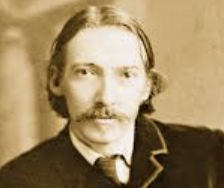
2 months 2 days ago
Vanity dies hard; in some obstinate cases it outlives the man.
▼
Source
source
Prince Otto, reported in Bartlett's Familiar Quotations, 10th ed. (1919).
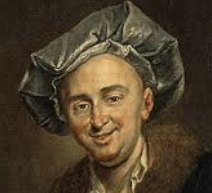
3 days ago
Whatever the virtue may be, from whatever source it may come, it is worthy of esteem... Mind, beauty, wealth, nobility, although the children of chance, all have their own value, as skill, learning and virtue have theirs.

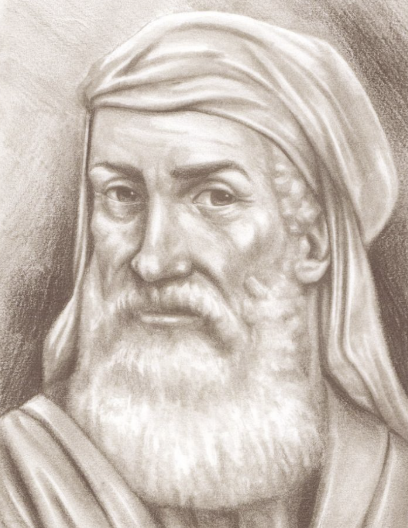
3 months 3 weeks ago
As it has long been and shall be, not ever, I think, will unfathomable time be emptied of either. This quote refers to Love and Strife, the fundamental opposing and ordering forces in Empedocles' model of the cosmos.
▼
Source
source
fr. 16
4 months 1 week ago
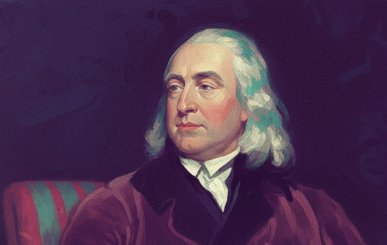
Intense, long, certain, speedy, fruitful, pure-Such marks in pleasures and in pains endure.Such pleasures seek if private be thy end:If it be public, wide let them extend.Such pains avoid, whichever be thy view:If pains must come, let them extend to few.
▼
Source
source
Ch. 4: Value of a Lot of Pleasure or Pain, How to be Measured
4 months 2 weeks ago
Anyone who studies present and ancient affairs will easily see how in all cities and all peoples there still exist, and have always existed, the same desires and passions. Thus, it is an easy matter for him who carefully examines past events to foresee future events in a republic and to apply the remedies employed by the ancients, or, if old remedies cannot be found, to devise new ones based upon the similarity of the events. But since these matters are neglected or not understood by those who read, or, if understood, remain unknown to those who govern, the result is that the same problems always exist in every era.
▼
Source
source
Book 1, Chapter 39
2 weeks ago
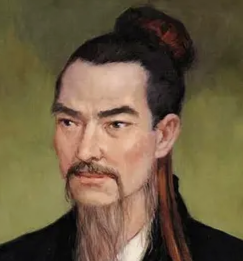
When we come to think about the several benefits in regard to their cause, how have they arisen? Have they arisen out of hate of others and injuring others? Of course we should say no. We should say they have arisen out of love of others and benefiting others. If we should classify one by one all those who love others and benefit others, should we find them to be partial or universal? Of course we should say they are universal. Now, since universal love is the cause of the major benefits in the world, therefore Mozi proclaims universal love is right. And, as has already been said, the interest of the magnanimous lies in procuring benefits for the world and eliminating its calamities. Now that we have found out the consequences of universal love to be the major benefits of the world and the consequences of partiality to be the major calamities in the world; this is the reason why Mozi said partiality is wrong and universality is right.
▼
Source
source
Book 4; Universal Love III
4 weeks ago
The way of learning is none other than finding the lost mind.
▼
Source
source
6A:11, as translated by Wing-tsit Chan in A Source Book in Chinese Philosophy (1963), p. 58
4 months 1 week ago
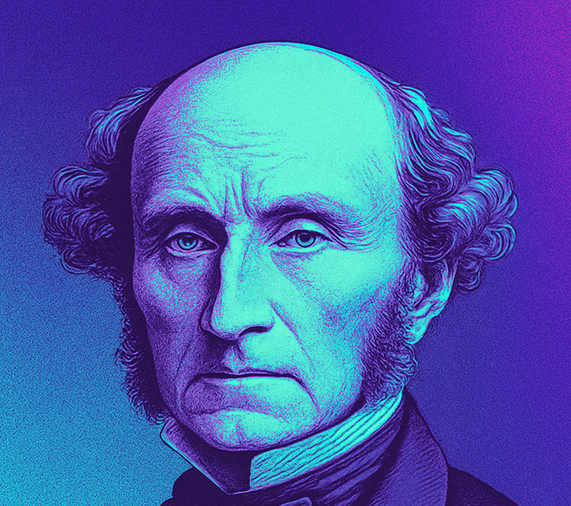
I now saw, that a science is either deductive or experimental, according as, in the province it deals with, the effects of causes when conjoined, are or are not the sums of the effects which the same causes produce when separate. It followed that politics must be a deductive science. It thus appeared, that both Macaulay and my father were wrong; the one in assimilating the method of philosophising in politics to the purely experimental method of chemistry; while the other, though right in adopting a deductive method, had made a wrong selection of one, having taken as the type of deduction, not the appropriate process, that of the deductive branches of natural philosophy, but the inappropriate one of pure geometry, which, not being a science of causation at all, does not require or admit of any summing-up of effects.
▼
Source
source
(pp. 160-161)

2 months 2 weeks ago
That passivity was the essence of the problem. The human being was intended to be passive only in a condition of fatigue, and not always then. Too much passivity of body produced surplus fat, short-windedness, indigestion: passivity of mind produced the same symptoms on the mental level. a feeling of spiritual dyspepsia. Since the average human being has no purposes that are not connected with the activities of keeping alive, the black room was bound to produce passivity, increasing dullness, a state in which the mind is at once awake and static, motionless, stagnant. This sense of dullness was nothing less than the collapse of the sense of reality and of values, the retreat into one's inner world.
▼
Source
source
p. 72

4 months 1 week ago
All happiness or unhappiness solely depends upon the quality of the object to which we are attached by love.
▼
Source
source
I, 9; translation by W. Hale White (Revised by Amelia Hutchison Stirling)

6 days ago
Put down the banks, and if this country could not be carried through the longest war against her most powerful enemy without ever knowing the want of a dollar, without dependence on the traitorous classes of her citizens, without bearing hard on the resources of the people, or loading the public with an indefinite burden of debt, I know nothing of my countrymen. Not by any novel project, not by any charlatanerie, but by ordinary and well-experienced means; by the total prohibition of all private paper at all times, by reasonable taxes in war aided by the necessary emissions of public paper of circulating size, this bottomed on special taxes, redeemable annually as this special tax comes in, and finally within a moderate period.
▼
Source
source
Letter to Albert Gallatin, 1815. ME 14:356
4 months 1 week ago
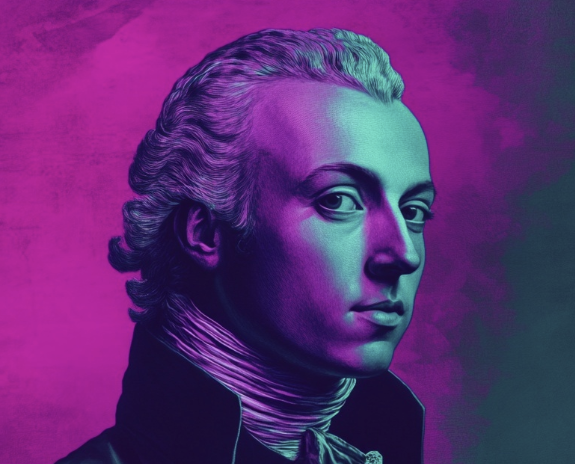
Natural science is throughout either a pure or an applied doctrine of motion.
▼
Source
source
Preface, Tr. Bax, 1883
4 months 2 weeks ago
Even opinion is of force enough to make itself to be espoused at the expense of life.
▼
Source
source
Book I, Ch. 40. Of Good and Evil, tr. Cotton, rev. W. Hazlitt, 1842
3 months 6 days ago
I have distinctly announced the grounds upon which I regard the Apostle John as the only teacher of true Christianity:-namely, that the Apostle Paul and his party, as the authors of the opposite system of Christianity, remained half Jews, and left unaltered the fundamental error of Judaism as well as of Heathenism, which we must afterwards notice. For the present the following may be enough: -It is only with John that the philosopher can deal, for he alone has respect for Reason, and appeals to that evidence which alone has weight with the philosopher-the internal. "If any man will do the will of him that sent me, he shall know of the doctrine, whether it be of God." But this Will of God, accord ing to John, is, that we should truly believe in God, and in Jesus Christ whom he hath sent. The other promulgators of Christianity, however, rely upon the external evidence of Miracle, which, to us at least, proves nothing.
▼
Source
source
P. 96-97

2 months 3 weeks ago
I have always noticed that deeply and truly religious persons are fond of a joke, and I am suspicious of those who aren't.
▼
Source
source
As quoted in Church and Home, Vol. 1 (1964) by United Methodist Church, and Evangelical United Brethren Church, p. 21.
3 months 4 days ago
Poets and priests were one in the beginning, and they only separated in later times. But the real poet is always a priest, just as the real priest always remains a poet.
▼
Source
source
Fragment No. 71

3 weeks ago
If one doesn't know his mistakes, he won't want to correct them.
▼
Source
source
Line 9
4 months 1 week ago
When by these steps he has got resolution enough not to be deterr'd from what he ought to do, by the apprehension of danger; when fear does not, in sudden or hazardous occurrences, decompose his mind, set his body a-trembling, and make him unfit for action, or run away from it, he has then the courage of a rational creature: and such an hardiness we should endeavour by custom and use to bring children to, as proper occasions come in our way.
▼
Source
source
Sec. 115

4 months 6 days ago
We live together, we act on, and react to, one another; but always and in all circumstances we are by ourselves. The martyrs go hand in hand into the arena; they are crucified alone. Embraced, the lovers desperately try to fuse their insulated ecstacies into a single self-transcendence; in vain. By its very nature every embodied spirit is doomed to suffer and enjoy in solitude.
▼
Source
source
Page 159
6 days ago
Lay down true principles and adhere to them inflexibly. Do not be frightened into their surrender by the alarms of the timid, or the croakings of wealth against the ascendency of the people.
▼
Source
source
Letter to Samuel Kercheval
6 days ago
Inquiry into the evidence of a doctrine is not to be made once for all, and then taken as finally settled. It is never lawful to stifle a doubt; for either it can be honestly answered by means of the inquiry already made, or else it proves that the inquiry was not complete. "But," says one, "I am a busy man; I have no time for the long course of study which would be necessary to make me in any degree a competent judge of certain questions, or even able to understand the nature of the arguments." Then he should have no time to believe.
2 months 2 days ago
If wine is to withdraw its most poetic countenance, the sun of the white dinner-cloth, a deity to be invoked by two or three, all fervent, hushing their talk, degusting tenderly, and storing reminiscences-for a bottle of good wine, like a good act, shines ever in the retrospect-if wine is to desert us, go thy ways, old Jack!
▼
Source
source
Pt. I, ch. III

2 months 4 days ago
Without an understanding of causality there can be no theory of communication. What passes as information theory today is not communication at all, but merely transportation.
▼
Source
source
(p. 362)
3 months 1 week ago
We are constantly railing against the passions; we ascribe to them all of man's afflictions, and we forget that they are also the source of all his pleasures ... But what provokes me is that only their adverse side is considered ... and yet only passions, and great passions, can raise the soul to great things. Without them there is no sublimity, either in morals or in creativity. Art returns to infancy, and virtue becomes small-minded.
▼
Source
source
As translated in Diderot (1977) by Otis Fellows, p. 39
2 months 2 days ago
An appeal to his alarm is never a good plan to rid oneself of a spirited young man.
▼
Source
source
The Pavilion on the Links, ch. III.
3 months 2 days ago
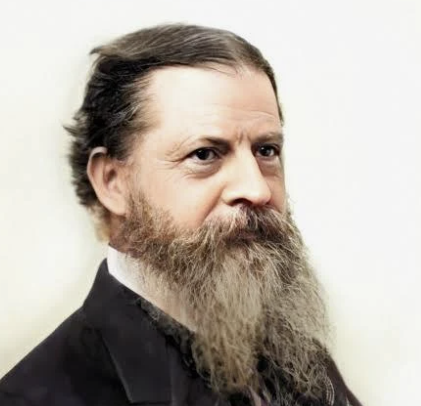
The consciousness of a general idea has a certain "unity of the ego" in it, which is identical when it passes from one mind to another. It is, therefore, quite analogous to a person, and indeed, a person is only a particular kind of general idea.
▼
Source
source
Man's Glassy Essence in The Monist, Vol. III, No. 1
3 months 3 weeks ago
In peace, as a wise man, he should make suitable preparation for war.
▼
Source
source
Book II, satire ii, line 111

4 months 1 week ago
The establishment of any new manufacture, of any new branch of commerce, or any new practice in agriculture, is always a speculation, from which the projector promises himself extraordinary profits. These profits sometimes are very great, and sometimes, more frequently, perhaps, they are quite otherwise; but in general they bear no regular proportion to those of other older trades in the neighbourhood. If the project succeeds, they are commonly at first very high. When the trade or practice becomes thoroughly established and well known, the competition reduces them to the level of other trades.
▼
Source
source
Chapter X, Part I, p. 136 (tendency of the rate of profit to fall).

4 months 6 days ago
It is easy to live for others; everybody does. I call on you to live for yourselves.
▼
Source
source
May 3, 1845
4 months 1 week ago
Whenever the general disposition of the people is such, that each individual regards those only of his interests which are selfish, and does not dwell on, or concern himself for, his share of the general interest, in such a state of things, good government is impossible.
▼
Source
source
Ch. II: The Criterion of a Good Form of Government (p. 167)

4 months 3 weeks ago
He who disdained not to assume us unto Himself, did not disdain to take our place and speak our words, in order that we might speak His words.
▼
Source
source
p.421
4 months 2 weeks ago
The art of dining well is no slight art, the pleasure not a slight pleasure.
3 weeks 6 days ago
At bottom, as was said above, we are to consider Luther as a Prophet Idol-breaker; a bringer-back of men to reality. It is the function of great men and teachers.
4 months 3 weeks ago
When a man at forty is the object of dislike, he will always continue what he is.
2 months 4 weeks ago
People from a planet without flowers would think we must be mad with joy the whole time to have such things about us.
▼
Source
source
A Fairly Honourable Defeat (1970); 2001, p. 170.
3 months 2 days ago
With this as its basic constitution, civilization achieved things of which gentile society was not even remotely capable. But it achieved them by setting in motion the lowest instincts and passions in man and developing them at the expense of all his other abilities. From its first day to this, sheer greed was the driving spirit of civilization; wealth and again wealth and once more wealth, wealth, not of society, but of the single scurvy individual-here was its one and final aim. If at the same time the progressive development of science and a repeated flowering of supreme art dropped into its lap, it was only because without them modern wealth could not have completely realized its achievements.
▼
Source
source
The Origin of the Family, Private Property and the State (1884) as translated by Ernest Untermann (1902)
4 months 1 week ago
The teaching of my philosophy... that our whole existence is something which had better not have been, and that to disown and disclaim it is the highest wisdom.
▼
Source
source
Ch 1

1 month 2 days ago
Today we have arrived at a point when the three principles [of modern resistance: 1. measure of efficacy, 2. the form of political and military organization correspond to the current forms of economic and social production, 3. democracy and freedom] coincide. The distributed network structure provides the model for an absolutely democratic organization that corresponds to the dominant forms of economic and social production and is also the most powerful weapon against the ruling power structure.
▼
Source
source
88
3 months 4 days ago
It is vain to expect virtue from women till they are in some degree independent of men; nay, it is vain to expect that strength of natural affection which would make them good wives and mothers. Whilst they are absolutely dependent on their husbands they will be cunning, mean, and selfish.
▼
Source
source
Ch. 9
CivilSimian.com created by AxiomaticPanic, CivilSimian, Kalokagathia