Yeah...whatever misery you are enduring....it could be worse....



Is there not therefore rational necessity, but vital anguish that impels us to believe in God. And to believe in God - I must reiterate it yet again - is, before all and above all, to feel a hunger for God, a hunger for divinity, to be sensible to his lack and absence, to wish that God may exist. And it is the wish to save the human finality of the Universe. For one might even come to resign oneself to being absorbed by God, if it be that our consciousness is based upon Consciousness, if consciousness is the end of the Universe.
Macaulay is like a book in breeches...He has occasional flashes of silence, that make his conversation perfectly delightful.
Since these questions lie in the future, imagination must supply the lack of experienced feeling in attaching value to them. But values can be only imperfectly anticipated.

Exercise is the technique by which one imposes on the body tasks that are both repetitive and different, but always graduated. By bending behavior towards a terminal state, exercise makes possible a perpetual characterization of the individual...It thus assures, in the form of continuity and constraint, a growth, an observation, a qualification.

Truth happens to an idea. It becomes true, is made true by events. Its verity is in fact an event, a process: the process namely of its verifying itself, its veri-fication. Its validity is the process of its valid-ation.
In the deepest heart of all of us there is a corner in which the ultimate mystery of things works sadly.

One may discover the root of a Hindoo religion in his own private history, when, in the silent intervals of the day or night, he does sometimes inflict on himself like austerities with a stern satisfaction.

Useful undertakings which require sustained attention and vigorous precision in order to succeed often end up by being abandoned, for, in America, as elsewhere, the people move forward by sudden impulses and short-lived efforts.
Philosophy is an everlasting fire, sometimes damped down by setting itself limits, then flaring into new life as it consumes them. Every field of inquiry is limited, but philosophy has an essential relation to the question of limits, to its own limits.

At the core of all well-founded belief, lies belief that is unfounded.
Meaning created links so numerous, so rich and involved that only esoteric knowledge could possibly have the necessary key. Objects became so weighed down with attributes, connections and associations that they lost their own original face. Meaning was no longer read in an immediate perception, and accordingly objects ceased to speak directly: between the knowledge that animated the figures of objects and the forms they were transformed into, a divide began to appear, opening the way for a symbolism more often associated with the world of dreams.
Tools arm the man. One can well say that man is capable of bringing forth a world; he lacks only the necessary apparatus, the corresponding armature of his sensory tools. The beginning is there. Thus the principle of a warship lies in the idea of the shipbuilder, who is able to incorporate this thought by making himself into a gigantic machine, as it were, through a mass of men and appropriate tools and materials. Thus the idea of a moment often required monstrous organs, monstrous masses of materials, and man is therefore a potential, if not an actual creator.
Creatures inveterately wrong in their inductions have a pathetic but praiseworthy tendency to die before reproducing their kind.
I simply don't think it is reasonable to use IQ tests to produce results of questionable value, which may then serve to justify racists in their own minds and to help bring about the kinds of tragedies we have already witnessed earlier in this century.
From a correct Marxian point of view ... all measures designed to restrain, to regulate and to improve capitalism were simply "petty-bourgeois" nonsense ... True socialists should not place any obstacles in the way of capitalist evolution. For only the full maturity of capitalism could bring about socialism. It is not only vain, but harmful to the interests of the proletarians to resort to such measures.

The unfortunate thing about public misfortunes is that everyone regards himself as qualified to talk about them.
Nothing is indefensible - from the absurdest proposition to the most monstrous crime.
The notion contradicts reality when the latter has become self-contradictory. Hegel says that a prevailing social form can be successfully attacked by thought only if this form has come into open contradiction with its own 'truth,' in other words, if it can no longer fulfill the demands of its own contents.
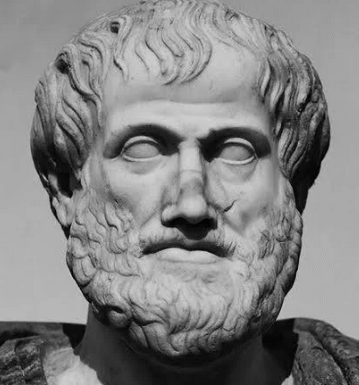
The vices respectively fall short of or exceed what is right in both passions and actions, while virtue both finds and chooses that which is intermediate.
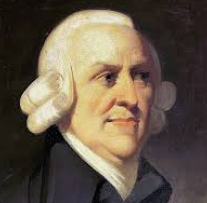
Mercantile jealousy is excited, and both inflames, and is itself inflamed, by the violence of national animosity.

Everything ideal has a natural basis and everything natural an ideal development.

That we are overdone with banking institutions which have banished the precious metals and substituted a more fluctuating and unsafe medium, that these have withdrawn capital from useful improvements and employments to nourish idleness, that the wars of the world have swollen our commerce beyond the wholesome limits of exchanging our own productions for our own wants, and that, for the emolument of a small proportion of our society who prefer these demoralizing pursuits to labors useful to the whole, the peace of the whole is endangered and all our present difficulties produced, are evils more easily to be deplored than remedied.

That some have never dreamed is as improbable as that some have never laughed.
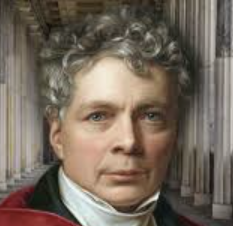
The end of the philosophical dialogue lies in itself; it can never serve a purpose outside of itself. Just as a sculptor does not cease to be a work of art even if it lies at the bottom of the sea, so indeed every work of philosophy endures, even if uncomprehended in its own time. One would be grateful if it were merely a matter of incomprehension. Instead, the work is usually refitted and appropriated by various entities-some playing the part of the opponent; others, that of the proponent.
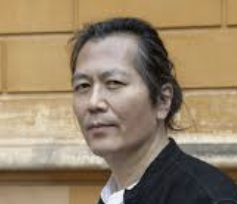
Sabbath rest does not follow creation; it brings creation to completion.
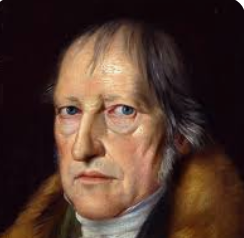
It is easier to discover a deficiency in individuals, in states, and in providence, than to see their real import or value.
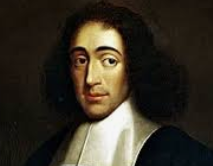
Man can, indeed, act contrarily to the decrees of God, as far as they have been written like laws in the minds of ourselves or the prophets, but against that eternal decree of God, which is written in universal nature, and has regard to the course of nature as a whole, he can do nothing.
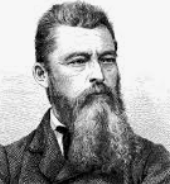
Hegel ... proceeds abstractly from the pre-existence of the intellect. ... He does not appeal to the intellect within us.
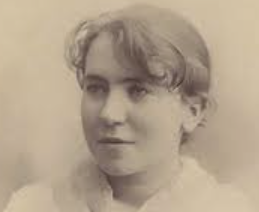
The people are asleep; they remain indifferent. They forge their own chains and do the bidding of their masters to crucify their Christs.

Would you know what makes men greedy for the future? It is because no one has yet found himself.
I realize the malady of the oppressed and disinherited masses only too well, but I refuse to prescribe the usual ridiculous palliatives which allow the patient neither to die nor to recover. One cannot be too extreme in dealing with social ills; besides, the extreme thing is generally the true thing. My lack of faith in the majority is dictated by my faith in the potentialities of the individual. Only when the latter becomes free to choose his associates for a common purpose, can we hope for order and harmony out of this world of chaos and inequality.
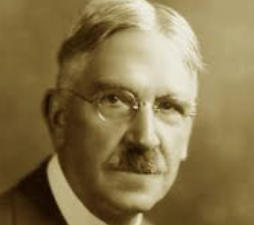
There is another significant involution of time and movement in space. It is constituted not only by directional tendencies-up and down for example-but by mutual approaches and retreatings. Near and far, close and distant, are qualities of pregnant, often tragic, import-that is, as they are experienced, not just stated by measurement of science. They signify loosening and tightening, expanding and contracting, separating and compacting, soaring and drooping, rising and falling; the dispersive, scattering, and the hovering and brooding, unsubstantial lightness and massive blow. Such actions and reaction are the very stuff out if which the objects and events we experience are made.
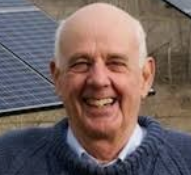
Ask the world to reveal its quietude - not the silence of machines when they are still, but the true quiet by which birdsongs, trees, bellworts, snails, clouds, storms become what they are, and are nothing else.

Don't waste yourself in rejection, nor bark against the bad, but chant the beauty of the good.
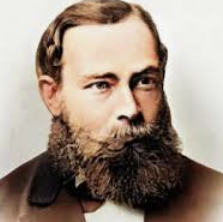
Gottlob Frege created modern logic including "for all," "there exists," and rules of proof. Leibniz and Boole had dealt only with what we now call "propositional logic" (that is, no "for all" or "there exists"). They also did not concern themselves with rules of proof, since their aim was to reach truth by pure calculation with symbols for the propositions. Frege took the opposite track: instead of trying to reduce logic to calculation, he tried to reduce mathematics to logic, including the concept of number.
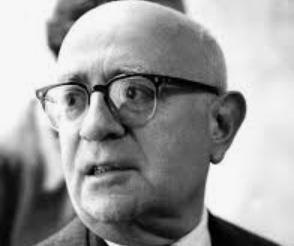
Traditional philosophy's claim to totality, culminating in the thesis that the real is rational, is indistinguishable from apologetics.

Time: That which man is always trying to kill, but which ends in killing him.

Gold is now money with reference to all other commodities only because it was previously, with reference to them, a simple commodity.
No one realizes how beautiful it is to travel until he comes home and rests his head on his old, familiar pillow.

No sound ought to be heard in the church but the healing voice of Christian charity.

On the other hand, the cheapest form of pride is national pride; for the man affected therewith betrays a want of individual qualities of which he might be proud, since he would not otherwise resort to that which he shares with so many millions. The man who possesses outstanding personal qualities will rather see most clearly the faults of his own nation, for he has them constantly before his eyes. But every miserable fool, who has nothing in the world whereof he could be proud, resorts finally to being proud of the very nation to which he belongs. In this he finds compensation and is now ready and thankful to defend, ... all the faults and follies peculiar to it.

One of the ideas I had discussed in The Poverty of Historicism was the influence of a prediction upon the event predicted. I had called this the "Oedipus effect", because the oracle played a most important role in the sequence of events which led to the fulfilment of its prophecy. ... For a time I thought that the existence of the Oedipus effect distinguished the social from the natural sciences. But in biology, too-even in molecular biology-expectations often play a role in bringing about what has been expected.
There are limits beyond which your folly will not carry you. I am glad of that. In fact, I am relieved.
CivilSimian.com created by AxiomaticPanic, CivilSimian, Kalokagathia