


8 months 1 week ago
The native and untaught suggestions of inquisitive children do often offer things, that may set a considering man's thoughts on work. And I think there is frequently more to be learn'd from the unexpected questions of a child than the discourses of men, who talk in a road, according to the notions they have borrowed, and the prejudices of their education.
▼
Source
source
Sec. 121

7 months 1 week ago
If death is as horrible as is claimed, how is it that after the passage of a certain period of time we consider happy any being, friend or enemy, who has ceased to live?

7 months 2 days ago
But fantasy kills imagination, pornography is death to art.
▼
Source
source
The Message to the Planet (1989) p. 43.

8 months 5 days ago
I believe that political power also exercises itself through the mediation of a certain number of institutions that seem to have nothing in common with political power, that have the appearance of being independent, but are not.
▼
Source
source
Debate with Noam Chomsky, École Supérieure de Technologie à Eindhoven, November 1971
4 months ago
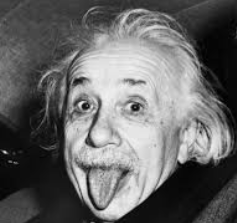
If I was not a physicist, I would probably be a musician. I often think in music. I live my daydreams in music. I see my life in terms of music. ... I cannot tell if I would have done any creative work of importance in music, but I do know that I get most joy in life out of my violin.
5 months 1 week ago
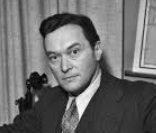
A free press is not a privilege but an organic necessity in a great society. ...Without criticism and reliable and intelligent reporting, the government cannot govern. For there is no adequate way in which it can keep itself informed about what the people of the country are thinking and doing and wanting.
▼
Source
source
International Press Institute Association, London
9 months ago
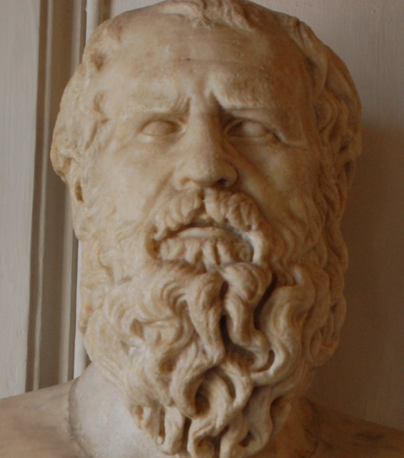
It pertains to all men to know themselves and to learn self-control.
8 months 2 weeks ago
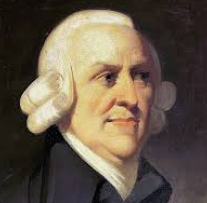
Civil government, so far as it is instituted for the security of property, is in reality instituted for the defence of the rich against the poor, or of those who have some property against those who have none at all.
▼
Source
source
Chapter I, Part II, 775.
4 months 1 week ago
All hopes and despairs vanish in the voracious, funneling whirlwind of God. God laughs, wails, kills, sets us on fire, and then leaves us in the middle of the way, charred embers. And I rejoice to feel between my temples, in the flicker of an eyelid, the beginning and the end of the world. I condense into a lightning moment the seeding, sprouting, blossoming, fructifying, and the disappearance of every tree, animal, man, star, and god. All Earth is a seed planted in the coils of my mind. Whatever struggles for numberless years to unfold and fructify in the dark womb of matter bursts in my head like a small and silent lightning flash. Ah! let us gaze intently on this lightning flash, let us hold it for a moment, let us arrange it into human speech. Let us transfix this momentary eternity which encloses everything, past and future, but without losing in the immobility of language any of its gigantic erotic whirling.

7 months 2 weeks ago
I think that democratic communities have a natural taste for freedom: left to themselves, they will seek it, cherish it, and view any privation of it with regret. But for equality, their passion is ardent, insatiable, incessant, invincible: they call for equality in freedom; and if they cannot obtain that, they still call for equality in slavery.
▼
Source
source
Book Two, Chapter I.

4 months 1 week ago
One loves to possess arms, though they hope never to have occasion for them.
▼
Source
source
Letter to George Washington (1796); published in The Writings of Thomas Jefferson, 20 Vols., Washington, D.C., (1903-04), 9:341
7 months 1 day ago
Having given up autonomy, reason has become an instrument.
▼
Source
source
p. 21.

7 months 1 week ago
They sang the praises of nature, of the sea, of the woods. They liked making songs about one another, and praised each other like children; they were the simplest songs, but they sprang from their hearts and went to one's heart. And not only in their songs but in all their lives they seemed to do nothing but admire one another. It was like being in love with each other, but an all-embracing, universal feeling.
8 months 2 weeks ago
There is an inconvenience which attends all abstruse reasoning. That it may silence, without convincing an antagonist, and requires the same intense study to make us sensible of its force, that was at first requisite for its invention. When we leave our closet, and engage in the common affairs of life, its conclusions seem to vanish, like the phantoms of the night on the appearance of the morning; and 'tis difficult for us to retain even that conviction, which we had attain'd with difficulty.
▼
Source
source
Part 1, Section 1

8 months 6 days ago
I would really like to slow down the speed of reading with continual punctuation marks. For I would like to be read slowly. (As I myself read.)
▼
Source
source
p. 77e

4 months 3 weeks ago
The much occupied man has no time for wantonness, and it is an obvious commonplace that the evils of leisure can be shaken off by hard work.
▼
Source
source
Line 9
7 months 1 week ago
From these two immediate perceptions, we gain a mediate, or inferential perception of the relation of all four instants. This mediate perception is objectively, or as to the object being represented, spread over the four instants; but subjectively, or as itself the subject of duration, it is completely embraced in the second moment. (The reader will observe that I use the word instant to mean a point in time, and moment to mean an infinitesimal duration.

6 months 3 weeks ago
I prefer to reach the few who really want to learn, rather than the many who come to be amused.
8 months 4 weeks ago
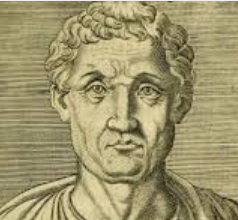
For when every judgement is the act of hym that judgeth, it behoveth that every man performe hys worke and purpose, not by any forayne or straunge power or facultie, but by his owne proper power, and strength.
4 months 2 weeks ago
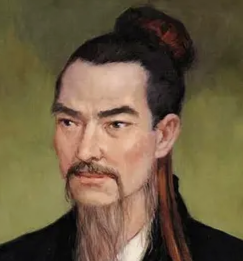
If the rulers sincerely desire the empire to be wealthy and dislike to have it poor, desire to have it orderly and dislike to have it chaotic, they should bring about universal love and mutual aid. This is the way of the sage-kings and the way to order for the world, and it should not be neglected.
▼
Source
source
Book 4; Universal Love II
4 months 3 weeks ago
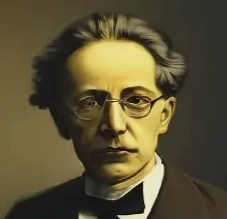
All right, men are as they should be, can be. What should they be? Surely not more than they can be! And what can they be? Not more, again, than they - can, than they have the competence, the force, to be. But this they really are, because what they are not, they are incapable of being; for to be capable means - really to be. One is not capable for anything that one really is not; one is not capable of anything that one does not really do. Could a man blinded by cataract see? Oh, yes, if he had his cataract successfully removed. But now he cannot see because he does not see. Possibility and reality always coincide. One can do nothing that one does not, as one does nothing that one cannot.
▼
Source
source
Cambridge 1995, p. 291
8 months 1 week ago
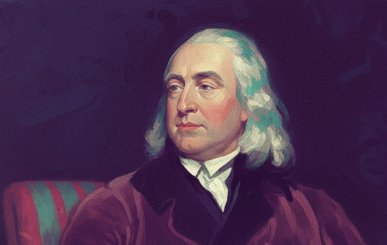
Of corruption, the principal and direct use is, to engage the representatives of the people to betray their trust, and sell themselves and the people to the universal corrupter-the monarch, in his capacity of corrupter-general.
▼
Source
source
Constitutional Code (written between 1820 and 1832), quoted in The Works of Jeremy Bentham, Vol. XVII (1841), p. 76

8 months 1 week ago
One may discover the root of a Hindoo religion in his own private history, when, in the silent intervals of the day or night, he does sometimes inflict on himself like austerities with a stern satisfaction.
▼
Source
source
Snakes in the Ganga, 2022

8 months 1 week ago
Nature is too thin a screen; the glory of the One breaks in everywhere.
▼
Source
source
p. 182
8 months 1 week ago
When a whole nation is roaring Patriotism at the top of its voice, I am fain to explore the cleanness of its hands and purity of its heart.
▼
Source
source
December 10, 1824

8 months 1 week ago
Wherever a man comes, there comes revolution. The old is for slaves.
▼
Source
source
p. 25
4 months 3 weeks ago
The point is, not how long you live, but how nobly you live. And often this living nobly means that you cannot live long.

9 months 1 week ago
Then we understand that rebellion cannot exist without a strange form of love. Those who find no rest in God or in history are condemned to live for those who, like themselves, cannot live; in fact, for the humiliated.

6 months 6 days ago
Give us grace and strength to forbear and to persevere. Give us courage and gaiety and the quiet mind, spare to us our friends, soften to us our enemies.
▼
Source
source
Prayer, inscribed on the bronze memorial to Stevenson in St. Giles Cathedral, Edinburgh, Scotland

5 months 1 day ago
I am fast becoming a patriot of the most decided stamp. Scornfully as I used to speak and think of Scotland in my hours of bitterness and irritation, I never fail to stand up manfully in defence of it thro' thick and thin, whenever a renegade Scot takes upon him to abuse it.
▼
Source
source
Letter to Thomas Murray (24 August 1824), quoted in Fred Kaplan, Thomas Carlyle: A Biography (1983), p. 100
4 months 3 weeks ago
Physicists and philosophers stick stubbornly to the principles of a mechanistic interpretation of the world after physics has, in its factual structure, already outgrown the latter. They have the same excuse as the inhabitant of the mainland who for the first time travels on the open sea: he will desperately try to stay in sight of the vanishing coast line, as long as there is no other coast in sight, towards which he steers.
▼
Source
source
"Wissenschaft als symbolische Konstruktion des Menschen" Eranos-Jahrbuch (1948) GA IV, as quoted/translated by Erhard Scholz, "Philosophy as a Cultural Resource and Medium of Reflection for Hermann Weyl"

6 months 1 week ago
I don't want to sound callous. I mean, even if I have nothing to offer, that doesn't matter, because that still doesn't mean that what anybody else has to offer therefore has to be true.
8 months 1 week ago
Secrecy is an instrument of conspiracy; it ought not, therefore, to be the system of a regular government.
▼
Source
source
On Publicity from The Works of Jeremy Bentham volume 2, part 2, 1839

7 months 1 day ago
It would be wrong to suppose that the man of any particular period always looks upon past times as below the level of his own, simply because they are past. It is enough to recall that to the seeming of Jorge Manrique, "Any time gone by was better."... From A.D. 150 on, this impression of a shrinking of vitality, of a falling from position, of decay and loss of pulse shows itself increasingly in the Roman Empire. Had not Horace already sung: "Our fathers, viler than our grandfathers, begot us who are even viler, and we shall bring forth a progeny more degenerate still"?
▼
Source
source
Horace, Odes, III.6] Chap. III: The Height Of The Times
7 months 1 week ago
Revolution is like the daughters of Pelias: it cuts humanity to pieces in order to rejuvenate it.
▼
Source
source
Act II.

7 months 1 week ago
Nature too remains, so far as we have yet come, ever a frightful Machine of Death: everywhere monstrous revolution, inexplicable vortices of movement; a kingdom of Devouring, of the maddest tyranny; a baleful Immense: the few light-points disclose but a so much the more appalling Night, and terrors of all sorts must palsy every observer.

7 months 3 days ago
Let a man once overcome his selfish terror at his own finitude, and his finitude is, in one sense, overcome.

4 months ago
We Jews have been too adaptable. We have been too eager to sacrifice our idiosyncrasies for the sake of social conformity. ... Even in modern civilization, the Jew is most happy if he remains a Jew.


6 months 1 week ago
The percept takes priority of the concept.
▼
Source
source
Letter to Edward T. Hall, 1971, Letters of Marshall McLuhan, p. 397
8 months 1 week ago
Things are pretty, graceful, rich, elegant, handsome, but, until they speak to the imagination, not yet beautiful.
▼
Source
source
Beauty

8 months 1 week ago
What can be said can and should always be said more and more simply and clearly.
4 months 1 week ago
Our people... will give you all the necessaries of war they produce, if, instead of the bankrupt trash they now are obliged to receive for want of any other, you will give them a paper promise funded on a specific pledge, and of a size for common circulation.
▼
Source
source
Letter to James Monroe, 1815. ME 14:228

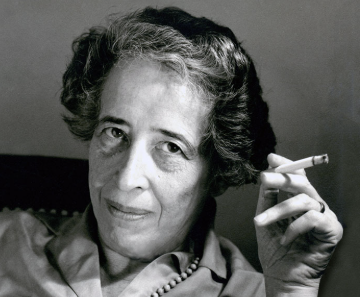
8 months 1 week ago
The only man for whom Hitler had "unqualified respect" was "Stalin the genius," and while in the case of Stalin and the Russian regime we do not... have the rich documentary material that is available for Germany, we nevertheless know since Khrushchev's speech before the Twentieth Party Congress that Stalin trusted only one man and that was Hitler.
▼
Source
source
Part 3, Ch. 10
7 months 1 day ago
The species with eyes appears suddenly, capriciously as it were, and it is this species which changes the environment by creating its visible aspect. The eye does not come into being because it is needed. Just the contrary; because the eye appears it can henceforth be applied as a serviceable instrument. Each species builds up its stock of useful habits by selecting among, and taking advantage of, the innumerable useless actions which a living being performs out of sheer exuberance.
▼
Source
source
p. 17
6 months 1 week ago
A theory of cultural change is impossible without knowledge of the changing sense ratios effected by various externalizations of our senses.
▼
Source
source
(p. 49)
CivilSimian.com created by AxiomaticPanic, CivilSimian, Kalokagathia