


3 months 1 week ago
Democracy is, by the nature of it, a self-canceling business; and it gives in the long run a net result of zero.
▼
Source
source
Ch. 6, Laissez-Faire.

5 months 3 weeks ago
I look upon you as a gem of the old rock.
▼
Source
source
Dedication

5 months 1 week ago
Did ye never read in the scriptures, The stone which the builders rejected, the same is become the head of the corner: this is the Lord's doing, and it is marvellous in our eyes? Therefore say I unto you, The kingdom of God shall be taken from you, and given to a nation bringing forth the fruits thereof. And whosoever shall fall on this stone shall be broken: but on whomsoever it shall fall, it will grind him to powder.
▼
Source
source
21:27-42 and 44 (KJV)
2 months 2 weeks ago
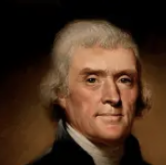
On similar ground it may be proved that no society can make a perpetual constitution, or even a perpetual law. The earth belongs always to the living generation. They may manage it then, & what proceeds from it, as they please, during their usufruct. They are masters too of their own persons, & consequently may govern them as they please. But persons & property make the sum of the objects of government. The constitution and the laws of their predecessors extinguished then in their natural course, with those who gave them being. This could preserve that being till it ceased to be itself, & no longer. Every constitution then, & every law, naturally expires at the end of 19 years. If it be enforced longer, it is an act of force, & not of right. It may be said that the succeeding generation exercising in fact the power of repeal, this leaves them as free as if the constitution or law had been expressly limited to 19 years only.
▼
Source
source
Letter to James Madison,
2 months 2 weeks ago
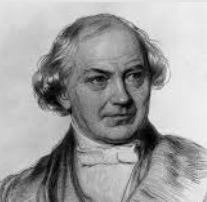
Secondary Qualities are not 'extended' but 'intensive'; their effects are not augmented by addition of parts, but by increased operation of the medium. Hence they are not measured directly, but by 'scales'; not by 'units', but by 'degrees'.
2 months 2 weeks ago
The basis of all Natural Systems of Classification is the Idea of Natural Affinity. The Principle which this Idea involves is this:-Natural arrangements, obtained from 'different' sets of characters, must 'coincide' with each other.
3 months 4 days ago
The truth is, that most men want knowledge, not for itself, but for the superiority which knowledge confers; and the means they employ to secure this superiority, are as wrong as the ultimate object, for no man can ever end with being superior, who will not begin with being inferior.
▼
Source
source
Lecture IX : On the Conduct of the Understanding
6 months 3 weeks ago
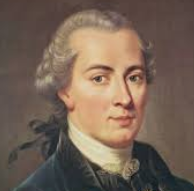
Human reason has this peculiar fate that in one species of its knowledge it is burdened by questions which, as prescribed by the very nature of reason itself, it is not able to ignore, but which, as transcending all its powers, it is also not able to answer.
▼
Source
source
Preface, A vii
6 months 4 weeks ago
Cosmus, Duke of Florence, was wont to say of perfidious friends, that "We read that we ought to forgive our enemies; but we do not read that we ought to forgive our friends."
▼
Source
source
No. 206

5 months 2 weeks ago
A harmonious being cannot believe in God. Saints, criminals, and paupers have launched him, making him available to all unhappy people.
5 months 1 week ago
Reason has never really directed social reality, but now reason has been so thoroughly purged of any specific trend or preference that it has finally renounced even the task of passing judgment on man's actions and way of life. Reason has turned them over for ultimate sanction to the conflicting interests to which our world actually seems abandoned.
▼
Source
source
p. 9.

7 months 2 weeks ago
It's better to bet on this life than on the next.


5 months 3 weeks ago
The infant runs toward it with its eyes closed, the adult is stationary, the old man approaches it with his back turned.
▼
Source
source
"Death"

6 months 2 weeks ago
Humans are amphibians - half spirit and half animal.... As spirits they belong to the eternal world, but as animals they inhabit time.
▼
Source
source
Letter VIII

6 months 1 week ago
If any one hearken with understanding to these sayings of mine many a deed worthy of a good man shall he perform and many a foolish deed be spared.
6 months 1 week ago
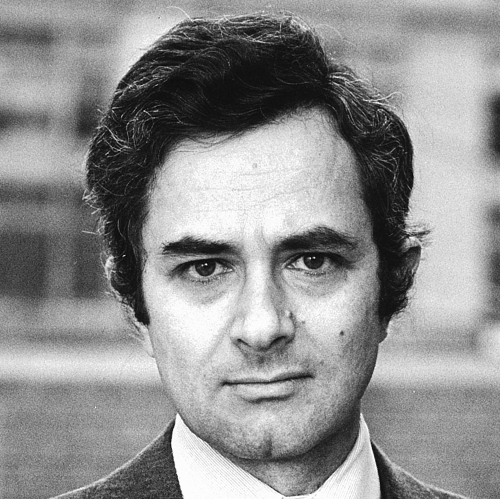
The essence of the belief that bats have experience is that there is something that it is like to be a bat. Now we know that most bats (the microchiroptera, to be precise) perceive the external world primarily by sonar, or echolocation. ... But bat sonar, though clearly a form of perception, is not similar in its operation to any sense that we possess, and there is no reason to suppose that it is subjectively like anything we can experience or imagine. This appears to create difficulties for the notion of what it is like to be a bat.
▼
Source
source
p. 168.
5 months 3 days ago
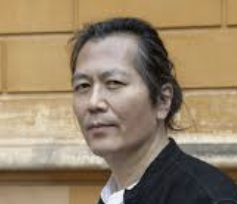
We can define rituals as symbolic techniques of making oneself at home in the world. They transforming being at home to being in the world. They turn the world into a reliable place. They are to time what a home is to space. They render time habitable.
6 months 1 day ago
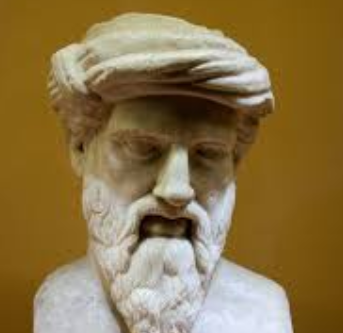
Let thy mind rule thy tongue!
5 months 1 week ago
The capabilities (intellectual and material) of contemporary society are immeasurably greater than ever before-which means that the scope of society's domination over the individual is immeasurably greater than ever before. Our society distinguishes itself by conquering the centrifugal social forces with Technology rather than Terror, on the dual basis of an overwhelming efficiency and an increasing standard of living.
▼
Source
source
p. xliii

5 months 2 weeks ago
Wherever ideas come together they tend to weld into general ideas; and whenever they are generally connected, general ideas govern the connection; and these general ideas are living feelings spread out.
5 months 1 week ago
It must be emphasized that the warrior spirit is one thing and the military spirit quite another. Militarism was unknown in the Middle Ages. The soldier signifies the degeneration of the warrior, corrupted by the industrialist. The soldier is an armed industrialist, a bourgeois who has invented gunpowder. He was organized by the state to make war on the castles. With his coming, long-distance warfare appeared, the abstract war waged by cannon and machine gun.

2 months 2 weeks ago
In a word, the mass of the people counts for nothing in every political creation. A people even respects a government only because it is not its own creation. This feeling is engraved on its heart in profound characters. It submits to sovereignty because it senses that it is something sacred it can neither create nor destroy. If, as a consequence of corruption and perfidious suggestions, this preventive sentiment is somehow effaced, if it has the misfortune of believing itself called as a body to reform the State, all is lost. This is why, even in free States, it is extremely important that the men who govern be separated from the mass of the people by that personal respect stemming from birth and wealth.
▼
Source
source
p. 73

6 months 2 weeks ago
A man who belongs to some communist or revolutionary society wills certain concrete ends, which imply the will to freedom, and that freedom is willed in community. We will freedom for freedom's sake, and in and through the particular circumstances. And in thus willing freedom, we discover that it depends entirely upon the freedom of others and that the freedom of others depends upon our own.
▼
Source
source
pp. 51-52
7 months 2 weeks ago
Without the interplay of human against human, the chief interest in life is gone; most of the intellectual values are gone; most of the reason for living is gone.
6 months 4 weeks ago
It is not possible to run a course aright when the goal itself has not been rightly placed.
▼
Source
source
Aphorism 81
5 months 2 weeks ago
If we would regain our freedom, we must shake off the burden of sensation, no longer react to the world by our senses, break our bonds. For all sensation is a bond, pleasure as much as pain, joy as much as misery. The only free mind is the one that, pure of all intimacy with beings or objects, plies its own vacuity.

4 months 2 weeks ago
Anyone can hold the helm when the sea is calm.
▼
Source
source
Maxim 358
5 months 2 days ago
There is no reason whatever to assume that woman, in her climb to emancipation, has been, or will be, helped by the ballot.
3 months 4 weeks ago
Our bodies are perishable, wealth is not at all permanent and death is always nearby. Therefore we must immediately engage in acts of merit.
3 months 1 week ago
I feel that these old Northmen wore looking into Nature with open eye and soul: most earnest, honest; childlike, and yet manlike; with a great-hearted simplicity and depth and freshness, in a true, loving, admiring, unfearing way.
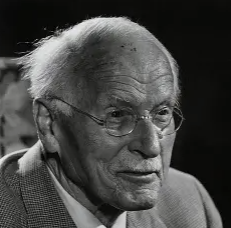
5 months 2 weeks ago
For lack of empirical data I have neither knowledge nor understanding of such forms of being, which are commonly called spiritual. ...Nevertheless, we have good reason to suppose that behind this veil there exists the uncomprehended absolute object which affects and influences us-and to suppose it even, or particularly, in the case of psychic phenomena about which no verifiable statements can be made.
▼
Source
source
p.351
2 months 2 weeks ago
The whole history of these books is so defective and doubtful that it seems vain to attempt minute enquiry into it: and such tricks have been played with their text, and with the texts of other books relating to them, that we have a right, from that cause, to entertain much doubt what parts of them are genuine. In the New Testament there is internal evidence that parts of it have proceeded from an extraordinary man; and that other parts are of the fabric of very inferior minds. It is as easy to separate those parts, as to pick out diamonds from dunghills
▼
Source
source
Letter to John Adams, on Christian scriptures

3 months 2 weeks ago
The regeneration of the inferior or bastard races by the superior ones is consistent with God's plans for humanity. The man of the people, in our countries, is always a fallen aristocrat; his hands are made to handle the sword rather than the laborer's tools. He prefers warring to working, that is, he returns to his original calling.
▼
Source
source
93, as translated by Asselin Charles, in "Colonial Discourse Since Christopher Columbus," Journal of Black Studies, Vol. 26, No. 2 (November 1995), 147
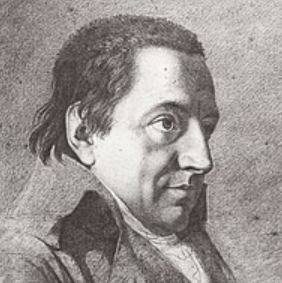
5 months 2 weeks ago
On condition that you protect my rights, I will protect your rights. How, then, does some party obtain the right to claim the protection of the other? Evidently, by actually protecting the rights of the other. But if this is so, no party will ever obtain a strictly legal claim to the protection of the other.
▼
Source
source
P. 220

4 months 2 weeks ago
To recognize this clearly is enough to drive a man out of his senses or to make him shoot himself. And this is just what does happen, and especially often among military men. A man need only come to himself for an instant to be impelled inevitably to such an end.
▼
Source
source
Chapter V, Contradiction Between our Life and our Christian Conscience
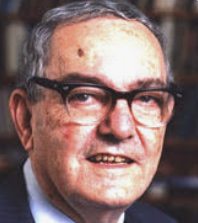
4 months 4 weeks ago
The criterion of efficiency dictates that choice of alternatives which produces the largest result for the given application of resources.
▼
Source
source
Simon (1945, p. 179); As cited in: Harry M. Johnson (1966) Sociology: A Systematic Introduction. p. 287.
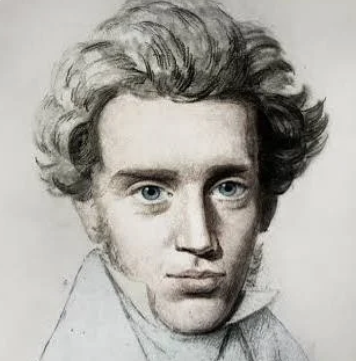
7 months 2 weeks ago
From the Christian point of view it stands firm that the truly Christian venturing requires probability.

6 months 2 weeks ago
I saw men go up and down, In the country and the town, With this tablet on their neck,- 'Judgement and a judge we seek.' Not to monarchs they repair, Nor to learned jurist's chair; But they hurry to their peers, To their kinsfolk and their dears; Louder than with speech they pray,- 'What am I? companion, say.'
▼
Source
source
Astræa
2 months 2 weeks ago
The Ambassador answered us that it was founded on the laws of their Prophet; that it was written in their Koran; that all nations who should not have acknowledged their authority were sinners; that it was their right and duty to make war upon them wherever they could be found, and to make slaves of all they could take as prisoners; and that every Mussulman who was slain in battle was sure to go to Paradise. He said, also, that the man who was the first to board a vessel had one slave over and above his share, and that when they sprang to the deck of an enemy's ship, every sailor held a dagger in each hand and a third in his mouth; which usually struck such terror into the foe that they cried out for quarter at once. That it was a law that the first who boarded an Enemy's Vessell should have one slave.
▼
Source
source
Concerning an interview in London with the ambassador from Tripoli, Sidi Haji Abdul Rahman Adja.
5 months 2 weeks ago
The notion of nothingness is not characteristic of laboring humanity: those who toil have neither time nor inclination to weigh their dust; they resign themselves to the difficulties or the doltishness of fate; they hope: hope is a slave's virtue.
2 months 2 weeks ago
Man, in wearing himself out his whole life long by saying: What is that! and what is that called! and what does that mean! is a big spectacle to himself if he wants to open his eyes. All his natural powers tending towards the truth, he never ceases looking for true names; he senses a language prior to that of Babel, and even of Eden.
▼
Source
source
p. 68
3 months 1 week ago
The virtues are not poured into us, they are natural. Seek, and you will find them: neglect, and you will lose them.
▼
Source
source
Uses and Sanctions, no. 22
2 months 4 weeks ago
Knighthood, instead, appeared as a superterritorial and supernational community in which its members, who were consecrated to military priesthood, no longer had a homeland and thus were bound by faithfulness not to people but, on the one hand, to an ethics that had as its fundamental values honor, truth, courage, and loyalty and, on the other hand, to a spiritual authority of a universal type, which was essentially that of the Empire.
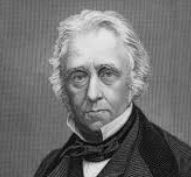
4 months 1 week ago
And why were those haughty [French] nobles destroyed with that utter destruction? Why were they scattered over the face of the earth, their titles abolished, their escutcheons defaced, their parks wasted, their palaces dismantled, their heritage given to strangers? Because they had no sympathy with the people, no discernment of the signs of their time; because, in the pride and narrowness of their hearts, they called those whose warnings might have saved them theorists and speculators; because they refused all concession till the time had arrived when no concession would avail.
▼
Source
source
Speech in the House of Commons on the Reform Bill (20 September 1831), quoted in Speeches of the Right Honourable T. B. Macaulay, M.P. (1854), p. 50
3 months ago
It is the fate of 'little faiths' of truth that they, true followers of Peter, whether they be Roman or the Protestant observance, cry out and sink in the sea of ideas, where the followers of Paul, believing in the Spirit, walk secure and undismayed.
▼
Source
source
p. 32

6 months 3 weeks ago
On the other hand, the cheapest form of pride is national pride; for the man affected therewith betrays a want of individual qualities of which he might be proud, since he would not otherwise resort to that which he shares with so many millions. The man who possesses outstanding personal qualities will rather see most clearly the faults of his own nation, for he has them constantly before his eyes. But every miserable fool, who has nothing in the world whereof he could be proud, resorts finally to being proud of the very nation to which he belongs. In this he finds compensation and is now ready and thankful to defend, ... all the faults and follies peculiar to it.
▼
Source
source
From 'Parerga and Paralipomena', Vol. 1, Aphorisms on the Wisdom of Life, 'What A Man Represents', pp. 360
4 months 2 weeks ago
The wine is bottled poetry.
▼
Source
source
Pt. I, ch. II
CivilSimian.com created by AxiomaticPanic, CivilSimian, Kalokagathia