

8 months 2 weeks ago

3 months 1 week ago
Men who undertake considerable things, even in a regular way, ought to give us ground to presume ability.

4 months 1 week ago
The world is full of conflicts; and, overshadowing all minor conflicts, the titanic struggle between Communism and anti-Communism. Almost everybody who is politically conscious has strong feelings about one or more of these issues; but we want you, if you can, to set aside such feelings and consider yourselves only as members of a biological species which has had a remarkable history, and whose disappearance none of us can desire. We shall try to say no single word which should appeal to one group rather than to another. All, equally, are in peril, and, if the peril is understood, there is hope that they may collectively avert it.

1 month 2 weeks ago
The belief that there is some hidden cabal directing the course of events is a type of anthropomorphism - a way of finding agency in the entropy of history.
▼
Source
source
In the Puppet Theatre: Puppetry, Conspiracy and Ouija Boards (p. 133)

4 months 2 weeks ago
Man, being the servant and interpreter of Nature, can do and understand so much and so much only as he has observed in fact or in thought of the course of nature. Beyond this he neither knows anything nor can do anything.
▼
Source
source
Aphorism 1

3 months 3 days ago
Woe unto you, lawyers! for ye have taken away the key of knowledge: ye entered not in yourselves, and them that were entering in ye hindered. And as he said these things unto them, the scribes and the Pharisees began to urge him vehemently, and to provoke him to speak of many things: Laying wait for him, and seeking to catch something out of his mouth, that they might accuse him.
▼
Source
source
11:52

5 months 1 week ago
Hungary conquered and in chains has done more for freedom and justice than any people for twenty years. But for this lesson to get through and convince those in the West who shut their eyes and ears, it was necessary, and it can be no comfort to us, for the people of Hungary to shed so much blood which is already drying in our memories. In Europe's isolation today, we have only one way of being true to Hungary, and that is never to betray, among ourselves and everywhere, what the Hungarian heroes died for, never to condone, among ourselves and everywhere, even indirectly, those who killed them. It would indeed be difficult for us to be worthy of such sacrifices.
4 months 3 weeks ago
But it isn't just a matter of faith, but of faith and works. Each is necessary. For the demons also believe you heard the apostle and tremble (Jas 2:19); but their believing doesn't do them any good. Faith alone is not enough, unless works too are joined to it: Faith working through love (Gal 5:6), says the apostle.
▼
Source
source
16A:11:2

3 months 1 week ago
The more you live, the less useful it seems to have lived.

1 month 2 days ago
What I called the perplexed jungle of Paganism sprang, we may say, out of many roots: every admiration, adoration of a star or natural object, was a root or fibre of a root; but Hero-worship is the deepest root of all; the tap-root, from which in a great degree all the rest were nourished and grown.
3 months 1 day ago
Every morning I shall concern myself anew about the boundary Between the love-deed-Yes and the power-deed-No And pressing forward honor reality. We cannot avoid Using power, Cannot escape the compulsion To afflict the world, So let us, cautious in diction And mighty in contradiction, Love powerfully.
▼
Source
source
"Power and Love"

3 weeks 5 days ago
You must lay aside the burdens of the mind; until you do this, no place will satisfy you.

4 months 1 week ago
The poor, short lone fact dies at birth. Memory catches it up into her heaven and bathes it in immortal waters.
▼
Source
source
"Memory", p. 66
2 months 1 week ago
There is one mistake we got to avoid, and that is the mistake of supposing that if you simulate it, you duplicate it. This is a deep mistake embedded in our popular culture - that simulation is equivalent to duplication, but of course it isn't. A perfect simulation of the brain - say, on a computer - would no longer thereby be conscious than a perfect simulation of a rainstorm on a weather-predicting computer will leave us all wet.
3 months 1 day ago
It is questionable whether there does not exist in man an obscure and blind will to make war; an impulse towards change, towards emergence from the familiarities of everyday life and from the stabilities of well-known conditions - something like a will to death as a will to annihilation and self-sacrifice, a vague enthusiasm for the upbuilding of a new world.

4 months 2 weeks ago
Faith, like light, should ever be simple and unbending; while love, like warmth, should beam forth on every side, and bend to every necessity of our brethren.
▼
Source
source
p. 220

3 months 1 week ago
The next simplest feature that is common to all that comes before the mind, and consequently, the second category, is the element of Struggle.
▼
Source
source
Lecture II : The Universal Categories, § 2 : Struggle, CP 5.45

5 months 1 week ago
In the New Testament sense, to be a Christian is, in an upward sense, as different from being a man as, in a downward sense, to be a man is different from being a beast. A Christian in the sense of the New Testament, although he stands suffering in the midst of life's reality, has yet become completely a stranger to this life; in the words of the Scripture and also of the Collects (which still are read-O bloody satire!-by the sort of priests we now have, and in the ears of the sort of Christians that now live) he is a stranger and a pilgrim-just think, for example of the late Bishop Mynster intoning, We are strangers and pilgrims in this world! A Christian in the New Testament sense is literally a stranger and a pilgrim, he feels himself a stranger, and everyone involuntarily feels that this man is a stranger to him.
1 week 3 days ago
Mechanical Science depends on the Conception of Force; and is divided into 'Statics', the doctrine of Force preventing motion, and 'Dynamics', the doctrine of Force producing motion.
4 months 1 week ago
Undoubtedly we have no questions to ask which are unanswerable. We must trust the perfection of the creation so far, as to believe that whatever curiosity the order of things has awakened in our minds, the order of things can satisfy. Every man's condition is a solution in hieroglyphic to those inquiries he would put. He acts it as life, before he apprehends it as truth.
▼
Source
source
Introduction


3 months 1 week ago
The normal present connects the past and the future through limitation. Contiguity results, crystallization by means of solidification. There also exists, however, a spiritual present that identifies past and future through dissolution, and this mixture is the element, the atmosphere of the poet.
▼
Source
source
Fragment No. 109
4 months 1 week ago
A mollusk is a cheap edition [of man] with a suppression of the costlier illustrations, designed for dingy circulation, for shelving in an oyster-bank or among the seaweed.
▼
Source
source
Power and Laws of Thought, c. 1870
1 month 3 weeks ago
Our western science is a child of moral virtues; and it must now become the father of further moral virtues if its extraordinary material triumphs in our time are not to bring human history to an abrupt, unpleasant and discreditable end.
▼
Source
source
"A Turning Point in Man's Destiny", The New York Times Magazine (26 December 1954) p. 5

4 months 1 week ago
I well knew that to propose something which would be called extreme, was the true way not to impede but to facilitate a more moderate experiment.
▼
Source
source
(p. 294)
4 months 5 days ago
If it recedes one day, leaving behind its works and signs on the shores of our civilization, the structuralist invasion might become a question or the historian of ideas, or perhaps even an object. But the historian would be deceived if he came to this pass: by the very act of considering the structuralist invasion as an object he would forget its meaning and would forget that what is at stake, first of all, is an adventure of vision, a conversion of the way of putting questions to any object posed before us, to historical objects-his own- in particular. And, unexpectedly among these, the literary objects.
▼
Source
source
Force and Signification

3 months 3 weeks ago
By Silence, the discretion of a man is known: and a fool, keeping Silence, seemeth to be wise.
1 week ago
As for silver, I never could see any degree of fire make it part with any of its three principles. ...But admitting, that some parts of the silver were driven away by the violence of the fire, what proof is there, that it was either the salt, the sulphur, or the mercury of the metal, and not rather a part of it homogeneous to what remained? for besides that the silver, that was left, seemed not sensibly altered, which probably would have appeared, had so much of any one of its principles been separated from it.
3 months 1 day ago
The hypostasis of the particular methods of procedure employed by natural science ... results in the view that all theoretical differences which rest on historically conditioned antagonisms of interest are to be settles by a "crucial experiment" rather than by struggle and counter-struggle. The harmonious relation of individuals to one another becomes a fact, therefore, that has even more general character than a law of nature.
▼
Source
source
p. 148.
1 month ago
As we find a place in the economic world the rebellion of youth subsides; we disapprove of earthquakes when our feet are on the earth. We forget then the radicalism then in a gentle liberalism - which is radicalism softened with the consciousness of a bank account.
▼
Source
source
Ch. 3 : On Middle Age

3 months 3 days ago
In the form of the oeuvre, the actual circumstances are placed in another dimension where the given reality shows itself as that which it is. Thus it tells the truth about itself; its language ceases to be that of deception, ignorance, and submission. Fiction calls the facts by their name and their reign collapses; fiction subverts everyday experience and shows it to be mutilated and false.
▼
Source
source
p. 62
1 month 3 weeks ago
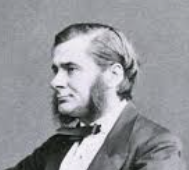
The students of physical science are not unfrequently told that their pursuits unfit them for the estimation of moral probability. And it may be so, for I am afraid that to those who are accustomed to severe reasoning, either in the province of Science or in that of Law, reasoning from 'moral probability' is apt to be regarded as a process of accumulating inconclusive arguments, in the hope that a great heap of them may, at least, look as firm as one good demonstration.
▼
Source
source
The Evidence of the Miracle of the Resurrection

4 months 2 weeks ago
I maintain that in every special natural doctrine only so much science proper is to be met with as mathematics; for... science proper, especially of nature, requires a pure portion, lying at the foundation of the empirical, and based upon à priori knowledge of natural things. ...the conception should be constructed. But the cognition of the reason through construction of conceptions is mathematical. A pure philosophy of nature in general, namely, one that only investigates what constitutes a nature in general, may thus be possible without mathematics; but a pure doctrine of nature respecting determinate natural things (corporeal doctrine and mental doctrine), is only possible by means of mathematics; and as in every natural doctrine only so much science proper is to be met with therein as there is cognition à priori, a doctrine of nature can only contain so much science proper as there is in it of applied mathematics.
▼
Source
source
Preface, Tr. Ernest Belfort Bax, 1883
3 months 1 week ago
What a judgment upon the living, if it is true, as has been maintained, that what dies has never existed!

4 months 1 day ago
He who abhors and shuns the light of the Sun, He who refuses to behold with respect the living creation of God, He who leads the good to wickedness, He who makes the meadows waterless and the pastures desolate, He who lets fly his weapon against the innocent, An enemy of my faith, a destroyer of Thy principles is he, O Lord!
▼
Source
source
Ahunuvaiti Gatha; Yasna 32, 10.
3 months 1 week ago
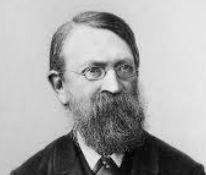
There was a loud echo of Hume in Mach's work, as both emphasized the tangibility of all knowledge-ultimately, all knowledge is based in the senses. Mach also emphasized the internal nature of all knowledge, in that it is experienced in the mind. Finally, he emphasized the importance of quantitative and mathematical methods and models to understand sensory experience.
▼
Source
source
Alan Ebenstein, Hayek's Journey" The Mind of Friedrich Hayek (2003), Ch. 10 : Epistemology, Psychology, and Methodology
1 week 3 days ago
The Sensations are the 'Objective', the Ideas the 'Subjective' part of every act of perception or knowledge.
4 months 4 weeks ago
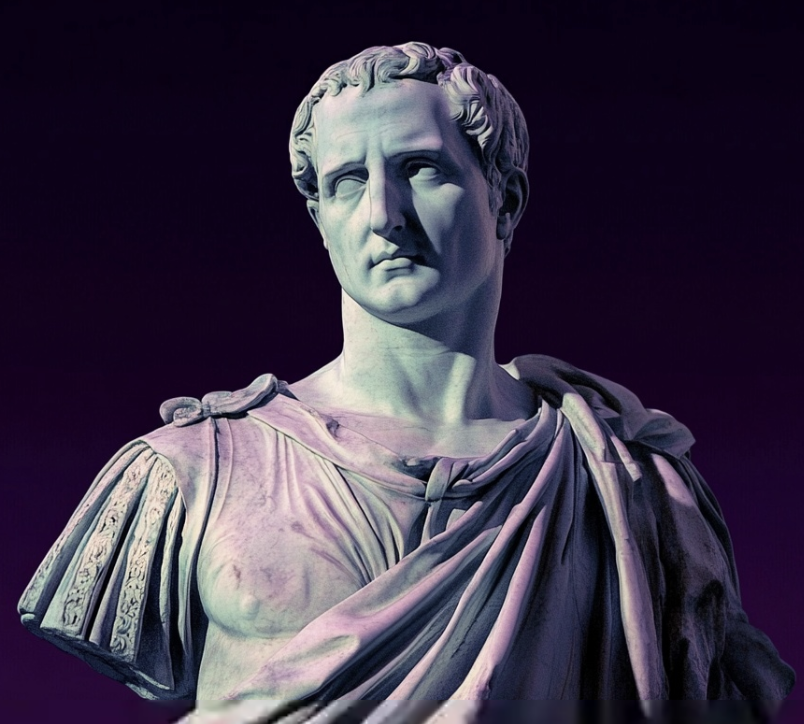
They are such fools that they seem to expect that, though the Republic is lost, their fish-ponds will be safe.
▼
Source
source
Letters to Atticus, Book I, 18.
4 months 2 weeks ago
Fear of evil is greater than the evil itself.
▼
Source
source
Act III, scene xi

4 months 1 day ago
Good means not [merely] not to do wrong, but rather not to desire to do wrong.
1 month 3 weeks ago
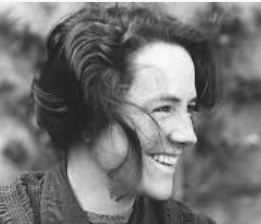
I ... understand why the saints were rarely married women. I am convinced it has nothing inherently to do, as I once supposed, with chastity or children. It has primarily to do with distractions ... Women's normal occupations in general run counter to creative life, or contemplative life or saintly life.
▼
Source
source
Ch. 2

1 week 4 days ago
If ever there was a holy war, it was that which saved our liberties and gave us independence.
▼
Source
source
Letter to John W. Eppes (6 November 1813). Reported in Albert Ellery Bergh, The Writings of Thomas Jefferson (1907), p. 430


3 months 2 weeks ago
No protracted war can fail to endanger the freedom of a democratic country.
▼
Source
source
Book Three, Chapter XXII.
4 months 1 week ago
At puberty, the elements of an unsuperstitious sexual morality ought to be taught. Boys and girls should be taught that nothing can justify sexual intercourse unless there is mutual inclination... Boys and girls should be taught respect for each other's liberty; they should be made to feel that nothing gives one human being rights over another, and that jealousy and possessiveness kill love. They should be taught that to bring another human being into the world is a very serious matter, only to be undertaken when the child will have a reasonable prospect of health, good surroundings, and parental care. But they should also be taught methods of birth control, so as to insure that children shall only come when they are wanted. Finally, they should be taught the dangers of venereal disease, and the methods of prevention and cure. The increase of human happiness to be expected from sex education on these lines is immeasurable.
4 months 5 days ago
To live, by definition, is not something one learns. Not from oneself, it is not learned from life, taught by life. Only from the other and by death. In any case from the other at the edge of life. At the internal border or the external border, it is a heterodidactics between life and death.
▼
Source
source
Exordium
3 weeks ago
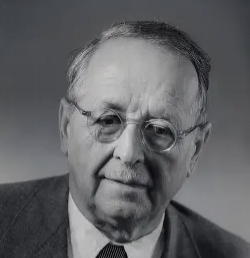
Physicists and philosophers stick stubbornly to the principles of a mechanistic interpretation of the world after physics has, in its factual structure, already outgrown the latter. They have the same excuse as the inhabitant of the mainland who for the first time travels on the open sea: he will desperately try to stay in sight of the vanishing coast line, as long as there is no other coast in sight, towards which he steers.
▼
Source
source
"Wissenschaft als symbolische Konstruktion des Menschen" Eranos-Jahrbuch (1948) GA IV, as quoted/translated by Erhard Scholz, "Philosophy as a Cultural Resource and Medium of Reflection for Hermann Weyl"

4 months 2 weeks ago
There are some defeats more triumphant than victories.
▼
Source
source
Ch. 30. Of Cannibals, tr. Cotton, rev. W. Hazlitt, 1842

3 months 2 weeks ago
To keep our eyes open longer were but to set our Antipodes. The Huntsmen are up in America, and they are already past their first sleep in Persia. But who can be drowsy at that hour which freed us from everlasting sleep? or have slumbering thoughts at that time, when sleep itself must end, and as some conjecture all shall awake again?
▼
Source
source
Ch. 5

4 months 1 week ago
It is Christ Himself, not the Bible, who is the true Word of God. The Bible, read in the right spirit and with the guidance of good teachers, will bring us to Him.
▼
Source
source
Letter (8 November 1952); published in Letters of C. S. Lewis (1966), p. 247
CivilSimian.com created by AxiomaticPanic, CivilSimian, Kalokagathia