


8 months 3 weeks ago
Even then [at the time of Peter's speech in Acts 2] it was the last days; how much more so now, when there must still be as much time till the end of the world as has passed since the ascension of the Lord! We do not know the end of the world, because it is not for us to know the times or the seasons that the Father has set in his power; but we know that, like the apostles, we live in the last times, in the last days, in the last hour. Those who lived after the apostles and before us were more in what we call the last times, and we ourselves are in them even more than they; those who will come after us will be so much more, till one gets to those who will be, if one may say so, the last of the last, and finally till that day, the very last, of which the Lord means to speak when he said, "And I will raise him up on the last day". How far are we from that day? That is an impenetrable secret.
8 months 1 week ago
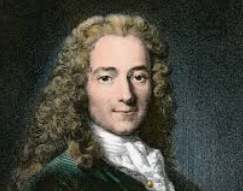
If you want good laws, burn those you have and make new ones.
▼
Source
source
"Laws", 1765
7 months 6 days ago
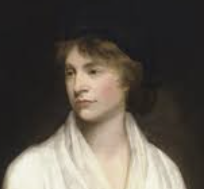
It is a melancholy truth; yet such is the blessed effect of civilization! the most respectable women are the most oppressed; and, unless they have understandings far superiour to the common run of understandings, taking in both sexes, they must, from being treated like contemptible beings, become contemptible.
▼
Source
source
Ch. 9
6 months 2 weeks ago
Optimism is an alienated form of faith, pessimism an alienated form of despair. If one truly responds to man and his future, ie, concernedly and "responsibly." one can respond only by faith or by despair. Rational faith as well as rational despair are based on the most thorough, critical knowledge of all the factors that are relevant for the survival of man.
▼
Source
source
p. 483
4 months 2 weeks ago
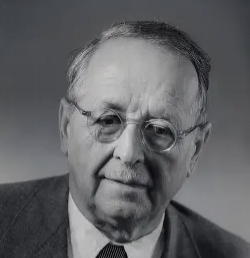
Physicists and philosophers stick stubbornly to the principles of a mechanistic interpretation of the world after physics has, in its factual structure, already outgrown the latter. They have the same excuse as the inhabitant of the mainland who for the first time travels on the open sea: he will desperately try to stay in sight of the vanishing coast line, as long as there is no other coast in sight, towards which he steers.
▼
Source
source
"Wissenschaft als symbolische Konstruktion des Menschen" Eranos-Jahrbuch (1948) GA IV, as quoted/translated by Erhard Scholz, "Philosophy as a Cultural Resource and Medium of Reflection for Hermann Weyl"
8 months 1 week ago
It is from the Bible that man has learned cruelty, rapine, and murder; for the belief of a cruel God makes a cruel man.
▼
Source
source
A Letter: Being an Answer to a Friend, on the publication of The Age of Reason" (12 May 1797), published in an 1852 edition of The Age of Reason, p. 205
7 months ago
Because energy is not restrained by other elements that are at once antagonistic and cooperative, action proceeds by jerks and spasms. There is discontinuity.
▼
Source
source
p. 189
7 months 1 day ago
That life is worth living is the most necessary of assumptions and, were it not assumed, the most impossible of conclusions.
8 months 2 weeks ago
Even from their infancy we frame them to the sports of love: their instruction, behavior, attire, grace, learning and all their words azimuth only at love, respects only affection. Their nurses and their keepers imprint no other thing in them.

8 months 4 days ago
It is so characteristic, that just when the mechanics of reproduction are so vastly improved, there are fewer and fewer people who know how the music should be played.
▼
Source
source
p. 96
8 months 1 week ago
Every substance is as a world apart, independent of everything else except God.
▼
Source
source
Discours de métaphysique, 1686

7 months 4 days ago
To detach yourself elegantly from the world; to give contour and grace to sadness; a solitude in style; a walk that gives cadence to memories; stepping towards the intangible; with the breath in the trembling margins of things; the past reborn in the overflow of fragrances; the smell, through which we conquer time; the contour of the invisible things; the forms of the immaterial; to deepen yourself in the intangible; to touch the world airborne by smell; aerial dialogue and gliding dissolution; to bathe in your own reflecting fragmentation...

8 months 1 week ago
Every step of real movement is more important than a dozen programmes.
▼
Source
source
Letter to W. Bracke, 5 May 1875

8 months 1 week ago
You ask particularly after my health. I suppose that I have not many months to live; but, of course, I know nothing about it. I may add that I am enjoying existence as much as ever, and regret nothing.
▼
Source
source
Last letter, to Myron Benton, March 31, 1862
6 months 4 weeks ago
Once the philosophical foundation of democracy has collapsed, the statement that dictatorship is bad is rationally valid only for those who are not its beneficiaries, and there is no theoretical obstacle to the transformation of this statement into its opposite.
▼
Source
source
p. 29.

8 months 1 week ago
I am sure that university life would be better, both intellectually and morally, if most university students had temporary childless marriages. This would afford a solution to the sexual urge neither restless nor surreptitious, neither mercenary nor casual, and of such a nature that it need not take up time which ought to be given to work.
▼
Source
source
"Sex in Education", p. 119-120
7 months 6 days ago
This means that no state, howsoever democratic its forms, not even the reddest political republic - a people's republic only in the sense of the lie known as popular representation - is capable of giving the people what they need: the free organization of their own interests from below upward, without any interference, tutelage, or coercion from above. That is because no state, not even the most republican and democratic, not even the pseudo-popular state contemplated by Marx, in essence represents anything but government of the masses from above downward, by an educated and thereby privileged minority which supposedly understands the real interests of the people better than the people themselves.
6 months 1 day ago
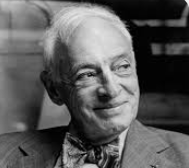
I am an American, Chicago born - Chicago, that somber city - and go at things as I have taught myself, free-style, and will make the record in my own way: first to knock, first admitted; sometimes an innocent knock, sometimes a not so innocent.
▼
Source
source
Ch. 1 (opening line)
7 months 1 week ago
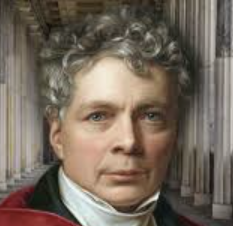
Yes! We believe in a higher principle than your virtue and the kind of morality you speak of so paltrily and without much conviction. We believe that there is no imperative or reward for virtue for the soul because it simply acts according to the necessity of its inherent nature. The moral imperative expresses itself in an ought and presupposes the concept of an evil next to that of good.
▼
Source
source
P. 43

8 months 1 week ago
The value of a principle is the number of things it will explain; and there is no good theory of disease which does not at once suggest a cure.
▼
Source
source
p. 212
7 months 1 week ago
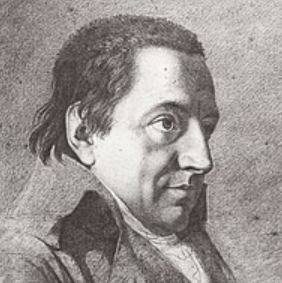
The Life according to Reason consists herein, -that the Individual forget himself in the Race, place his own life in the life of the Race, and dedicate it thereto;-the Life opposed to Reason, on the contrary, consists in this, that the Individual think of nothing but himself, love nothing but himself and in relation to himself, and set his whole existence in his own personal well-being alone: -and since we may briefly call that which is according to Reason good, and that which is opposed to Reason evil, so there is but One Virtue, to forget one's own personality;-and but One Vice,-to make self the object of our thoughts.
▼
Source
source
p. 33

6 months 6 days ago
In tetrad form, the artefact is seen to be not netural or passive, but an active logos or utterance of the human mind or body that transforms the user and his ground.
▼
Source
source
p. 99
5 months 3 weeks ago
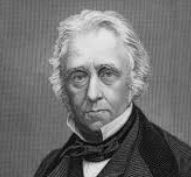
No doubt a tumult caused by local and temporary irritation ought to be suppressed with promptitude and vigour. Such disturbances, for example, as those which Lord George Gordon raised in 1780, should be instantly put down with the strong hand. But woe to the Government which cannot distinguish between a nation and a mob! Woe to the Government which thinks that a great, a steady, a long continued movement of the public mind is to be stopped like a street riot! This error has been twice fatal to the great House of Bourbon. God be praised, our rulers have been wiser. The golden opportunity which, if once suffered to escape, might never have been retrieved, has been seized. Nothing, I firmly believe, can now prevent the passing of this noble law, this second Bill of Rights.
▼
Source
source
Speech in the House of Commons on the Reform Bill (5 July 1831), quoted in Speeches of the Right Honourable T. B. Macaulay, M.P. (1854), pp. 34-35
8 months 1 week ago
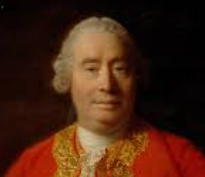
Tis from the resemblance of the external actions of animals to those we ourselves perform, that we judge their internal likewise to resemble ours; and the same principle of reasoning, carry'd one step farther, will make us conclude that since our internal actions resemble each other, the causes, from which they are deriv'd, must also be resembling.
▼
Source
source
Part 3, Section 16

8 months 1 week ago
The trail of the human serpent is thus over everything.
▼
Source
source
Lecture II, What Pragmatism Means
7 months 4 weeks ago
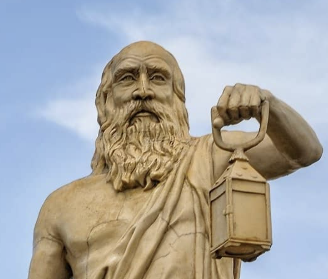
When scolded for masturbating in public, he said "I wish it were as easy to banish hunger by rubbing my belly."
▼
Source
source
Diogenes Laërtius, vi. 46, 69
4 months 2 weeks ago
In the new order a Locke was free-with almost no danger of being interfered with-to think his sublime thoughts, to seek the first causes of all things, to understand the nature of things. He could talk with his friends and teach the young. And there was money enough. The academies and universities satisfied Socrates' demand to be fed in the prytaneum.
▼
Source
source
Commerce and Culture, p. 289.

8 months 3 days ago
The 'Enlightenment', which discovered the liberties, also invented the disciplines.

8 months 1 week ago
So long as men worship the Caesars and Napoleons, Caesars and Napoleons will duly rise and make them miserable.
▼
Source
source
Ch. 8, p. 99 [2012 reprint]

4 months 2 weeks ago
To be honest, as critical as I am of people for being anti-human, I love everybody so much for sinking on this ship with me. Admit it or not, we're all dying together.
8 months 1 week ago
From the comparison of theism and idolatry, we may form some other observations, which will also confirm the vulgar observation that the corruption of the best things gives rise to the worst.
▼
Source
source
Part X - With regard to courage or abasement
7 months 4 days ago
Of all that makes us suffer, nothing - so much as disappointment - gives us the sensation of at last touching Truth.
4 months 1 week ago
The Sight cannot decompose a compound colour into simple colours, or distinguish a compound from a simple colour

6 months 3 weeks ago
An army and navy represents the people's toys.
6 months 4 weeks ago
It is precisely the essential feature of egoism that it does not apprehend the full value of the isolated self. The egoist sees himself only with regard to the others, as a member of society who wishes to possess and acquire more than the others. Self-directedness or other-directedness have no essential bearing on the specific quality of love or hatred. These acts are different in themselves, quite independently of their direction.
▼
Source
source
L. Coser, trans. (1961), p. 96
9 months 1 week ago
I have just now come from a party where I was its life and soul; witticisms streamed from my lips, everyone laughed and admired me, but I went away - yes, the dash should be as long as the radius of the earth's orbit ----------- and wanted to shoot myself.
8 months 4 days ago
At the core of all well-founded belief, lies belief that is unfounded.

8 months 1 week ago
Landlords... grow richer, as it were in their sleep, without working, risking, or economizing.
▼
Source
source
Book V, Chapter 1, Section 5
6 months 1 week ago
We live in a world where there is more and more information, and less and less meaning.
▼
Source
source
"The Implosion of Meaning in the Media," p. 79
4 months 6 days ago
Any institution is only a political structure. In physics and in morals, the laws are the same; you cannot build a large structure on a narrow foundation, nor a durable structure on a moving or transient base. In the political order, therefore, if one wants to build on a large scale and for the centuries, one must rely on an opinion, on a large and profound belief. For if this opinion does not dominate a majority of minds and if it is not deeply rooted, it will furnish only a narrow and transient base.

7 months 1 week ago
In countries where associations are free, secret societies are unknown. In America there are factions, but no conspiracies.
▼
Source
source
Chapter XII.
8 months 2 weeks ago
Nothing is so firmly believed as what we least know.
▼
Source
source
Ch. 31. Of Divine Ordinances, tr. Cotton, rev. W. Hazlitt, 1842
7 months 4 days ago
I call a sign which stands for something merely because it resembles it, an icon. Icons are so completely substituted for their objects as hardly to be distinguished from them. Such are the diagrams of geometry. A diagram, indeed, so far as it has a general signification, is not a pure icon; but in the middle part of our reasonings we forget that abstractness in great measure, and the diagram is for us the very thing. So in contemplating a painting, there is a moment when we lose the consciousness that it is not the thing, the distinction of the real and the copy disappears, and it is for the moment a pure dream, - not any particular existence, and yet not general. At that moment we are contemplating an icon.

6 months 1 week ago
Nonviolence has now to be understood less as a moral position adopted by individuals in relation to a field of possible action than as a social and political practice undertaken in concert, culminating in a form of resistance to systemic forms of destruction coupled with a commitment to world building that honors global interdependency of the kind that embodies ideals of economic, social, and political freedom and equality.
▼
Source
source
p. 20

8 months 1 week ago
In its widest possible sense, however, a man's Self is the sum total of all that he can call his, not only his body and his psychic powers, but his clothes and his house, his wife and children, his ancestors and friends, his reputation and works, his lands and horses, and yacht and bank-account. All these things give him the same emotions. If they wax and prosper, he feels triumphant; if they dwindle and die away, he feels cast down.
▼
Source
source
Ch. 10

8 months 1 week ago
Suppose that I wish to deserve the title of "robber of remorse" and that I place in myself all the townspeople's repentence?
▼
Source
source
Orestes to Electra, Act 2
CivilSimian.com created by AxiomaticPanic, CivilSimian, Kalokagathia