


5 months 1 week ago
Speech and silence. We feel safer with a madman who talks than with one who cannot open his mouth.
5 months 1 week ago
The skeptic is the least mysterious man in the world, and yet, starting from a certain moment, he no longer belongs to this world.



6 months 2 weeks ago
If human nature were unchangeable, as ignorant people still suppose it to be, the situation would indeed be hopeless.
▼
Source
source
Ch. 17: Some Prospects: Cheerful and Otherwise
6 months 3 weeks ago
I am further of opinion that it would be better for us to have [no laws] at all than to have them in so prodigious numbers as we have.
▼
Source
source
Book III, Ch. 13. Of Experience
3 months 1 week ago
Among all the great men who have philosophized about this remarkable effect, I am more astonished at Kepler than at any other. Despite his open and acute mind, and though he has at his fingertips the motions attributed to the earth, he nevertheless lent his ear and his assent to the moon's dominion over the waters, to occult properties, and to such puerilities.
▼
Source
source
In regard to Kepler's belief of the moon affecting the tides of the Earth, p. 328

6 months 2 weeks ago
The reasons for legal intervention in favour of children, apply not less strongly to the case of those unfortunate slaves and victims of the most brutal part of mankind, the lower animals.
▼
Source
source
Book V, Chapter 11, Section 9
5 months 1 week ago
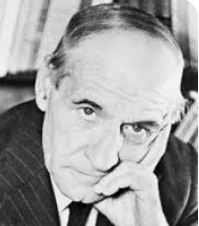
This fighting-shy of every obligation partly explains the phenomenon, half ridiculous, half disgraceful, Of the setting-up in our days of the platform of "youth" as youth. ... In comic fashion people call themselves "young," because they have heard that youth has more rights than obligations, since it can put off the fulfilment of these latter to the Greek Kalends of maturity. ...[T]he astounding thing at present is that these take it as an effective right precisely in order to claim for themselves all those other rights which only belong to the man who has already done something.
▼
Source
source
Chapter XV: We Arrive At The Real Question

6 months 2 weeks ago
The perception of the comic is a tie of sympathy with other men, a pledge of sanity, and protection from those perverse tendencies and gloomy insanities in which fine intellects sometimes lose themselves. A rogue alive to the ludicrous is still convertible.
▼
Source
source
The Comic
6 months 3 weeks ago
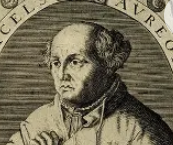
We must not attach knowledge to the mind, we have to incorporate it there.
▼
Source
source
Ch. 25
3 months 1 day ago
Belief and work, knowledge and action are one and the same thing.
5 months 1 week ago
There is no false sensation.

2 months 2 weeks ago
The two principles on which our conduct towards the Indians should be founded, are justice and fear. After the injuries we have done them, they cannot love us....
▼
Source
source
Letter to Benjamin Hawkins (13 August 1786) Lipscomb & Bergh ed. 5:390
5 months 1 week ago
To be is to be cornered.
5 months 1 week ago
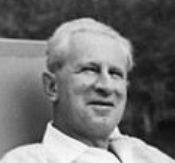
Bourgeois political economy ... never gets to see man who is its real subject. It disregards the essence of man and his history and is thus in the profoundest sense not a 'science of people' but of non-people and of an inhuman world of objects and commodities.
▼
Source
source
"The Foundations of Historical Materialism," Studies in Critical Philosophy (1972), p. 9

6 months 2 weeks ago
We have ...as M. Ribot says, not memory so much as memories. The visual... tactile... muscular... auditory memory may all vary independently... and different individuals may have them developed in different degrees. As a rule, a man's memory is good in the departments in which his interest is strong; but those departments are apt to be those in which his discriminative sensibility is high. ...[D]ifferences in men's imagining power... the machinery of memory must be largely determined thereby.
▼
Source
source
Ch. 16

3 months 1 week ago
It is not easy for any of us to stop measuring the world against the standard of Europe, but the concept of the multitude requires it of us. It is a challenge. Embrace it.
2 months 2 weeks ago
Let those flatter, who fear: it is not an American art.
▼
Source
source
Summary View of the Rights of British America
3 months 1 week ago
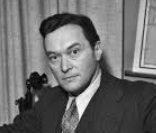
In places where men are used to differences they inevitably become tolerant.
▼
Source
source
Ch. IV: "The Line of Least Resistance", p. 52
2 months 2 weeks ago
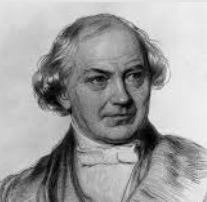
The Idea of Cause is expressed for purposes of science by these three Axioms:-'Every Event must have a Cause':-'Causes are measured by their Effects':-'Reaction is equal and opposite to Action'.

5 months 2 weeks ago
He was not merely a chip of the old Block, but the old Block itself.
▼
Source
source
On Pitt's First Speech (26 February 1781), from Wraxall's Memoirs, First Series, vol. i. p. 342

3 months 1 day ago
What is wisdom? Always desiring the same things, and always refusing the same things.
▼
Source
source
Line 5 Here, Seneca uses the same observation that Sallust made regarding friendship (in his historical account of the Catilinarian conspiracy, Bellum Catilinae[XX.4]) to define wisdom.
7 months 6 days ago
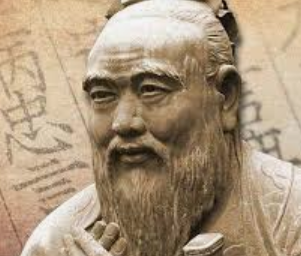
Let the superior man never fail reverentially to order his own conduct, and let him be respectful to others and observant of propriety: then all within the four seas, all men are brothers. What has the superior man to do with being distressed because he has no brothers?

6 months 1 week ago
I sit astride life like a bad rider on a horse. I only owe it to the horse's good nature that I am not thrown off at this very moment.
▼
Source
source
p. 36e
6 months 2 weeks ago
If any philosopher had been asked for a definition of infinity, he might have produced some unintelligible rigmarole, but he would certainly not have been able to give a definition that had any meaning at all.
▼
Source
source
Ch. 5: Mathematics and the Metaphysicians
5 months 1 week ago
The State is always, whatever be its form - primitive, ancient, medieval, modern - an invitation issued by one group of men to other human groups to carry out some enterprise in common. That enterprise, be its intermediate processes what they may, consists in the long run in the organisation of a certain type of common life. ... [As Renan says,] "To have common glories in the past, a common will in the present; to have done great things together; to wish to do greater; these are the essential conditions which make up a people.... In the past, an inheritance of glories and regrets; in the future, one and the same programme to carry out.... The existence of a nation is a daily plebiscite."
▼
Source
source
Chapter XIV: Who Rules The World?

2 months 2 weeks ago
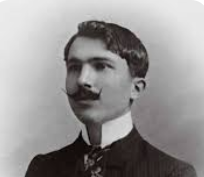
Comrades, I've voyaged long and far on sea and soul,my eyes have seen disease, gods, ghosts, and men, and yetin no land have I seen a more false, murderous sirenthan that wind-headed, babbling, blind bitch-hound called Hope!
▼
Source
source
Odysseus, Book X, line 892

4 months 1 week ago
I would mind more if I could claim that The Selfish Gene had become severely outmoded and superseded. Unfortunately (from one point of view) I cannot. Details have changed and factual examples burgeoned mightily. But, with an exception that I shall discuss in a moment, there is little in the book that I would rush to take back now, or apologize for.
▼
Source
source
Arthur Cain, late Professor of Zoology at Liverpool and one of my inspiring tutors at Oxford in the sixties, described The Selfish Gene in 1976 as a 'young man's book'.

6 months 2 weeks ago
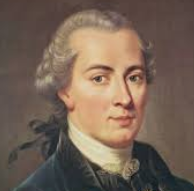
The third of this kind of principles is : matter neither originates nor perishes; all the changes in the world concern form only ; a postulate which on the recommendation of common sense has spread through all philosophical schools, not because it is to be taken as having been found so, or as having been demonstrated by arguments a priori, but because if we were to admit that matter itself is fleeting and transitory, nothing at all that is stable and lasting would be left any longer to serve for the explication of phenomena according to universal and perpetual laws, and hence nothing at all would be left for the exercise of the intellect.
4 months 1 week ago
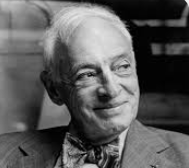
The university, in a society ruled by public opinion, was to have been an island of intellectual freedom where all views were investigated without restriction. ... But by consenting to play an active or "positive," a participatory role in society, the university has become inundated and saturated with the backflow of society's "problems." Preoccupied with questions of Health, Sex, Race, War, academics make their reputations and their fortunes. ... Any proposed reforms of liberal education which might bring the university into conflict with the whole of the U.S.A. are unthinkable. Increasingly, the people "inside" are identical in their appetites and motives with the people "outside" the university.
▼
Source
source
p. 18
5 months 1 week ago
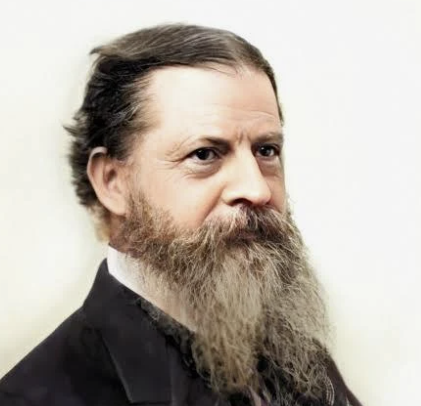
I think that I have succeeded in making it clear that this doctrine gives room for explanations of many facts which without it are absolutely and hopelessly inexplicable; and further that it carries along with it the following doctrines: first, a logical realism of the most pronounced type; second, objective idealism; third, tychism, with its consequent thoroughgoing evolutionism. We also notice that the doctrine presents no hindrences to spiritual influences, such as some philosophies are felt to do.
6 months 2 weeks ago
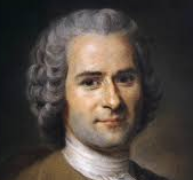
Through the fortunate effect of my frankness, I had the rarest and surest opportunity to know a man well, which is to study him at leisure in his private life and living, so to speak, with himself. For he share himself without reservation and made me feel as much at home in his house as in mine. I had almost no other abode than his own.
▼
Source
source
Second Dialogue; translated by Judith R. Bush, Christopher Kelly, Roger D. Masters
6 months 2 weeks ago
What is there in 'Paradise Lost' to elevate and astonish like Herschel or Somerville?
▼
Source
source
Quoted in Robert D. Richardson, Jr., Emerson, the Mind On Fire (Univ. of Calif Press 1995), p. 124
4 months 4 weeks ago
Thinking is more erotic than calculating.
6 months 2 weeks ago
Only in thought is man a God; in action and desire we are the slaves of circumstance.
▼
Source
source
Letter to Lucy Donnely, November 25, 1902
3 months 2 days ago
But let the individual man lay claim to ever so many rights because Man or the concept man 'entitles' him to them, because his being man does it: what do I care for his right and his claim? If he has his right only from Man and does not have it from me, then for me he has no right. His life, for example, counts to me only for what it is worth to me. I respect neither a so-called right of property (or his claim to tangible goods) nor yet his right to the 'sanctuary of his inner nature' (or his right to have the spiritual goods and divinities, his gods, remain un-aggrieved). His goods, the sensuous as well as the spiritual, are mine, and I dispose of them as proprietor, in the measure of my - might.
▼
Source
source
Cambridge 1995, p. 219
6 months 3 weeks ago
He who establishes his argument by noise and command shows that his reason is weak.

6 months 6 days ago
He who does wrong is more unhappy than he who suffers wrong.
7 months 1 day ago
It is the act of an ill-instructed man to blame others for his own bad condition; it is the act of one who has begun to be instructed, to lay the blame on himself; and of one whose instruction is completed, neither to blame another, nor himself.
▼
Source
source
(5) [tr. George Long (1888)].
7 months 2 weeks ago
I believe that only scientists can understand the universe. It is not so much that I have confidence in scientists being right, but that I have so much in nonscientists being wrong.
2 months 3 weeks ago
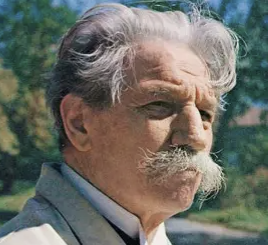
The man who has become a thinking being feels a compulsion to give every will-to-live the same reverence for life that he gives to his own. He experiences that other life in his own.

4 months 4 weeks ago
Like a plague, the mad spirit is sweeping the country, infesting the clearest heads and staunchest hearts with the deathly germ of militarism.

2 months 1 week ago
Yes, you can--if you do everything as if it were the last thing you were doing in your life, and stop being aimless, stop letting your emotions override what your mind tells you, stop being hypocritical, self-centered, irritable. You will find rest from vain fancies if you perform every act in life as though it were your last.
▼
Source
source
II, 5
4 months 1 week ago
Eternity is best spent under a general anesthetic - which is what is going to happen.
▼
Source
source
Interview with Joe Rogan on The Joe Rogan Experience (2019);

6 months 2 weeks ago
Every man takes the limits of his own field of vision for the limits of the world.
▼
Source
source
"Psychological Observations"
CivilSimian.com created by AxiomaticPanic, CivilSimian, Kalokagathia