

3 months 2 weeks ago
If it does not upset, it is not philosophy.
7 months 1 week ago
It is the way of the superior man to prefer the concealment of his virtue, while it daily becomes more illustrious, and it is the way of the mean man to seek notoriety, while he daily goes more and more to ruin. It is characteristic of the superior man, appearing insipid, yet never to produce satiety; while showing a simple negligence, yet to have his accomplishments recognized; while seemingly plain, yet to be discriminating. He knows how what is distant lies in what is near. He knows where the wind proceeds from. He knows how what is minute becomes manifested. Such a one, we may be sure, will enter into virtue.
7 months 4 days ago
Show me someone who is ill and yet happy, in danger and yet happy, dying and yet happy, exiled and yet happy. Show me such a person; by the gods, how greatly I long to see a Stoic!
▼
Source
source
Book II, ch. 19, 24.
3 months 3 weeks ago
The true goal of the bourgeois life, in other words, is not self-enactment, but diversion. Most people need the organised distraction of work (if they can find it). Idleness - the life of the playboy who doesn't answer the phone - is simply too demanding. "
▼
Source
source
A difficult business," New Statesman


3 months 1 week ago
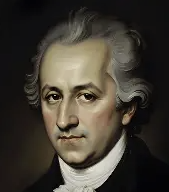
A talent is formed in stillness, a character in the world's torrent.
▼
Source
source
Torquato Tasso, Act I, sc. ii
7 months 3 weeks ago
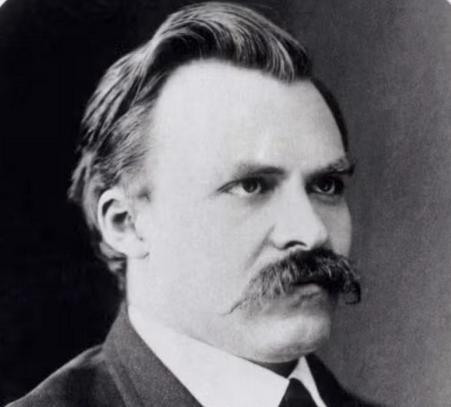
Every tradition grows ever more venerable — the more remote its origin, the more confused that origin is. The reverence due to it increases from generation to generation. The tradition finally becomes holy and inspires awe.
4 months 1 week ago
A man who has never been within the tropics does not know what a thunderstorm means; a man who has never looked on Niagara has but a faint idea of a cataract; and he who has not read Barère's Memoirs may be said not to know what it is to lie.
▼
Source
source
Barère', The Edinburgh Review (April 1844), quoted in The Miscellaneous Writings of Lord Macaulay, Vol. II (1860), p. 109
6 months 2 weeks ago
Philosophy's position with regard to science, which at one time could be designated with the name "theory of knowledge," has been undermined by the movement of philosophical thought itself. Philosophy was dislodged from this position by philosophy.
▼
Source
source
p. 4

3 months 1 week ago
War is a quarrel between two thieves too cowardly to fight their own battle; therefore they take boys from one village and another village, stick them into uniforms, equip them with guns, and let them loose like wild beasts against each other.
▼
Source
source
Quoted by Emma Goldman in her essay, "Patriotism: A Menace to Liberty", chapter five of Anarchism and Other Essays (2nd revised edition, 1911).
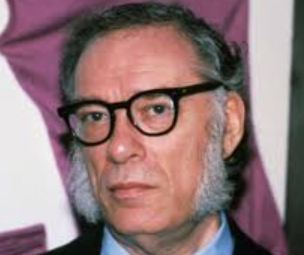
7 months 2 weeks ago
I believe that only scientists can understand the universe. It is not so much that I have confidence in scientists being right, but that I have so much in nonscientists being wrong.
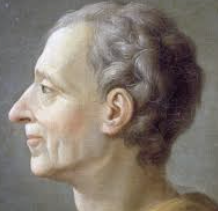
5 months 6 days ago
One must give one power a ballast, so to speak, to put it in a position to resist another.
▼
Source
source
Book V, Chapter 14.
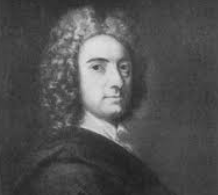
5 months 3 weeks ago
Truth is the cry of all, but the game of the few.
▼
Source
source
Paragraph 368

5 months 2 weeks ago
To win the guilty kiss of a saint, I'd welcome the plague as a blessing
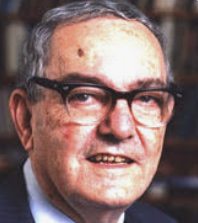
4 months 4 weeks ago
Since these questions lie in the future, imagination must supply the lack of experienced feeling in attaching value to them. But values can be only imperfectly anticipated.
4 months 2 weeks ago
When things fall out opportunely for the person concerned, he is not apt to be critical about the how or why, his own immediate personal convenience seeming a sufficient reason for the strangest oddities and revolutions in our sublunary things.
▼
Source
source
The Sire de Maletroit's Door.
2 months 2 weeks ago
Believing that the happiness of mankind is best promoted by the useful pursuits of peace, that on these alone a stable prosperity can be founded, that the evils of war are great in their endurance, and have a long reckoning for ages to come, I have used my best endeavors to keep our country uncommitted in the troubles which afflict Europe, and which assail us on every side. Letter to the Young Republicans of Pittsburg and its vicinities
▼
Source
source
2 December 1808

6 months 2 weeks ago
I, for my part, do not conceive an act as having causes, and I consider myself satisfied when I have found in it not its 'factors' but the general themes which it organizes: for our decisions gather into new syntheses and on new occasions the leitmotif that governs our life
▼
Source
source
p. 461
2 months 2 weeks ago
Men never respect what they have made themselves. This is why an elective king never possesses the moral power of a hereditary sovereign, because he is not noble enough, that is to say he does not possess that kind of greatness independent of men and that is the work of time.
▼
Source
source
p. 72

5 months 6 days ago
But it has been necessary, for the benefit of the social order, to convert religion into a kind of police system, and hence hell. Oriental or Greek Christianity is predominantly eschatological, Protestantism predominantly ethical, and Catholicism is a compromise between the two, although with the eschatological element predominating.
5 months 2 weeks ago
Why don't I commit suicide? Because I am as sick of death as I am of life.

5 months 3 weeks ago
All abstract sciences are nothing but the study of relations between signs.
▼
Source
source
Dr. Théophile de Bordeu, in "Conversation Between D'Alembert and Diderot"
5 months 1 week ago
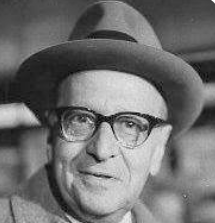
Every philosophical, ethical, and political idea-its lifeline connecting it with its historical origins having been severed-has a tendency to become the nucleus of a new mythology, and this is one of the reasons why the advance of enlightenment tends at certain points to revert to superstition and paranoia. The majority principle ... has become the sovereign force to which thought must cater. It is a new god, not in the sense in which the heralds of the great revolutions conceived it, namely, as a power of resistance to existing injustice, but as a power of resistance to anything that does not conform.
▼
Source
source
p. 30.
6 months 2 weeks ago
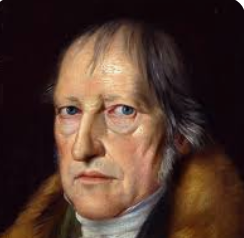
History, is a conscious, self-mediating process - Spirit emptied out into Time; but this externalization, this kenosis, is equally an externalization of itself; the negative is the negative of itself. ... Thus absorbed in itself, it is sunk in the night of its self-consciousness; but in that night its vanished outer existence is perserved, and this transformed existence - the former one, but now reborn of the Spirit's knowledge - is the new existence, a new world and a new shape of Spirit.
4 months 2 weeks ago
A man, Mr. Scrymgeour, may fall into a thousand perplexities, but if his heart be upright and his intelligence unclouded, he will issue from them all without dishonour.
▼
Source
source
The Rajah's Diamond, Story of the House with the Green Blinds.
4 months 4 weeks ago
The principle of bounded rationality is the capacity of the human mind for formulating and solving complex problems is very small compared with the size of the problems whose solution is required for objectively rational behavior in the real world - or even for a reasonable approximation to such objective rationality.
▼
Source
source
p. 198.
5 months 6 days ago
One of those leaders of what they call the social revolution has said that religion is the opiate of the people. Opium...opium...opium, yes. Let us give them opium so that they can sleep and dream.

5 months 2 days ago
Jung believed that he was proceeding scientifically, but most Freudians remain convinced that he was inventing his own underground realm, rather as Tolkien invented Middle Earth. There is at least an element of truth in this view.
▼
Source
source
p. 126
6 months 2 weeks ago
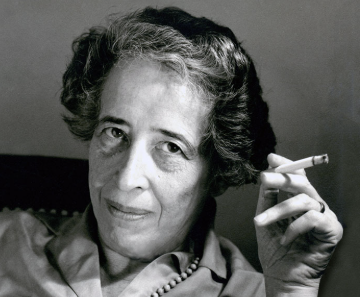
If a given science accidentally reached its goal, this would by no means stop the workers in the field, who would be driven past their goal by the sheer momentum of the illusion of unlimited progress.
▼
Source
source
p. 55

5 months 1 week ago
The transition from philosophy to the domain of state and society had been an intrinsic part of Hegel's system.
▼
Source
source
P. 251

2 months 2 weeks ago
A horse at the end of the race...A dog when the hunt is over...A bee with its honey stored...And a human being after helping others. They don't make a fuss about it. They just go on to something else, as the vine looks forward to bearing fruit again in season. We should be like that. Acting almost unconsciously.
▼
Source
source
(Hays translation) V, 6
6 months 2 weeks ago
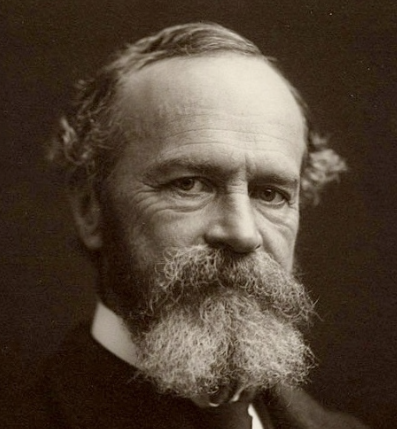
As a rule we disbelieve all the facts and theories for which we have no use.
▼
Source
source
"The Will to Believe" p. 10
7 months 2 weeks ago
In the course of my fight with the school, I couldn't help but notice that I became a pariah. [...] Once, however, a fellow faculty member, making sure we were unobserved, said to me, "Isaac, the faculty is proud of you for your courage in fighting the administration for academic freedom."I said, "There's no courage involved in it. Don't you know my definition of academic freedom?""No. What's your definition of academic freedom?"I said, "Independent income."
4 months 4 weeks ago
The function of knowledge in the decision-making process is to determine which consequences follow upon which of the alternative strategies.
▼
Source
source
p. 75
2 months 2 weeks ago
We confide in our strength, without boasting of it; we respect that of others, without fearing it.
▼
Source
source
Letter to William Carmichael and William Short
2 months 1 week ago
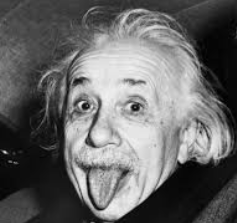
Life is like riding a bicycle. To keep your balance you must keep moving.
2 months 2 weeks ago
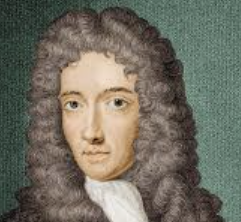
Not that I at all disallow the use of reasoning upon experiments, or the endeavouring to discern as early as we can the confederations, and differences, and tendencies of things: for such an absolute suspension of the exercise of reasoning were exceeding troublesome, if not impossible. And, as in that rule of arithmetic, which is commonly called regula falsi by proceeding upon a conjecturally-supposed number, as if it were that, which we inquire after, we are wont to come to the knowledge of the true number sought for; so in physiology it is sometimes conducive to the discovery of truth, to permit the understanding to make an hypothesis, in order to the explication of this or that difficulty, that by examining how far the phænomena are, or are not, capable of being solved by that hypothesis, the understanding may, even by its own errors, be instructed.
6 months 2 weeks ago
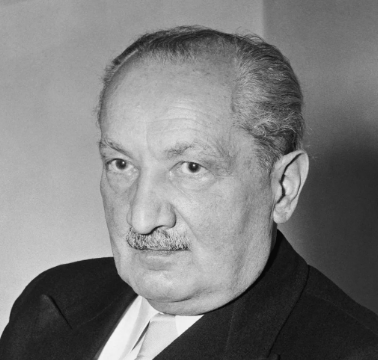
The Geschick of being: a child that plays... Why does it play, the great child of the world-play Heraclitus brought into view in the aiôn? It plays, because it plays. The "because" withers away in the play. The play is without "why." It plays since it plays. It simply remains a play: the most elevated and the most profound. But this "simply" is everything, the one, the only... The question remains whether and how we, hearing the movements of this play, play along and accommodate ourselves to the play.
▼
Source
source
The Principle of Reason (1955-1956) as translated by Reginald Lilly
6 months 3 weeks ago
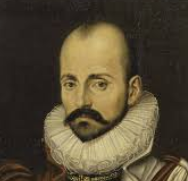
Love to his soul gave eyes; he knew things are not as they seem. The dream is his real life; the world around him is the dream.

5 months 1 week ago
The Interpretation of the Laws of Nature in a Common-wealth, dependeth not on the books of Moral Philosophy. The Authority of writers, without the Authority of the Commonwealth, maketh not their opinions Law, be they never so true.
▼
Source
source
The Second Part, Chapter 26, p. 143
2 months 2 weeks ago
Our laws, language, religion, politics, & manners are so deeply laid in English foundations, that we shall never cease to consider their history as a part of ours, and to study ours in that as it's origin.
▼
Source
source
Letter to William Duane

6 months 4 weeks ago
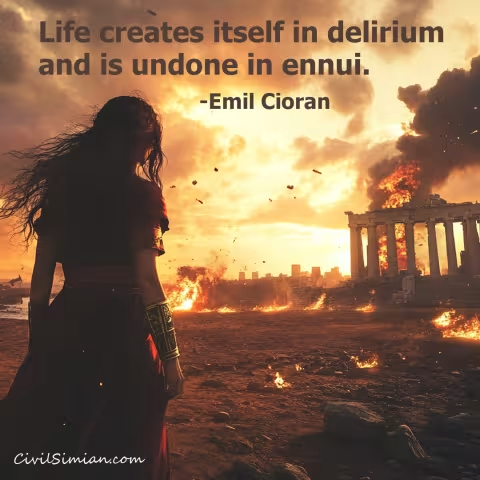
War is sweet to them that know it not.
▼
Source
source
Though Erasmus quoted this proverb in Latin at the start of his essay Bellum [War], and it is sometimes attributed to him, it originates with the Greek poet Pindar

6 months 2 weeks ago
There are, indeed, things that cannot be put into words. They make themselves manifest. They are what is mystical.
▼
Source
source
(6.522) Original German: Es gibt allerdings Unaussprechliches. Dies zeigt sich, es ist das Mystische.

6 months 2 weeks ago
A man who has trained himself in goodness come to have certain direct intuitions about character, about the relations between human beings, about his own position in the world - intuitions that are quite different from the intuitions of the average sensual man.
▼
Source
source
Ch. 14, p. 333 [2012 reprint]
5 months 3 weeks ago
Jacques said that his master said that everything good or evil we encounter here below was written on high.
▼
Source
source
Prologue

5 months 2 weeks ago
The science of government being, therefore, so practical in itself, and intended for such practical purposes, a matter which requires experience, and even more experience than any person can gain in his whole life, however sagacious and observing he may be, it is with infinite caution that any man ought to venture upon pulling down an edifice which has answered in any tolerable degree for ages the common purposes of society, or on building it up again without having models and patterns of approved utility before his eyes.
4 months 2 weeks ago
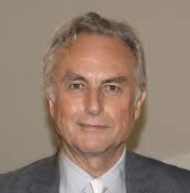
I am often accused of expressing contempt and despising religious people. I don't despise religious people, I despise what they stand for. I like to quote the British journalist Johann Hari who said, "I have so much respect for you, that I cannot respect your ridiculous ideas."
▼
Source
source
Reason Rally, National Mall, Washington, DC, 2012-03-24 Richard Dawkins and his Foundation at the Reason Rally, YouTube, 7 April 2012
4 months 2 weeks ago
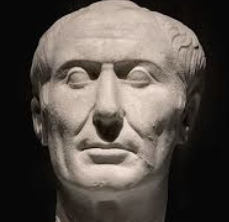
The loss which is unknown is no loss at all.
▼
Source
source
Maxim 38
CivilSimian.com created by AxiomaticPanic, CivilSimian, Kalokagathia