If life is a test, what do you have to defend what you stood for? Your actions in a tumultuous confusing world? If life is a test, you're going to want to have developed your own philosophy to point to.



I met, not long ago, a young man who aspired to become a novelist. Knowing that I was in the profession, he asked me to tell him how he should set to work to realize his ambition. I did my best to explain. 'The first thing,' I said, 'is to buy quite a lot of paper, a bottle of ink, and a pen. After that you merely have to write.'
During the Vietnam War, which lasted longer than any war we've ever been in -- and which we lost -- every respectable artist in this country was against the war. It was like a laser beam. We were all aimed in the same direction. The power of this weapon turns out to be that of a custard pie dropped from a stepladder six feet high.
There is a contrast of primary significance between Augustine and Pelagius. The former crushes everything in order to rebuild it again. The other addresses himself to man as he is. The first system, therefore, in respect to Christianity, falls into three stages: creation – the fall and a consequent condition of death and impotence; a new creation - whereby man is placed in a position where he can choose; and then, if he chooses - Christianity. The other system addresses itself to man as he is (Christianity fits into the world). From this is seen the significance of the theory of inspiration for the first system; from this also is seen the relationship between the synergistic and the semipelagian conflict. It is the same question, only that the syngeristic struggle has its presupposition in the new creation of the Augustinian system.
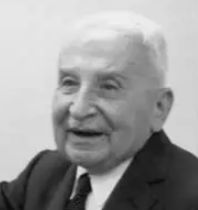
You have the courage to tell the masses what no politician told them: you are inferior and all the improvements in your conditions which you simply take for granted you owe to the effort of men who are better than you. If this be arrogance, as some of your critics observed, it is still the truth that had to said in the age of the Welfare State.
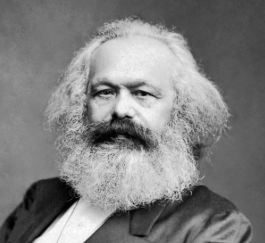
In reality, the labourer belongs to capital before he has sold himself to capital.

Adam was created righteous, acceptable, and without sin. He had no need from his labor in the garden to be made righteous and acceptable to God. Rather, the Lord gave Adam work in order to cultivate and protect the garden. This would have been the freest of all works because they were done simply to please God and not to obtain righteousness. ... The works of the person who trusts God are to be understood in a similar manner. Through faith we are restored to paradise and created anew. We have no need of works in order to be righteous; however, in order to avoid idleness and so that the body might be cared for an disciplined, works are done freely to please God.

No man can have a peaceful life who thinks too much about lengthening it.

It is proof of a base and low mind for one to wish to think with the masses or majority, merely because the majority is the majority. Truth does not change because it is, or is not, believed by a majority of the people.

The savage in man is never quite eradicated.
If a king is energetic, his subjects will be equally energetic. If he is reckless, they will not only be reckless likewise, but also eat into his works. Besides, a reckless king will easily fall into the hands of his enemies. Hence the king shall ever be wakeful.
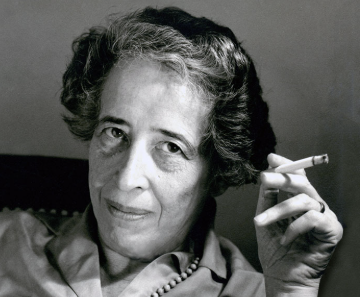
In an ever-changing, incomprehensible world the masses had reached the point where they would, at the same time, believe everything and nothing, think that everything was possible and that nothing was true. [...] under such conditions, one could make people believe the most fantastic statements one day, and trust that if the next day they were given irrefutable proof of their falsehood, they would take refuge in cynicism; instead of deserting the leaders who had lied to them, they would protest that they had known all along that the statement was a lie and would admire the leaders for their superior tactical cleverness.

Americans combine to give fêtes, found seminaries, build churches, distribute books, and send missionaries to the antipodes. Hospitals, prisons, and schools take shape in that way. Finally, if they want to proclaim a truth or propagate some feeling by the encouragement of a great example, they form an association. In every case, at the head of any new undertaking, where in France you would find the government or in England some territorial magnate, in the United States you are sure to find an association. I have come across several types of association in America of which, I confess, I had not previously the slightest conception, and I have often admired the extreme skill they show in proposing a common object for the exertions of very many and in inducing them voluntarily to pursue it.
Friendship is always helpful, but love sometimes even does harm

I say, it is the everlasting privilege of the foolish to be governed by the wise; to be guided in the right path by those who know it better than they. This is the first "right of man;" compared with which all other rights are as nothing.
The Beatific Vision, Sat Chit Ananda, Being-Awareness-Bliss-for the first time I understood, not on the verbal level, not by inchoate hints or at a distance, but precisely and completely what those prodigious syllables referred to. And then I remembered a passage I had read in one of Suzuki's essays. "What is the Dharma-Body of the Buddha?" ('"the Dharma-Body of the Buddha" is another way of saying Mind, Suchness, the Void, the Godhead.) The question is asked in a Zen monastery by an earnest and bewildered novice. And with the prompt irrelevance of one of the Marx Brothers, the Master answers, "The hedge at the bottom of the garden." "And the man who realizes this truth," the novice dubiously inquires, "what, may I ask, is he?" Groucho gives him a whack over the shoulders with his staff and answers, "A golden-haired lion."

All men are almost led to believe not of proof, but by attraction. This way is base, ignoble, and irrelevant; every one therefore disavows it. Each one professes to believe and even to love nothing but what he knows to be worthy of belief and love.

All of the new media have enriched our perceptions of language and older media. They are to the man-made environment what species are to biology.

If we owe to it [civil society] any duty, it is not subject to our will. Duties are not voluntary. Duty and will are even contradictory terms. Now though civil society might be at first a voluntary act (which in many cases it undoubtedly was) its continuance is under a permanent standing covenant, coexisting with the society; and it attaches upon every individual of that society, without any formal act of his own. This is warranted by the general practice, arising out of the general sense of mankind.
Wise command, wise obedience: the capability of these two is the net measure of culture, and human virtue, in every man; all good lies in the possession of these two capabilities; all evil, wretchedness and ill-success in the want of these.
My Lord St. Albans said that Nature did never put her precious jewels into a garret four stories high, and therefore that exceeding tall men had ever very empty heads.
Accent is the soul of language; it gives to it both feeling and truth.

In a sense, all explanation must end in an ultimate arbitrariness.

The doctrine of the Second Coming teaches us that we do not and cannot know when the world drama will end. The curtain may be rung down at any moment: say, before you have finished reading this paragraph.
There are three principal means of acquiring knowledge available to us: observation of nature, reflection, and experimentation. Observation collects facts; reflection combines them; experimentation verifies the result of that combination. Our observation of nature must be diligent, our reflection profound, and our experiments exact. We rarely see these three means combined; and for this reason, creative geniuses are not common.

So rolling time changes the seasons of things. What was of value, becomes in turn of no worth.
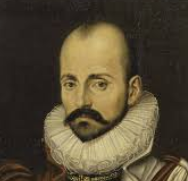
There are some defeats more triumphant than victories.
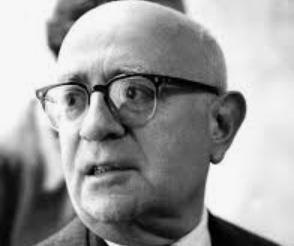
Elements of empirical language are manipulated in their rigidity, as if they were elements of a true and revealed language. The empirical usability of the sacred ceremonial words makes both the speaker and listener believe in their corporeal presence.
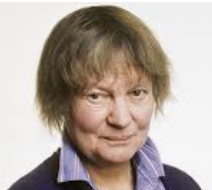
We can only learn to love by loving.
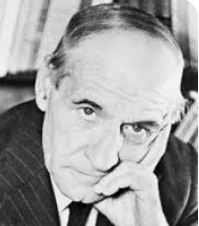
Without a strategic retreat into the self, without vigilant thought, human life is impossible. Call to mind all that mankind owes to certain great withdrawals into the self! It is no chance that all the great founders of religions preceded their apostolates by famous retreats. Buddha withdraws to the forest; Mahomet withdraws to his tent, and even there he withdraws from his tent by wrapping his head in his cloak; above all, Jesus goes apart into the desert for forty days.
Violence, whether spiritual or physical, is a quest for identity and the meaningful.
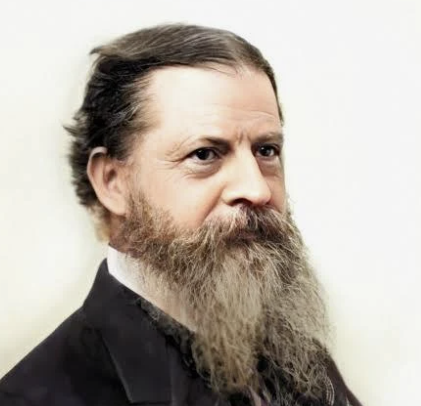
In an article published in The Monist for January, 1891, I endeavored to show what ideas ought to form the warp of a system of philosophy, and particularly emphasized that of absolute chance. In the number of April, 1892, I argued further in favor of that way of thinking, which it will be convenient to christen tychism (from τύχη, chance). A serious student of philosophy will be in no haste to accept or reject this doctrine; but he will see in it one of the chief attitudes which speculative thought may take, feeling that it is not for an individual, nor for an age, to pronounce upon a fundamental question of philosophy. That is a task for a whole era to work out. I have begun by showing that tychism must give birth to an evolutionary cosmology, in which all the regularities of nature and of mind are regarded as products of growth, and to a Schelling-fashioned idealism which holds matter to be mere specialized and partially deadened mind.
I find that the best goodness I have has some tincture of vice.
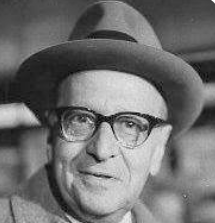
Reason has never really directed social reality, but now reason has been so thoroughly purged of any specific trend or preference that it has finally renounced even the task of passing judgment on man's actions and way of life. Reason has turned them over for ultimate sanction to the conflicting interests to which our world actually seems abandoned.
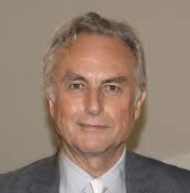
I'm not clever enough to be a physicist. When asked about why he chose to become a biologist.
At the very high speed of living, everybody needs a new career and a new job and a totally new personality every ten years.
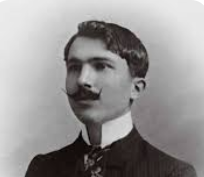
Gather together in your heart all terrors, recompose all details. Salvation is a circle; close it!

The poor, stupid, free American citizen! Free to starve, free to tramp the highways of this great country, he enjoys universal suffrage, and, by that right, he has forged chains about his limbs. The reward that he receives is stringent labor laws prohibiting the right of boycott, of picketing, in fact, of everything, except the right to be robbed of the fruits of his labor.
I had been virtually a Unitarian (as I still am) but without knowing it. The experience of being among Unitarians who did know what they were, and attached much importance to it, was entirely novel to me, but I soon fell into their ways and found it easy to go forward on their road, the more so because the other roads became closed to me.
I strongly suspect that most of the great knowers of Suchness paid very little attention to art.... (To a person whose transfigured and transfiguring mind can see the All in every this, the first-rateness or tenth-rateness of even a religious painting will be a matter of the most sovereign indifference.) Art, I suppose, is only for beginners, or else for those resolute dead-enders, who have made up their minds to be content with the ersatz of Suchness, with symbols rather than with what they signify, with the elegantly composed recipe in lieu of actual dinner.

Therefore, on hearing His words let no one say either: "These are not Christ's words," or "These are not my words." On the contrary, if he knows that he is in the body of Christ, let him say: "These are both Christ's words and my words." Say nothing without Him, and He will say nothing without thee. We must not consider ourselves as strangers to Christ, or look upon ourselves as other than Himself.
Consider the most famous pure dystopian tale of modern times, 1984, by George Orwell (1903-1950), published in 1948 (the same year in which Walden Two was published). I consider it an abominably poor book. It made a big hit (in my opinion) only because it rode the tidal wave of cold war sentiment in the United States.
Nobody knows what is going to happen because so much depends on an enormous number of variables, on simple hazard. On the other hand if you look at history retrospectively, then, even though it was contingent, you can tell a story that makes sense.... Jewish history, for example, in fact had its ups and downs, its, enmities and its friendships, as every history of all people has. The notion that there is one unilinear history is of course false. But if you look at it after the experience of Auschwitz it looks as though all of history-or at least history since the Middle Ages - had no other aim than Auschwitz.... This, is the real problem of every philosophy of history how is it possible that in retrospect it always looks as though it couldn't have happened otherwise?
When shall we see poets born? After a time of disasters and great misfortunes, when harrowed nations begin to breathe again. And then, shaken by the terror of such spectacles, imaginations will paint things entirely strange to those who have not witnessed them.
Since the management of industry by individuals necessarily implies private property, and since competition is in reality merely the manner and form in which the control of industry by private property owners expresses itself, it follows that private property cannot be separated from competition and the individual management of industry. Private property must, therefore, be abolished and in its place must come the common utilization of all instruments of production and the distribution of all products according to common agreement - in a word, what is called the communal ownership of goods.

Science has adapted itself entirely to the wealthy classes and accordingly has set itself to heal those who can afford everything, and it prescribes the same methods for those who have nothing to spare.

Erosion of our being by our infirmities: the resulting void is filled by the presence of consciousness, what am I saying? - that void is consciousness itself.
CivilSimian.com created by AxiomaticPanic, CivilSimian, Kalokagathia