I'm not religious, but, I'm sure when he refers to morality he means justice and fairness...humanistic justice and fairness. He's not talking about loyalty and following orders.



Let your life be pleasing to the multitude, and it can not be so to yourself.
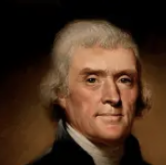
With respect to modern languages, French, as I have before observed, is indispensible. Next to this the Spanish is most important to an American. Our connection with Spain is already important and will become daily more so. Besides this the antient part of American history is written chiefly in Spanish.

Violence is the effort to maintain and restore a weakened psyche.
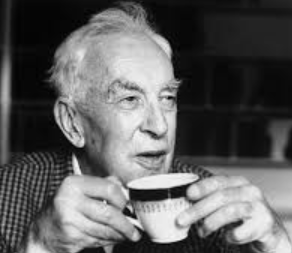
Right and wrong are the same in Palestine as anywhere else. What is peculiar about the Palestine conflict is that the world has listened to the party that has committed the offence and has turned a deaf ear to the victims.
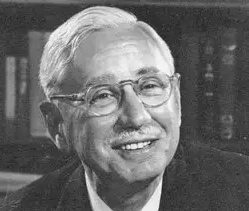
Happiness is the free play of the instincts, and so is youth.
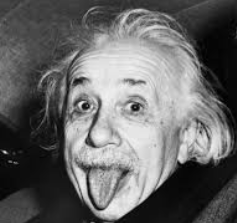
As a child, I received instruction both in the Bible and in the Talmud. I am a Jew, but I am enthralled by the luminous figure of the Nazarene.
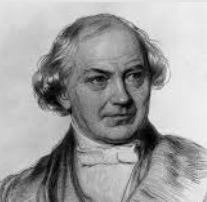
The system becomes more coherent as it is further extended. The elements which we require for explaining a new class of facts are already contained in our system. Different members of the theory run together, and we have thus a constant convergence to unity. In false theories, the contrary is the case.

Certainly it is correct to say: Conscience is the voice of God.
The cultural atmosphere of Russia in those years had an adolescent quality, common to all periods of revolution: the belief that life is just beginning, that the future is unlimited, and that mankind is no longer bound by the shackles of history.

Life is one long struggle in the dark.
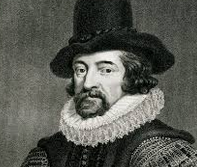
Neither did the dispensation of God vary in the times after our Saviour came into the world; for our Saviour himself did first show His power to subdue ignorance, by His conference with the priests and doctors of the law, before He showed His power to subdue nature by His miracles. And the coming of this Holy Spirit was chiefly figured and expressed in the similitude and gift of tongues, which are but vehicula scientiæ.

Progress usually comes from the barbarian, and there is nothing more stagnant than the philosophy of the philosophers and the theology of the theologians.
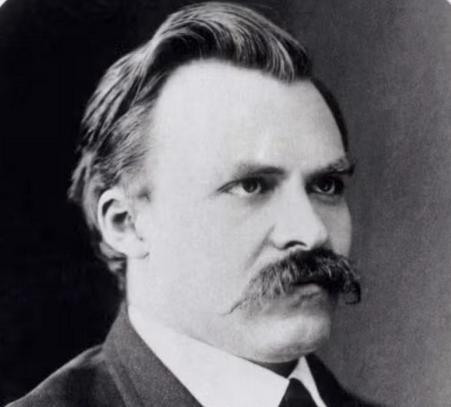

Government has no other end than the preservation of property.

Russia was a slave in Europe but would be a master in Asia.

The essential trait in the moral consciousness, is the control of some feeling or feelings by some other feeling or feelings.
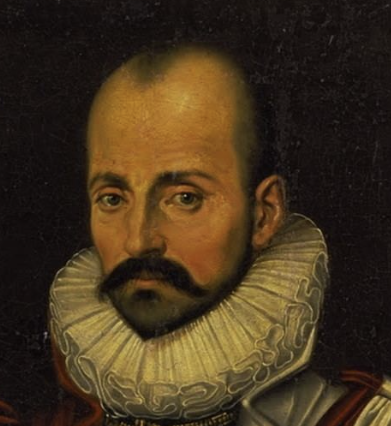
The fundamental political question is why do people obey a government. The answer is that they tend to enslave themselves, to let themselves be governed by tyrants. Freedom from servitude comes not from violent action, but from the refusal to serve. Tyrants fall when the people withdraw their support.

Freedom can be manifested only in the void of beliefs, in the absence of axioms, and only where the laws have no more authority than a hypothesis.

Every artist was first an amateur.

The secret of happiness is this: let your interests be as wide as possible, and let your reactions to the things and persons that interest you be as far as possible friendly rather than hostile.
One would have to be as unenlightened as an angel or an idiot to imagine that the human escapade could turn out well.
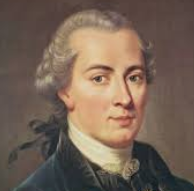
A whole from necessary substances is impossible. The whole, therefore, of substances is a whole of contingent things, and the world consists essentially of only contingent things.
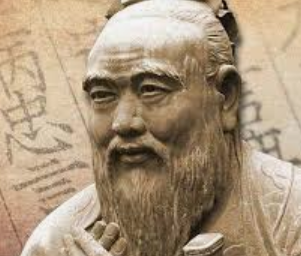
A man's character is formed by the Odes, developed by the Rites and perfected by music.

Furthermore, when citizens are all almost equal, it becomes difficult for them to defend their independence against the aggressions of power.
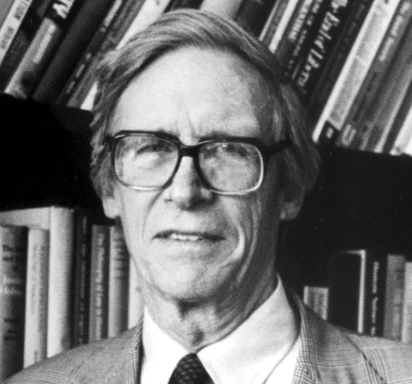
We must choose for others as we have reason to believe they would choose for themselves if they were at the age of reason and deciding rationally.
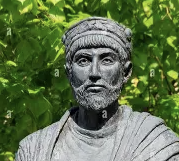
Must we then speak of this subject also: and shall we write concerning things that are not to be told, and shall we publish things not to be divulged, and secrets not to be spoken aloud? Who indeed is Attis or Gallos; who the Mother of the Gods; what is the reason of this rule of Chastity; moreover for what cause has such an institution been established among us from remote antiquity; handed down to us indeed from the most ancient of the Phrygians, but accepted in the first place by the Greeks - and those not the vulgar herd, but the Athenians - taught by the event that they had not done well in ridiculing him that was performing the rites of the Great Mother. For they are said to have insulted and driven off the Gallos, as one who was making innovations in religion: because they did not understand the character of the goddess, or how that she was the very "Deo", "Rhea," and " "Demeter" so much honoured amongst them themselves.
Necessity gives the law without itself acknowledging one.
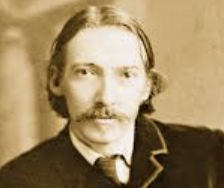
The devil, depend upon it, can sometimes do a very gentlemanly thing.

A conscientious man would be cautious how he dealt in blood.
Once the needs of hunger are satisfied - and they are soon satisfied - the vanity, the necessity - for it is a necessity - arises of imposing ourselves upon and surviving in others. Man habitually sacrifices his life to his purse, but he sacrifices his purse to his vanity. He boasts even of his weakness and his misfortunes, for want of anything better to boast of, and is like a child who, in order to attract attention, struts about with a bandaged finger.

I am sorry that my convictions do not allow me to repeat my friend's offer, said one of the others. But I have had to abandon the humanitarian and egalitarian fancies. His name was Mr. Neo-Classical.
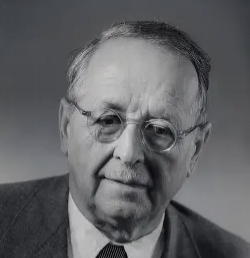
This letter, if judged by the novelty and profundity of ideas it contains, is perhaps the most substantial piece of writing in the whole literature of mankind.
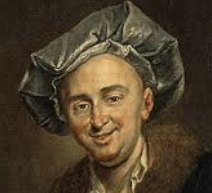
What was man before the invention of words and the knowledge of language? An animal..
In Lenin I honor a man, who in total sacrifice of his own person has committed his entire energy to realizing social justice. I do not find his methods advisable. One thing is certain, however: men like him are the guardians and renewers [Erneuerer] of mankind's conscience.
It is not, what a lawyer tells me I may do; but what humanity, reason, and justice, tell me I ought to do.
But perhaps I lack the gift. I see I've described her as being like a sword. That's true as far as it goes. But utterly inadequate by itself, and misleading. I ought to have said 'But also like a garden. Like a nest of gardens, wall within wall, hedge within hedge, more secret, more full of fragrant and fertile life, the further you explore.' And then, of her, and every created thing I praise, I should say 'in some way, in its unique way, like Him who made it.' Thus up from the garden to the Gardener, from the sword to the Smith. to the life-giving Life and the Beauty that makes beautiful.
Clearly when the liberties are left unrestricted they collide with one another.

Who is my mother? and who are my brethren? And he stretched forth his hand toward his disciples, and said, Behold my mother and my brethren! For whosoever shall do the will of my Father which is in heaven, the same is my brother, and sister, and mother.
The men of England - the men, I mean of light and leading in England.
Jesus is too colossal for the pen of phrasemongers, however artful. No man can dispose of Christianity with a bon mot.
Time, subjectively, is the conscious sequence of perceptions.
Q. You do not consider your statement a disloyal one? A. No, sir. Scientific truth is beyond loyalty and disloyalty. Q. You are sure that your statement represents scientific truth? A. I am.
The order and connection of the thought is identical to with the order and connection of the things.
Philosophy in its very act is a process of translation!
CivilSimian.com created by AxiomaticPanic, CivilSimian, Kalokagathia