

6 months 1 week ago
But, when the elements have been mingled in the fashion of a man and come to the light of day, or in the fashion of the race of wild beasts or plants or birds, then men say that these come into being; and when they are separated, they call that woeful death. They call it not aright; but I too follow the custom, and call it so myself.
▼
Source
source
fr. 9 As quoted by John Burnet, Early Greek philosophy (1908) p. 240
3 months ago
There is always something taboo, something repressed, unadmitted, or just glimpsed quickly out of the corner of one's eye because a direct look is too unsettling. Taboos lie within taboos, like the skin of an onion.
▼
Source
source
Inside Information
2 months 3 weeks ago
The grand discoveries which scientific experiment yielded at and about the turn of the century, in which investigators in many countries took an eminent part and which were destined all unexpectedly to give us a fresh insight into the structure of atoms, were due in the first instance, as all are aware, to the work of the great investigators of the English school, Sir Joseph Thomson and Sir Ernest Rutherford, who have inscribed their names on the tablets of the history of scientific research as distinguished witnesses to the truth that imagination and acumen are capable of penetrating the crowded mass of registered experience and of revealing Nature's simplicity to our gaze.
▼
Source
source
Niels Bohr's speech at the Nobel Banquet in Stockholm

7 months 4 days ago
Were I a nightingale, I would act the part of a nightingale; were I a swan, the part of a swan.
▼
Source
source
Book I, ch. 16, 20.
7 months 2 weeks ago
If I were to imagine a girl deeply in love and some man who wanted to use all his reasoning powers and knowledge to ridicule her passion, well, there's surely no question of the enamoured girl having to choose between keeping her wealth and being ridiculed. No, but if some extremely cool and calculating man calmly told the young girl, "I will explain to you what love is," and the girl admitted that everything he told her was quite correct, I wonder if she wouldn't choose his miserable common sense rather than her wealth?
5 months 1 week ago
Injustice, poverty, slavery, ignorance - these may be cured by reform or revolution. But men do not live only by fighting evils. They live by positive goals, individual and collective, a vast variety of them, seldom predictable, at times incompatible.

4 months 2 weeks ago
The only cool PR is provided by one's enemies. They toil incessantly and for free.
4 months 2 weeks ago
It's obvious that in an intelligent educated audience such as this university, I stress this university. Who saw fit to give them accreditation?
▼
Source
source
At Randolph-Macon Woman's College, (23 October 2006) Broadcasted by C-SPAN2
4 months 1 week ago
The strange superstition has arisen in the Western world that we can start all over again, remaking human nature, human society, and the possibilities of happiness; as though the knowledge and experience of our ancestors were now entirely irrelevant.
▼
Source
source
Gentle Regrets: Thoughts from a Life
5 months 1 week ago
Beauty is a pledge of the possible conformity between the soul and nature, and consequently a ground of faith in the supremacy of the good.
▼
Source
source
Pt. IV, Expression; § 67: "Conclusion.", p. 270

5 months 2 weeks ago
It was the case of common soldiers deserting from their officers, to join a furious, licentious populace. It was a desertion to a cause, the real object of which was to level all those institutions, and to break all those connexions, natural and civil, that regulate and hold together the community by a chain of subordination; to raise soldiers against their officers; servants against their masters; tradesmen against their customers; artificers against their employers; tenants against their landlords; curates against their bishops; and children against their parents. That this cause of theirs was not an enemy to servitude, but to society.
▼
Source
source
Speech in the House of Commons (9 February 1790), quoted in The Parliamentary History of England, From the Earliest Period to the Year 1803, Vol. XXVIII (1816), column 359

6 months 2 weeks ago
One unscrupulous distortion of the truth tends to beget other and opposite distortions.
▼
Source
source
Ch. 14, p. 316 [2012 reprint]

5 months 2 days ago
With Puritanism as the constant check upon American life, neither truth nor sincerity is possible. Nothing but gloom and mediocrity to dictate human conduct, curtail natural expression, and stifle our best impulses.
6 months 3 weeks ago
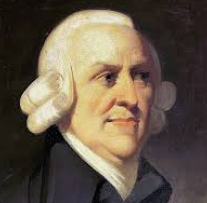
It would be too ridiculous to go about seriously to prove that wealth does not consist in money, or in gold and silver; but in what money purchases, and is valuable only for purchasing. Money no doubt, makes always a part of the national capital; but it has already been shown that it generally makes but a small part, and always the most unprofitable part of it.
▼
Source
source
Chapter I, p. 470.

3 months 2 weeks ago
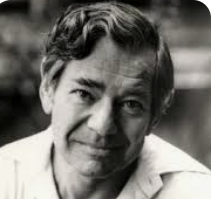
Heresy is a set of opinions "at variance with established or generally received principles." In this sense, heresy is the price of all originality and innovation.

2 months 2 weeks ago
Whatever the virtue may be, from whatever source it may come, it is worthy of esteem... Mind, beauty, wealth, nobility, although the children of chance, all have their own value, as skill, learning and virtue have theirs.
4 months 2 weeks ago
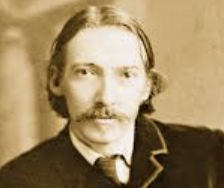
It is the worst of all quaint and of all cheap ways of life that they bring us at last to the pinch of some humiliation.
▼
Source
source
Episodes in the Story of a Mine.

6 months 2 weeks ago
Is it just I who cannot found a school, or can a philosopher never do so?
▼
Source
source
p. 69e
4 months 4 weeks ago
The empirical research of the last fifteen years on the structure of large organizations seems to confirm the hypothesis of Herbert Simon that human cognitive limits are a basic limiting factor in determining organization structures .
▼
Source
source
Jay R. Galbraith, "Organization design: An information processing view." Organizational Effectiveness Center and School 21 (1977). p. 21
7 months 1 week ago
Music is associated not only with speculation but with morality. When rhythms and modes reach an intellect through the ear, they doubtless affect and reshape that mind according to their particular character.
4 months 5 days ago
Mathematics may be compared to a mill of exquisite workmanship, which grinds you stuff of any degree of fineness; but, nevertheless, what you get out depends upon what you put in; and as the grandest mill in the world will not extract wheat-flour from peascod, so pages of formulae will not get a definite result out of loose data.
▼
Source
source
Geological Reform, Quarterly Journal of the Geological Society of London, Vol. 25 (1869); as reprinted in Huxley, Discourses, Biological and Geological essays (1909), pp. 335-336

6 months 3 weeks ago
Virtue refuses facility for her companion ... the easy, gentle, and sloping path that guides the footsteps of a good natural disposition is not the path of true virtue. It demands a rough and thorny road.
▼
Source
source
Ch. 11. Of Cruelty (tr. Donald M. Frame)
5 months 2 weeks ago
Men without their choice derive benefits from that association; without their choice they are subjected to duties in consequence of these benefits; and without their choice they enter into a virtual obligation as binding as any that is actual. Look through the whole of life and the whole system of duties. Much the strongest moral obligations are such as were never the results of our option. I allow, that if no supreme ruler exists, wise to form, and potent to enforce, the moral law, there is no sanction to any contract, virtual or even actual, against the will of prevalent power. On that hypothesis, let any set of men be strong enough to set their duties at defiance, and they cease to be duties any longer.
▼
Source
source
p. 442

5 months 1 week ago
From the same it proceedeth,that men gives different names, to one and the same thing, from the difference of their own passions: As they that approve a private opinion, call it Opinion; but they that mislike it, Haeresie: and yet haeresie signifies no more than private opinion; but has only agreater tincture of choler.
▼
Source
source
The First Part, Chapter 11, p. 50

2 months 2 weeks ago
You seem to consider the federal judges as the ultimate arbiters of all constitutional questions, a very dangerous doctrine, indeed, and one which would place us under the despotism of an oligarchy. Our judges are as honest as other men, and not more so. They have with others the same passions for the party, for power and the privilege of the corps. Their power is the more dangerous, as they are in office for life and not responsible, as the other functionaries are, to the elective control. The Constitution has erected no such single tribunal, knowing that to whatever hands confided, with the corruptions of time and party, its members would become despots. It has more wisely made all departments co-equal and co-sovereign within themselves.
▼
Source
source
Letter to William Charles Jarvis, 1820

4 months 2 weeks ago
In the spiritual realm nothing is indifferent: what is not useful is harmful.
▼
Source
source
VII
7 months 1 week ago
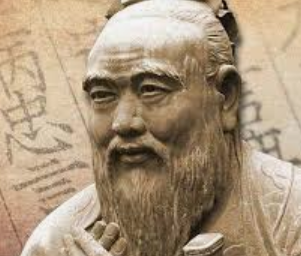
When the Superior Man (Junzi) eats he does not try to stuff himself; at rest he does not seek perfect comfort; he is diligent in his work and careful in speech. He avails himself to people of the Tao and thereby corrects himself. This is the kind of person of whom you can say, "he loves learning."
4 months 3 weeks ago
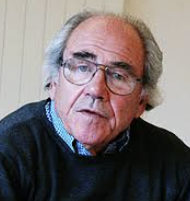
The great event of this period, the great trauma, is this decline of strong referentials, these death pangs of the real and of the rational that open onto an age of simulation. Whereas so many generations, and particularly the last, lived in the march of history, in the euphoric or catastrophic expectation of a revolution-today one has the impression that history has retreated, leaving behind it an indifferent nebula, traversed by currents, but emptied of references. It is into this void that the phantasms of a past history recede, the panoply of events, ideologies, retro fashions-no longer so much because people believe in them or still place some hope in them, but simply to resurrect the period when at least there was history, at least there was violence (albeit fascist), when at least life and death were at stake.
▼
Source
source
"History: A Retro Scenario," pp. 43-44

6 months 2 weeks ago
Anyone wanting a new house picks one from among those built on speculation or still in process of construction. The builder no longer works for his customers but for the market.
▼
Source
source
Vol. II, Ch. XII, p. 237.


5 months 2 days ago
I spoke after Sasha, for an hour. I discussed the farce of a government undertaking to carry democracy abroad by suppressing the last vestiges of it at home. I took up the contention of Judge Mayer that only such ideas are permissible as are "within the law." Thus he had instructed the jurymen when he had asked them if they were prejudiced against those who propagate unpopular ideas. I pointed out that there had never been an ideal, however humane and peaceful, which in its time had been considered "within the law." I named Jesus, Socrates, Galileo, Giordano Bruno. "Were they 'within the law"?" I asked. "And the men who set America free from British rule, the Jeffersons and the Patrick Henrys? The William Lloyd Garrisons, the John Browns, the David Thoreaus and Wendell Phillipses-were they within the law?"
▼
Source
source
chapter 45

6 months 2 weeks ago
Both in thought and in feeling, even though time be real, to realise the unimportance of time is the gate of wisdom.
▼
Source
source
p. 167
6 months 3 weeks ago
And to bring in a new word by the head and shoulders, they leave out the old one.
▼
Source
source
Book III, Ch. 5. Upon some Verses of Virgil
3 months 1 week ago
Most precious are the people; next come the spirits of land and grain; and last, the kings.
▼
Source
source
7B:14.
5 months 2 days ago
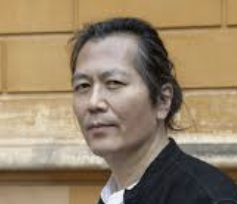
Violence and freedom are the two endpoints on the scale of power.

3 months 1 week ago
Everywhere the human soul stands between a hemisphere of light and another of darkness on the confines of two everlasting hostile empires, - Necessity and Free Will.
▼
Source
source
Essays, Goethe's Works.

2 months 2 weeks ago
The dyad gets its name from passing through or asunder; for the dyad is the first to have separated itself from the monad, whence also it is called "daring." For when the monad manifests unification, the dyad steals in and manifests separation.
▼
Source
source
On the Dyad
7 months 1 week ago
After death the sensation is either pleasant or there is none at all. But this should be thought on from our youth up, so that we may be indifferent to death, and without this thought no one can be in a tranquil state of mind. For it is certain that we must die, and, for aught we know, this very day. Therefore, since death threatens every hour, how can he who fears it have any steadfastness of soul?
▼
Source
source
section 74
4 months 2 weeks ago
How do we account for the current paranormal vogue in the popular media? Perhaps it has something to do with the millennium - in which case it's depressing to realise that the millennium is still three years away.

7 months 5 days ago
There is another form of temptation, more complex in its peril. It originates in an appetite for knowledge. From this malady of curiosity are all those strange sights exhibited in the theatre. Hence do we proceed to search out the secret powers of nature (which is beside our end), which to know profits not, and wherein men desire nothing but to know.
▼
Source
source
X, 35
2 months 2 weeks ago
There is not a sprig of grass that shoots uninteresting to me.
▼
Source
source
Thomas Jefferson Letter (23 Dec 1790) to Martha Jefferson Randolph. Collected in B.L. Rayner (ed.), Sketches of the Life, Writings, and Opinions of Thomas Jefferson (1832), 192.
5 months 6 days ago
"And the upshot of all this," so I have been told more than once and by more than one person, "will be simply that all you will succeed in doing will be to drive people to the wildest Catholicism." And I have been accused of being a reactionary and even a Jesuit. Be it so! ...I know very well it is madness to seek to turn the waters of the river back to their source, and that it is only the ignorant who seek to find in the past a remedy for their present ills; but I know too that anyone who fights for any ideal whatever, although his ideal may seem to lie in the past, is driving the world on to the future, and that the only reactionaries are those who find themselves at home in the present. Every supposed restoration of the past is a creation of the future, and if the past which it is sought to restore is a dream, something imperfectly known, so much the better.

2 months 2 weeks ago
"Those who have forgotten where the road leads." "They are at odds with what is all around them"-the all-directing logos. And "they find alien what they meet with every day."
▼
Source
source
(Hays translation) IV, 46
6 months 2 weeks ago
Philosophy unravels the knots in our thinking; hence its results must be simple, but its activity is as complicated as the knots that it unravels.
▼
Source
source
Ch. 9 : Philosophy, p. 183
7 months 5 days ago
For it still seemed to me that it is not we who sin, but some other nature sinned in us. And it gratified my pride to be beyond blame, and when I did anything wrong not to have to confess that I had done wrong. I loved to excuse my soul and to accuse something else inside me (I knew not what) but which was not I. But, assuredly, it was I, and it was my impiety that had divided me against myself. That sin then was all the more incurable because I did not deem myself a sinner.
▼
Source
source
A. Outler, trans. (Dover: 2002), Book 5, Chapter 10, p. 77
5 months 5 days ago
If one is to take Lulu's twelve-tone chord as the integral totality of complementary harmony, then Berg's allegorical genius proves itself within a historical perspective which makes the brain reel: just as Lulu in the world of total illusion longs for nothing but her murderer and finally finds him in that sound, so does all harmony of unrequited happiness long for its fatal chord as the cipher of fulfillment - twelve-tone music is not to be separated from dissonance. Fatal: because all dynamics come to a standstill within it without finding release. The law of complementary harmony already implies the end of the musical experience of time, as this was heralded in the dissociation of time according to Expressionistic extremes.
▼
Source
source
Philosophy of Modern Music (1973) as translated by Anne G. Mitchell and Wesley V. Blomster
5 months 2 weeks ago
Big industry, competition and generally the individualistic organization of production have become a fetter which it must and will shatter.
CivilSimian.com created by AxiomaticPanic, CivilSimian, Kalokagathia