


3 months 1 week ago
"A fair day's wages for a fair day's work": it is as just a demand as governed men ever made of governing. It is the everlasting right of man.
▼
Source
source
Bk. I, ch. 3.

6 months 2 weeks ago
We boil at different degrees.
▼
Source
source
Eloquence

7 months 5 days ago
If any one will piously and soberly consider the sermon which our Lord Jesus spoke on the mount, as we read it in the Gospel according to Matthew, I think that he will find in it, so far as regards the highest morals, a perfect standard of the Christian life: and this we do not rashly venture to promise, but gather it from the very words of the Lord Himself. For the sermon itself is brought to a close in such a way, that it is clear there are in it all the precepts which go to mould the life. He has sufficiently indicated, as I think, that these sayings which He uttered on the mount so perfectly guide the life of those who may be willing to live according to them, that they may justly be compared to one building upon a rock.
▼
Source
source
On the Sermon on the Mount, as translated by William Findlay (1888), Book I, Ch. 1
3 months 1 week ago
On the dust of our heroic ancestors we too sit ballot-boxing, saying to one another, It is well, it is well! By inheritance of their noble struggles, we have been permitted to sit slothful so long. By noble toil, not by shallow laughter and vain talk, they made this English Existence from a savage forest into an arable inhabitable field for us; and we, idly dreaming it would grow spontaneous crops forever,-find it now in too questionable a state.

5 months 2 weeks ago
There can be little question that good composition is far less dependent upon acquaintance with its laws, than upon practice and natural aptitude. A clear head, a quick imagination, and a sensitive ear, will go far towards making all rhetorical precepts needless.
▼
Source
source
Pt. I, sec. 1, "The Principle of Economy"
4 months 3 weeks ago
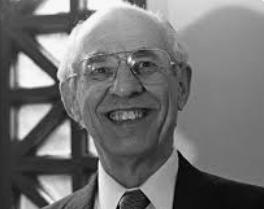
No sane person should believe that something is 'subjective' merely because it cannot be settled beyond controversy.
▼
Source
source
Lecture IV: Reasonableness as a Fact and as a Value

4 months 2 weeks ago
Patience is a remedy for every sorrow.
▼
Source
source
Maxim 170

6 months 2 weeks ago
England, it is true, in causing a social revolution in Hindostan, was actuated only by the vilest interests, and was stupid in her manner of enforcing them. But that is not the question. The question is, can mankind fulfil its destiny without a fundamental revolution in the social state of Asia? If not, whatever may have been the crimes of England she was the unconscious tool of history in bringing about that revolution.
▼
Source
source
"The British Rule in India," New York Daily Tribune, 10 June 1853.

6 months 2 weeks ago
I don't feel that it is necessary to know exactly what I am. The main interest in life and work is to become someone else that you were not in the beginning. If you knew when you began a book what you would say at the end, do you think that you would have the courage to write it? What is true for writing and for a love relationship is true also for life. The game is worthwhile insofar as we don't know what will be the end. My field is the history of thought. Man is a thinking being.
▼
Source
source
Truth, Power, Self : An Interview with Michel Foucault

3 months 3 weeks ago
I may not be as unambiguously hostile to capitalism as many people are, but what I don't like about it is the commodification of personal experiences, it turns everyone into actors.
▼
Source
source
Quoted in Will Self, "John Gray: Forget everything you know," The Independent
6 months 2 weeks ago
What all these people are doing is not aggressive; they are inventing new possibilities of pleasure with strange parts of their body - through the eroticization of the body. I think it's ... a creative enterprise, which has as one of its main features what I call the desexualization of pleasure.
▼
Source
source
In reference to Sadism and Masochism, as quoted in Who's Who in Contemporary Gay & Lesbian History: From World War II to the Present Day (2001) by Robert Aldrich and Gary Wotherspoon

5 months 2 days ago
Forty years ago Germany proclaimed the slogan: "Germany above everything. Germany for the Germans, first, last and always. We want peace; therefore we must prepare for war. Only a well armed and thoroughly prepared nation can maintain peace, can command respect, can be sure of its national integrity." And Germany continued to prepare, thereby forcing the other nations to do the same. The terrible European war is only the culminating fruition of the hydra-headed gospel, military preparedness.

6 months 2 weeks ago
Many Catholic mystics have affirmed that, at a certain stage of that contemplative prayer in which, according to the most authoritative theologians, the life of Christian perfection ultimately consists, it is necessary to put aside all thought of the Incarnation as distracting from the higher knowledge of that which has been incarnated. From this fact have arisen misunderstandings in plenty and a number of intellectual difficulties.

4 months 2 weeks ago
An atheist is just somebody who feels about Yahweh the way any decent Christian feels about Thor or Baal or the golden calf. As has been said before, we are all atheists about most of the gods that humanity has ever believed in. Some of us just go one god further.
▼
Source
source
Richard Dawkins on militant atheism,
6 months 2 weeks ago
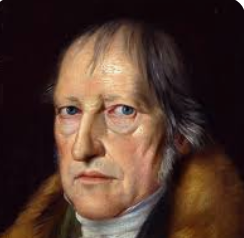
The external embodiment of an act is composed of many parts, and may be regarded as capable of being divided into an infinite number of particulars. An act may be looked on as in the first instance coming into contact with only one of these particulars. But the truth of the particular is the universal. A definite act is not confined in its content to one isolated point of the varied external world, but is universal, including these varied relations within itself. The purpose, which is the product of thought and embraces not the particular only but also the universal side, is intention.
▼
Source
source
Georg Wilhelm Friedrich Hegel, Philosophy of Right translated by SW Dyde Queen's University Canada 1896 p. 114-115

6 months 2 weeks ago
Most boys or youths who have had much knowledge drilled into them, have their mental capacities not strengthened, but over-laid by it. They are crammed with mere facts, and with the opinions or phrases of other people, and these are accepted as a substitute for the power to form opinions of their own: and thus the sons of eminent fathers, who have spared no pains in their education, so often grow up mere parroters of what they have learnt, incapable of using their minds except in the furrows traced for them. Mine, however, was not an education of cram. My father never permitted anything which I learnt to degenerate into a mere exercise of memory. He strove to make the understanding not only go along with every step of the teaching, but, if possible, precede it. Anything which could be found out by thinking I never was told, until I had exhausted my efforts to find it out for myself.
▼
Source
source
(p. 31)

6 months 3 weeks ago
How many valiant men we have seen to survive their own reputation!
▼
Source
source
Ch. 16
6 months 2 weeks ago
We assert then that nothing has been accomplished without interest on the part of the actors; and - if interest be called passion, inasmuch as the whole individuality, to the neglect of all other actual or possible interests and claims, is devoted to an object with every fibre of volition, concentrating all its desires and powers upon it - we may affirm absolutely that nothing great in the World has been accomplished without passion. Often abbreviated to: Nothing great in the World has been accomplished without passion. Variant translation: We may affirm absolutely that nothing great in the world has ever been accomplished without enthusiasm.
7 months 5 days ago
Venerate the martyrs, praise, love, proclaim, honor them. But worship the God of the martyrs.
▼
Source
source
273:9; translation from: The works of Saint Augustine, John E. Rotelle, New City Press, ISBN 1565480600 ISBN 9781565480605 p. 21

6 months 3 weeks ago
Though the managing ourselves well in this part of our behavior has the name good-breeding, as if a peculiar effect of education; yet... young children should not be much perplexed about it... Teach them humility, and to be good-natur'd, if you can, and this sort of manners will not be wanting; civility being in truth nothing but a care not to shew any slighting or contempt of any one in conversation.
▼
Source
source
Sec. 145
5 months 2 days ago
Truths dead and forgotten long ago, conceptions of the world and its people, covered with mould, even during the times of our grandmothers, are being hammered into the heads of our young generation.

7 months 2 weeks ago
Let's not beat around the bush; I love life, that's my real weakness. I love it so much that I am incapable of imagining what is not life.
6 months 2 weeks ago
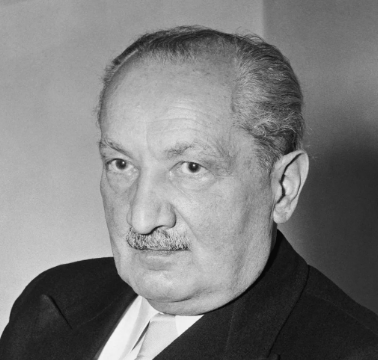
We think of beauty as being most worthy of reverence. But what is most worthy of reverence lights up only where the magnificent strength to revere is alive. To revere is not a thing for the petty and lowly, the incapacitated and underdeveloped. It is a matter of tremendous passion; only what flows from such passion is in the grand style.
▼
Source
source
p. 125

6 months 2 weeks ago
Why you fool, it's the educated reader who can be gulled. All our difficulty comes with the others. When did you meet a workman who believes the papers? He takes it for granted that they're all propaganda and skips the leading articles. He buys his paper for the football results and the little paragraphs about girls falling out of windows and corpses found in Mayfair flats. He is our problem. We have to recondition him. But the educated public, the people who read the highbrow weeklies, don't need reconditioning. They're all right already. They'll believe anything.
▼
Source
source
Ch. 5: Elasticity, section 1 Miss Hardcastle speaking to Mark Studdock

2 months 2 weeks ago
..If you are troubled by external circumstances, it is not the circumstances that trouble you, but your own perception of them - and they are in your power to change at any time.

4 months 2 weeks ago
An arrogant person considers himself perfect. This is the chief harm of arrogance. It interferes with a person's main task in life-becoming a better person.
▼
Source
source
p. 110

6 months 2 weeks ago
Either the USSR was not the country of socialism, in which case socialism didn't exist anywhere and doubtless, wasn't possible: or else, socialism was that, this abominable monster, this police state, the power of beasts of prey.
▼
Source
source
p. 184

2 months 2 weeks ago
I deplore with you the putrid state into which our newspapers have passed, and the malignity, the vulgarity, & mendacious spirit of those who write for them: and I enclose you a recent sample, the production of a New England judge, as a proof of the abyss of degradation into which we are fallen. These ordures are rapidly depraving the public taste and lessening its relish for sound food. As vehicles of information and a curb on our functionaries, they have rendered themselves useless by forfeiting all title to belief. That this has in a great degree been produced by the violence and malignity of party spirit I agree with you...
▼
Source
source
Letter to Walter Jones (2 January 1814)

5 months 1 week ago
Give an inch, he'll take an ell.
▼
Source
source
Liberty and Necessity (no. 111)
6 months 2 weeks ago
For what avail the plough or sail, Or land or life, if freedom fail?
▼
Source
source
Boston

6 months 2 weeks ago
Some old poet's grand imagination is imposed on us as adamantine everlasting truth, and God's own word! Pythagoras says, truly enough, "A true assertion respecting God, is an assertion of God"; but we may well doubt if there is any example of this in literature.

5 months 3 weeks ago
The main business of religions is to purify, control, and restrain that excessive and exclusive taste for well-being which men acquire in times of equality.
▼
Source
source
Book One, Chapter V.
6 months 2 weeks ago
There is a physical relation between physical things. But it is different with commodities.
▼
Source
source
Vol. I, Ch. 1, Section 4, pg. 83.

6 months 3 weeks ago
I believe that it is possible for one to praise, without concern, any man after he is dead since every reason and supervision for adulation is lacking.
▼
Source
source
Book 1
6 months 2 weeks ago
That power should be exercised over any portion of mankind without any obligation of consulting them, is only tolerable while they are in an infantine, or a semi-barbarous state. In any civilized condition, power ought never to be exempt from the necessity of appealing to the reason, and recommending itself by motives which justify it to the conscience and feelings, of the governed.
▼
Source
source
Thoughts on Parliamentary Reform (1859), p. 24

6 months 3 weeks ago
I will first discuss images according to the Law of Moses, and then according to the gospel. And I say at the outset that according to the Law of Moses no other images are forbidden than an image of God which one worships. A crucifix, on the other hand, or any other holy image is not forbidden. Heigh now! you breakers of images, I defy you to prove the opposite!
▼
Source
source
pp. 85-86

6 months 3 weeks ago
The plea is, in a great measure, false; they had no permission to catch and enslave people who never injured them.

5 months 3 weeks ago
The possibility of divorce renders both marriage partners stricter in their observance of the duties they owe to each other. Divorces help to improve morals and to increase the population.
2 months 2 weeks ago
Your reason is now mature enough to examine this object religion. In the first place divest yourself of all bias in favour of novelty & singularity of opinion. Indulge them in any other subject rather than that of religion. It is too important, & the consequences of error may be too serious. On the other hand shake off all the fears & servile prejudices under which weak minds are servilely crouched. Fix reason firmly in her seat, and call to her tribunal every fact, every opinion. Question with boldness even the existence of a god; because, if there be one, he must more approve the homage of reason, than that of blindfolded fear.
▼
Source
source
Scan of the original page at The Library of Congress.
6 months 2 weeks ago
Their worship was not paid to the demon which such a being as they imagined would really be, but to their own idea of excellence. The evil is, that such a belief keeps the ideal wretchedly low; and opposes the most obstinate resistance to all thought which has a tendency to raise it higher. Believers shrink from every train of ideas which would lead the mind to a clear conception and an elevated standard of excellence, because they feel (even when they do not distinctly see) that such a standard would conflict with many of the dispensations of nature, and with much of what they are accustomed to consider as the Christian creed.
▼
Source
source
(p. 42)


2 months 4 weeks ago
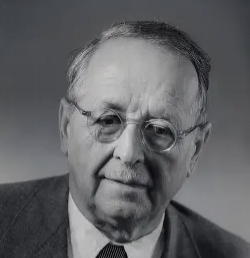
The scene of action of reality is not a three-dimensional Euclidean space but rather a four-dimensional world, in which space and time are linked together indissolubly. However deep the chasm may be that separates the intuitive nature of space from that of time in our experience, nothing of this qualitative difference enters into the objective world which physics endeavors to crystallize out of direct experience. It is a four-dimensional continuum, which is neither "time" nor "space". Only the consciousness that passes on in one portion of this world experiences the detached piece which comes to meet it and passes behind it as history, that is, as a process that is going forward in time and takes place in space.
▼
Source
source
Ch. 3 "Relativity of Space and Time"
5 months 1 week ago
Beyond all conscious lying and falsifying, there is a deeper "organic mendacity." Here the falsification is not formed in consciousness, but at the same stage of the mental process as the impressions and value feelings themselves: on the road of experience into consciousness. There is "organic mendacity" whenever a man's mind admits only those impressions which serve his "interest" or his instinctive attitude. Already in the process of mental reproduction and recollection, the contents of his experience are modified in this direction. He who is "mendacious" has no need to lie! In his case, the automatic process of forming recollections, impressions, and feelings is involuntarily slanted, so that conscious falsification becomes unnecessary.
▼
Source
source
L. Coser, trans. (1973), pp. 77-78
6 months 1 day ago
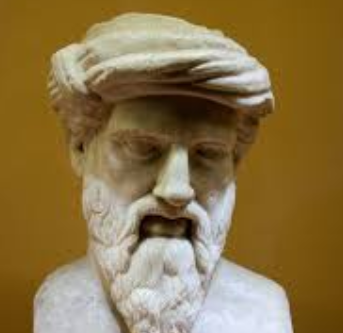
Govern your tongue before all other things, following the gods.
▼
Source
source
Symbol 7
5 months 5 days ago
Necessity resides in the way we talk about things, not in the things we talk about.
▼
Source
source
Ways of Paradox and Other Essays (1976), p. 174
6 months 2 weeks ago
The man who comes back through the Door in the Wall will never be quite the same as the man who went out. He will be wiser but less sure, happier but less self-satisfied, humbler in acknowledging his ignorance yet better equipped to understand the relationship of words to things, of systematic reasoning to the unfathomable mystery which it tries, forever vainly, to comprehend.
6 months 2 weeks ago
The Indian teaching, through its clouds of legends, has yet a simple and grand religion, like a queenly countenance seen through a rich veil. It teaches to speak truth, love others, and to dispose trifles. The East is grand - and makes Europe appear the land of trifles .... all is soul and the soul is Vishnu ... cheerful and noble is the genius of this cosmogony. Hari is always gentle and serene - he translates to heaven the hunter who has accidentally shot him in his human form, he pursues his sport with boors and milkmaids at the cow pens; all his games are benevolent and he enters into flesh to relieve the burdens of the world.
▼
Source
source
Quoted in S. Londhe, A Tribute to Hinduism, New Delhi: Pragun Publication, 2008

2 months 2 weeks ago
Violated, dishonored, wading in blood, dripping filth - there stands bourgeois society. This is it [in reality]. Not all spic and span and moral, with pretense to culture, philosophy, ethics, order, peace, and the rule of law - but the ravening beast, the witches' sabbath of anarchy, a plague to culture and humanity. Thus it reveals itself in its true, its naked form.
▼
Source
source
Ch. 1
CivilSimian.com created by AxiomaticPanic, CivilSimian, Kalokagathia