


6 months 3 weeks ago
But the truth is that my work - I was going to say my mission - is to shatter the faith of men here, there, and everywhere, faith in affirmation, faith in negation, and faith in abstention in faith, and this for the sake of faith in faith itself; it is to war against all those who submit, whether it be to Catholicism, or to rationalism, or to agnosticism; it is to make all men live the life of inquietude and passionate desire.
7 months 1 day ago
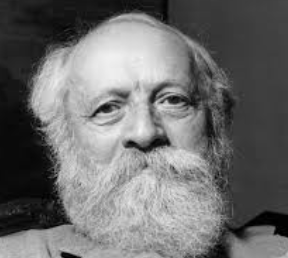
Before his death, Rabbi Zusya said, "In the coming world, they will not ask me: 'Why were you not Moses?' They will ask me: 'Why were you not Zusya?'"
▼
Source
source
Tales of the Hasidim (1947), 1991 Ebook edition, p.251, as quoted in Jewish Currents.
7 months 4 weeks ago
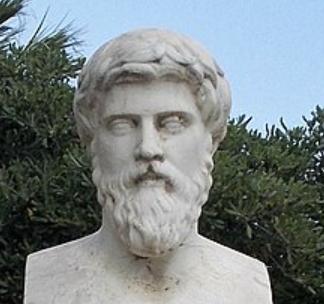
Pyrrhus said, "If I should overcome the Romans in another fight, I were undone."
▼
Source
source
47 Pyrrhus
4 months 3 weeks ago
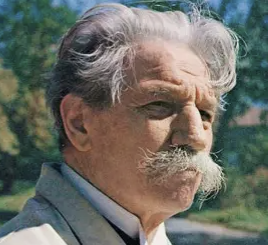
The restoration of our world-view can come only as a result of inexorably truth-loving and recklessly courageous thought. Such thinking alone is mature enough to learn by experience how the rational, when it thinks itself out to a conclusion, passes necessarily over into the non-rational. World- and life-affirmation and ethics are non-rational. They are not justified by any corresponding knowledge of the nature of the world, but are the disposition in which, through the inner compulsion of our will-to-live, we determine our relation to the world. What the activity of this disposition of ours means in the evolution of the world, we do not know. Nor can we regulate this activity from outside; we must leave entirely to each individual its shaping and its extension. From every point of view, then, world- and life-affirmation and ethics are non-rational, and we must have the courage to admit it.

4 months 2 weeks ago
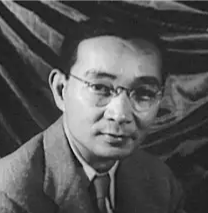
To me personally, the only function of philosophy is to teach us to take life more lightly and gayly than the average businessman does, for no businessman who does not retire at fifty, if he can, is in my eyes a philosopher.
▼
Source
source
Ch. I : The Awakening, p. 13

7 months 6 days ago
I want to proclaim a truth that would forever exile me from among the living. I know only the conditions but not the words that would allow me to formulate it.

5 months 1 day ago
But leaving this, let us remark one thing which is very plain: That whatever be the uses and duties, real or supposed, of a Secretary in Parliament, his faculty to accomplish these is a point entirely unconnected with his ability to get elected into Parliament, and has no relation or proportion to it, and no concern with it whatever.


4 months 1 week ago
Take away your opinion, and there is taken away the complaint. Take away the complaint, and the hurt is gone.
▼
Source
source
IV. 7, trans. George Long
9 months ago
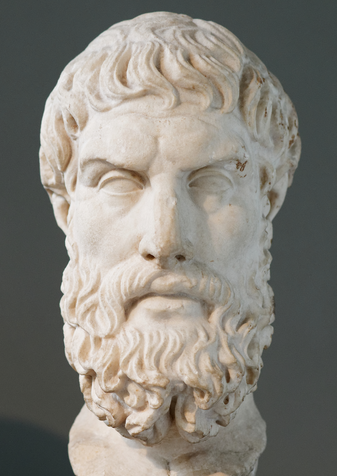
Chance seldom interferes with the wise man; his greatest and highest interests have been, are, and will be, directed by reason throughout his whole life.
9 months 1 week ago
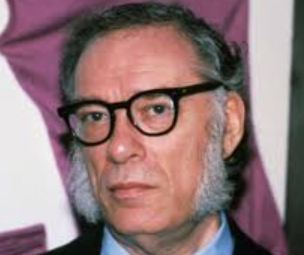
I wouldn't give an astrologer the time of day.


9 months 1 week ago
Again, it is possible to fail in many ways (for evil belongs to the class of the unlimited ... and good to that of the limited), while to succeed is possible only in one way (for which reason also one is easy and the other difficult—to miss the mark easy, to hit it difficult); for these reasons also, then, excess and defect are characteristic of vice, and the mean of virtue; For men are good in but one way, but bad in many.
6 months 3 weeks ago
Marriage as a community of interests unfailingly means the degradation of the interested parties, and it is the perfidy of the world's arrangements that no one, even if aware of it, can escape such degradation. The idea might therefore be entertained that marriage without ignominy is a possibility reserved for those spared the pursuit of interests, for the rich. But the possibility is purely formal, for the privileged are precisely those in whom the pursuit of interests has become second-nature-they would not otherwise uphold privilege.
▼
Source
source
E. Jephcott, trans. (1974), § 10
4 months 1 week ago
The most beautiful monuments of Athens belong to the century of Pericles. In Rome, what writers were produced under the Republic? Only Plautus and Terence. Lucretius, Sallust, and Cicero saw the Republic die. Then came the century of Augustus when the nation was all that it could be by way of talents. The arts, in general, need a king; they only flourish under the influence of sceptres. Even in Greece, the only country where they flourished in the milieu of a republic, Lysippos and Apelles worked for Alexander. Aristotle owed to Alexander's generosity the means to compose his history of animals; and, after the death of this monarch, the poets, scholars, and artists went to look for protection and rewards in the courts of his successors.
▼
Source
source
p. 179
8 months 2 weeks ago
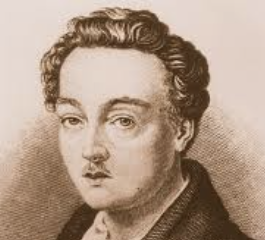
Truth springs from argument amongst friends.
7 months 1 week ago
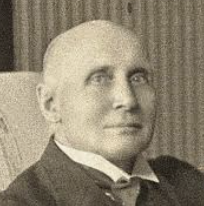
Supreme power rests in the will of all or of the majority.
6 months 3 weeks ago
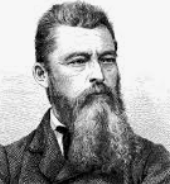
Thus the universe is to be conceived as attaining the active self-expression of its own variety of opposites of its own freedom and its own necessity, of its own multiplicity and its own unity, of its own imperfection and its own perfection. All the opposites are elements in the nature of things, and are incorrigibly there. The concept of God is the way in which we understand this incredible fact that what cannot be, yet is.
7 months 1 week ago
Religion is the dream of the human mind. But even in dreams we do not find ourselves in emptiness or in heaven, but on earth, in the realm of reality; we only see real things in the entrancing splendor of imagination and caprice, instead of in the simple daylight of reality and necessity.
▼
Source
source
Preface to Second Edition
4 months 2 weeks ago
It is important that man dreams, but it is perhaps equally important that he can laugh at his own dreams.
▼
Source
source
Ch. I : The Awakening, pp. 4-5

5 months 2 weeks ago
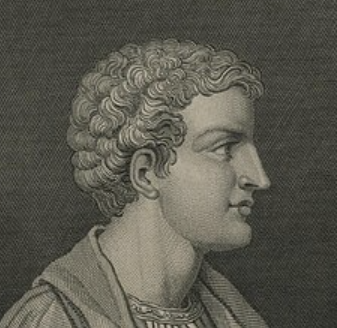
Today those who peer into the future want only relief from anxiety. Unable to face the prospect that the cycles of war will continue, they are desperate to find a pattern of improvement in history. It is only natural that believers in reason, lacking any deeper faith and too feeble to tolerate doubt, should turn to the sorcery of numbers. Happily there are some who are ready to assist them. Just as the Elizabethan magus transcribed tables shown to him by angels, the modern scientific scryer deciphers numerical auguries of angels hidden in ourselves.
▼
Source
source
In the Puppet Theatre: Dark mirrors, Hidden Angels and an Algorithmic Prayer-Wheel (p. 99)
8 months ago
Look round and round the man you recommend, for yours will be the shame should he offend.
▼
Source
source
Book I, epistle xviii, line 76 (translated by John Conington).

7 months 1 week ago
Nor is there any embarrassment in the fact that we're ridiculous, isn't it true? For it's actually so, we are ridiculous, light-minded, with bad habits, we're bored, we don't know how to look, how to understand, we're all like that, all, you, and I, and they! Now, you're not offended when I tell you to your face that you're ridiculous? And if so, aren't you material? You know, in my opinion it's sometimes even good to be ridiculous, if not better: we can the sooner forgive each other, the sooner humble ourselves; we can't understand everything at once, we can't start right out with perfection! To achieve perfection, one must first begin by not understanding many things! And if we understand too quickly, we may not understand well. This I tell you, you, who have already been able to understand. .. and not understand ... so much. I'm not afraid for you now.
▼
Source
source
Part 4, Chapter ?

6 months 2 weeks ago
The noble simplicity in the works of nature only too often originates in the noble shortsightedness of him who observes it.
▼
Source
source
H 1
7 months 3 weeks ago
Tell not abroad what thou intendest to do; for if thou speed not, thou shalt be mocked!
6 months 3 weeks ago
The reason that people take selfies is not narcissism. Rather, it is inner emptiness. There is no meaning to stabilize the ego. Faced with its inner emptiness, the ego constantly produces itself.
7 months 6 days ago
The comprehension of God taken as a participation in his sacred life, an allegedly direct comprehension, is impossible, because participation is a denial of the divine, and because nothing is more direct than the face to face, which is straightforwardness itself.
▼
Source
source
Totality and Infinity
8 months 2 weeks ago
The same good sense, that directs men in the ordinary occurrences of life, is not hearkened to in religious matters, which are supposed to be placed altogether above the cognizance of human reason.
8 months 6 days ago
For anyone who at the end of Western philosophy can and must still question philosophically, the decisive question is no longer merely "What basic character do beings manifest?" or "How may the being of beings be characterized?" but "What is this 'being' itself?" The decisive question is that of "the meaning of being," not merely that of the being of beings.
▼
Source
source
p. 18
6 months 6 days ago
The fact that life evolved out of nearly nothing, some 10 billion years after the universe evolved out of literally nothing, is a fact so staggering that I would be mad to attempt words to do it justice.
▼
Source
source
From tail to tale on the path of pilgrims in life, The Scotsman

9 months 1 week ago
Ironic philosophies produce passionate works. Any thought that abandons unity glorifies diversity! And diversity is the home of art. The only thought to liberate the mind is that which leaves it alone, certain of its limits and of its impending end. No doctrine tempts it. It awaits the ripening of the work and of life.
6 months 1 week ago
He is a despicable sage whose wisdom does not profit himself.
▼
Source
source
Maxim 629
8 months 5 days ago
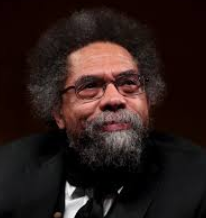
Free-market fundamentalism trivializes the concern for public interest. It puts fear and insecurity in the hearts of anxiety-ridden workers. It also makes money-driven, poll-obsessed elected officials deferential to corporate goals of profit - often at the cost of the common good. ... The free-market fundamentalism that prevails in the United States today promotes the pervasive sleepwalking of the populace. People see that the false prophets are handsomely rewarded - with money, status and access to more power. ... We are experiencing the sad gangsterization of America - an unbridled grasp at power, wealth and status.
▼
Source
source
Cornel West: Democracy Matters in The Globalist
4 months 3 weeks ago
The divergent scales of values scream in discordance, they dazzle and daze us, and in order that it might not be painful we steer clear of all other values, as though from insanity, as though from illusion, and we confidently judge the whole world according to our own home values. Which is why we take for the greater, more painful and less bearable disaster not that which is in fact greater, more painful and less bearable, but that which lies closest to us. Everything which is further away, which does not threaten this very day to invade our threshold - with all its groans, its stifled cries, its destroyed lives, even if it involves millions of victims - this we consider on the whole to be perfectly bearable and of tolerable proportions.
7 months 6 days ago
Each of us must pay for the slightest damage he inflicts upon a universe created for indifference and stagnation, sooner or later, he will regret not having left it intact.
4 months 3 weeks ago
Let me give you a definition of ethics: It is good to maintain and further life - it is bad to damage and destroy life. And this ethic, profound and universal, has the significance of a religion. It is religion.
▼
Source
source
As quoted in Albert Schweitzer : The Man and His Mind (1947) by George Seaver, p. 366

8 months 1 week ago
Tell him to live by yes and no - yes to everything good, no to everything bad.
▼
Source
source
As quoted in The Thought and Character of William James (1935) by Ralph Barton Perry, Vol. II, ch. 91
7 months 3 weeks ago
If thou intend to do any good; tarry not till to-morrow! for thou knowest not what may chance thee this night.

8 months 1 week ago
The foundation of irreligious criticism is: Man makes religion, religion does not make man.


8 months 1 day ago
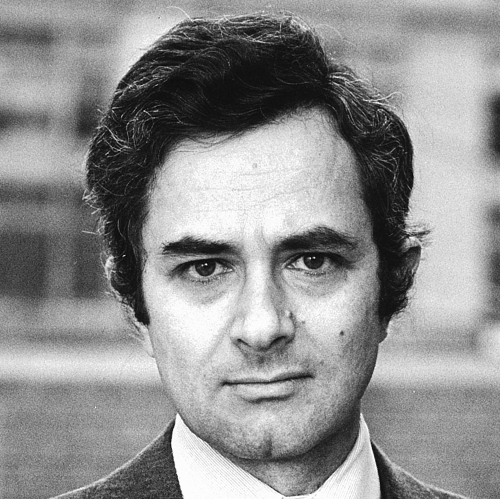
Leading a human life is a full-time occupation, to which everyone devotes decades of intense concern.
▼
Source
source
"The Absurd" (1971), p. 15.
4 months 1 week ago
Look within. Within is the fountain of the good, and it will ever bubble up, if thou wilt ever dig.
▼
Source
source
VII, 59
6 months 3 weeks ago
It suffices to remember how many sorrows he is spared who no longer thinks too many thoughts, how much more "in accordance with reality" a person behaves when he affirms that the real is the right, how much more capacity to use the machinery falls to the person who integrates himself with it uncomplainingly.
▼
Source
source
p. 286
CivilSimian.com created by AxiomaticPanic, CivilSimian, Kalokagathia