



4 months 2 weeks ago
The election... on November 3 ... illustrates a lot of these clashing forces. ..That election was the most important political fight ...in my lifetime. It's important not just for the United States but... for the rest of the world, given the role that the United States has historically played in maintaining that broader liberal international order.
▼
Source
source
20:56

6 months 3 weeks ago
To fear is to die every minute.

7 months 2 weeks ago
Verily we know nothing. Truth is buried deep.
▼
Source
source
(Another translation: "Of truth we know nothing, for truth is in a well." Diogenes Laertius, Lives of Eminent Philosophers R.D. Hicks, Ed.)
5 months 1 week ago
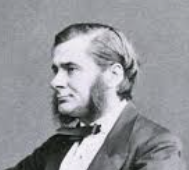
Scientific men get an awkward habit - no, I won't call it that, for it is a valuable habit - of believing nothing unless there is evidence for it; and they have a way of looking upon belief which is not based upon evidence, not only as illogical, but as immoral.
▼
Source
source
Thomas Henry Huxley. "Lectures on Evolution Title: This is Essay# 3 from" Science and Hebrew Tradition." (1882); as cited in: William Trufant Foster, (1908) Argumentation and debating, p. 55

6 months 1 week ago
The real importance of Swedenborg lies in the doctrines he taught, which are the reverse of the gloom and hell-fire of other breakaway sects. He rejects the notion that Jesus died on the cross to atone for the sin of Adam, declaring that God is neither vindictive nor petty-minded, and that since he is God, he doesn't need atonement. It is remarkable that this common-sense view had never struck earlier theologians. God is Divine Goodness, and Jesus is Divine Wisdom, and Goodness has to be approached through Wisdom. Whatever one thinks about the extraordinary claims of its founder, it must be acknowledged that there is something very beautiful and healthy about the Swedenborgian religion. Its founder may have not been a great occultist, but he was a great man.
▼
Source
source
p. 280

7 months 3 weeks ago
Does man think because he has found that thinking pays? Does he bring his children up because he has found it pays?
▼
Source
source
§ 467
6 months 2 weeks ago
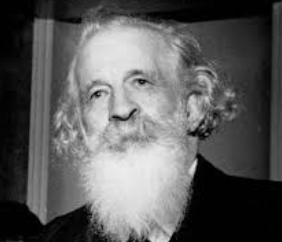
The repose of sleep refreshes only the body. It rarely sets the soul at rest. The repose of the night does not belong to us. It is not the possession of our being. Sleep opens within us an inn for phantoms. In the morning we must sweep out the shadows.
▼
Source
source
Ch. 2, sect. 3
4 months 3 days ago
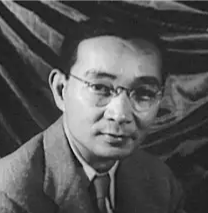
No one realizes how beautiful it is to travel until he comes home and rests his head on his old, familiar pillow.
▼
Source
source
"A Trip to Anhwei", in With Love And Irony (1940), p. 145
5 months 5 days ago
There is no disease so destructive as lust.

8 months 3 days ago
The art of dining well is no slight art, the pleasure not a slight pleasure.

4 months 2 weeks ago
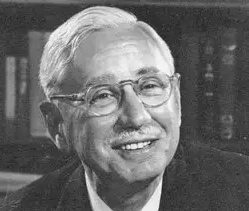
Rooted in freedom, bonded in the fellowship of danger, sharing everywhere a common human blood, we declare again that all men are brothers, and that mutual tolerance is the price of liberty.
3 months 2 weeks ago
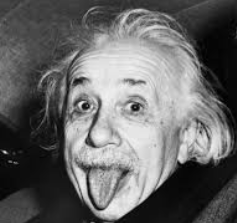
I am not an Atheist. I do not know if I can define myself as a Pantheist. The problem involved is too vast for our limited minds. May I not reply with a parable? The human mind, no matter how highly trained, cannot grasp the universe. We are in the position of a little child, entering a huge library whose walls are covered to the ceiling with books in many different tongues. The child knows that someone must have written those books. It does not know who or how. It does not understand the languages in which they are written. The child notes a definite plan in the arrangement of the books, a mysterious order, which it does not comprehend, but only dimly suspects. That, it seems to me, is the attitude of the human mind, even the greatest and most cultured, toward God. We see a universe marvelously arranged, obeying certain laws, but we understand the laws only dimly. Our limited minds cannot grasp the mysterious force that sways the constellations. I am fascinated by Spinoza's Pantheism. I admire even more his contributions to modern thought. Spinoza is the greatest of modern philosophers because he is the first philosopher who deals with the soul and the body as one, not as two separate things.
4 months 2 weeks ago
A right exists in theory... All human beings have the same set of rights, but rights need to be enforced by the state. It needs to rely on the coercive power of the state... its army, its police force, to actually make those rights something real that citizens can enjoy, and the enforcement power is not universal. ...We wouldn't want to live in a world in which every liberal state wanted to enforce liberal rights in every other state in the world.
▼
Source
source
24:09


6 months 3 weeks ago
I feel safer with a Pyrrho than with a St. Paul, for a jesting wisdom is gentler than an unbridled sanctity.

4 months 2 weeks ago
Every noble crown is, and on earth will forever be, a crown of thorns.
▼
Source
source
Bk. III, ch. 7.
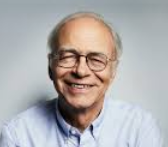
7 months 2 weeks ago
The principles of ethics come from our own nature as social, reasoning beings.
▼
Source
source
Chapter 6, A New Understanding Of Ethics, p. 149
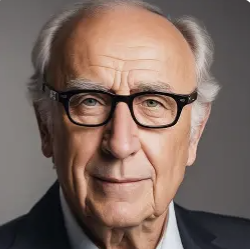
4 months 2 weeks ago
Philosophers of science have repeatedly demonstrated that more than one theoretical construction can always be placed upon a given collection of data. History of science indicates that, particularly in the early developmental stages of a new paradigm, it is not even very difficult to invent such alternates. But that invention of alternates is just what scientists seldom undertake except during the pre-paradigm stage of their science's development and at very special occasions during its subsequent evolution. So long as the tools a paradigm supplies continue to prove capable of solving the problems it defines, science moves fastest and penetrates most deeply through confident employment of those tools. The reason is clear. As in manufacture so in science-retooling is an extravagance to be reserved for the occasion that demands it. The significance of crises is the indication they provide that an occasion for retooling has arrived.
▼
Source
source
p. 76
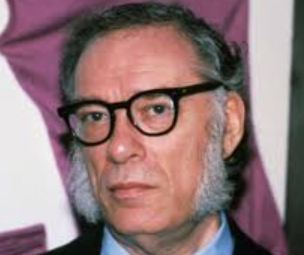
8 months 3 weeks ago
Private profit is often hidden under a careful coating of great patriotism.
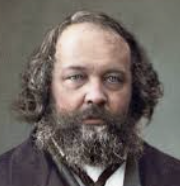
6 months 3 weeks ago
To revolt is a natural tendency of life. Even a worm turns against the foot that crushes it. In general, the vitality and relative dignity of an animal can be measured by the intensity of its instinct to revolt.
▼
Source
source
"On the International Workingmen's Association and Karl Marx"
5 months 3 weeks ago
Anyone can hold the helm when the sea is calm.
▼
Source
source
Maxim 358
8 months 3 weeks ago
For man to become successful, for man to establish himself as the ruler of the planet, it was necessary for him to use his brain as something more than a device to make the daily routine of getting food and evading enemies a little more efficient. Man had to learn to control his environment.
6 months 1 week ago
Life is an offensive, directed against the repetitious mechanism of the Universe.
▼
Source
source
p. 102.
7 months 4 weeks ago
All that time is lost which might be better employed.
▼
Source
source
As quoted in A Dictionary of Quotations in Most Frequent Use: Taken Chiefly from the Latin and French, but comprising many from the Greek, Spanish, and Italian Languages, translated into English (1809) by David Evans Macdonnel
8 months 3 days ago
I find that the best goodness I have has some tincture of vice.
▼
Source
source
Ch. 20
4 months 2 weeks ago
How does the poet speak to men with power, but by being still more a man than they?
▼
Source
source
Burns.

7 months 3 weeks ago
Every parting gives a foretaste of death, every reunion a hint of the resurrection.
▼
Source
source
Vol. 2, Ch. 26, § 310, as translated by Eric F. J. Payne
7 months 3 weeks ago
At the age of five years to enter a spinning-cotton or other factory, and from that time forth to sit there daily, first ten, then twelve, and ultimately fourteen hours, performing the same mechanical labour, is to purchase dearly the satisfaction of drawing breath. But this is the fate of millions, and that of millions more is analogous to it.
▼
Source
source
Vol II: "On the Vanity and Suffering of Life", as translated by R. B. Haldane, and J. Kemp in The World as Will and Idea (1886), p. 389
5 months 2 weeks ago
I shall not be satisfied unless I produce something which shall for a few days supersede the last fashionable novel on the tables of young ladies.
▼
Source
source
Letter to Macvey Napier
3 months 3 weeks ago
Much of the obscurity of our effort so far against terrorism originates in the now official idea that the enemy is evil and that we are (therefore) good, which is the precise mirror image of the official idea of the terrorists.

5 months 3 weeks ago
Government is violence, Christianity is meekness, non-resistance, love. And, therefore, government cannot be Christian, and a man who wishes to be a Christian must not serve government.
▼
Source
source
Letter to Dr. Eugen Heinrich Schmitt (October 12, 1896), translated by Nathan Haskell Dole

7 months 3 weeks ago
The mass of men lead lives of quiet desperation. What is called resignation is confirmed desperation.
▼
Source
source
p. 10
6 months 1 week ago
Like Fichte, Brentano had one simple and powerful insight. He declared: there is a basic difference between a mental and physical act. if I slip on the snow and fall flat on my back, that is an unintentional physical act. But there is no such thing as an unintentional mental act. When I think, I have to think about something; I have to focus my mind on it. You could compare all mental acts (thinking, willing, loving, trying to remember something) to a searchlight beam stabbing into the darkness. There is an element of will, of 'intentionality,' in all mental activity. So it is quite inaccurate to compare mental activity to chemistry, or to a kind of drifting, like leaves on a stream. It flows purposefully or not at all.
▼
Source
source
p. 35
8 months 2 weeks ago
Listen widely to remove your doubts and be careful when speaking about the rest and your mistakes will be few. See much and get rid of what is dangerous and be careful in acting on the rest and your causes for regret will be few. Speaking without fault, acting without causing regret: 'upgrading' consists in this.
6 months 5 days ago
With a pen in my hand I have successfully stormed bulwarks from which others armed with sword and excommunication have been repulsed.
▼
Source
source
E 76

3 months 3 weeks ago
You want praise from people who kick themselves every fifteen minutes, the approval of people who despise themselves. (Is it a sign of self-respect to regret nearly everything you do?)
▼
Source
source
(Hays translation) VIII, 53

7 months 3 weeks ago
I do not believe that I am now dreaming, but I cannot prove that I am not. I am, however, quite certain that I am having certain experiences, whether they be those of a dream or those of waking life.
▼
Source
source
Human Knowledge: Its Scope and Limits (1948), p. 172
7 months 1 week ago
In anger we should refrain both from speech and action.
▼
Source
source
As quoted in Lives and Opinions of Eminent Philosophers, "Pythagoras", Sect. 23-24, as translated in Dictionary of Quotations (1906) by Thomas Benfield Harbottle, p. 370

4 months 2 weeks ago
Complete, at the same time, was his confidence in his own judgment when it spoke to him decisively. He was one of those few that could believe and know as well as inquire and be of opinion. When I remember how much he admired intellectual force, how much he had of it himself, and yet how unconsciously and contentedly he gave others credit for superiority, I again see the healthy spirit of the genuine man.
4 months 2 weeks ago
Names and attributes must be accommodated to the essence of things, and not the essence to the names, since things come first and names afterwards.
▼
Source
source
As quoted in Discoveries and Opinions of Galileo (1957) by Stillman Drake, p. 92

7 months 3 weeks ago
We are spinning our own fates, good or evil, and never to be undone. Every smallest stroke of virtue or of vice leaves its never so little scar. ...Nothing we ever do is, in strict scientific literalness, wiped out.
▼
Source
source
Ch. 4
6 months 3 weeks ago
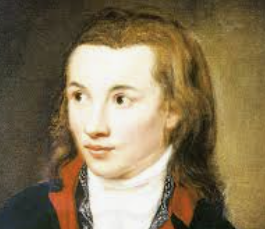
Self-alienation is the source of all degradation as well as, on the contrary, the basis of all true elevation. The first step will be a look inward, an isolating contemplation of our self. Whoever remains standing here proceeds only halfway. The second step must be an active look outward, an autonomous, determined observation of the outer world.
▼
Source
source
Fragment No. 24 Variant translation: The first step is to look within, the discriminating contemplation of the self. He who remains at this point only half develops. The second step must be a telling look without, independent, sustained contemplation of t
CivilSimian.com created by AxiomaticPanic, CivilSimian, Kalokagathia