


6 months 1 week ago
When we have undermined the patriotic lie, we shall have cleared the path for that great structure wherein all nationalities shall be united into a universal brotherhood, - a truly FREE SOCIETY.

4 months 1 week ago
It would be some consolation for the feebleness of our selves and our works, if all things should perish as slowly as they come into being; but as it is, increases are of sluggish growth, but the way to ruin is rapid.
5 months 2 weeks ago
The highest proof of virtue is to possess boundless power without abusing it.
▼
Source
source
The Life and Writings of Addison', The Edinburgh Review (July 1843), quoted in T. B. Macaulay, Critical and Historical Essays Contributed to The Edinburgh Review: A New Edition (1852), p. 706
6 months 1 week ago
Men ... ask nothing better, it would seem, than to leave their destiny, their life, and all their thoughts in the hands of a few men with a gift for the exclusive manipulation of this or that technique.
▼
Source
source
"Wave Mechanics," p. 75
7 months 2 weeks ago
As medium for reaching understanding, speech acts serve: a) to establish and renew interpersonal relations, whereby the speaker takes up a relation to something in the world of legitimate social orders; b) to represent states and events, whereby the speaker takes up a relation to something in the world of existing states of affairs; c) to manifest experiences that is, to represent oneself- whereby the speaker takes up a relation to something in the subjective world to which he has privileged access.
▼
Source
source
p. 308
6 months 3 weeks ago
It is the destiny of our race to become united into one great body, thoroughly connected in all its parts, and possessed of similar culture. Nature, and even the passions and vices of Man, have from the beginning tended towards this end. A great part of the way towards it is already passed, and we may surely calculate that it will in time be reached.
▼
Source
source
Jane Sinnett, trans 1846 p. 88
5 months 4 days ago
What I would like to show is that there is a vital dimension of their writing, which I call performative reflexivity, which if ignored or misunderstood will impede an adequate response to it.
▼
Source
source
Chapter 8, Performative Reflexivity, p. 134

3 months 3 weeks ago
All those events in history were such dramas as we see now, only with different actors.
▼
Source
source
.X, 27
6 months 1 week ago
Truth is sought not because it is truth but because it is good.
▼
Source
source
p. 213
8 months 4 days ago
There are also Idols formed by the intercourse and association of men with each other, which I call Idols of the Market Place, on account of the commerce and consort of men there. For it is by discourse that men associate, and words are imposed according to the apprehension of the vulgar. And therefore the ill and unfit choice of words wonderfully obstructs the understanding. Nor do the definitions or explanations wherewith in some things learned men are wont to guard and defend themselves, by any means set the matter right. But words plainly force and overrule the understanding, and throw all into confusion, and lead men away into numberless empty controversies and idle fancies.
▼
Source
source
Aphorism 43

7 months 3 weeks ago
The doctrine of the Second Coming has failed, so far as we are concerned, if it does not make us realize that at every moment of every year in our lives Donne's question "What if this present were the world's last night?" is equally relevant.
8 months 4 days ago
The beginning is from God: for the business which is in hand, having the character of good so strongly impressed upon it, appears manifestly to proceed from God, who is the author of good, and the Father of Lights. Now in divine operations even the smallest beginnings lead of a certainty to their end. And as it was said of spiritual things, "The kingdom of God cometh not with observation," so is it in all the greater works of Divine Providence; everything glides on smoothly and noiselessly, and the work is fairly going on "before men are aware that it has begun. Nor should the prophecy of Daniel be forgotten, touching the last ages of the world: -"Many shall go to and fro, and knowledge shall be increased;" clearly intimating that the thorough passage of the world (which now by so many distant voyages seems to be accomplished, or in course of accomplishment), and the advancement of the sciences, are destined by fate, that is, by Divine Providence, to meet in the same age.
▼
Source
source
Aphorism 93
7 months 4 weeks ago
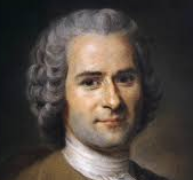
Visions are a feeble resource, you will say, against great adversity! Oh Sir, these visions may possibly have more reality than all those apparent goods about which men make so much ado, for they never bring a true feeling of happiness to the soul, and those who possess them are equally forced to project themselves into the future for want of finding enjoyments that satisfy them, in the present.
▼
Source
source
Second Dialogue; translated by Judith R. Bush, Christopher Kelly, Roger D. Masters

7 months 3 weeks ago
We are in hell and I will have my turn!
▼
Source
source
Inès warns Garcin and Estelle not to make love in her presence, Act 1, sc. 5

3 months 3 weeks ago
What we do need to worry about is the possibility that we will be reduced, in the face of the enormities of our time, to silence or to mere protest.
▼
Source
source
A Poem of Difficult Hope
6 months 1 week ago
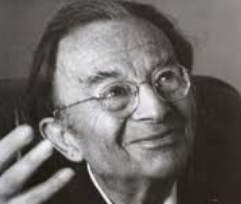
In erotic love, two people who were separate become one. In motherly love, two people who were one become separate. The mother must not only tolerate, she must wish and support the child's separation.
▼
Source
source
Ch. 2
4 months 2 weeks ago
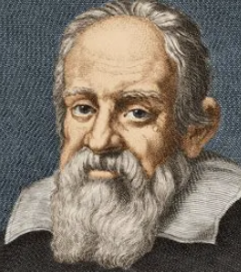
After the publication of my dialogues, I was summoned to Rome by the Congregation of the holy Office, where, being arrived on the 10th of February 1633, I was subjected to the infinite clemency of that tribunal, and of the Sovereign Pontiff, Urban the Eighth; who, notwithstanding, thought me deserving of his esteem.
▼
Source
source
pp. 145-146
6 months 3 weeks ago
Spirit: Do not be deceived by sophists and half philosophers; things do not appear to thee by means of any representatives. Of the thing that exists, and that can exist, thou art conscious immediately ; thou, thyself, art that of which thou art conscious. By a fundamental law of thy being thou art thus presented to thyself, and thrown out of thyself.
▼
Source
source
Jane Sinnett, trans 1846 p. 53

7 months 3 weeks ago
All the cruelty and torment of which the world is full is in fact merely the necessary result of the totality of the forms under which the will to live is objectified.
▼
Source
source
Vol. 2, Ch. 14, § 164
3 months 2 weeks ago
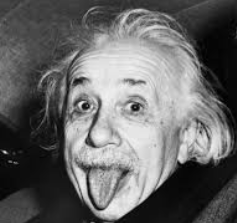
Everyone who is seriously involved in the pursuit of science becomes convinced that some spirit is manifest in the laws of the universe, one that is vastly superior to that of man.

7 months 3 weeks ago
The old often envy the young; when they do, they are apt to treat them cruelly.


7 months 3 weeks ago
Most kings and priests have been despotic, and all religions have been riddled with superstition.
▼
Source
source
Chapter 6 (pp. 52-53)
6 months 2 weeks ago
So we are always esthetically disappointed when the sensuous qualities and the intellectual properties of an object do not coalesce.
▼
Source
source
p. 7
8 months 3 weeks ago
When the throne of God is overturned, the rebel realizes that it is now his own responsibility to create the justice, order, and unity that he sought in vain within his own condition, and in this way to justify the fall of God. Then begins the desperate effort to create, at the price of crime and murder if necessary, the dominion of man.


3 months 3 weeks ago
He who has the most imagination should be regarded as having the most intelligence or genius, for all these words are synonymous...

8 months 1 week ago
There are some men who expose themselves to damnation so foolishly by avarice, by brutality, by debauches, by violence, by excesses, by blasphemies! ...it is always a great folly for a man to expose himself to damnation... He must despise desire and its kingdom, and aspire to that kingdom of love in which all the subjects breathe nothing but love, and desire nothing but the benefits of love.
3 months 3 weeks ago
We are not afraid to follow truth wherever it may lead, nor to tolerate any error so long as reason is left free to combat it.
▼
Source
source
Letter to William Roscoe
7 months 4 weeks ago
Look round this universe. What an immense profusion of beings, animated and organised, sensible and active! You admire this prodigious variety and fecundity. But inspect a little more narrowly these living existences, the only beings worth regarding. How hostile and destructive to each other! How insufficient all of them for their own happiness! How contemptible or odious to the spectator! The whole presents nothing but the idea of a blind Nature, impregnated by a great vivifying principle, and pouring forth from her lap, without discernment or parental care, her maimed and abortive children!
▼
Source
source
Philo to Cleanthes, Part XI
6 months 1 week ago
Though he made a joke when asked to do the right thing, he always did it. He was so much more in earnest than he appeared. He did not do himself justice.
▼
Source
source
On Henry John Temple, 3rd Viscount Palmerston, as quoted in Victorian England : Aspects of English and Imperial History, 1837-1901 (1973) by Lewis Charles Bernard Seaman, p. 108


5 months 3 weeks ago
Writing turned a spotlight on the high, dim Sierras of speech; writing was the visualization of acoustic space. It lit up the dark.
▼
Source
source
(p. 14)
6 months 4 days ago
Roughly speaking, rationality is concerned with the selection of preferred behavior alternatives in terms of some system of values, whereby the consequences of behavior can be evaluated.
▼
Source
source
p. 84.
3 months 3 weeks ago
Yes, boorish people do boorish things. What's strange or unheard-of about that? Isn't it yourself you should reproach-for not anticipating that they'd act this way?
▼
Source
source
(Hays translation) IX, 42
8 months 1 week ago
One of the principal reasons that diverts those who are entering upon this knowledge so much from the true path which they should follow, is the fancy that they take at the outset that good things are inaccessible, giving them the name great, lofty, elevated, sublime. This destroys everything. I would call them low, common, familiar: these names suit it better; I hate such inflated expressions.

6 months 2 days ago
Pure justice emerges from symmetry applied human life, and human beings as ends in themselves.

8 months 3 days ago
The middle sort of historians (of which the most part are) spoil all; they will chew our meat for us.
▼
Source
source
Book II, Ch. 10. Of Books
6 months 3 weeks ago
Tools arm the man. One can well say that man is capable of bringing forth a world; he lacks only the necessary apparatus, the corresponding armature of his sensory tools. The beginning is there. Thus the principle of a warship lies in the idea of the shipbuilder, who is able to incorporate this thought by making himself into a gigantic machine, as it were, through a mass of men and appropriate tools and materials. Thus the idea of a moment often required monstrous organs, monstrous masses of materials, and man is therefore a potential, if not an actual creator.
▼
Source
source
Fragment No. 88

7 months 3 weeks ago
We are not so absurd as to propose that the teacher should not set forth his own opinions as the true ones and exert his utmost powers to exhibit their truth in the strongest light. To abstain from this would be to nourish the worst intellectual habit of all, that of not finding, and not looking for, certainty in any teacher. But the teacher himself should not be held to any creed; nor should the question be whether his own opinions are the true ones, but whether he is well instructed in those of other people, and, in enforcing his own, states the arguments for all conflicting opinions fairly.
▼
Source
source
"Civilization," London and Westminster Review, April 1836
5 months 1 week ago
It cannot be doubted, I think, that Mr. Darwin has satisfactorily proved that what he terms selection, or selective modification, must occur, and does occur, in nature; and he has also proved to superfluity that such selection is competent to produce forms as distinct, structurally, as some genera even are. If the animated world presented us with none but structural differences, I should have no hesitation in saying that Mr. Darwin has demonstrated the existence of a true physical cause, amply competent to account for the origin of living species, and of man among the rest.
▼
Source
source
Ch.2, p. 126
8 months 3 days ago
Age imprints more wrinkles in the mind than it does on the face.
▼
Source
source
Book III, Ch. 2
8 months 2 weeks ago
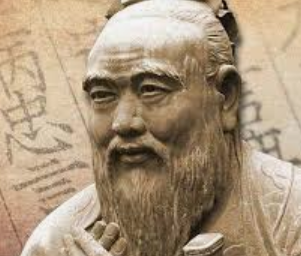
The Master said, "Hard is it to deal with him, who will stuff himself with food the whole day, without applying his mind to anything good! Are there not gamesters and chess players? To be one of these would still be better than doing nothing at all.

7 months 3 weeks ago
In how many churches, by how many prophets, tell me, is man made sensible that he is an infinite Soul; that the earth and heavens are passing into his mind; that he is drinking forever the soul of God?
▼
Source
source
p. 18
3 months 3 weeks ago
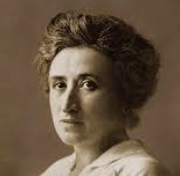
As the entire middle class, the bourgeois and petty bourgeois intelligentsia, boycotted the Soviet government for months after the October Revolution and crippled the railroad, post and telegraph, and educational and administrative apparatus, and, in this fashion, opposed the workers government, naturally all measures of pressure were exerted against it. These included the deprivation of political rights, of economic means of existence, etc., in order to break their resistance with an iron fist. It was precisely in this way that the socialist dictatorship expressed itself, for it cannot shrink from any use of force to secure or prevent certain measures involving the interests of the whole.

4 months 2 weeks ago
What I called the perplexed jungle of Paganism sprang, we may say, out of many roots: every admiration, adoration of a star or natural object, was a root or fibre of a root; but Hero-worship is the deepest root of all; the tap-root, from which in a great degree all the rest were nourished and grown.
5 months 4 weeks ago
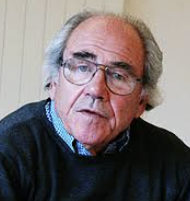
The discourse of truth is quite simply impossible. It eludes itself. Everything eludes itself, everything scoffs at its own truth, seduction renders everything elusive. The fury to unveil the truth, to get at the naked truth, the one which haunts all discourses of interpretation, the obscene rage to uncover the secret, is proportionate to the impossibility of ever achieving this. ...But this rage, this fury, only bears witness to the eternity of seduction and to the impossibility of mastering it.
▼
Source
source
(p. 73)
3 months 3 weeks ago
If...it be a thing external that causes thy grief, know, that it is not that properly that doth cause it, but thine own conceit and opinion concerning the thing: which thou mayest rid thyself of, when thou wilt.
▼
Source
source
VIII, 45
CivilSimian.com created by AxiomaticPanic, CivilSimian, Kalokagathia