

6 months 3 weeks ago
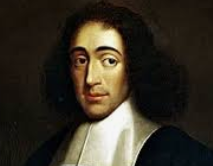
Nature offers nothing that can be called this man's rather than another's ; but, under nature, everything belongs to all - that is, they have authority to claim it for themselves. But, under dominion, where it is by common law determined what belongs to this man, and what to that, he is called just who has a constant will to render to every man his own, but he, unjust who strives, on the contrary, to make his own that which belongs to another.
▼
Source
source
Ch. 2, Of Natural Right

5 months 3 weeks ago
There are two things which a democratic people will always find very difficult-to begin a war and to end it.
▼
Source
source
Book Three, Chapter XXII.
6 months 3 weeks ago
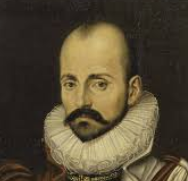
The ceaseless labour of your life is to build the house of death.
▼
Source
source
Book I, Ch. 20

6 months 2 weeks ago
The proper study of mankind is books.
▼
Source
source
Ch. XXVIII
6 months 1 week ago
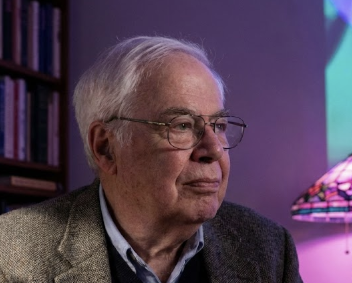
Citizens of a Jeffersonian democracy can be as religious or irreligious as they please as long as they are not "fanatical." That is, they must abandon or modify opinion on matters of ultimate importance, the opinions that may hitherto have given sense and point to their lives, if these opinions entail public actions that cannot be justified to most of their fellow citizens.
5 months 1 week ago
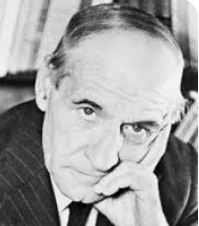
I know well that many of my readers do not think as I do. This also is most natural and confirms the theorem. For although my opinion turn out erroneous, there will always remain the fact that many of those dissentient readers have never given five minutes' thought to this complex matter. How are they going to think as I do? But by believing that they have a right to an opinion on the matter without previous effort to work one out for themselves, they prove patently that they belong to that absurd type of human being which I have called the "rebel mass." It is precisely what I mean by having one's soul obliterated, hermetically closed. Here it would be the special case of intellectual hermetism.
▼
Source
source
Chap. VIII: The Masses Intervene In Everything, And Why Their Intervention Is Solely By Violence

6 months 3 weeks ago
Mother love is stronger than the filth and scabbiness on a child, and so the love of God toward us is stronger than the dirt that clings to us.
▼
Source
source
94

4 months 2 weeks ago
The most difficult subjects can be explained to the most slow-witted man if he has not formed any idea of them already; but the simplest thing cannot be made clear to the most intelligent man if he is firmly persuaded that he knows already, without a shadow of doubt, what is laid before him.
▼
Source
source
Chapter III, Christianity Misunderstood by Believers

2 months 4 weeks ago
It is not sufficient to say, "God spake and it was so." For the natures of things that are created ought to harmonise with the commands of God. I will say more clearly what I mean. Did God ordain that fire should mount upwards by chance and earth sink down? Was it not necessary, in order that the ordinance of God should be fulfilled, for the former to be light and the latter to weigh heavy? And in the case of other things also this is equally true.
6 months 1 week ago
With a foolish man make no dispute.
3 months ago
If rational thought thinks itself out to a conclusion, it arrives at something non-rational which, nevertheless, is a necessity of thought. This is the paradox which dominates our spiritual life. If we try to get on without this non-rational element, there result views of the world and of life which have neither vitality nor value.

5 months 2 days ago
The freedom of the 'everyday mind' consists rather in not kneeling down in awe. Its mental attitude is better expressed as sitting unmoveable like an object.

6 months 2 weeks ago
I do not overlook the fact that there are irrationalists who love mankind, and that not all forms of irrationalism engender criminality. But I hold that he who teaches that not reason but love should rule opens up the way for those who rule by hate. (Socrates, I believe, saw something of this when he suggested that mistrust or hatred of argument is related to mistrust or hatred of man).
▼
Source
source
Vol. 2, Ch. 24 "Oracular Philosophy and the Revolt against Reason"

3 months 1 week ago
A great man shows his greatness by the way he treats little men.
4 months 2 weeks ago
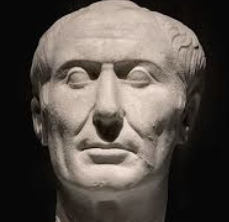
The loss which is unknown is no loss at all.
▼
Source
source
Maxim 38
5 months 3 weeks ago
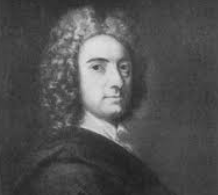
Abstract terms (however useful they may be in argument) should be discarded in meditation, and the mind should be fixed on the particular and the concrete, that is, on the things themselves.
▼
Source
source
Paragraph 4

5 months 2 weeks ago
At different degrees, everything is pathology, except for indifference.

3 months 3 weeks ago
The idea of a law of progress, or of an all but irresistible tendency to general improvement, is then merely a superstition, one of the tents of the modernist pseudo-religion of humanism. Even if such a law or tendency existed and were demonstrable, the liberal faith in progress would for Santayana be pernicious. For it leads to a corrupt habit of mind in which things are valued, not for their present excellence or perfection, but instrumentally, as leading to something better; and it insinuates into thought and feeling a sort of historical theodicy, in which past evil is justified as a means to present or future good. The idea of progress embodies a kind of time-worship (to adopt an expression used by Wyndham Lewis) in which the particularities of our world are seen and valued, not in themselves, but for what they might perhaps become, thereby leaving us destitute of the sense of the present and, at the same time, of the perspective of eternity.
▼
Source
source
'Santayana's Alternative' (p.67-8)
6 months 2 weeks ago
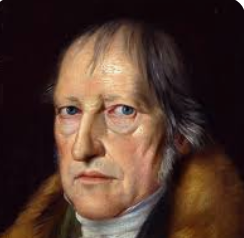
On the stage on which we are observing it, - Universal History - Spirit displays itself in its most concrete reality.

6 months 2 weeks ago
Money often costs too much.
▼
Source
source
Wealth
6 months 3 weeks ago
He that I am reading seems always to have the most force.
▼
Source
source
Book II, Ch. 12. Apology for Raimond Sebond
4 months 3 weeks ago
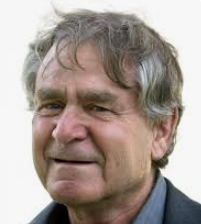
When land and its tillage are the basis of taxation, one need not care exactly how many people there are.
▼
Source
source
Chapter 12, Political Arithmetic, p. 103.
4 months 5 days ago
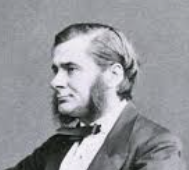
The improver of natural knowledge absolutely refuses to acknowledge authority, as such. For him, scepticism is the highest of duties; blind faith the one unpardonable sin. And it cannot be otherwise, for every great advance in natural knowledge has involved the absolute rejection of authority, the cherishing of the keenest scepticism, the annihilation of the spirit of blind faith; and the most ardent votary of science holds his firmest convictions, not because the men he most venerates hold them; not because their verity is testified by portents and wonders; but because his experience teaches him that whenever he chooses to bring these convictions into contact with their primary source, Nature - whenever he thinks fit to test them by appealing to experiment and to observation - Nature will confirm them. The man of science has learned to believe in justification, not by faith, but by verification. On the advisableness of improving natural knowledge
▼
Source
source
1866
4 months 2 weeks ago
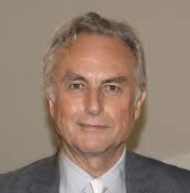
The second requirement of a virus-friendly environment - that it should obey a program of coded instructions - is again only quantitatively less true for brains than for cells or computers. We sometimes obey orders from one another, but also we sometimes don't. Nevertheless, it is a telling fact that, the world over, the vast majority of children follow the religion of their parents rather than any of the other available religions. Instructions to genuflect, to bow towards Mecca, to nod one's head rhythmically towards the wall, to shake like a maniac, to "speak in tongues" - the list of such arbitrary and pointless motor patterns offered by religion alone is extensive - are obeyed, if not slavishly, at least with some reasonably high statistical probability.
5 months 1 week ago
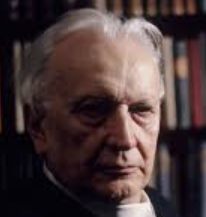
We cannot avoid conflict, conflict with society, other individuals and with oneself. Conflicts may be the sources of defeat, lost life and a limitation of our potentiality but they may also lead to greater depth of living and the birth of more far-reaching unities, which flourish in the tensions that engender them.
▼
Source
source
As quoted in Turning Conflict Into Profit : A Roadmap for Resolving Personal and Organizational Disputes (2005) by Larry Axelrod and Rowland Johnson
5 months 2 weeks ago
Boredom is connected naturally with time, with the horror of time, with the experience and the consciousness of time. Those who are not aware of time do not become bored. Basically life is only possible if one is not aware of time. If one should happen to want to experience consciously one of those moments that pass, one would be lost; life would become unbearable.
6 months 2 weeks ago
Don't say things. What you are stands over you the while, and thunders so that I cannot hear what you say to the contrary.
▼
Source
source
Social Aims; sometimes condensed to "What you do speaks so loud that I cannot hear what you say."
2 months 2 weeks ago
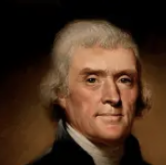
To the existence of banks of discount for cash... there can be no objection, because there can be no danger of abuse, and they are a convenience both to merchants and individuals. I think they should even be encouraged, by allowing them a larger than legal interest on short discounts, and tapering thence, in proportion as the term of discount is lengthened, down to legal interest on those of a year or more. Even banks of deposit, where cash should be lodged, and a paper acknowledgment taken out as its representative, entitled to a return of the cash on demand, would be convenient for remittances, travelling persons, etc. But, liable as its cash would be to be pilfered and robbed, and its paper to be fraudulently re-issued, or issued without deposit, it would require skilful and strict regulation.
▼
Source
source
ME 13:431

2 months 2 weeks ago
The essence of liberalism is negotiation, a cautious half measure, in the hope that the definitive dispute, the decisive bloody battle, can be transformed into a parliamentary debate and permit the decision to be suspended forever in an everlasting discussion.
3 months 3 weeks ago
Near-ubiquitous technological monitoring is a consequence of the decline of cohesive societies that has occurred alongside the rising demand for individual freedom.
▼
Source
source
In the Puppet Theatre: An Iron Mountain and a Shifting Spectacle (p. 121)
5 months 2 weeks ago
But the extraordinary insight which some persons are able to gain of others from indications so slight that it is difficult to ascertain what they are, is certainly rendered more comprehensible by the view here taken.
5 months 2 weeks ago
When people come to me saying they want to kill themselves, I tell them, "What's your rush? You can kill yourself any time you like. So calm down. Suicide is a positive act." And they do calm down.

6 months 2 weeks ago
But more correctly: The fact that I use the word "hand" and all the other words in my sentence without a second thought, indeed that I should stand before the abyss if I wanted so much as to try doubting their meanings - shows that absence of doubt belongs to the essence of the language-game, that the question "How do I know..." drags out the language-game, or else does away with it.

7 months 5 days ago
For if a thing is not diminished by being shared with others, it is not rightly owned if it is only owned and not shared.
▼
Source
source
1:1:1 English Latin Latin: Omnis enim res quae dando non deficit, dum habetur et non datur, nondum habetur quomodo habenda est.
6 months 1 week ago
This to the right, that to the left hand strays, and all are wrong, but wrong in different ways.
▼
Source
source
Book II, satire iii, line 50 (trans. Conington)
6 months 2 weeks ago
Liberty, as we all know, cannot flourish in a country that is permanently on a war footing, or even a near war footing. Permanent crisis justifies permanent control of everybody and everything by the agencies of central government.
▼
Source
source
Chapter 1 (p. 14)

6 months 2 weeks ago
Money is a crystal formed of necessity in the course of the exchanges, whereby different products of labour are practically equated to one another and thus by practice converted into commodities.
▼
Source
source
Vol. I, Ch. 2, pg. 99.
2 months 2 weeks ago
Those distinct substances, which concretes generally either afford, or are made up of, may, without very much inconvenience, be called the elements or principles of them.
▼
Source
source
Proposition IV
5 months 2 weeks ago
Nothing surpasses the pleasures of idleness: even if the end of the world were to come, I would not leave my bed at an ungodly hour.
3 months ago
We witness a strange inversion: on the one hand, the endeavor to turn the social contract into a less calculating and more feeling connection among its members; on the other hand, the endeavor to turn the erotic relationship into a contractual one.
▼
Source
source
p. 15.
4 months 2 weeks ago
If wine is to withdraw its most poetic countenance, the sun of the white dinner-cloth, a deity to be invoked by two or three, all fervent, hushing their talk, degusting tenderly, and storing reminiscences-for a bottle of good wine, like a good act, shines ever in the retrospect-if wine is to desert us, go thy ways, old Jack!
▼
Source
source
Pt. I, ch. III
6 months 2 weeks ago
Deconstruction never had meaning or interest, at least in my eyes, than as a radicalization, that is to say, also within the tradition of a certain Marxism, in a certain spirit of Marxism.
▼
Source
source
Specters of Marx. Routledge, 1994. p. 115
6 months 3 weeks ago
Every thing in the world is purchased by labour.
▼
Source
source
Part II, Essay 1: Of Commerce
5 months 1 week ago
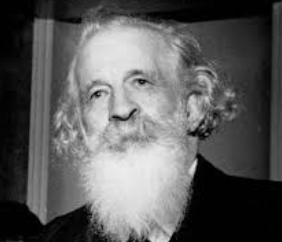
To disappear into deep water or to disappear toward a far horizon, to become part of depth of infinity, such is the destiny of man that finds its image in the destiny of water.
▼
Source
source
Introduction
6 months 2 weeks ago
The problems are dissolved in the actual sense of the word - like a lump of sugar in water.
▼
Source
source
Ch. 9 : Philosophy, p. 183
7 months 1 week ago
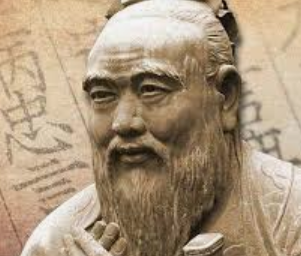
Virtue (or the man of virtue) is not left to stand alone. He who practices it will have neighbors.
4 months 1 week ago
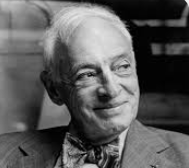
There is simply too much to think about. It is hopeless - too many kinds of special preparation are required. In electronics, in economics, in social analysis, in history, in psychology, in international politics, most of us are, given the oceanic proliferating complexity of things, paralyzed by the very suggestion that we assume responsibility for so much. This is what makes packaged opinion so attractive.
▼
Source
source
There Is Simply Too Much to Think About (1992), pp. 173-174
3 months 1 week ago
We shall either learn to know a Hero, a true Governor and Captain, somewhat better, when we see him; or else go on to be forever governed by the Unheroic;-had we ballot-boxes clattering at every street-corner, there were no remedy in these.
CivilSimian.com created by AxiomaticPanic, CivilSimian, Kalokagathia