


4 months 2 weeks ago
In all European countries, especially in England, one class of Captains and commanders of men, recognizable as the beginning of a new real and not imaginary "Aristocracy," has already in some measure developed itself: the Captains of Industry;-happily the class who above all, or at least first of all, are wanted in this time. In the doing of material work, we have already men among us that can command bodies of men. And surely, on the other hand, there is no lack of men needing to be commanded: the sad class of brother-men whom we had to describe as "Hodge's emancipated horses," reduced to roving famine,-this too has in all countries developed itself; and, in fatal geometrical progression, is ever more developing itself, with a rapidity which alarms every one. On this ground, if not on all manner of other grounds, it may be truly said, the "Organization of Labor" (not organizable by the mad methods tried hitherto) is the universal vital Problem of the world.

8 months 3 days ago
In my opinion, all things in nature occur mathematically.
▼
Source
source
Sources: Correspondence with Mersenne note for line 7 (1640), page 36, Die Wiener Zeit page 532 (2008); StackExchange Math Q/A Where did Descartes write...
7 months 4 weeks ago
Thus there is nothing waste, nothing dead in the universe; no chaos, no confusions, save in appearence. We might compare this to the appearence of a pond in the distance, where we can see the confused movement and swarming of the fish, without distinguishing the fish themselves.Thus we are that each living body has a dominante entelechy, which in case of an animal is the soul, but the members of this living body are full of other living things, plants and animals, of which each has in turn ita dominant entelechy or soul.
▼
Source
source
Monadology (69-70).

4 months 3 weeks ago
Even when labor is subjugated by capital it always necessarily maintains its own autonomy, and this ever more clearly true today with respect to the new immaterial, cooperative and collaborative forms of labor. This relationship is not isolated to the economic terrain but, as we will argue later, spills over into the biopolitical terrain of society as a hole, including military conflicts. In any case, we should recognize here that even in asymmetrical conflicts victory in terms of complete domination is not possible. All that can be achieved is a provisional and limited maintenance of control and order that must constantly be policed and preserved. Counterinsurgency is a full-time job.
▼
Source
source
54



6 months 3 weeks ago
This morning I thought, hence lost my bearings, for a good quarter of an hour.

7 months 3 weeks ago
Of the evils most liable to attend on any sort of early proficiency, and which often fatally blights its promise, my father most anxiously guarded against. This was self-conceit. He kept me, with extreme vigilance, out of the way of hearing myself praised, or of being led to make self-flattering comparisons between myself and others. From his own intercourse with me I could derive none but a very humble opinion of myself; and the standard of comparison he always held up to me, was not what other people did, but what a man could and ought to do. He completely succeeded in preserving me from the sort of influences he so much dreaded. I was not at all aware that my attainments were anything unusual at my age.
▼
Source
source
(pp. 32-33)
6 months 3 weeks ago
I seem to myself, among civilised men, an intruder, a troglodyte enamored of decrepitude, plunged into subversive prayers.

5 months 3 weeks ago
Is not the reason of the confidence of the positive, critical, experimental scientists, and of the reverent attitude of the crowd towards their doctrines, still the same? At first it seems strange how the theory of evolution (which, like the redemption in theology, serves the majority as a popular expression of the whole new creed) can justify people in their injustice, and it seems as if the scientific theory dealt only with facts and did nothing but observe facts. But that only seems so. It seemed just the same in the case of theological doctrine: theology, it seemed, was only occupied with dogmas and had no relation to people's lives, and it seemed the same with regard to philosophy, which appeared to be occupied solely with transcendental reasonings. But that only seemed so. It was just the same with the Hegelian doctrine on a large scale and with the particular case of the Malthusian teaching.
6 months 2 weeks ago
Never since the heroic days of Greece has the world had such a sweet, just, boyish master.
▼
Source
source
"The British Character"

3 months 3 weeks ago
There is no man so fortunate that there shall not be by him when he is dying some who are pleased with what is going to happen. Suppose that he was a good and a wise man, will there not be at least some one to say to himself, Let us at last breathe freely, being relieved from this schoolmaster? It is true that he was harsh to none of us, but I perceive that he tacitly condemns us.-This is what is said of a good man. But in our own case how many other things are there for which there are many who wish to get rid of us.
▼
Source
source
X, 36

6 months 1 week ago
School children and students who love God should never say: "For my part I like mathematics"; "I like French"; "I like Greek." They should learn to like all these subjects, because all of them develop that faculty of attention which, directed toward God, is the very substance of prayer.

7 months 3 weeks ago
At least two thirds of our miseries spring from human stupidity, human malice, and those great motivators and justifiers of malice and stupidity, idealism, dogmatism and proselytizing zeal on behalf of religious or political idols.
▼
Source
source
Tomorrow and Tomorrow and Tomorrow, 1952

5 months 3 weeks ago
If you want to do evil, science provides the most powerful weapons to do evil; but equally, if you want to do good, science puts into your hands the most powerful tools to do so. The trick is to want the right things, then science will provide you with the most effective methods of achieving them.
6 months 3 weeks ago
Dead of night. No one, nothing but the society of the moments. Each pretends to keep us company, then escapes - desertion after desertion.
3 months 3 weeks ago
Every man worthy of being called a son of man bears his cross and mounts his Golgotha. Many, indeed most, reach the first or second step, collapse pantingly in the middle of the journey, and do not attain the summit of Golgotha, in other words the summit of their duty: to be crucified, resurrected, and to save theirs souls. Afraid of crucifixion, they grow fainthearted; they do not know that the cross is the only path to resurrection. There is no other path.
▼
Source
source
Author's Introduction, p. 15
5 months 3 weeks ago
The universal hypocrisy has so entered into the flesh and blood of all classes of our modern society, it has reached such a pitch that nothing in that way can rouse indignation. Hypocrisy in the Greek means "acting," and acting-playing a part-is always possible. Chapter XII, Conclusion-Repent Ye, for the Kingdom of Heaven is at Hand Variant Translation: Hypocrisy with good reason means the same as acting, and anybody can pretend - act a part.
7 months 3 weeks ago
Being happy involves both a certain achievement in action and a rational assurance about the outcome.
▼
Source
source
Chapter IX, Section 83, p. 549

3 months 3 weeks ago
When we reflect, that the Inquisition, by its restrictions, and authority, would have prevented the French revolution,-it is hard to say, whether the Sovereign, who, wholly, and without reserve, gave up this instrument, would not, in reality, be doing an injury to humanity.
▼
Source
source
p. 31
3 months 3 weeks ago
Evil does not approach us as pride any more, but on the contrary as slumber, lassitude, concealment of the "I." ... It may make us so quickly contented, that any definitive fire will die down. The venomous, breathtaking frigid mist seems able ... to harden hearts and fill them with envy, obduracy and resentment, with bloody scorn for the divine image and light, with all the causes of the only true original sin, which is not wanting to be like God.
▼
Source
source
p. 62
6 months 3 weeks ago
It is so by nature that the plant will develop with regularity, that the animal will move purposefully, and that human beings will think. Why should I take exception to recognizing also the last as the expression of an original force of nature, as I do the first and the second?
▼
Source
source
P. Preuss, trans. (1987), p. 11
5 months 2 weeks ago
The ethical life... is maintained in being by a common culture, which also upholds the togetherness of society... Unlike the modern youth culture, a common culture sanctifies the adult state, to which it offers rites of passage.
▼
Source
source
"Idle Hands" (p. 127)

5 months 3 weeks ago
I am not a "culture critic" because I am not in any way interested in classifying cultural forms. I am a metaphysician, interested in the life of the forms and their surprising modalities. That is why I have no interest in the academic world.
▼
Source
source
Letters of Marshall McLuhan (1987), p. 413

6 months 5 days ago
What makes our poetry so contemptible nowadays is its paucity of ideas. If you want to be read, invent. Who the Devil wouldn't like to read something new?
▼
Source
source
D 62

7 months 2 days ago
The proximity between the counterfeit and the good coin does not make the good coin counterfeit nor the counterfeit good. In the same way the proximity between truth and falsehood does not make truth falsehood nor falsehood truth.
▼
Source
source
III. The Classes of Seekers, p. 33.
6 months 1 week ago
Males learn to lie as a way of obtaining power, and females not only do the same but they also lie to pretend powerlessness.
▼
Source
source
Chapter 3, pg. 59
5 months 3 weeks ago
Environments are not just containers, but are processes that change the content totally.
▼
Source
source
American scholar, Volume 35, 1965, p. 200

6 months 1 week ago
Women dream till they have no longer the strength to dream; those dreams against which they so struggle, so honestly, vigorously, and conscientiously, and so in vain, yet which are their life, without which they could not have lived; those dreams go at last. All their plans and visions seem vanished, and they know not where; gone, and they cannot recall them. They do not even remember them. And they are left without the food of reality or of hope. Later in life, they neither desire nor dream, neither of activity, nor of love, nor of intellect. The last often survives the longest. They wish, if their experiences would benefit anybody, to give them to someone. But they never find an hour free in which to collect their thoughts, and so discouragement becomes ever deeper and deeper, and they less and less capable of undertaking anything.
7 months 4 weeks ago
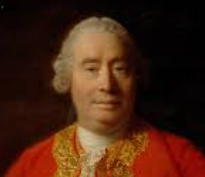
Morals excite passions, and produce or prevent actions. Reason of itself is utterly impotent in this particular. The rules of morality, therefore, are not conclusions of our reason.
▼
Source
source
Part 1, Section 1
7 months ago
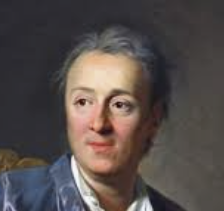
Go further, and require each of them to make a contribution: you will see how many things are still missing, and you will be obliged to get the assistance of a large number of men who belong to different classes, priceless men, but to whom the gates of the academies are nonetheless closed because of their social station. All the members of these learned societies are more than is needed for a single object of human science; all the societies together are not sufficient for a science of man in general.
▼
Source
source
Article on Encyclopedia

7 months 3 weeks ago
From each according to his abilities, to each according to his needs.
▼
Source
source
The Criticism of the Gotha Program (1875) Variant translation: From each according to his ability, to each according to his need.
4 months 4 days ago
To ascend to the origin of things and speculate on the creation, is not the business of the natural philosopher. An humbler field is sufficient for him in the endeavor to discover, as far as our faculties will permit; what are these primary qualities impressed on matter, and to discover the spirit of the laws of nature

7 months 3 weeks ago
There are many things of which a wise man might wish to be ignorant.
▼
Source
source
Demonology
8 months 3 weeks ago
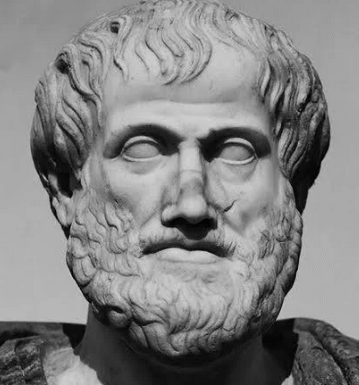
The refined and active, on the other hand, prefer honour, which I suppose may be said to be the end of the political life. Yet honour is plainly too superficial to be the object of our search, because it appears to depend rather on those who give than on those who receive it, whereas we feel instinctively that the good must be something proper to a man, which cannot easily be taken from him.
6 months 2 weeks ago
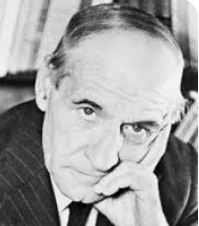
The direction of society has been taken over by a type of man who is not interested in the principles of civilisation. Not of this or that civilisation but - from what we can judge to-day - of any civilisation. ...The type of man dominant to-day is a primitive one, a Naturmensch rising up in the midst of a civilised world.
▼
Source
source
Chap.IX: The Primitive and the Technical

7 months 3 weeks ago
There are uncertain truths - even true statements that we may take to be false - but there are no uncertain certainties. Since we can never know anything for sure, it is simply not worth searching for certainty; but it is well worth searching for truth; and we do this chiefly by searching for mistakes, so that we have to correct them.

6 months 1 week ago
And neither ought we to be surprised by the affirmation that the consciousness of the Universe is composed and integrated by the consciousnesses of the beings which form the Universe, by the consciousnesses of all the beings that exist, and that nevertheless it remains a personal consciousness distinct from those which compose it. Only thus is it possible to understand how in God we live, move, and have our being.
4 months 3 weeks ago
We are by no means opposed to the globalization of relationships as such-in fact, as we said, the strongest forces of Leftist internationalism have effectively led this process. The enemy, rather, is a specific regime of global relations that we call Empire.
▼
Source
source
45-46
5 months 1 week ago
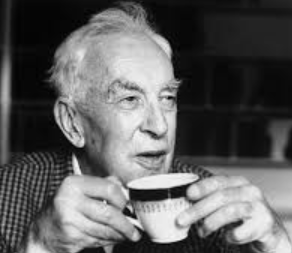
Compassion is the desire that moves the individual self to widen the scope of its self-concern to embrace the whole of the universal self.
▼
Source
source
The Toynbee-Ikeda Dialogue: Man Himself Must Choose
7 months 2 days ago
If man's love for himself be necessary, then his love for Him through whom, first his coming-to-be, and second, his continuance in his essential being with all his inward and outward traits, his substance and his accidents, occur must also be necessary. Whoever is so besotted by his fleshy appetites as to lack this love neglects his Lord and Creator. He possesses no authentic knowledge of Him; his gaze is limited to his cravings and to things of sense.
▼
Source
source
Al-Ghazali on Love, Longing, Intimacy & Contentment, Translated with an introduction and notes by Eric Ormsby. Cambridge: The Islamic Texts Society (2011), p. 25.

7 months 3 weeks ago
The fundamental concept in social science is Power, in the same sense in which Energy is the fundamental concept in physics.
▼
Source
source
Ch. 1: The Impulse to Power
3 months 3 weeks ago
Nothing has such power to broaden the mind as the ability to investigate systematically and truly all that comes under thy observation in life.
▼
Source
source
III, 11
7 months 3 weeks ago
We plant trees, we build stone houses, we redeem the waste, we make prospective laws, we found colleges and hospitals, for remote generations.
6 months 1 week ago
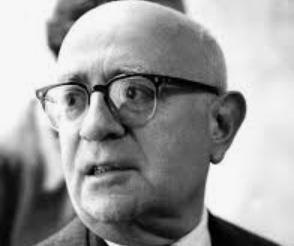
If philosophy is still necessary, it is so only in the way it has been from time immemorial: as critique, as resistance to the expanding heteronomy, even if only as thought's powerless attempt to remain its own master and to convict of untruth, by their own criteria, both a fabricated mythology and a conniving, resigned acquiescence. ... It is incumbent upon philosophy ... to provide a refuge for freedom. Not that there is any hope that it could break the political tendencies that are throttling freedom throughout the world both from within and without and whose violence permeates the very fabric of philosophical argumentation.
▼
Source
source
p. 10
7 months 3 weeks ago
The true Enlightenment thinker, the true rationalist, never wants to talk anyone into anything. No, he does not even want to convince; all the time he is aware that he may be wrong. Above all, he values the intellectual independence of others too highly to want to convince them in important matters. He would much rather invite contradiction, preferably in the form of rational and disciplined criticism. He seeks not to convince but to arouse - to challenge others to form free opinions.
6 months 3 weeks ago
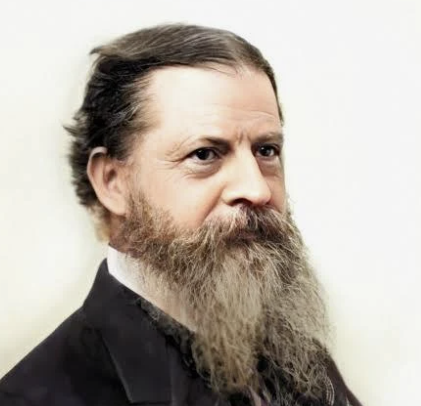
Unless man have a natural bent in accordance with nature's, he has no chance of understanding nature at all.
▼
Source
source
IV
3 months 3 weeks ago
As for others whose lives are not so ordered, he reminds himself constantly of the characters they exhibit daily and nightly at home and abroad, and of the sort of society they frequent; and the approval of such men, who do not even stand well in their own eyes has no value for him.
▼
Source
source
III. 4, trans. Maxwell Staniforth
7 months 1 week ago
Assist a man in raising a burden; but do not assist him in laying it down.
▼
Source
source
Symbol 11
5 months 3 weeks ago
Well, Prince, so Genoa and Lucca are now just family estates of the Buonapartes. But I warn you, if you don't tell me that this means war, if you still try to defend the infamies and horrors perpetrated by that Antichrist-I really believe he is Antichrist-I will have nothing more to do with you and you are no longer my friend, no longer my 'faithful slave,' as you call yourself! But how do you do? I see I have frightened you-sit down and tell me all the news.
▼
Source
source
Bk. I, Ch. I

CivilSimian.com created by AxiomaticPanic, CivilSimian, Kalokagathia