




8 months 1 week ago
Although I consider our political world to be the best of which we have any historical knowledge, we should beware of attributing this fact to democracy or to freedom. Freedom is not a supplier who delivers goods to our door. Democracy does not ensure that anything is accomplished - certainly not an economic miracle. It is wrong and dangerous to extol freedom by telling people that they will certainly be all right once they are free. How someone fares in life is largely a matter of luck or grace, and to a comparatively small degree perhaps also of competence, diligence, and other virtues. The most we can say of democracy or freedom is that they give our personal abilities a little more influence on our well-being.

5 months 1 day ago
The seeing eye! It is this that discloses the inner harmony of things; what Nature meant, what musical idea Nature has wrapped up in these often rough embodiments. Something she did mean. To the seeing eye that something were discernible. Are they base, miserable things? You can laugh over them, you can weep over them; you can in some way or other genially relate yourself to them; - you can, at lowest, hold your peace about them, turn away your own and others' face from them, till the hour come for practically exterminating and extinguishing them!

8 months 1 week ago
There is an artist imprisoned in each one of us. Let him loose to spread joy everywhere.
▼
Source
source
Last Essay: "1967"
8 months 1 week ago
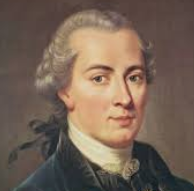
What alone has value is the use to which life is put and the end to which it is directed. The value of life has to be created by man, it cannot be obtained through luck but only through wisdom. He who is anxiously concerned over losing his life will never enjoy life.
▼
Source
source
Kant, Immanuel (1996), pages 141

4 months 1 week ago
I'm constantly amazed by how easily we love ourselves above all others, yet we put more stock in the opinions of others than in our own estimation of self....How much credence we give to the opinions our peers have of us and how little to our very own!
▼
Source
source
XII. 4:160
7 months 1 week ago
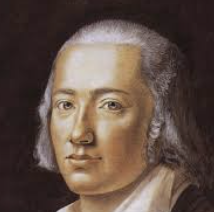
The earth with yellow pears And overgrown with roses wild Upon the pond is bent, And swans divine, With kisses drunk You drop your heads In the sublimely sobering water. But where, with winter come, am I To find, alas, the floweres, and where The sunshine And the shadow of the world? Cold the walls stand And the wordless, in the wind The weathercocks are rattling.
▼
Source
source
"Halves of Life"
8 months 1 week ago
We have, in fact, two kinds of morality side by side; one which we preach but do not practise, and another which we practise but seldom preach.
▼
Source
source
Ch. 8: Eastern and Western Ideals of Happiness
6 months 3 weeks ago
The concept of positivity in itself, in abstracto, has become part and parcel of the ideology today. ... Critique has started to become suspect, regardless of its content.
▼
Source
source
p. 23

6 months 3 weeks ago
In the study of ideas, it is necessary to remember that insistence on hard-headed clarity issues from sentimental feeling, as if it were a mist, cloaking the perplexities of fact. Insistence on clarity at all costs is based on sheer superstition as to the mode in which human intelligence functions. Our reasoning grasps at straws for premises and floats on gossamer for deductions.
▼
Source
source
p. 91.
7 months 1 week ago
All law relations are determined by this principle: each one must restrict his freedom by the possibility of the freedom of the other. ... My freedom is limited by the freedom of the other only on condition that he limits his freedom by the conception of mine. Otherwise he is lawless. Hence, if a law-relation is to result from my cognition of the other, the cognition and the consequent limitation of freedom must have been mutual. All law-relation between persons is, therefore, conditioned by their mutual cognition of each other, and is, at the same time, completely determined thereby.
▼
Source
source
P. 173-175
7 months 3 days ago
We suppose, it would seem, that concepts grow in the individual mind like leaves on a tree, and we think to discover their nature by studying their growth; we seek to define them psychologically, in terms of the human mind. But this account makes everything subjective, and if we follow it through to the end, does away with truth. What is known as the history of concepts is really a history either of our knowledge of concepts or of the meanings of words.
▼
Source
source
Translation J. L. Austin (Oxford, 1950) as quoted by Stephen Toulmin, Human Understanding: The Collective Use and Evolution of Concepts (1972) Vol. 1, p. 56.

8 months 1 day ago
Let us consider first the view that it is always wrong to take an innocent human life. We may call this the "sanctity of life" view. People who take this view oppose abortion and euthanasia. They do not usually, however, oppose the killing of nonhuman animals-so perhaps it would be more accurate to describe this view as the "sanctity of human life" view. The belief that human life, and only human life, is sacrosanct is a form of speciesism.
▼
Source
source
Ch. 1: All Animals Are Equal
4 months 3 weeks ago
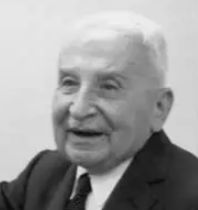
All rational action is economic. All economic activity is rational action. All rational action is in the first place individual action. Only the individual thinks. Only the individual reasons. Only the individual acts.
▼
Source
source
Part II : The Economics of a Socialist Community, § I : The Economics of an Isolated Socialist Community, Ch. 5 : The Nature of Economic Activity, p. 97
5 months 1 day ago
These things, which we state lightly enough here, are yet of deep import, and indicate a mighty change in our whole manner of existence. For the same habit regulates not our modes of action alone, but our modes of thought and feeling. Men are grown mechanical in head and in heart, as well as in hand. They have lost faith in individual endeavour, and in natural force, of any kind. Not for internal perfection, but for external combinations and arrangements, for institutions, constitutions, for Mechanism of one sort or other, do they hope and struggle. Their whole efforts, attachments, opinions, turn on mechanism, and are of a mechanical character.
5 months ago
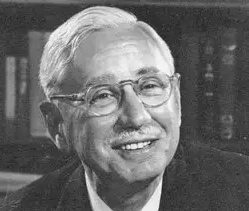
The principle of the family was mutual aid; but the principle of society is competition, the struggle for existence, the elimination of the weak and the survival of the strong.
▼
Source
source
Ch. 2 : On Youth

6 months 3 weeks ago
There are pretenses which are very sincere, and marriage is their school.
▼
Source
source
Tres novelas ejemplares y un prólogo [Three Exemplary Novels and a Prologue] (1920); Two Mothers

8 months 1 week ago
When the husk gets separated from the kernel, almost all men run after the husk and pay their respects to that. It is only the husk of Christianity that is so bruited and wide spread in this world; the kernel is still the very least and rarest of all things. There is not a single church founded on it.
4 months 1 week ago
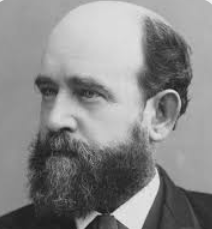
The intelligence required for the solving of social problems is not a thing of the mere intellect. It must be animated with the religious sentiment and warm with sympathy for human suffering. It must stretch out beyond self-interest, whether it be the self-interest of the few or of the many. It must seek justice. For at the bottom of every social problem we will find a social wrong.
▼
Source
source
Ch. 1 : The Increasing Importance of Social Questions
8 months 1 week ago
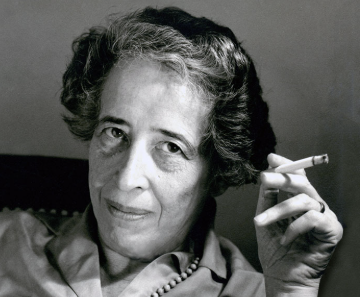
Revolutionaries do not make revolutions! The revolutionaries are those who know when power is lying in the street and when they can pick it up. Armed uprising by itself has never yet led to revolution.
▼
Source
source
"Thoughts on Politics and Revolution: A Commentary"
8 months 1 week ago
I am sorry to say that at the moment I am so busy as to be convinced that life has no meaning whatever... I do not see that we can judge what would be the result of the discovery of truth, since none has hitherto been discovered.
▼
Source
source
Letter to Will Durant, 20 June, 1931

8 months 6 days ago
One age misunderstands another; and a petty age misunderstands all the others in its own ugly way.
▼
Source
source
p. 98e
4 months 6 days ago
And first the Doctrine that all their Theory is grounded on, seems to me Inevident and undemonstrated, not to say precarious.

6 months 1 week ago
Pierre, who from the moment Prince Andrew entered the room had watched him with glad, affectionate eyes, now came up and took his arm. Before he looked round Prince Andrew frowned again, expressing his annoyance with whoever was touching his arm, but when he saw Pierre's beaming face he gave him an unexpectedly kind and pleasant smile. "There now!... So you, too, are in the great world?" said he to Pierre. "I knew you would be here," replied Pierre. "I will come to supper with you. May I?" he added in a low voice so as not to disturb the vicomte who was continuing his story. "No, impossible!" said Prince Andrew, laughing and pressing Pierre's hand to show that there was no need to ask the question. He wished to say something more, but at that moment Prince Vasíli and his daughter got up to go and the two young men rose to let them pass.
▼
Source
source
Bk. I, Ch. IV
4 months 1 week ago
I have often thought that nothing would do more extensive good at small expense than the establishment of a small circulating library in every county, to consist of a few well-chosen books, to be lent to the people of the country under regulations as would secure their safe return in due time.
▼
Source
source
Letter to John Wyche


7 months 3 days ago
By MANNERS, I mean not here Decency of behaviour; as how one man should salute another, or how a man should wash his mouth, or pick his teeth before company, and such other points of the Small Morals; But those qualities of mankind that concern their living together in Peace and Unity. To which end we are to consider that the Felicity of this life consisteth not in the repose of a mind satisfied. For there is no such Finis ultimus (utmost aim) nor Summum Bonum (greatest good) as is spoken of in the books of the old Moral Philosophers. Nor can a man any more live whose desires are at an end than he whose Senses and Imaginations are at a stand.
▼
Source
source
The First Part, Chapter 11, p. 47
6 months 3 weeks ago
Not by way of reason, but only by way of love and suffering, do we come to the living God, the human God. Reason rather separates us from Him. We cannot first know Him in order that afterward we may love Him; we must begin by loving Him, longing for Him, hungering after Him, before knowing Him. The knowledge of God proceeds from the love of God, and this love has little or nothing of the rational in it. For God is indefinable. To seek to define Him is to seek to confine Him within the limits of our mind - that is to say, to kill Him. In so far as we attempt to define Him, there rises up before us - Nothingness.
7 months 1 week ago
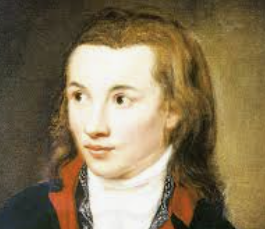
To romanticize the world is to make us aware of the magic, mystery and wonder of the world; it is to educate the senses to see the ordinary as extraordinary, the familiar as strange, the mundane as sacred, the finite as infinite.
▼
Source
source
As quoted in "Bildung in Early German Romanticism" by Frederick C. Beiser, in Philosophers on Education : Historical Perspectives (1998) by Amélie Rorty, p. 294
6 months 3 weeks ago
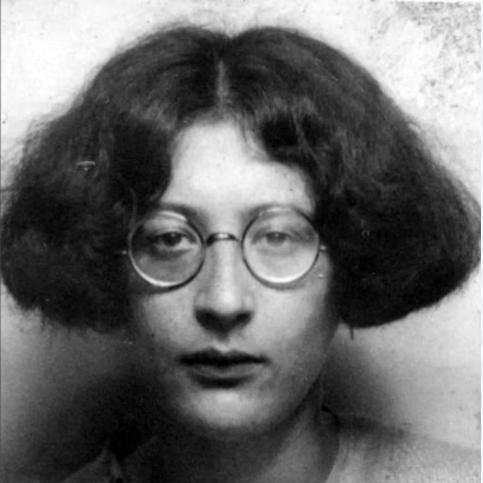
It is not in a person's nature to desire what he already has. Desire is a tendency, the start of a movement toward something, toward a point from which one is absent. If, at the very outset, this movement doubles back on itself toward its point of departure, a person turns round and round like a squirrel in a cage or a prisoner in a condemned cell. Constant turning soon produces revulsion. All workers, especially though not exclusively those who work under inhumane conditions, are easily the victims of revulsion, exhaustion and disgust and the strongest are often the worst affected.
▼
Source
source
p. 245
6 months 3 weeks ago
There can be no freedom in the large sense of the word, no harmonious development, so long as mercenary and commercial considerations play an important part in the determination of personal conduct.
9 months ago
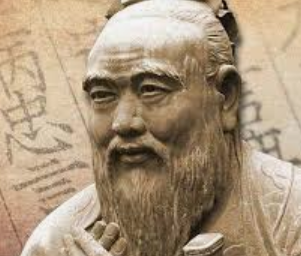
The superior man thinks of virtue; the small man thinks of comfort. The superior man thinks of the sanctions of law; the small man thinks of favors which he may receive.

7 months 6 days ago
Once we reject lyricism, to blacken a page becomes an ordeal: what's the use of writing in order to say exactly what we had to say?
5 months 1 day ago
"Normal science" means research firmly based upon one or more past scientific achievements, achievements that some particular scientific community acknowledges for a time as supplying the foundation for its further practice.
▼
Source
source
p. 10
6 months 1 week ago
Despite the fact that the doctors treated him, bled him, and gave him medicines to drink, he recovered.
▼
Source
source
[sometimes quoted as "Though the doctors treated him, let his blood, and gave him medications to drink, he nevertheless recovered."] Bk. XV, ch. 12

5 months 1 day ago
In the development of any science, the first received paradigm is usually felt to account quite successfully for most of the observations and experiments easily accessible to that science's practitioners. Further development, therefore, ordinarily calls for the construction of elaborate equipment, the development of an esoteric vocabulary and skills, and a refinement of concepts that increasingly lessens their resemblance to their usual common-sense prototypes. That professionalization leads, on the one hand, to an immense restriction of the scientist's vision and to a considerable resistance to paradigm change. The science has become increasingly rigid. On the other hand, within those areas to which the paradigm directs the attention of the group, normal science leads to a detail of information and to a precision of the observation-theory match that could be achieved in no other way.
▼
Source
source
p. 64
8 months ago
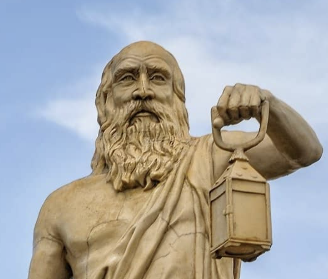
He lit a lamp in broad daylight and said, as he went about, "I am looking for a human."
▼
Source
source
Diogenes Laërtius, vi. 41. This line is frequently translated as "I am looking for an honest man."

5 months 6 days ago
The old form of trade union, which was born in the nineteenth century and aimed primarily at negotiating wages for a specific trade is no longer sufficient. First of all, as we have been arguing, the old trade unions are not able to represent the unemployed, the poor, or even the mobile and flexible post-Fordist workers with short term contracts, all of whom participate actively in social production and increase social wealth. Second, the old unions are divided according to the various products and tasks defined in the heyday of industrial production - a miners' union, a pipefitters' union, a machinists' union and so forth. Today, insofar as the conditions and the relations of labor are becoming common, these traditional divisions (or even newly defined divisions) no longer make sense and serve only as an obstacle. Finally the old unions have become purely economic, not political, organization.
▼
Source
source
136

8 months 1 week ago
My friend Professor Tolkien asked me the very simple question, "What class of men would you expect to be most preoccupied with, and most hostile to, the idea of escape?" and gave the obvious answer: jailers.
▼
Source
source
"On Science Fiction". Of Other Worlds: Essays and Stories. Houghton Mifflin Harcourt (2002). p. 67.
8 months 1 week ago
Even atheists rebel and express, like Hardy and Housman, their rage against God although (or because) He does not, on their view, exist...
4 months 3 weeks ago
As the French say, there are three sexes - men, women, and clergymen.
▼
Source
source
Vol. I, ch. 9, p. 313
4 months 2 weeks ago
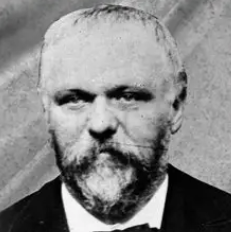
Lenin may be proud of what his comrades are doing; the Russian workers are acquiring immortal glory in attempting the realization of what hitherto had been only an abstract idea.....
▼
Source
source
"For Lenin," Soviet Russia, Official Organ of The Russian Soviet Government Bureau, Vol. II, New York: NY, January-June 1920 (April 10, 1920), p. 356
6 months 3 days ago
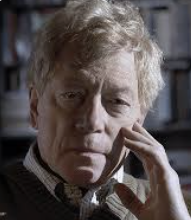
Hayek fails to account either for the passion among intellectuals for equality, or for the resulting success of socialists and their egalitarian successors in driving the liberal idea from the stage of politics. This passion for equality is not a new thing, and indeed pre-dates socialism by many centuries, finding its most influential expression in the writings of Rousseau. There is no consensus as to how equality might be achieved, what it would consist in if achieved, or why it is so desirable in the first place. But no argument against the cogency or viability of the idea has the faintest chance of being listened to or discussed by those who have fallen under its spell.
▼
Source
source
Hayek and conservatism, in Edward Feser (ed.), The Cambridge Companion to Hayek
CivilSimian.com created by AxiomaticPanic, CivilSimian, Kalokagathia