


6 months 2 weeks ago
Value, therefore, does not stalk about with a label describing what it is.
▼
Source
source
Vol. I, Ch. 1, Section 4, pg. 85.
6 months 1 day ago
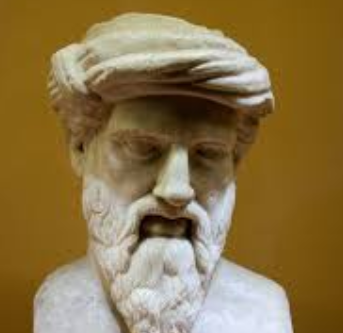
Power is the near neighbour of necessity.
▼
Source
source
As quoted in Aurea Carmina (8) by Hierocles of Alexandria, as translated in Dictionary of Quotations (1906) by Thomas Benfield Harbottle, p. 356

6 months 2 weeks ago
There is no history of mankind, there is only an indefinite number of histories of all kinds of aspects of human life. And one of these is the history of political power. This is elevated into the history of the world. But this, I hold, is an offence against every decent conception of mankind. It is hardly better than to treat the history of embezzlement or of robbery or of poisoning as the history of mankind. For the history of power politics is nothing but the history of international crime and mass murder (including it is true, some of the attempts to suppress them). This history is taught in schools, and some of the greatest criminals are extolled as heroes.
▼
Source
source
Vol 2, Ch. 25 "Has History any Meaning?" Variant: There is no history of mankind, there are only many histories of all kinds of aspects of human life. And one of these is the history of political power. This is elevated into the history of the world.
5 months 1 day ago
Both dreams and myths are important communications from ourselves to ourselves. If we do not understand the language in which they are written, we miss a great deal of what we know and tell ourselves in those hours when we are not busy manipulating the outside world.
▼
Source
source
As quoted in The New York Times
3 months ago
Any religion or philosophy which is not based on a respect for life is not a true religion or philosophy.
▼
Source
source
Letter to a Japanese Animal Welfare Society (1961); also in The Words of Albert Schweitzer (1984) edited by Norman Cousins, p. 37
3 months 1 week ago
All the problems that disturb us today-the cutting down of forests and the erosion of the soil; the emancipation of woman and the limitation of the family; the conservatism of the established, and the experimentalism of the unplaced, in morals, music, and government; the corruptions of politics and the perversions of conduct; the conflict of religion and science, and the weakening of the supernatural supports of morality; the war of the classes, the nations, and the continents; the revolutions of the poor against the economically powerful rich, and of the rich against the politically powerful poor; the struggle between democracy and dictatorship, between individualism and communism, between the East and the West-all these agitated, as if for our instruction, the brilliant and turbulent life of ancient Hellas. There is nothing in Greek civilization that does not illuminate our own.
▼
Source
source
Preface, P.18

5 months 2 days ago
Capitalism dislikes silence.

6 months 2 weeks ago
The concentration camps, by making death itself anonymous (making it impossible to find out whether a prisoner is dead or alive), robbed death of its meaning as the end of a fulfilled life. In a sense they took away the individual's own death, proving that henceforth nothing belonged to him and he belonged to no one. His death merely set a seal on the fact that he had never existed.
▼
Source
source
Part 3, Ch. 12, § 3
5 months 2 weeks ago
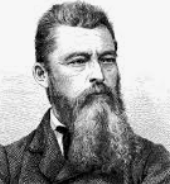
What man calls Absolute Being, his God, is his own being. The power of the object over him is therefore the power of his own being. Thus, the power of the object of feeling is the power of feeling itself; the power of the object of reason is the power of reason itself; and the power of the object of will is the power of will itself.
▼
Source
source
Introduction, Z. Hanfi, trans., in The Fiery Brook (1972), p. 102

7 months 5 days ago
There is another form of temptation, more complex in its peril. It originates in an appetite for knowledge. From this malady of curiosity are all those strange sights exhibited in the theatre. Hence do we proceed to search out the secret powers of nature (which is beside our end), which to know profits not, and wherein men desire nothing but to know.
▼
Source
source
X, 35

4 months 2 weeks ago
New technological environments are commonly cast in the molds of the preceding technology out of the sheer unawareness of their designers.
▼
Source
source
(p. 47)

10 months 3 weeks ago
In the more sophisticated versions of the critics of ideology - that developed by the Frankfurt School, for example - it is not just a question of seeing things (that is, social reality) as they 'really are," of throwing away the distorting spectacles of ideology; the main point is to see how the reality itself cannot reproduce itself without this so-called ideological mystification. The mask is not simply hiding the real state of things; the ideological distortion is written into its very essence... the moment we see it 'as it really is,' this being dissolves itself into nothingness or, more precisely, it changes into another kind of reality. That is why we must avoid simple metaphors of demasking, of throwing away the veils which are supposed to hide the naked reality.

5 months 1 day ago
A girl, if she has any pride, is so ashamed of having anything she wishes to say out of the hearing of her own family, she thinks it must be something so very wrong, that it is ten to one, if she have the opportunity of saying it, that she will not. And yet she is spending her life, perhaps, in dreaming of accidental means of unrestrained communion.

2 months 2 weeks ago
Thou art a little soul bearing about a corpse, as Epictetus used to say.
▼
Source
source
IV, 41

3 months 1 week ago
I came hither solely with the design to simplify my way of life and to secure the independence through which I could be enabled to remain true to myself.
▼
Source
source
Letter to Goethe, (1828).
2 months 2 weeks ago
Where any work can be done conformably to the reason which is common to gods and men, there we have nothing to fear; for where we are able to get profit by means of the activity which is successful and proceeds according to our constitution, there no harm is to be suspected.
▼
Source
source
VII, 53
3 months 1 week ago
British rule in India is the most sordid and criminal exploitation of one nation by another in all recorded history. I propose to show that England has year by year been bleeding India to the point of death, and that self-government of India by the Hindus could not within any reasonable probability, have worse results than the present form of alien domination.

6 months 3 weeks ago
...so it is with human reason, which strives not against faith, when enlightened, but rather furthers and advances it.
▼
Source
source
On Justification CCXCIV
5 months 1 week ago
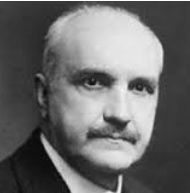
Fashion is something barbarous, for it produces innovation without reason and imitation without benefit.
▼
Source
source
Ch. VII
4 months 1 week ago
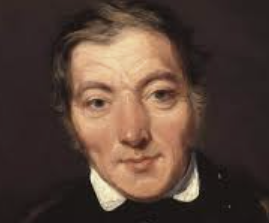
Train any population rationally, and they will be rational. Furnish honest and useful employments to those so trained, and such employments they will greatly prefer to dishonest or injurious occupations. It is beyond all calculation the interest of every government to provide that training and that employment; and to provide both is easily practicable.

6 months 3 days ago
But Eudoxus the Cnidian, who was somewhat junior to Leon, and the companion of Plato, first of all rendered the multitude of those theorems which are called universals more abundant; and to three proportions added three others; and things relative to a section, which received their commencement from Plato, he diffused into a richer multitude, employing also resolutions in the prosecution of these.
▼
Source
source
Ch. IV.
6 months 1 week ago
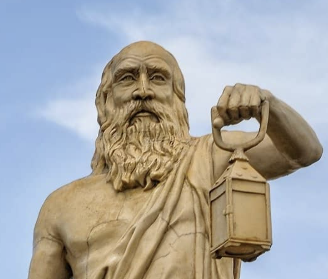
It is not that I am mad, it is only that my head is different from yours.
▼
Source
source
Stobaeus, iii. 3. 51
6 months 2 weeks ago
Kant ... discovered "the scandal of reason," that is the fact that our mind is not capable of certain and verifiable knowledge regarding matters and questions that it nevertheless cannot help thinking about.
▼
Source
source
p. 14
7 months 2 weeks ago
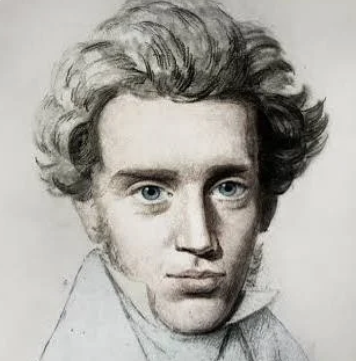
The next thing you can learn from the woman who was a sinner, something she herself understood, is that with regard to finding forgiveness she is able to do nothing at all.

5 months 2 days ago
Christianity was an epidemic rather than a religion. It appealed to fear, hysteria and ignorance. It spread across the Western world, not because it was true, but because humans are gullible and superstitious.
▼
Source
source
p. 212
4 months 3 weeks ago
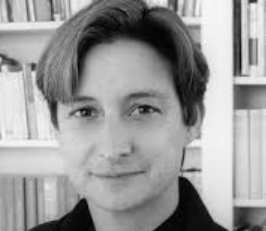
Quite apart from assiduous efforts to restrict the use of violence as means rather than an end, the actualization of violence as a means can inadvertently become its own end, producing new violence, producing violence anew, reiterating the license, and licensing further violence. Violence does not exhaust itself in the realization of a just end; rather, it renews itself in directions that exceed both deliberate intention and instrumental schemes. In other words, by acting as if the use of violence can be a means to achieve a nonviolent end, one imagines that the practice of violence does not in the act posit violence as its own end. The technē is undermined by the praxis, and the use of violence only makes the world into a more violent place, by bringing more violence into the world.
▼
Source
source
p. 20
6 months 2 weeks ago
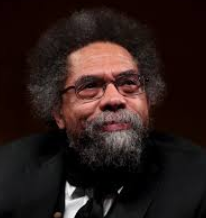
We're at such a low point in the American empire. Its spiritual decay and its immoral decadence are so profound that we have to begin on the foundational level of a spiritual awakening and a moral reckoning. Organized greed. Institutionalized hatred. Routinized indifference to the lives of poor and working people of all colors. We've got to get beyond an analysis of the predatory capitalist processes that have saturated every nook and cranny of the culture. We've got to get beyond the ways in which the political system has been colonized by corporate wealth and by monied elite. We've got to get beyond that sense of impotence of the citizenry. These are all the signs of an empire in decline. The only thing that we have to add is military overreach, and we see that as well. Speaking to Chris Hedges about his decision to run for president in 2024.
▼
Source
source
Chris Hedges: Dr. Cornel West Announces He Is Running for President. Scheerpost. June 5, 2023

5 months 2 weeks ago
...the French business is no light or trivial thing, or such as has commonly occurd in the course of political Events. At present the whole political State of Europe hinges upon it. On the Continent there is little doubt; every thing will take is future shape and colour from the good or ill success of the Duke of Brunswick. In my opinion, it is the most important crisis that ever existed in the World. ... My poor opinion is, that these principles...cannot possibly be realized in practice in France, without an absolute certainty and that at no remote period, of overturning the whole fabrick of the British Constitution.
▼
Source
source
Letter to the Foreign Secretary, Lord Grenville (19 September 1792), quoted in P. J. Marshall and John A. Woods (eds.), The Correspondence of Edmund Burke, Volume VII: January 1792-August 1794 (1968), pp. 218-219
5 months 1 week ago
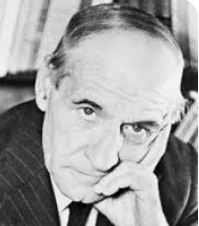
The most immediate result of this unbalanced specialisation has been that to-day, when there are more "scientists" than ever, there are much less "cultured" men than, for example, about 1750. And the worst is that with these turnspits of science not even the real progress of science itself is assured. For science needs from time to time, as a necessary regulator of its own advance, a labour of reconstitution, and, as I have said, this demands an effort towards unification, which grows more and more difficult, involving, as it does, ever-vaster regions of the world of knowledge. Newton was able to found his system of physics without knowing much philosophy, but Einstein needed to saturate himself with Kant and Mach before he could reach his own keen synthesis. Kant and Mach - the names are mere symbols of the enormous mass of philosophic and psychological thought which has influenced Einstein.
▼
Source
source
Chapter XII: The Barbarism Of "Specialisation"
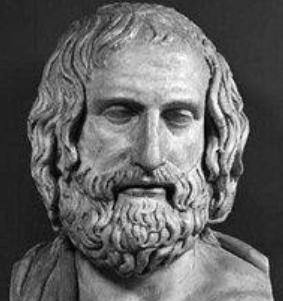
6 months 1 week ago
Thought is something limitless and independent, and has been mixed with no thing but is alone by itself. ... What was mingled with it would have prevented it from having power over anything in the way in which it does. ... For it is the finest of all things and the purest.
▼
Source
source
Frag. B12, in Jonathan Barnes, Early Greek Philosophy (1984), p. 190.
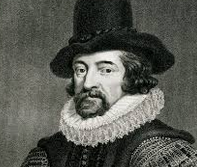
6 months 4 weeks ago
The human understanding is unquiet; it cannot stop or rest, and still presses onward, but in vain. Therefore it is that we cannot conceive of any end or limit to the world, but always as of necessity it occurs to us that there is something beyond... But he is no less an unskilled and shallow philosopher who seeks causes of that which is most general, than he who in things subordinate and subaltern omits to do so.
▼
Source
source
Aphorism 48
4 months 2 weeks ago
The new media are not bridges between man and nature: they are nature.
▼
Source
source
(p. 14)
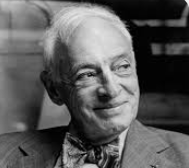
4 months 1 week ago
We are all such accidents. We do not make up history and culture. We simply appear, not by our own choice. We make what we can of our condition with the means available. We must accept the mixture as we find it - the impurity of it, the tragedy of it, the hope of it.
▼
Source
source
Great Jewish Short Stories, introduction to the Dell paperback edition
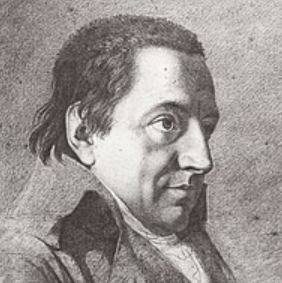
5 months 2 weeks ago
That I should by necessity be either wise and good, or foolish or vicious, without having in one case or the other merit or fault - this it was that filled me with aversion and horror.The determination of my actions by a cause out of myself, whose manifestations were again determined by other causes - this it was from which I so violently revolted.The freedom which was not mine, but that of a foreign power, and, in that, only a conditional, half freedom - this it was with which I could not rest satisfied. I myself - that which in this system only appears as the manifestation of a higher existence, I will be independent, - will be something, not by another or through another, but of myself.
▼
Source
source
Jane Sinnett, trans 1846 p. 21
5 months 1 week ago
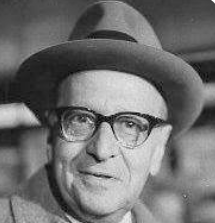
No criticism can be brought against a branch of technical science from outside; no thought fitted out with the knowledge of a period and setting its course by definite historical aims could have anything to say to the specialist. Such thought and the critical, dialectical element it communicates to the process of cognition, thereby maintaining conscious connection between that process and historical life, do not exist for empiricism; nor do the associated categories, such as the distinction between essence and appearance, identity in change, and rationality of ends, indeed, the concept of man, of personality, even of society and class taken in the sense that presupposes specific viewpoints and directions of interest.
▼
Source
source
p. 145.

5 months 2 days ago
Like a plague, the mad spirit is sweeping the country, infesting the clearest heads and staunchest hearts with the deathly germ of militarism.

5 months 1 week ago
The Value or WORTH of a man, is as of all other things, his Price; that is to say, so much as would be given for the use of his Power...
▼
Source
source
The First Part, Chapter 10, p. 42
4 months 2 weeks ago
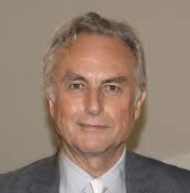
But if you can breed cattle for milk yield, horses for running speed, and dogs for herding skill, why on Earth should it be impossible to breed humans for mathematical, musical or athletic ability? Objections such as "these are not one-dimensional abilities" apply equally to cows, horses and dogs and never stopped anybody in practice. I wonder whether, some 60 years after Hitler's death, we might at least venture to ask what the moral difference is between breeding for musical ability and forcing a child to take music lessons. Or why it is acceptable to train fast runners and high jumpers but not to breed them. I can think of some answers, and they are good ones, which would probably end up persuading me. But hasn't the time come when we should stop being frightened even to put the question? From the Afterword, The Herald
▼
Source
source
Glasgow, Scotland, 20 November 2006
6 months 1 week ago
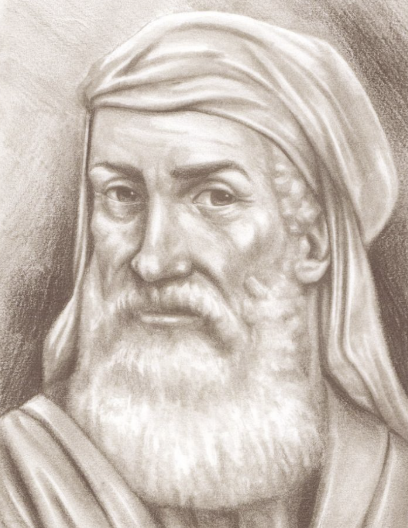
Fortunate is he who has acquired a wealth of divine understanding, but wretched the one whose interest lies in shadowy conjectures about divinities.
▼
Source
source
fr. 132
5 months 2 weeks ago
In effect, to follow, not to force the public inclination; to give a direction, a form, a technical dress, and a specific sanction, to the general sense of the community, is the true end of legislature.

2 months 2 weeks ago
Professional standards, the standards of ambition and selfishness, are always sliding downward toward expense, ostentation, and mediocrity. They tend always to narrow the ground of judgment. But amateur standards, the standards of love, are always straining upward toward the humble and the best. They enlarge the ground of judgment. The context of love is the world.
▼
Source
source
The Responsibility of the Poet
4 months 5 days ago
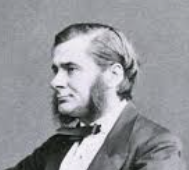
Education is the instruction of the intellect in the laws of Nature, under which name I include not merely things and their forces, but men and their ways; and the fashioning of the affections and of the will into an earnest and loving desire to move in harmony with those laws. For me, education means neither more nor less than this. Anything which professes to call itself education must be tried by this standard, and if it fails to stand the test, I will not call it education, whatever may be the force of authority, or of numbers, upon the other side.

6 months 3 weeks ago
Marriage, a market which has nothing free but the entrance.
7 months 3 weeks ago
All that exists that can be denied deserves to be denied; and being truthful means: to believe in an existence that can in no way be denied and which is itself true and without falsehood.
5 months 2 days ago
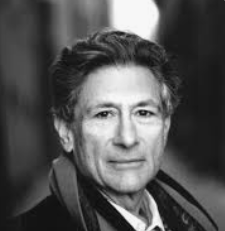
Everything I have written in these lectures underlines the importance to the intellectual of passionate engagement, risk, exposure, commitment to principles, vulnerability in debating and being involved in worldly causes. For example, the difference I drew earlier between a professional and an amateur intellectual rests precisely on this, that the professional claims detachment on the basis of a profession and pretends to objectivity, whereas the amateur is moved neither by reward nor by the fulfillment of an immediate career plan but by a committed engagement with ideas and values in the public sphere.
▼
Source
source
p. 109

5 months 5 days ago
The collective is the object of all idolatry, this it is which chains us to the earth. In the case of avarice: gold is of the social order. In the case of ambition: power is of the social order. Science and art are full of the social element also. And love? Love is more or less of an exception: that is why we can go to God through love, not through avarice and ambition.
▼
Source
source
p. 121
3 months 2 weeks ago
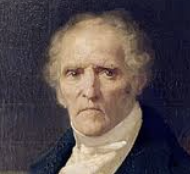
Those who have taken the planets to be inanimate bodies without function, limited to traveling geometric paths, resemble idiots who would believe that the brain is inanimate because it has no visible function, or that the stomach is idle because it does no visible work as do our limbs. Civilizees have always been reproached for believing nature to be limited to known effects. If the planets were not animate creatures endowed with functions, God would then appear to be an advocate of laziness. He would have created universes furnished with large inert bodies spending eternity in purposeless meandering as do the idlers in our society.
▼
Source
source
L'attraction passioneé
4 months 4 weeks ago
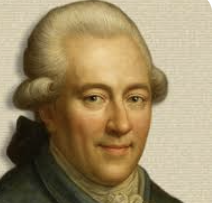
As the few adepts in such things well know, universal morality is to be found in little everyday penny-events just as much as in great ones. There is so much goodness and ingenuity in a raindrop that an apothecary wouldn't let it go for less than half-a-crown.
▼
Source
source
B 33
CivilSimian.com created by AxiomaticPanic, CivilSimian, Kalokagathia