I think of it like a tree. Even if you stop studying philosophy or critical thinking itself the seed you planted begins growth that just happens by living in the world with the tools you have.



I think people who are unhappy are always proud of being so, and therefore do not like to be told that there is nothing grand about their unhappiness. A man who is melancholy because lack of exercise has upset his liver always believes that it is the loss of God, or the menace of Bolshevism, or some such dignified cause that makes him sad. When you tell people that happiness is a simple matter, they get annoyed with you.

What nationalist educators often fail to recognize is that merely being taught by teachers who are black has not and will not solve the problem if the teachers have been socialized to internalize racist thinking.
The great majority of men and women, in ordinary times, pass through life without ever contemplating or criticising, as a whole, either their own conditions or those of the world at large. They find themselves born into a certain place in society, and they accept what each day brings forth, without any effort of thought beyond what the immediate present requires. Almost as instinctively as the beasts of the field, they seek the satisfaction of the needs of the moment, without much forethought, and without considering that by sufficient effort the whole conditions of their lives could be changed.

Put in a nut-shell, my thesis amounts to this. The repeated attempts made by Rudolf Carnap to show that the demarcation between science and metaphysics coincides with that between sense and nonsense have failed. The reason is that the positivistic concept of 'meaning' or 'sense' (or of verifiability, or of inductive confirmability, etc.) is inappropriate for achieving this demarcation - simply because metaphysics need not be meaningless even though it is not science. In all its variations demarcation by meaninglessness has tended to be at the same time too narrow and too wide: as against all intentions and all claims, it has tended to exclude scientific theories as meaningless, while failing to exclude even that part of metaphysics which is known as 'rational theology'.
Of faith and morals, one cannot speak honestly for long without hurting feelings. Therefore, most people speak dishonestly of the most important subjects. Many recent philosophers prefer not to speak of them at all. But in some situations honesty is incompatible with silence.
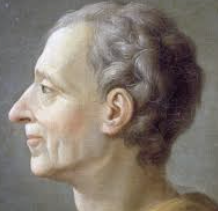
You have to study a great deal to know a little.

The only significance of life consists in helping to establish the kingdom of God; and this can be done only by means of the acknowledgment and profession of the truth by each one of us. Chapter XII, Conclusion-Repent Ye, for the Kingdom of Heaven is at Hand Variant translation: The sole meaning of life is to serve humanity by contributing to the establishment of the kingdom of God, which can only be done by the recognition and profession of the truth by every man.

For love is ever the beginning of Knowledge, as fire is of light.

Never esteem anything as of advantage to you that will make you break your word or lose your self-respect.
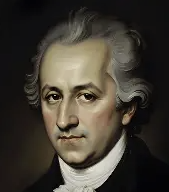
Investigate what is, and not what pleases.

Attention consists of suspending our thought, leaving it detached, empty, and ready to be penetrated by the object; it means holding in our minds, within reach of this thought, but on a lower level and not in contact with it, the diverse knowledge we have acquired which we are forced to make use of.
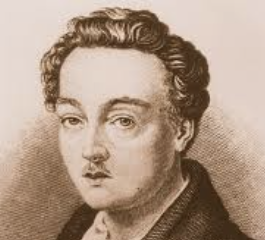
The death clock is ticking slowly in our breast, and each drop of blood measures its time, and our life is a lingering fever.

Do not fight against these harmful spells. For you do not know what God wants with them. You do not know the greater divine plan behind it all.
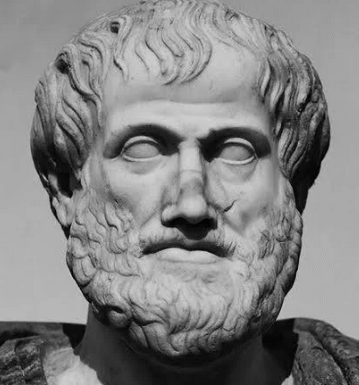
Philosophy is the science of truth.
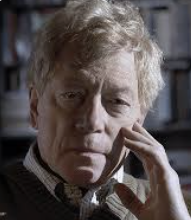
To teach virtue we must educate the emotions, and this means learning "what to feel" in the various circumstances that prompt them.

It has always been denied by the republican party in this country, that the Constitution had given the power of incorporation to Congress. On the establishment of the Bank of the United States, this was the great ground on which that establishment was combated; and the party prevailing supported it only on the argument of its being an incident to the power given them for raising money.
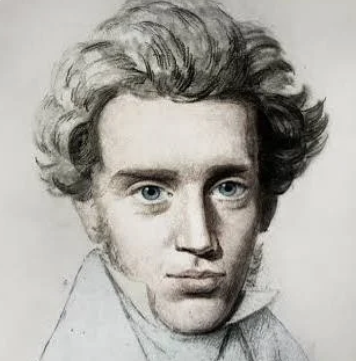
I will not by suppression, or by performing tricks, try to produce the impression that the ordinary Christianity in the land and the Christianity of the New Testament are alike. "What Do I Want?"
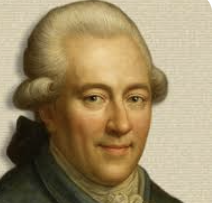
The Greeks possessed a knowledge of human nature we seem hardly able to attain to without passing through the strengthening hibernation of a new barbarism.
Darwinism is not a testable scientific theory, but a metaphysical research program. Unsourced variant: Evolution is not a fact. Evolution doesn't even qualify as a theory or as a hypothesis. It is a metaphysical research program, and it is not really testable science.
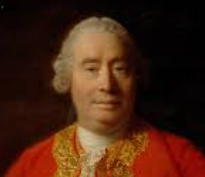
In all ages of the world, priests have been enemies to liberty; and it is certain, that this steady conduct of theirs must have been founded on fixed reasons of interest and ambition. Liberty of thinking, and of expressing our thoughts, is always fatal to priestly power, and to those pious frauds, on which it is commonly founded; and, by an infallible connexion, which prevails among all kinds of liberty, this privilege can never be enjoyed, at least has never yet been enjoyed, but in a free government.
In ressentiment morality, love for the "small," the "poor," the "weak," and the "oppressed" is really disguised hatred, repressed envy, an impulse to detract, etc., directed against the opposite phenomena: "wealth," "strength," "power," "largesse." When hatred does not dare to come out into the open, it can be easily expressed in the form of ostensible love-love for something which has features that are the opposite of those of the hated object. This can happen in such a way that the hatred remains secret. When we hear that falsely pious, unctuous tone (it is the tone of a certain "socially-minded" type of priest), sermonizing that love for the "small" is our first duty, love for the "humble" inspirit, since God gives "grace" to them, then it is often only hatred posing as Christian love.
The infant runs toward it with its eyes closed, the adult is stationary, the old man approaches it with his back turned.
The extent of the region of the uncertain, the number of the problems the investigation of which ends in a verdict of not proven, will vary according to the knowledge and the intellectual habits of the individual agnostic. I do not very much care to speak of anything as unknowable. What I am sure about is that there are many topics about which I know nothing, and which, so far as I can see, are out of reach of my faculties. But whether these things are knowable by any one else is exactly one of those matters which is beyond my knowledge, though I may have a tolerably strong opinion as to the probabilities of the case.

And if he be too forward to venture upon his own strength and skill, and perplexity and trouble of a misadventure now and then, that reaches not his innocence, his health, or reputation, may not be an ill way to teach him more caution.

Always to have lived with the nostalgia to coincide with something, but not really knowing with what - it is easy to shift from unbelief to belief, or conversely. But what is there to convert to, and what is there to abjure, in a state of chronic lucidity?
Thought without language, says Lavelle, would not be a purer thought; it would be no more than the intention to think. And his last book offers a theory of expressiveness which makes of expression not "a faithful image of an already realized interior being, but the very means by which it is realized."
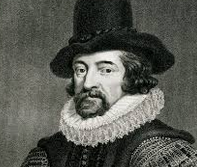
The cause and root of nearly all evils in the sciences is this - that while we falsely admire and extol the powers of the human mind we neglect to seek for its true helps.
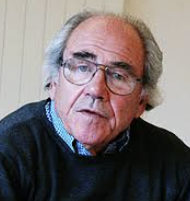
Once animals had a more sacred, more divine character than men. There is not even a reign of the "human" in primitive societies, and for a long time the animal order has been the order of reference. Only the animal is worth being sacrificed, as a god, the sacrifice of man only comes afterward, according to a degraded order. Men qualify only by their affiliation to the animal: the Bororos "are" macaws. "
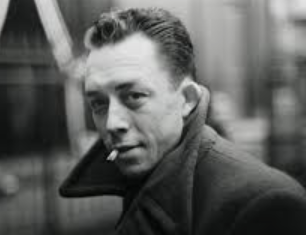
Opinions differ as to the reasons why he became the futile laborer of the underworld. To begin with, he is accused of a certain levity in regard to the gods. He stole their secrets.
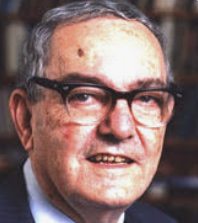
It is not my aim to surprise or shock you - but the simplest way I can summarize is to say that there are now in the world machines that think, that learn and that create. Moreover, their ability to do these things is going to increase rapidly until - in a visible future - the range of problems they can handle will be coextensive with the range to which the human mind has been applied.
He that will have his son have a respect for him and his orders, must himself have a great reverence for his son.
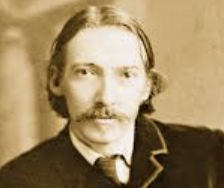
Decisive actions are often taken in a moment and without any conscious deliverance from the rational parts of man.
Government is violence, Christianity is meekness, non-resistance, love. And, therefore, government cannot be Christian, and a man who wishes to be a Christian must not serve government.
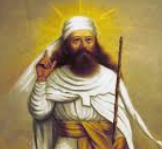
Choose a wife who is of character, because that one is good who in the end is more respected.

There is no sin, and there can be no sin on all the earth, which the Lord will not forgive to the truly repentant! Man cannot commit a sin so great as to exhaust the infinite love of God. Can there be a sin which could exceed the love of God?
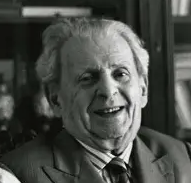
The moral consciousness can sustain the mocking gaze of the political man only if the certitude of peace dominates the evidence of war. Such a certitude is not obtained by a simple play of antitheses. The peace of empires issued from war rests on war. It does not restore to the alienated beings their lost identity. For that a primordial and original relation with being is needed.

Every age has its own poetry; in every age the circumstances of history choose a nation, a race, a class to take up the torch by creating situations that can be expressed or transcended only through poetry.

A further threat to liberalism has to do with the mode of cognition that we call modern natural science. The early liberals were very closely aligned with the founders of modern natural science, people like Bacon and Descartes and Newton, who believed that there was an objective world beyond our subjective consciousnesses, that we could perceive this world through the experimental method, and then come to manipulate it. Natural science gave us technology... that made the world much more habitable, by conquering disease, by inventing things that vastly increased human productivity. So... it's closely related to the wealth, and... the safety and comfort of a modern economically developed world.

To the Deity must be left the task of infinite perfection, while to us poor, weak, incapable mortals, there was no rule of conduct so safe as experience.
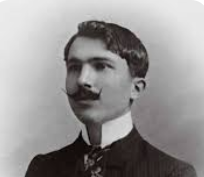
It is not you talking, but innumerable ancestors talking with your mouth. It is not you who desire, but innumerable generations of descendants longing with your heart. Your dead do not lie in the ground. They have become birds, trees, air. You sit under their shade, you are nourished by their flesh, you inhale their breathing. They have become ideas and passions, they determine your will and your actions. Future generations do not move far from you in an uncertain time. They live, desire, and act in your loins and your heart. In this lightning moment when you walk the earth, your first duty, by enlarging your ego, is to live through the endless march, both visible and invisible, of your own being.

The Indian knew how to live without wants, to suffer without complaint, and to die singing.
Getting along with women, Knocking around with men, Having more credit than money, Thus one goes through the world.
Our patriotism comes straight from the Romans. This is why French children are encouraged to seek inspiration for it in Corneille. It is a pagan virtue, if these two words are compatible. The word pagan, when applied to Rome, early possesses the significance charged with horror which the early Christian controversialists gave it. The Romans really were an atheistic and idolatrous people; not idolatrous with regard to images made of stone or bronze, but idolatrous with regard to themselves. It is this idolatry of self which they have bequeathed to us in the form of patriotism.
Crocodiles sweetly shut their lidded eyes, and yawned,for the blond meat had been quite good, and in slow rainsnew flesh would sprout once more and then be munched anew.

In... "The Education of Children"... Plutarch gives an anecdote of Theocritus, a sophist, as an example of athuroglossos... he is... "a giant in impudence"... strong not because of his reason, or his rhetorical ability... or his ability to pronounce the truth, but only because he is arrogant. ...His fourth trait is... "putting his confidence in bluster." He is confident in thorubos... the noise made by a strong voice, by a scream, a clamor, or uproar. ...The final characteristic ...his confidence in ..."ignorant outspokenness..." ... it lacks mathesis ...-learning or wisdom.
Ah! yes, I know: those who see me rarely trust my word: I must look too intelligent to keep it.
CivilSimian.com created by AxiomaticPanic, CivilSimian, Kalokagathia