


5 months 2 weeks ago
Truths begin by a conflict with the police - and end by calling them in.

5 months 2 days ago
These are the visionary, mystical moments, when a man 'completes his partial mind'. His everyday conscious self is only a small part of the mind, like the final crescent of the moon. In moments of crisis, the full moon suddenly appears.
▼
Source
source
p. 156
4 months 5 days ago
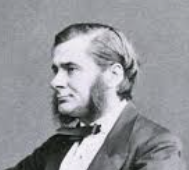
The extent of the region of the uncertain, the number of the problems the investigation of which ends in a verdict of not proven, will vary according to the knowledge and the intellectual habits of the individual agnostic. I do not very much care to speak of anything as unknowable. What I am sure about is that there are many topics about which I know nothing, and which, so far as I can see, are out of reach of my faculties. But whether these things are knowable by any one else is exactly one of those matters which is beyond my knowledge, though I may have a tolerably strong opinion as to the probabilities of the case.

2 months 2 weeks ago
Whatever this is that I am, it is flesh and a little spirit and an intelligence. This that I am, whatever it be, is mere flesh and a little breathe and the ruling Reason, This Being of mine, whatever it really is, consists of a little flesh, a little breath, and the part which governs.
▼
Source
source
A little flesh, a little breath, and a Reason to rule all - that is myself. (Staniforth translation) II, 2

3 months 1 week ago
Alas, our noble men of genius, Heaven's real messengers to us, they also rendered nearly futile by the wasteful time;-preappointed they everywhere, and assiduously trained by all their pedagogues and monitors, to "rise in Parliament," to compose orations, write books, or in short speak words, for the approval of reviewers; instead of doing real kingly work to be approved of by the gods!
2 months 1 week ago
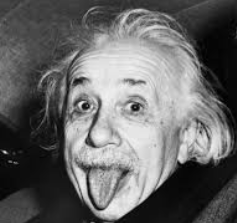
The state of mind which enables a man to do work of this kind is akin to that of the religious worshiper or the lover; the daily effort comes from no deliberate intention or program, but straight from the heart.
7 months 3 weeks ago
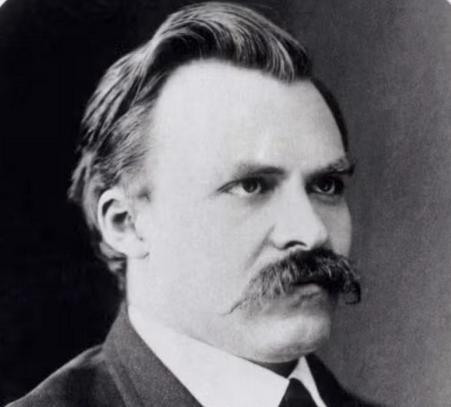
The Philology of Christianity. How little Christianity cultivates the sense of honesty can be inferred from the character of the writings of its learned men. They set out their conjectures as audaciously as if they were dogmas, and are but seldom at a disadvantage in regard to the interpretation of Scripture. Their continual cry is: am right, for it is written and then follows an explanation so shameless and capricious that a philologist, when he hears it, must stand stock-still between anger and laughter, asking himself again and again: Is it possible? Is it honest? Is it even decent?It is only those who never or always attend church that underestimate the dishonesty with which this subject is still dealt in Protestant pulpits; in what a clumsy fashion the preacher takes advantage of his security from interruption; how the Bible is pinched and squeezed; and how the people are made acquainted with every form of the art of false reading.
3 months 1 week ago
But the thing a man does practically believe (and this is often enough without asserting it even to himself, much less to others); the thing a man does practically lay to heart, and know for certain, concerning his vital relations to this mysterious Universe, and his duty and destiny there, that is in all cases the primary thing for him, and creatively determines all the rest. That is his religion; or, it may be, his mere scepticism and no-religion: the manner it is in which he feels himself to be spiritually related to the Unseen World or No-World; and I say, if you tell me what that is, you tell me to a very great extent what the man is, what the kind of things he will do is.
2 months 2 weeks ago
Love that only which happens to thee and is spun with the thread of thy destiny. For what is more suitable?
▼
Source
source
VII, 57
3 months 1 week ago
Our grand business undoubtedly is, not to see what lies dimly at a distance, but to do what lies clearly at hand.
4 months 2 weeks ago
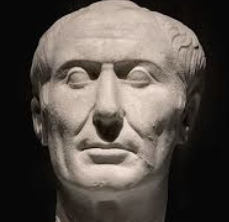
A noble spirit finds a cure for injustice in forgetting it.
▼
Source
source
Maxim 441

4 months 2 weeks ago
The assertion that art may be good art and at the same time incomprehensible to a great number of people is extremely unjust, and its consequences are ruinous to art itself...it is the same as saying some kind of food is good but most people can't eat it.
4 months 3 weeks ago
To me, believing that some correspondence intrinsically just is reference (not as a result of our operational and theoretical constraints, or our intentions, but as an ultimate metaphysical fact) amounts to a magical theory of reference. Reference itself becomes what Locke called a 'substantial form' (an entity which intrinsically belongs with a certain name) on such a view. Even if one is willing to contemplate such unexplainable metaphysical facts, the epistemological problems that accompany such a metaphysical view seem insuperable. For, assuming a world of mind- independent, discourse-independent entities (this is the presupposition of the view we are discussing), there are, as we have seen, many different 'correspondences' which represent possible or candidate reference relations (infinitely many, in fact, if there are infinitely many things in the universe).
▼
Source
source
Chap. 2 : A problem about reference

3 months 4 days ago
He maintained this attitude up to the very end, and no man ever saw Socrates too much elated or too much depressed. Amid all the disturbance of Fortune, he was undisturbed.
7 months 1 week ago
Speaking with sense we must fortify ourselves in the common sense of all, as a city is fortified by its law, and even more forcefully. For all human laws are nourished by the one divine law. For it prevails as far as it will and suffices for all and is superabundant.

5 months 6 days ago
And the conversion of the other Don Quixote - he who was converted only to die - was possible because he was mad, and it was his madness, and not his death or his conversion that immortalized him, earning him forgiveness for this crime of having been born. Felix culpa! And neither was his madness cured, but only transformed. His death was his last knightly adventure; in dying he stormed heaven, which suffereth violence.
2 months 1 week ago
How can it be that mathematics, being, after all, a product of human thought which is independent of experience, is so admirably appropriate to the objects of reality? Is human reason, then, without experience, merely by taking thought, able to fathom the properties of real things?

6 months 2 weeks ago
I am not much an advocate for travelling, and I observe that men run away to other countries because they are not good in their own, and run back to their own because they pass for nothing in the new places. For the most part, only the light characters travel. Who are you that have no task to keep you at home? I have been quoted as saying captious things about travel; but I mean to do justice. .... He that does not fill a place at home, cannot abroad. He only goes there to hide his insignificance in a larger crowd. You do not think you will find anything there which you have not seen at home? The stuff of all countries is just the same. Do you suppose there is any country where they do not scald milk-pans, and swaddle the infants, and burn the brushwood, and broil the fish? What is true anywhere is true everywhere. And let him go where he will, he can only find so much beauty or worth as he carries.
▼
Source
source
Culture
4 months 2 weeks ago
No longer able to believe in the Church religion, whose falsehood they had detected, and incapable of accepting true Christian teaching, which denounced their whole manner of life, these rich and powerful people, stranded without any religious conception of life, involuntarily returned to that pagan view of things which places life's meaning in personal enjoyment. And then among the upper classes what is called the "Renaissance of science and art" took place, which was really not only a denial of every religion, but also an assertion that religion was unnecessary.
4 months 3 weeks ago
A series of accidents creates a positively lighthearted state.
▼
Source
source
Chapter 4

6 months 2 weeks ago
I believe that political power also exercises itself through the mediation of a certain number of institutions that seem to have nothing in common with political power, that have the appearance of being independent, but are not.
▼
Source
source
Debate with Noam Chomsky, École Supérieure de Technologie à Eindhoven, November 1971

5 months 2 weeks ago
Great joys, why do they bring us sadness? Because there remains from these excesses only a feeling of irrevocable loss and desertion which reaches a high degree of negative intensity. At such moments, instead of a gain, one keenly feels loss. sadness accompanies all those events in which life expends itself. its intensity is equal to its loss. Thus death causes the greatest sadness.

6 months 2 weeks ago
The cheapest sort of pride is national pride; for if a man is proud of his own nation, it argues that he has no qualities of his own of which he can be proud; otherwise he would not have recourse to those which he shares with so many millions of his fellowmen. The man who is endowed with important personal qualities will be only too ready to see clearly in what respects his own nation falls short, since their failings will be constantly before his eyes. But every miserable fool who has nothing at all of which he can be proud adopts, as a last resource, pride in the nation to which he belongs; he is ready and glad to defend all its faults and follies tooth and nail, thus reimbursing himself for his own inferiority.
▼
Source
source
Vol. 1, Ch. 3, Section 2: Pride
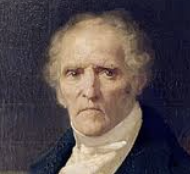
3 months 2 weeks ago
Nothing is more opposed to concord than the present condition of the domestic and salaried classes. By reducing this poor multitude to a condition very like slavery, civilization, on the rebound, imposes chains upon those who seem to dominate. Thus notables do not dare to amuse themselves openly at times when the people suffer from poverty. The rich are subject to individual as well as collective servitude. A wealthy man is often the slave of his valets. However in harmony the valet himself enjoys complete independence, while the rich are served with an assiduity and a devotion of which one sees not a trace in civilization.
▼
Source
source
Oeuvres completetes de Charles Fourier
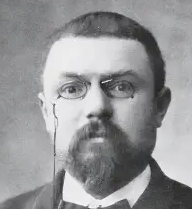
3 months 1 week ago
Thought must never submit, neither to a dogma, nor to a party, nor to a passion, nor to an interest, nor to a preconceived idea, nor to whatever it may be, save to the facts themselves, because, for thought, submission would mean ceasing to be.
▼
Source
source
Speech, University of Brussels (19 November 1909), during the festival for the 75th anniversary of the university's foundation; published in Œuvres de Henri Poincaré (1956), p. 152
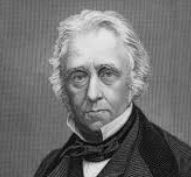
4 months 1 week ago
It is now time for us to pay a decent, a rational, a manly reverence to our ancestors, not by superstitiously adhering to what they, in other circumstances, did, but by doing what they, in our circumstances, would have done.
▼
Source
source
Speech in the House of Commons on the Reform Bill (2 March 1831), quoted in Speeches of the Right Honourable T. B. Macaulay, M.P. (1854), p. 8
6 months 2 weeks ago
Act, if you like,-but you do it at your peril. Men's actions are too strong for them. Show me a man who has acted, and who has not been the victim and slave of his action. What they have done commits and enforces them to do the same again. The first act, which was to be an experiment, becomes a sacrament. The fiery reformer embodies his aspiration in some rite or covenant, and he and his friends cleave to the form, and lose the aspiration. The Quaker has established Quakerism, the Shaker has established his monastery and his dance; and, although each prates of spirit, there is no spirit, but repetition, which is anti-spiritual.
▼
Source
source
Goethe; or, the Writer
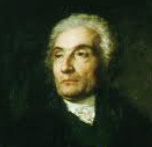
2 months 2 weeks ago
Every nation gets the government it deserves.
▼
Source
source
Original text:Toute nation a le gouvernement qu'elle mérite. Letter 76, on the topic of Russia's new constitutional laws (27 August 1811); published in Lettres et Opuscules.

5 months 3 weeks ago
What song the Syrens sang, or what name Achilles assumed when he hid himself among women, though puzzling questions, are not beyond all conjecture.
▼
Source
source
Chapter V. Cf Suetonius, Lives of the Twelve Caesars: "Tiberius," Ch 70
7 months 2 weeks ago
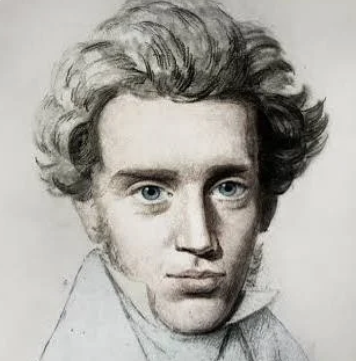
Editor Preface In this book, originating in the year 1848, the requirement for being a Christian is forced up by the pseudonymous author to the supreme ideality. Yet the requirement should indeed be stated, presented, and heard. From the Christian point of view, there ought to be no scaling down of the requirement, nor suppression of it-instead of a personal admission and confession. The requirement should be heard-and I understand what is said as spoken to me alone-so that I might learn not only to resort to grace but to resort to it in relation to the use of grace.
4 months 3 weeks ago
In conclusion, then, no satisfactory interpretation of quantum mechanics exists today. The questions posed by the confrontation between the Copenhagen interpretation and the hidden variable theorists go to the very foundations of microphysics, but the answers given by hidden variable theorists and Copenhagenists are alike unsatisfactory. Human curiosity will not rest until those questions are answered, but whether they will be answered by conceptual innovations within the framework of the present theory or only within the framework of an as yet unforeseen theory is unknown. The first step toward answering them has been attempted here. It is the modest but essential step of becoming clear on the nature and magnitude of the difficulties.
▼
Source
source
A philosopher looks at quantum mechanics
2 months 1 week ago
As an eminent pioneer in the realm of high frequency currents... I congratulate you on the great successes of your life's work.
▼
Source
source
[http://www.teslasociety.com/einsteinletter.jpg Einstein's letter] to Nikola Tesla for Tesla's 75th birthday (1931)
5 months 1 week ago
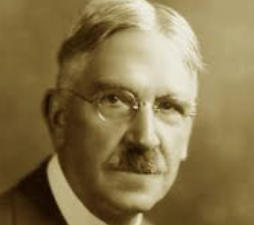
In the late eighteenth and the greater part of the nineteenth centuries appeared the first marked cultural shift in the attitude taken toward change. Under the names of indefinite perfectibility, progress, and evolution, the movement of things in the universe itself and of the universe as a whole began to take on a beneficent instead of hateful aspect.

2 months 2 weeks ago
There's nothing under the ground that's worthmore than the little layer of topsoil sitting on top of it.
6 months 1 week ago
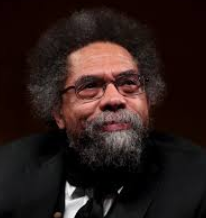
It's time for me to go back to the great Union Theological Seminary. That's my institutional home, my brother. I can stretch out and try to be a truth teller and bear witness, still learn and listen, but also be in the middle of the Big Apple. Nothing like it... Union Theological Seminary means so much to me, because in that context I can be the full, free Black man, the Jesus-loving, free Black man, fundamentally committed to focusing on the oppressed around the world. Speaking in Too Radical for Harvard?
▼
Source
source
Cornl West on Failed Fight for Tenure, Biden's First 50 Days & More, Democracy Now!,
3 months ago
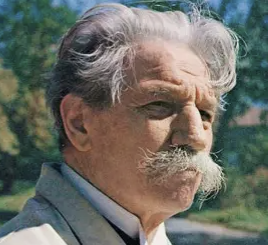
The mistake made by all previous systems of ethics has been the failure to recognize that life as such is the mysterious value with which they have to deal. All spiritual life meets us within natural life. Reverence for life, therefore, is applied to natural life and spiritual life alike. In the parable of Jesus, the shepherd saves not merely the soul of the lost sheep but the whole animal. The stronger the reverence for natural life, the stronger grows also that for spiritual life.
▼
Source
source
p. 264
3 months 1 week ago
The true University of these days is a Collection of Books.

5 months 1 week ago
Because of your unbelief: for verily I say unto you, If ye have faith as a grain of mustard seed, ye shall say unto this mountain, Remove hence to yonder place; and it shall remove; and nothing shall be impossible unto you. Howbeit this kind goeth not out but by prayer and fasting.
▼
Source
source
17:20-21 (KJV)
4 months 2 weeks ago
Fortune is like glass-the brighter the glitter, the more easily broken.
▼
Source
source
Maxim 280
3 months 4 days ago
No one is able to rule unless he is also able to be ruled.
▼
Source
source
De Ira (On Anger): Book 2, cap. 15, line 4
6 months 2 weeks ago
Four snakes gliding up and down a hollow for no purpose that I could see - not to eat, not for love, but only gliding.
▼
Source
source
April 11, 1834

6 months 2 weeks ago
The wisest man preaches no doctrines; he has no scheme; he sees no rafter, not even a cobweb, against the heavens. It is clear sky. If I ever see more clearly at one time than at another, the medium through which I see is clearer.
6 months 1 day ago
Happiness is a good flow of life.
▼
Source
source
As quoted by Stobaeus, ii. 77.
5 months 1 week ago
The function of objective thinking is to reduce all phenomena which bear witness to the union of subject and world, putting in their place the clear idea of the object as in itself and of the subject as pure consciousness. It therefore severs the links which unite the thing and the embodied subject, leaving only sensible qualities to make up our world (to the exclusion of the modes of appearance which we have described), and preferably visual qualities, because these give the impression of being autonomous, and because they are less directly linked to our body and present us with an object rather than introducing us into an atmosphere. But in reality all things are concretions of a setting, and any explicit perception of a thing survives in virtue of a previous communication with a certain atmosphere.
▼
Source
source
p. 374
5 months 1 week ago
So watch yourselves. If your brother sins, rebuke him, and if he repents, forgive him. If he sins against you seven times in a day, and seven times comes back to you and says, 'I repent,' forgive him.
▼
Source
source
(Luke 17:3-4) (NIV)

6 months 2 weeks ago
If we cut up beasts simply because they cannot prevent us and because we are backing our own side in the struggle for existence, it is only logical to cut up imbeciles, criminals, enemies, or capitalists for the same reasons.
▼
Source
source
"Vivisection" (1947), p. 227
6 months 3 weeks ago
The first characteristic of the human species is man's ability, as a rational being, to establish character for himself, as well as for the society into which nature has placed him. This ability, however, presupposes an already favorable natural predisposition and an inclination to the good in man, because the evil is really without character (since it is at odds with itself, and since it does not tolerate any lasting principle within itself)
▼
Source
source
Kant, Immanuel (1996), page 246
4 months 2 weeks ago
There is no penalty attached to a lover's oath.
▼
Source
source
Maxim 23
CivilSimian.com created by AxiomaticPanic, CivilSimian, Kalokagathia