

6 months 1 week ago
Necessity gives the law without itself acknowledging one.
▼
Source
source
Maxim 444
7 months 1 day ago
The fundamental sense of freedom is freedom from chains, from imprisonment, from enslavement by others. The rest is extension of this sense, or else metaphor.
7 months 1 week ago
By means of the new education we want to mould the Germans into a corporate body, which shall be stimulated and animated in all its individual members by the same interest.
▼
Source
source
Introduction p. 15

8 months 1 week ago
A father would do well, as his son grows up, and is capable of it, to talk familiarly with him; nay, ask his advice, and consult with him about those things wherein he has any knowledge or understanding. By this, the father will gain two things, both of great moment. The sooner you treat him as a man, the sooner he will begin to be one; and if you admit him into serious discourses sometimes with you, you will insensibly raise his mind above the usual amusements of youth, and those trifling occupations which it is commonly wasted in. For it is easy to observe, that many young men continue longer in thought and conversation of school-boys than otherwise they would, because their parents keep them at that distance, and in that low rank, by all their carriage to them.
▼
Source
source
Sec. 95
4 months 2 weeks ago
I go into the Upanishads to ask questions.
▼
Source
source
As quoted in God Is Not One : The Eight Rival Religions That Run the World and Why Their Differences Matter (2010), by Stephen Prothero, Ch, 4 : Hinduism : The Way of Devotion, p. 144
6 months 1 week ago
Guilt has to be understood not only as a way of checking one's own destructiveness, but as a mechanism for safeguarding the life of the other, one that emerges from our own need and dependency, from a sense that this life is not a life without another life. Indeed, when it turns into a safeguarding action, I am not sure it should still be called "guilt." If we do still use that term, we could conclude that "guilt" is strangely generative or that its productive form is reparation.
▼
Source
source
p. 93
6 months 1 week ago
We live in a world where there is more and more information, and less and less meaning.
▼
Source
source
"The Implosion of Meaning in the Media," p. 79

7 months 5 days ago
Far from diminishing the appetite for power, suffering exasperates it; hence the mind feels more comfortable in the society of a braggart than in that of a martyr; and nothing is more repugnant to it than the spectacle of dying for an idea.

8 months 1 week ago
The fact that a belief has a good moral effect upon a man is no evidence whatsoever in favor of its truth.
▼
Source
source
BBC Radio Debate on the Existence of God, Russell vs. Copleston, 1948
9 months 1 week ago
The greatest danger, that of losing one's own self, may pass off as quietly as if it were nothing; every other loss, that of an arm, a leg, five dollars, a wife etc., is sure to be noticed.
4 months 4 weeks ago
Civilization exists by geological consent, subject to change without notice.
▼
Source
source
What is Civilization? Ladies' Home Journal, LXIII
8 months 1 week ago
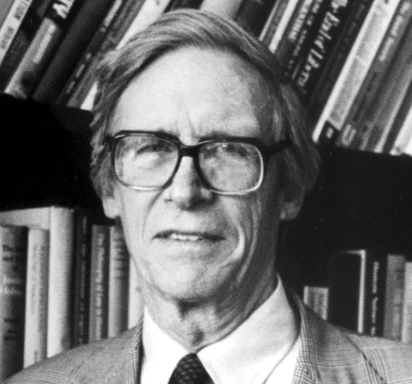
The principles of justice are chosen behind a veil of ignorance.
▼
Source
source
Chapter I, Section 3, pg. 12
6 months 3 weeks ago
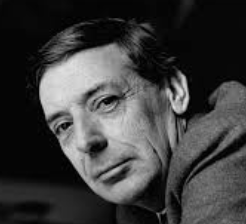
Deniers do not get their views just from simple mistakes about language and truth. Rather, they believe that there is something to worry about in important areas of our thought and in traditional interpretations of those areas; they sense that it has something to do with truth; and (no doubt driven by the familiar desire to say something at once hugely general, deeply important, and reassuringly simple) they extend their worry to the notion of truth itself.
▼
Source
source
p. 6
8 months 4 weeks ago
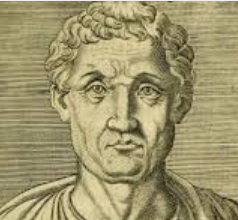
For when every judgement is the act of hym that judgeth, it behoveth that every man performe hys worke and purpose, not by any forayne or straunge power or facultie, but by his owne proper power, and strength.

8 months 1 week ago
Consider what you have in the smallest chosen library. A company of the wisest and wittiest men that could be picked out of all civil countries, in a thousand years, have set in best order the results of their learning and wisdom. The men themselves were hid and inaccessible, solitary, impatient of interruption, fenced by etiquette; but the thought which they did not uncover to their bosom friend is here written out in transparent words to us, the strangers of another age.

7 months 1 week ago
I cannot conceive how any man can have brought himself to that pitch of presumption, to consider his country as nothing but carte blanche, upon which he may scribble whatever he pleases.
▼
Source
source
Volume iii, p. 231
5 months 3 weeks ago
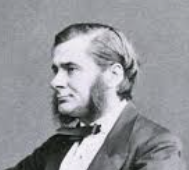
If Man be separated by no greater structural barrier from the brutes than they are from one another-then it seems to follow that if any process of physical causation can be discovered by which the genera and families of ordinary animals have been produced, that process of causation is amply sufficient to account for the origin of Man.
▼
Source
source
Ch.2, p. 125

6 months 3 weeks ago
Time begins to emit a scent when it gains duration; when it is given a narrative or deep tension; when it gains depth and breadth, even space.
5 months 3 days ago
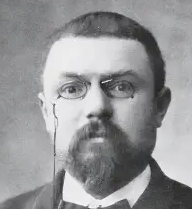
Is the position tenable, that certain phenomena, possible in Euclidean space, would be impossible in non-Euclidean space, so that experience, in establishing these phenomena, would directly contradict the non-Euclidean hypothesis? For my part I think no such question can be put. To my mind it is precisely equivalent to the following, whose absurdity is patent to all eyes: are there lengths expressible in meters and centimeters, but which can not be measured in fathoms, feet, and inches, so that experience, in ascertaining the existence of these lengths, would directly contradict the hypothesis that there are fathoms divided into six feet?
▼
Source
source
Ch. V: Experiment and Geometry (1905) Tr. George Bruce Halstead

5 months ago
He who takes not counsel of the Unseen and Silent, from him will never come real visibility and speech.
▼
Source
source
Bk. III, ch. 11.
8 months 1 week ago
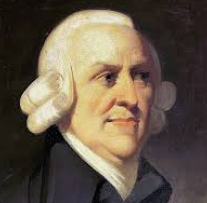
What is prudence in the conduct of every private family, can scarce be folly in that of a great kingdom.
▼
Source
source
Chapter II, p. 490.
6 months 2 days ago
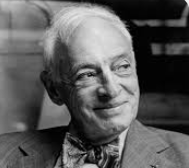
All a writer has to do to get a woman is to say he's a writer. It's an aphrodisiac.
▼
Source
source
As quoted in "Dailer's Choice" by Harriet Van Horne, in New York Magazine Vol. 10, No. 13 (28 March 1977), p. 80

8 months 1 week ago
In regard to man's final end, all the higher religions are in complete agreement. The purpose of human life is the discovery of Truth, the unitive knowledge of the Godhead. The degree to which this unitive knowledge is achieved here on earth determines the degree to which it will be enjoyed in the posthumous state. Contemplation of truth is the end, action the means.
9 months 1 week ago
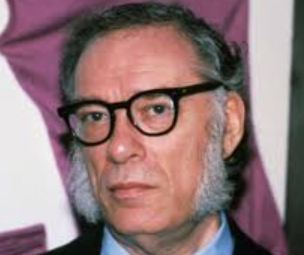
In my fiction I am careful to make everything probable and to tie up all loose ends. Real life is not hampered by such considerations.


8 months 5 days ago
Don't get involved in partial problems, but always take flight to where there is a free view over the whole single great problem, even if this view is still not a clear one.
▼
Source
source
Journal entry
9 months 1 week ago
Throughout history there have been peasant rebellions which have followed always the same course. Blindly, the peasants sacked and destroyed, and when members of the "upper classes" fell into their hands, they killed ruthlessly and cruelly, for never in their lives had they been taught gentleness and mercy by those now in their power.

6 months 3 weeks ago
We should have with each person the relationship of one conception of the universe to another conception of the universe, and not to a part of the universe.
▼
Source
source
p. 129

8 months 1 week ago
The career a young man should choose should be one that is most consonant with our dignity, one that is based on ideas of whose truth we are wholly convinced, one that offers us largest scope in working for humanity and approaching that general goal towards which each profession offers only one of the means: the goal of perfection ... If he works only for himself he can become a famous scholar, a great sage, an excellent imaginative writer [Dichter], but never a perfected, a truly great man.
▼
Source
source
in Karl Marx and World Literature (1976) by S. S. Prawer, p. 2.

4 months 3 weeks ago
When we leave you and assemble together by ourselves, we talk freely about his sayings and doings, treating them with the respect which they deserve: in your presence deep silence is observed about him, and thus you lose that greatest of pleasures, the hearing the praises of your son, which I doubt not you would be willing to hand down to all future ages, had you the means of so doing, even at the cost of your own life.

8 months 1 week ago
If you are not already dead, forgive. Rancor is heavy, it is worldly; leave it on earth: die light.
▼
Source
source
Act 1
7 months 3 weeks ago
Agesilaus was very fond of his children; and it is reported that once toying with them he got astride upon a reed as upon a horse, and rode about the room; and being seen by one of his friends, he desired him not to speak of it till he had children of his own.
▼
Source
source
Of Agesilaus the Great
4 months 3 weeks ago
By Hercules, the state would have sustained a great loss if you had not brought him forth from the oblivion to which his two splendid qualities, eloquence and independence, had consigned him: he is now read, is popular, is received into men's hands and bosoms, and fears no old age: but as for those who butchered him, before long men will cease to speak even of their crimes, the only things by which they are remembered.

6 months 3 weeks ago
And the soul, my soul at least, longs for something else, not absorption, not quietude, not peace, not appeasement, it longs ever to approach and never to arrive, it longs for the never-ending longing, for an eternal hope which is eternally renewed but never wholly fulfilled. And together with all this, it longs for an eternal lack of something and an eternal suffering. A suffering, a pain, thanks to which it grows without ceasing in consciousness and longing. Do not write upon the gate of heaven that sentence which Dante placed over the threshold of hell, Lasciate ogni speranza! [Lasciate ogne speranza, voi ch'intrate: All hope abandon, ye who enter in] Do not destroy time!
7 months 5 days ago
To suppose universal laws of nature capable of being apprehended by the mind and yet having no reason for their special forms, but standing inexplicable and irrational, is hardly a justifiable position. Uniformities are precisely the sort of facts that need to be accounted for. That a pitched coin should sometimes turn up heads and sometimes tails calls for no particular explanation; but if it shows heads every time, we wish to know how this result has been brought about. Law is par excellence the thing that wants a reason.

4 months 3 weeks ago
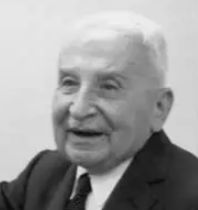
All rational action is economic. All economic activity is rational action. All rational action is in the first place individual action. Only the individual thinks. Only the individual reasons. Only the individual acts.
▼
Source
source
Part II : The Economics of a Socialist Community, § I : The Economics of an Isolated Socialist Community, Ch. 5 : The Nature of Economic Activity, p. 97
8 months 1 week ago
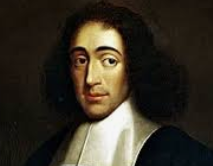
If slavery, barbarism and desolation are to be called peace, men can have no worse misfortune. No doubt there are usually more and sharper quarrels between parents and children, than between masters and slaves ; yet it advances not the art of household management to change a father's right into a right of property, and count children but as slaves. Slavery, then, and not peace, is furthered by handing the whole authority to one man.
▼
Source
source
Ch. 6, On Monarchy
4 months 1 week ago
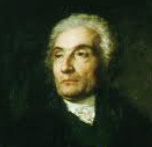
If sovereignty is not anterior to a people, at least these two ideas are collateral, since it takes a sovereign to make a people. It is as impossible to imagine a human society without a sovereign as a hive and a swarm without a queen, for a swarm, in virtue of the eternal laws of nature, exists in this way or it does not exist.
▼
Source
source
p. 53
7 months 3 weeks ago
Alcibiades had a very handsome dog, that cost him seven thousand drachmas; and he cut off his tail, "that," said he, "the Athenians may have this story to tell of me, and may concern themselves no further with me."
▼
Source
source
50 Alcibiades

7 months 2 days ago
We have reached the point where the Objective Logic turns into the Subjective Logic, or, where subjectivity emerges as the true form of objectivity. We may sum up Hegel's analysis in the following schema: The true form of reality requires freedom. Freedom requires self-consciousness and knowledge of the truth. Self-consciousness and knowledge of the truth are the essentials of the subject. The form of reality must be conceived as subject.
▼
Source
source
P. 154-155

7 months 2 weeks ago
A grievous crime indeed against religion has been committed by the man who imagines that Islam is defended by the denial of the mathematical sciences.
▼
Source
source
III. The Classes of Seekers, p. 23.

6 months 1 week ago
Paradox is the technique for seizing the conflicting aspects of any problem. Paradox coalesces or telescopes various facets of a complex process in a single instant.
▼
Source
source
(p. 106)
5 months 4 weeks ago
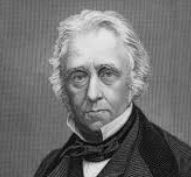
Many evils, no doubt, were produced by the civil war. They were the price of our liberty.
▼
Source
source
p. 39
8 months 4 weeks ago
Self-sufficiency is the greatest of all wealth.
4 months 1 week ago
The liberty of the whole earth was depending on the issue of the contest, and was ever such a prize won with so little innocent blood? My own affections have been deeply wounded by some of the martyrs to this cause, but rather than it should have failed, I would have seen half the earth desolated. Were there but an Adam & an Eve left in every country, & left free, it would be better than as it now is.
▼
Source
source
Letter to William Short (January 3, 1793), quoted in Stanley Elkins and Eric McKitrick, The Age of Federalism (1995), pp. 316-317

7 months 4 weeks ago
He who does wrong is more unhappy than he who suffers wrong.

5 months 4 days ago
The liberal world order that emerged, that... has these pragmatic and... moral dimensions has been severely challenged in the last few years, and the sources of this challenge are numerous. One is the rise of overtly authoritarian states like China and Russia. They have consolidated their rule. They seem to be stable internally, and they are increasingly seeking to project their power and influence, their model... across international borders.
▼
Source
source
19:23
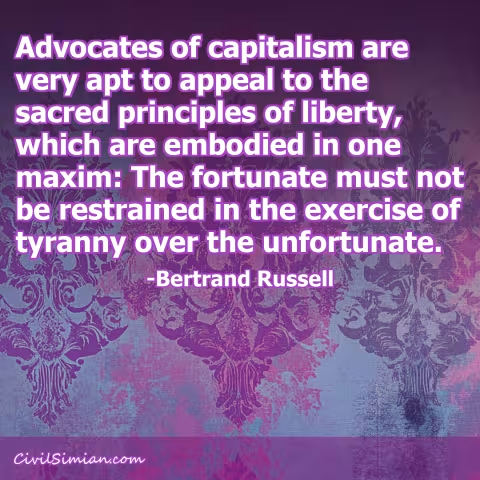
CivilSimian.com created by AxiomaticPanic, CivilSimian, Kalokagathia