


7 months 3 weeks ago
Nor knowest thou what argument Thy life to thy neighbor's creed has lent: All are needed by each one, Nothing is fair or good alone.
▼
Source
source
Each and All, st. 1
6 months 2 weeks ago
The spectacle of what religions have been in the past, of what certain religions still are to-day, is indeed humiliating for human intelligence. What a farrago of error and folly!'
▼
Source
source
Chapter II : Static Religion

7 months ago
I have often admired the mystical way of Pythagoras, and the secret Magic of numbers.
▼
Source
source
Section 12

4 months 2 weeks ago
I called it a small light shining and shaping in the huge vortex of Norse darkness. Yet the darkness itself was alive; consider that. It was the eager inarticulate uninstructed Mind of the whole Norse People, longing only to become articulate, to go on articulating ever farther!

7 months 3 weeks ago
Moreover, if the character is formed, and the mind made up, on the few cardinal points of human opinion, agreement of conviction and feeling on these, has been felt in all times to be an essential requisite of anything worthy the name of friendship, in a really earnest mind. All these circumstances united, made the number very small of those whose society, and still more whose intimacy, I now voluntarily sought.
▼
Source
source
(p. 229)

5 months 4 weeks ago
It is the perfection of God's works that they are all done with the greatest simplicity. He is the God of order and not of confusion. And therefore as they would understand the frame of the world must endeavor to reduce their knowledge to all possible simplicity, so must it be in seeking to understand these visions.
▼
Source
source
Cited in Rules for methodizing the Apocalypse, Rule 9, from a manuscript published in The Religion of Isaac Newton (1974) by Frank E. Manuel
6 months 3 weeks ago
No one, of a surety, wanders farther from the mark than he who fancies to himself that he already understands this marvellous Kingdom, and can, in few words, fathom its constitution, and everywhere find the right path. To no one, who has broken off, and made himself an Island, will insight rise of itself, nor even without toilsome effort. Only to children, or childlike men, who know not what they do, can this happen. Long, unwearied intercourse, free and wise Contemplation, attention to faint tokens and indications; an inward poet-life, practised senses, a simple and devout spirit: these are the essential requisites of a true Friend of Nature; without these no one can attain his wish.


4 months 1 week ago
I love men too, not merely individuals, but every one. But I love them with the consciousness of egoism; I love them because love makes me happy, I love because loving is natural to me, because it pleases me. I know no 'commandment of love'.
▼
Source
source
Cambridge 1995, p. 258

5 months 3 weeks ago
The printing press was at first mistaken for an engine of immortality by everybody except Shakespeare.
▼
Source
source
(p. 230)
7 months 1 week ago
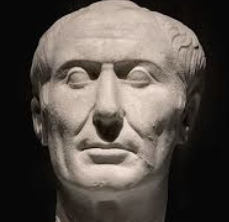
As Cæsar was at supper the discourse was of death,-which sort was the best. "That," said he, "which is unexpected."
▼
Source
source
Cæsar

7 months 3 weeks ago
It is sometimes maintained that racial mixture is biologically undesirable. There is no evidence whatever for this view. Nor is there, apparently, any reason to think that Negroes are congenitally less intelligent than white people, but as to that it will be difficult to judge until they have equal scope and equally good social conditions.
▼
Source
source
Part II: Man and Man, Ch. 12: Racial Antagonism, p. 108
7 months 2 weeks ago
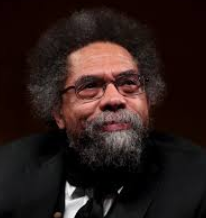
Harvard now, I think, suffers from a kind of self-idolatry, that it needs to be critical of itself in order to grow. And again, if you can be in contact with the best of its past, then it's got a chance. But if it just remains well adjusted to the status quo, generating careerist and opportunist students rather than critically oriented students who have a heart and soul, concerned about suffering here and around the world - then Harvard has a chance. I'm not giving up on Harvard, but I am making my way to New York.
▼
Source
source
Speaking in Too Radical for Harvard? Cornel West on Failed Fight for Tenure, Biden's First 50 Days & More, Democracy Now!

6 months 3 weeks ago
If insistence on them tends to unsettle established systems ... self-evident truths are by most people silently passed over; or else there is a tacit refusal to draw from them the most obvious inferences.
▼
Source
source
Ethics (New York:1915), § 14, pp. 38-39
5 months 3 weeks ago
The poor man is ruined as soon as he begins to ape the rich.
▼
Source
source
Maxim 941
6 months 3 weeks ago
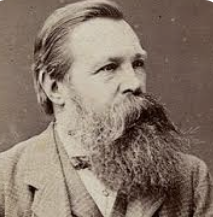
Labor is a commodity, like any other, and its price is therefore determined by exactly the same laws that apply to other commodities. In a regime of big industry or of free competition - as we shall see, the two come to the same thing - the price of a commodity is, on the average, always equal to its cost of production. Hence, the price of labor is also equal to the cost of production of labor. But, the costs of production of labor consist of precisely the quantity of means of subsistence necessary to enable the worker to continue working, and to prevent the working class from dying out. The worker will therefore get no more for his labor than is necessary for this purpose; the price of labor, or the wage, will, in other words, be the lowest, the minimum, required for the maintenance of life.


7 months 3 weeks ago
Don't for heaven's sake, be afraid of talking nonsense! But you must pay attention to your nonsense.
▼
Source
source
p. 56e
6 months 3 weeks ago
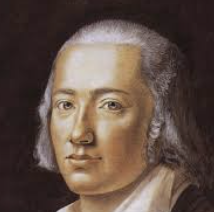
Before either of us knew it, we belonged to each other.

5 months 3 weeks ago
Although it is commonly supposed that war making is the specific activity of nations, the blind rage that motivates war destroys the very social bonds that make nations possible. Of course, it can fortify the nationalism of a nation, producing a provisional coherence bolstered by war and enmity, but it also erodes the social relations that make politics possible. The power of destruction unleashed by war breaks social ties and produces anger, revenge, and distrust ("embitterment") such that it becomes unclear whether reparation is possible, undermining not only those relations that may have been built in the past, but also the future possibility of peaceful coexistence.
▼
Source
source
p. 154
7 months 1 week ago
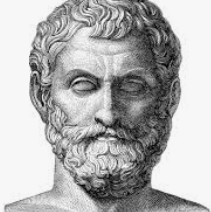
Time is the wisest of all things that are; for it brings everything to light.
▼
Source
source
As quoted in Diogenes Laërtius, The Lives and Opinions of Eminent Philosophers, I, 35
6 months 1 week ago
The theme of Cosmology, which is the basis of all religions, is the story of the dynamic effort of the World passing into everlasting unity, and of the static majesty of God's vision, accomplishing its purpose of completion by absorption of the World's multiplicity of effort.
▼
Source
source
Pt. V, ch. II, sec. V.

7 months 3 weeks ago
If the ability to tell right from wrong should turn out to have anything to do with the ability to think, then we must be able to "demand" its exercise from every sane person, no matter how erudite or ignorant, intelligent or stupid, he may happen to be. Kant-in this respect almost alone among the philosophers-was much bothered by the common opinion that philosophy is only for the few, precisely because of its moral implications.
▼
Source
source
p. 13
4 months 2 weeks ago
I knew Robert Burns, and I knew my father. Yet were you to ask me which had the greater natural faculty, I might perhaps actually pause before replying. Burns had an infinitely wider education, my father a far wholesomer. Besides, the one was a man of musical utterance; the other wholly a man of action, with speech subservient thereto. Never, of all the men I have seen, has one come personally in my way in whom the endowment from nature and the arena from fortune were so utterly out of all proportion. I have said this often, and partly know it. As a man of speculation - had culture ever unfolded him - he must have gone wild and desperate as Burns; hut he was a man of conduct, and work keeps all right. What strange shapable creatures we are!

5 months 3 weeks ago
The whole life of the upper classes is a constant inconsistency. The more delicate a man's conscience is, the more painful this contradiction is to him.
▼
Source
source
Chapter V, Contradiction Between our Life and our Christian Conscience
6 months 1 week ago
The mentality of mankind and the language of mankind created each other. If we like to assume the rise of language as a given fact, then it is not going too far to say that the souls of men are the gift from language to mankind. The account of the sixth day should be written: He gave them speech, and they became souls.
▼
Source
source
Modes of Thought (1938).
5 months 3 weeks ago
I suppose it is written that any one who sets up for a bit of a philosopher, must contradict himself to his very face. For here have I fairly talked myself into thinking that we have the whole thing before us at last; that there is no answer to the mystery, except that there are as many as you please; that there is no centre to the maze because, like the famous sphere, its centre is everywhere; and that agreeing to differ with every ceremony of politeness, is the only "one undisturbed song of pure concent" to which we are ever likely to lend our musical voices.
▼
Source
source
Crabbed Age and Youth.
7 months 1 week ago
After he routed Pharnaces Ponticus at the first assault, he wrote thus to his friends: "I came, I saw, I conquered."
▼
Source
source
Cæsar
6 months 3 weeks ago
The political freedom of conscience and of the press, so far from being as it is commonly supposed an extension, is a new case of the limitation of rights and discretion. Conscience and the press ought to be unrestrained, not because men have a right to deviate from the exact line that duty prescribes, but because society, the aggregate of individuals, has no right to assume the prerogative of an infallible judge, and to undertake authoritatively to prescribe to its members in matters of pure speculation.
▼
Source
source
Vol. 1, bk 2 : Principles of Society , Ch. 5 : Of Rights

8 months 3 days ago
He that I am reading seems always to have the most force.
▼
Source
source
Book II, Ch. 12. Apology for Raimond Sebond

3 months 3 weeks ago
A cucumber is bitter. Throw it away. There are briars in the road. Turn aside from them. This is enough. Do not add, "And why were such things made in the world?"
▼
Source
source
VIII. 50, trans. George Long

6 months 1 week ago
As a way of maintaining relative intellectual independence, having the attitude of an amateur instead of a professional is a better course.
▼
Source
source
p. 87
3 months 3 weeks ago
The Cry within me is a call to arms. It shouts: "I, the Cry, am the Lord your God! I am not an asylum. I am not hope and a home. I am not the Father nor the Son nor the Holy Ghost. I am your General! "You are not my slave, nor a plaything in my hands. You are not my friend, you are not my child. You are my comrade-in-arms! "Hold courageously the passes which I entrusted to you; do not betray them. You are in duty bound, and you may act heroically by remaining at your own battle station. "Love danger. What is most difficult? That is what I want! Which road should you take? The most craggy ascent! It is the one I also take: follow me!
7 months 3 weeks ago
People say law but they mean wealth.
▼
Source
source
1841
8 months 4 days ago
I dare affirm in knowledge of nature, that a little natural philosophy, and the first entrance into it, doth dispose the opinion to atheism; but on the other side, much natural philosophy and wading deep into it, will bring about men's minds to religion; wherefore atheism every way seems to be combined with folly and ignorance, seeing nothing can can be more justly allotted to be the saying of fools than this, "There is no God" Of Atheism.

6 months 3 weeks ago
Every act of courage is the work of an unbalanced man. Animals, normal by definition, are always cowardly except when they know themselves to be stronger, which is cowardice itself.

7 months 3 weeks ago
As for me, I am mean: that means that I need the suffering of others to exist. A flame. A flame in their hearts. When I am all alone, I am extinguished.
▼
Source
source
Inès, describing her path to Hell, Act 1, sc. 5
6 months 2 weeks ago
At one time in his life the apostate radically changes his political, religious or philosophical convictions by taking up all possible means of argumentation against that which he formerly held to be true, and lives now for the sake of its negation. His new ideas and opinions consist in continuous acts of revenge on his spiritual past.
▼
Source
source
Manfred Frings, Max Scheler (1996), p. 60
6 months 3 weeks ago
You can take away a man's gods, but only to give him others in return.
▼
Source
source
p 63

8 months 3 days ago
One ought to fast, watch, and labor to the extent that such activities are needed to harness the body's desires and longings; however, those who presume that they are justified by works pay no attention to the need for self-discipline but see the works themselves as the way to righteousness. They believe that if they do a great number of impressive works all will be well and righteousness will be the result. Sometimes this is pursued with such zeal that they become mentally unstable and their bodies are sapped of all strength. Such disastrous consequences demonstrate that the belief that we are justified and saved by works without faith is extremely foolish.
▼
Source
source
p. 73
7 months 3 weeks ago
What is troubling us is the tendency to believe that the mind is like a little man within.
▼
Source
source
Remarks to John Wisdom, quoted in Zen and the Work of WIttgenstein by Paul Weinpaul in The Chicago Review Vol. 12, (1958), p. 70
8 months 4 days ago
We are much beholden to Machiavel and others, that write what men do, and not what they ought to do.
▼
Source
source
Book II, xxi, 9

7 months 3 weeks ago
Every one knows that there are no real forests in England. The deer in the parks of the great are demurely domestic cattle, fat as London alderman.
▼
Source
source
Vol. I, Ch. 27, pg. 803.
6 months 1 week ago
Both dreams and myths are important communications from ourselves to ourselves. If we do not understand the language in which they are written, we miss a great deal of what we know and tell ourselves in those hours when we are not busy manipulating the outside world.
▼
Source
source
As quoted in The New York Times
3 months 3 weeks ago
I'm constantly amazed by how easily we love ourselves above all others, yet we put more stock in the opinions of others than in our own estimation of self....How much credence we give to the opinions our peers have of us and how little to our very own!
▼
Source
source
XII. 4:160
7 months 3 weeks ago
Those in the crossing must in the end know what is mistaken by all urging for intelligibility: that every thinking of being, all philosophy, can never be confirmed by "facts," ie, by beings. Making itself intelligible is suicide for philosophy. Those who idolize "facts" never notice that their idols only shine in a borrowed light. They are also meant not to notice this; for thereupon they would have to be at a loss and therefore useless. But idolizers and idols are used wherever gods are in flight and so announce their nearness.
▼
Source
source
Contributions to Philosophy (From Enowning) [Beitrage Zur Philosophie (Vom Ereignis)], notes of 1936-1938, as translated by Parvis Emad and Kenneth Maly
CivilSimian.com created by AxiomaticPanic, CivilSimian, Kalokagathia