

7 months 1 week ago
Man has many wishes that he does not really wish to fulfil, and it would be a misunderstanding to suppose the contrary. He wants them to remain wishes, they have value only in his imagination; their fulfilment would be a bitter disappointment to him. Such a desire is the desire for eternal life. If it were fulfilled, man would become thoroughly sick of living eternally, and yearn for death. In reality man wishes merely to avoid a premature, violent or gruesome death. Everything has its measure, says a pagan philosopher; in the end we weary of everything, even of life; a time comes when man desires death. Consequently there is nothing frightening about a normal, natural death, the death of a man who has fulfilled himself and lived out his life.
▼
Source
source
Lecture XXX, Atheism alone a Positive View

4 months 6 days ago
Is it not better to use what is in thy power like a free man than to desire in a slavish and abject way what is not in thy power?
▼
Source
source
IX, 40
4 months 1 week ago
A whale is not a fish in natural history, but it is a fish in commerce and law. A plea that human laws which mention fish do not apply to whales, would be rejected at once by an intelligent judge.
4 months 1 week ago
The Plan of the System, may aim at a Natural or an Artificial System. But no classes can be absolutely artificial, for if they were, no assertions could be made concerning them.
9 months 1 week ago
Where there have been powerful governments, societies, religions, public opinions, in short wherever there has been tyranny, there the solitary philosopher has been hated; for philosophy offers an asylum to a man into which no tyranny can force it way, the inward cave, the labyrinth of the heart.
6 months 3 weeks ago
Among most Christians the Old Testament is little read in comparison to the New Testament. Furthermore, much of what is read is often distorted by prejudice. Frequently the Old Testament is believed to express exclusively the principles of justice and revenge, in contrast to the New Testament, which represents those of love and mercy; even the sentence, "Love your neighbor as yourself," is thought by many to derive from the New, not the Old Testament. Or the Old Testament is believed to have been written exclusively in the spirit of narrow nationalism and to contain nothing of supranational universalism so characteristic of the New Testament.
▼
Source
source
You Shall Be as Gods: A Radical Interpretation of the Old Testament and Its Tradition (1966) "Introduction"

7 months 2 weeks ago
It is manifest that every soul has a certain continuity with the soul of the Universe, so that it must be understood to exist and to be included not only there where it liveth and feeleth, but it is also by its essence and substance diffused throughout immensity. The power of each soul is itself somehow present afar in the Universe. It is not mixed, yet is there in some presence.
8 months 1 week ago
Psychologists have hitherto failed to realize that imagination is a necessary ingredient of perception itself.
▼
Source
source
A 120

8 months 1 week ago
I believe that the early success and reputation of Carlyle's French Revolution, were considerably accelerated by what I wrote about it in the Review. Immediately on its publication, and before the commonplace critics, all whose rules and modes of judgment it set at defiance, had time to preoccupy the public with their disapproval of it, I wrote and published a review of the book, hailing it as one of those productions of genius which are above all rules, and are a law to themselves.
▼
Source
source
(p. 217)


9 months 1 week ago
I am an atheist, out and out. It took me a long time to say it. I've been an atheist for years and years, but somehow I felt it was intellectually unrespectable to say one was an atheist, because it assumed knowledge that one didn't have. Somehow, it was better to say one was a humanist or an agnostic. I finally decided that I'm a creature of emotion as well as of reason. Emotionally, I am an atheist. I don't have the evidence to prove that God doesn't exist, but I so strongly suspect he doesn't that I don't want to waste my time.
8 months 1 week ago
The man of principles has character. Of him we know definitely what to expect. He does not act on the basis of his instinct, but on the basis of his will. Therefore, without being redundant one can classify characteristics according to a person's faculty of desire (what is practical), as a) his nature, or natural talent, b) his temperament, or disposition, and c) his general character, or mode of thinking.
▼
Source
source
Kant, Immanuel (1996), page 195

4 months 3 weeks ago
The wise man is joyful, happy and calm, unshaken, he lives on a plane with the gods.

8 months 2 weeks ago
A constant element of enjoyment must be mingled with our studies, so that we think of learning as a game rather than a form of drudgery, for no activity can be continued for long if it does not to some extent afford pleasure to the participant.
▼
Source
source
Letter to Christian Northoff (1497), as translated in Collected Works of Erasmus (1974), p. 114
1 year 1 week ago
I found there, on the central square (Václavské náměstí), a café that miraculously worked through this emergency. I remember they had wonderful strawberry cakes, and I was sitting there eating strawberry cakes and watching Russian tanks against demonstrators. It was perfect.
5 months 6 days ago
In order to properly understand the big picture, everyone should fear becoming mentally clouded and obsessed with one small section of truth.
▼
Source
source
Quoted in: Joan Klostermann-Ketels (2011) HumaniTrees, p. 96

8 months 4 days ago
If our intention now is to reveal classical unreason on its own terms, outside of its ties with dreams and error, it must be understood not as a form of reason that is somehow diseased, lost or mad, but quite simply as reason dazzled.
▼
Source
source
Part Two: 2. The Transcendence of Delirium
3 months 4 weeks ago
I never think of the future. It comes soon enough.

6 months 3 weeks ago
If science is not to degenerate into a medley of ad hoc hypotheses, it must become philosophical and must enter upon a thorough criticism of its own foundations.
▼
Source
source
Ch. 1: "The Origins of Modern Science", p. 24

8 months 1 week ago
The effects of opposition are wonderful. There are men who rise refreshed on hearing of a threat, - men to whom a crisis which intimidates and paralyzes the majority - demanding, not the faculties of prudence and thrift, but comprehension, immovableness, the readiness of sacrifice - comes graceful and beloved as a bride!
▼
Source
source
p. 189

5 months ago
The infinite, absolute character of Virtue has passed into a finite, conditional one; it is no longer a worship of the Beautiful and Good; but a calculation of the Profitable.
6 months 1 week ago
Nonviolence does not make sense without a commitment to equality. The reason why nonviolence requires a commitment to equality can best be understood by considering that in this world some lives are more clearly valued than others, and that this inequality implies that certain lives will be more tenaciously defended than others. If one opposes the violence done to human lives-or, indeed, to other living beings-this presumes that it is because those lives are valuable. Our opposition affirms those lives as valuable. If they were to be lost as a result of violence, that loss would be registered as a loss only because those lives were affirmed as having a living value, and that, in turn, means we regard those lives as worthy of grief.
▼
Source
source
p. 28

7 months 2 days ago
Then are the children free. Notwithstanding, lest we should offend them, go thou to the sea, and cast an hook, and take up the fish that first cometh up; and when thou hast opened his mouth, thou shalt find a piece of money: that take, and give unto them for me and thee.
▼
Source
source
17:26-27 (KJV)

7 months 1 week ago
It cannot but happen that those individuals whose functions are most out of equilibrium with the modified aggregate of external forces, will be those to die; and that those will survive whose functions happen to be most nearly in equilibrium with the modified aggregate of external forces. But this survival of the fittest, implies multiplication of the fittest. Out of the fittest thus multiplied, there will, as before, be an overthrowing of the moving equilibrium wherever it presents the least opposing force to the new incident force.
▼
Source
source
The Principles of Biology, Vol. I (1864), Part III: The Evolution of Life, Ch. 7: Indirect Equilibration
4 months 2 weeks ago
I go into the Upanishads to ask questions.
▼
Source
source
As quoted in God Is Not One : The Eight Rival Religions That Run the World and Why Their Differences Matter (2010), by Stephen Prothero, Ch, 4 : Hinduism : The Way of Devotion, p. 144
7 months 2 days ago
Suffer little children, and forbid them not, to come unto me: for of such is the kingdom of heaven.
▼
Source
source
19:14 (KJV)
7 months 1 week ago
The weapon of the Republic is terror, and virtue is its strength.
▼
Source
source
Act I.
4 months 1 week ago
Every word is an adamantine shell which encloses a great explosive force. To discover its meaning you must let it burst inside you like a bomb and in this way liberate the soul which it imprisons.
▼
Source
source
Massacre, Ch. 10, p. 88

8 months 1 week ago
No man's knowledge here can go beyond his experience.
▼
Source
source
Book II, Ch. 1, sec. 19

8 months 3 weeks ago
Rules necessary for demonstrations. To prove all propositions, and to employ nothing for their proof but axioms fully evident of themselves, or propositions already demonstrated or admitted; Never to take advantage of the ambiguity of terms by failing mentally to substitute definitions that restrict or explain them.
5 months 2 weeks ago
The irony of the post-Cold War period is that the fall of communism was followed by the rise of another utopian ideology. In American and Britain, and to a lesser extent other Western countries, a type of market fundamentalism became the guiding philosophy. The collapse of American power that is underway is the predictable upshot.
6 months 3 days ago
What ideas individuals may attach to the term "Millennium" I know not; but I know that society may be formed so as to exist without crime, without poverty, with health greatly improved, with little, if any misery, and with intelligence and happiness increased a hundredfold; and no obstacle whatsoever intervenes at this moment except ignorance to prevent such a state of society from becoming universal.
8 months 2 weeks ago
You worry whether the drought will end. It is far better that you pray that God may water your mind lest virtue wither away in it. You are greatly concerned with money that is lost or being wasted, or you worry about the advance of old age. I think it much to be desired that you provide first of all for the needs of your soul.

6 months 2 weeks ago
Do not commence your exercises in philosophy in those regions where an error can deliver you over to the executioner.
▼
Source
source
C 16
8 months 1 week ago
How can great minds be produced in a country where the test of a great mind is agreeing in the opinions of small minds?
▼
Source
source
As quoted in Egoists: A Book of Supermen (1909) by James Huneker, p. 367

8 months 1 week ago
In the sphere of thought, absurdity and perversity remain the masters of the world, and their dominion is suspended only for brief periods.
▼
Source
source
"The Art of Controversy" as translated by T. Bailey Saunders
6 months 3 weeks ago
Capitalism lacks narrativity.
8 months 2 weeks ago
I have no patience with those who say that sexual excitement is shameful and that venereal stimuli have their origin not in nature, but in sin. Nothing is so far from the truth. As if marriage, whose function cannot be fulfilled without these incitements, did not rise above blame. In other living creatures, where do these incitements come from? From nature or from sin? From nature, of course. It must borne in mind that in the apetites of the body there is very little difference between man and other living creatures. Finally, we defile by our imagination what of its own nature is fair and holy. If we were willing to evaluate things not according to the opinion of the crowd, but according to nature itself, how is it less repulsive to eat, chew, digest, evacuate, and sleep after the fashion of dumb animals, than to enjoy lawful and permitted carnal relations?
▼
Source
source
In Praise of Marriage (1519), in Erasmus on Women (1996) Erika Rummel
7 months 2 days ago
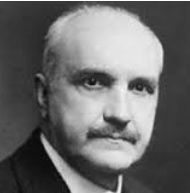
Although a poem be not made by counting of syllables upon the fingers, yet "numbers" is the most poetical synonym we have for verse, and "measure" the most significant equivalent for beauty, for goodness, and perhaps even for truth. Those early and profound philosophers, the followers of Pythagoras, saw the essence of all things in number, and it was by weight, measure, and number, as we read in the Bible, that the Creator first brought Nature out of the void.
▼
Source
source
Interpretations of Poetry and Religion (1900), p. 251
4 months 6 days ago
But if we judge only those things which are in our power to be good or bad, there remains no reason either for finding fault with God or standing in a hostile attitude to man.
▼
Source
source
VI, 41
7 months 1 week ago
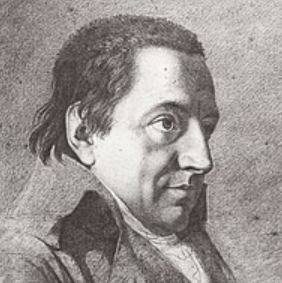
Thus then does the Doctrine of Knowledge, which in its substance is the realisation of the absolute Power of intelligising which has now been defined, end with the recognition of itself as a mere Schema in a Doctrine of Wisdom, although indeed a necessary and indispensable means to such a Doctrine: - a Schema, the sole aim of which is, with the knowledge thus acquired, - by which knowledge alone a Will, clear and intelligible to itself and reposing upon itself without wavering or perplexity, is possible, - to return wholly into Actual Life; - not into the Life of blind and irrational Instinct which we have laid bare in all its nothingness, but into the Divine Life which shall become visible to us.

8 months 1 week ago
I heartily accept the motto, "That government is best which governs least"; and I should like to see it acted up to more rapidly and systematically. Carried out, it finally amounts to this, which also I believe - "That government is best which governs not at all"; and when men are prepared for it, that will be the kind of government which they will have.
7 months 2 days ago
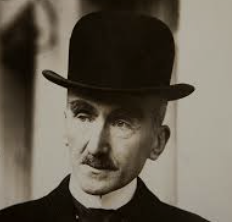
The open society is one that is deemed in principle to embrace all humanity.
▼
Source
source
Chapter IV
9 months 6 days ago
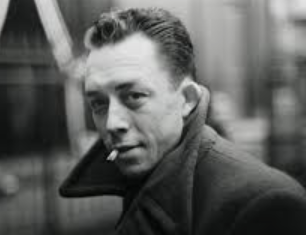
I may not have been sure about what really did interest me, but I was absolutely sure about what didn't.
8 months 1 week ago
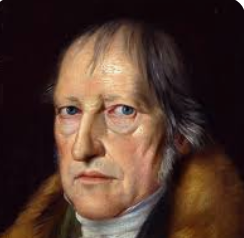
The first remark we have to make, and which - though already presented more than once - cannot be too often repeated when the occasion seems to call for it, - is that what we call principle, aim, destiny, or the nature and idea of Spirit, is something merely general and abstract. Principle - Plan of Existence - Law - is a hidden, undeveloped essence, which as such - however true in itself - is not completely real.

8 months 5 days ago
The less somebody knows and understands himself the less great he is, however great may be his talent. For this reason our scientists are not great.
▼
Source
source
p. 51e
CivilSimian.com created by AxiomaticPanic, CivilSimian, Kalokagathia