


7 months 3 weeks ago
We must plan for freedom, and not only for security, if for no other reason than that only freedom can make security secure.
▼
Source
source
Vol. 2, Ch. 21 "An Evaluation of the Prophecy"

6 months 2 weeks ago
All natures, all formed things, all creatures exist in and with one another and will again be resolved into their own roots, because the nature of matter is dissolved into the roots of its nature alone. He who has ears to hear, let him hear.

3 months 3 weeks ago
Be not as one that hath ten thousand years to live; death is nigh at hand: while thou livest, while thou hast time, be good.
▼
Source
source
Meditations. iv. 17.
7 months 3 weeks ago
Power and violence are opposites; where the one rules absolutely, the other is absent. Violence appears where power is in jeopardy, but left to its own course it ends in power's disappearance.
▼
Source
source
"On Violence"


3 months 3 weeks ago
Observe always that everything is the result of a change, and get used to thinking that there is nothing Nature loves so well as to change existing forms and to make new ones like them.
▼
Source
source
IV, 36

7 months 2 weeks ago
All those movements which took place in the fifteenth and sixteenth centuries and which had the Reformation as their main expression and result should be analyzed as a great crisis of the Western experience of subjectivity and a revolt against the kind of religious and moral power which gave form, during the Middle Ages, to this subjectivity. The need to take a direct part in spiritual life, in the work of salvation, in the truth which lies in the Book-all that was a struggle for a new subjectivity.
▼
Source
source
p. 782
4 months 6 days ago
Anyone who proposes to do good must not expect people to roll stones out of his way, but must accept his lot calmly if they even roll a few more upon it. A strength which becomes clearer and stronger through its experience of such obstacles is the only strength that can conquer them. Resistance is only a waste of strength.
▼
Source
source
p. 164
3 months 3 weeks ago
Doth perfect beauty stand in need of praise at all? Nay; no more than law, no more than truth, no more than loving kindness, nor than modesty.
▼
Source
source
IV, 20
4 months 4 days ago
It is my opinion that the present subject interests all: "Whatever breathes, and moves upon the earth," all that are endowed with existence, with a rational soul, and with a mind: but that above all others it interests myself, inasmuch as I am a votary of the Sun.

7 months 3 weeks ago
We live, in fact, in a world starved for solitude, silence, and privacy: and therefore starved for meditation and true friendship.
8 months 2 weeks ago
If we admit the existence of the prophetic mission, by putting the idea of possibility, which is in fact ignorance, in place of certainty, and make miracles a proof of the truth of man who claims to be a prophet it becomes necessary that they should not be used by a person, who says that they can be performed by others than prophets, as the Mutakallimun do.
6 months 1 week ago
A clash of doctrines is not a disaster - it is an opportunity.
▼
Source
source
Ch. 12: "Religion and Science", p. 259
6 months 3 weeks ago
The law of habit exhibits a striking contrast to all physical laws in the character of its commands. A physical law is absolute. What it requires is an exact relation. Thus, a physical force introduces into a motion a component motion to be combined with the rest by the parallelogram of forces; but the component motion must actually take place exactly as required by the law of force. On the other hand, no exact conformity is required by the mental law. Nay, exact conformity would be in downright conflict with the law ; since it would instantly crystallise thought and prevent all further formation of habit. The law of mind only makes a given feeling more likely to arise. It thus resembles the "non-conservative" forces of physics, such as viscosity and the like, which are due to statistical uniformities in the chance encounters of trillions of molecules.
7 months 1 week ago
Educate the children and it won't be necessary to punish the men.
▼
Source
source
As quoted in Geary's Guide to the World's Great Aphorists (2007) by James Geary

4 months 1 week ago
The wise man is joyful, happy and calm, unshaken, he lives on a plane with the gods.
3 months 3 weeks ago
How can the Universe tell its own story save by making use of human speech; how convey its meanings to finite minds save by employing a thinker to declare them? So long as the story remains unspoken, unwritten, can we say it exists at all? Does not the significance of things become a story by the very process which ends in the movement of an intelligently guided pen over a sheet of paper, in the reading of printed types, in the utterance of recognised vocables; and until this process has been accomplished is not the "meaning" a mere promise or unrealized potency? Can we learn the history of the world, and of human life, otherwise than by reading, or hearing it spoken? How, then, can we receive it without the intermediation of a writer, a speaker?
8 months 3 weeks ago
Outside of that single fatality of death, everything, joy or happiness, is liberty.
3 months 3 weeks ago
Faith is nothing else than reason grown courageous - reason raised to its highest power, expanded to its widest vision.
▼
Source
source
"Religious Perplexities" (1922), his Hibbert Lecture.

7 months 1 week ago
But after these, Pythagoras changed that philosophy, which is conversant about geometry itself, into the form of a liberal doctrine, considering its principles in a more exalted manner; and investigating its theorems immaterially and intellectually; who likewise invented a treatise of such things as cannot be explained in geometry, and discovered the constitution of the mundane figures.
▼
Source
source
Chap. IV.
6 months 3 days ago
Analytic philosophers - both in the 'constructivist' camp and in the camp that studies 'the ordinary use of words' - are disturbingly unanimous in regarding 2-valued logic as having a privileged position: privileged, not just in the sense of corresponding to the way we do speak, but in the sense of having no serious rival for logical reasons. If the foregoing analysis is correct, this is a prejudice of the same kind as the famous prejudice in favor of a privileged status for Euclidean geometry (a prejudice that survives in the tendency to cite 'space has three dimensions' as some kind of 'necessary' truth). One can go over from a 2-valued to a 3-valued logic without totally changing the meaning of 'true' and 'false'; and not just in silly ways, like the ones usually cited (e.g. equating truth with high probability, falsity with low probability, and middlehood with 'in between' probability).
▼
Source
source
"Three-valued logic"
8 months 3 weeks ago
Since my earliest childhood a barb of sorrow has lodged in my heart. As long as it stays I am ironic - if it is pulled out I shall die.

7 months 2 weeks ago
Make sure that your religion is a matter between you and God only.
▼
Source
source
Comment to Maurice O'Connor Drury, as quoted in Wittgenstein Reads Freud : The Myth of the Unconscious (1996) by Jacques Bouveresse, as translated by Carol Cosman, p. 14

6 months 3 weeks ago
Compared to the refined culture of sclerotic forms and frames, which mask everything, the lyrical mode is utterly barbarian in its expression. Its value resides precisely in its savage quality: it is only blood, sincerity, and fire.
4 months 3 days ago
True peace of mind comes from accepting the worst.
▼
Source
source
p. 158

7 months 2 weeks ago
Good means not [merely] not to do wrong, but rather not to desire to do wrong.

6 months 3 weeks ago
Early and provident fear is the mother of safety.
▼
Source
source
Speech on the Petition of the Unitarians (11 May 1792), volume vii, p. 50
6 months 1 week ago
I realize the malady of the oppressed and disinherited masses only too well, but I refuse to prescribe the usual ridiculous palliatives which allow the patient neither to die nor to recover. One cannot be too extreme in dealing with social ills; besides, the extreme thing is generally the true thing. My lack of faith in the majority is dictated by my faith in the potentialities of the individual. Only when the latter becomes free to choose his associates for a common purpose, can we hope for order and harmony out of this world of chaos and inequality.

6 months 3 weeks ago
Fathers and teachers, I ponder, "What is hell?" I maintain that it is the suffering of being unable to love.
▼
Source
source
Book VI, Chapter 3 (trans. Constance Garnett)

7 months 3 weeks ago
I call upon you, young men, to obey your heart, and be the nobility of this land. In every age of the world, there has been a leading nation, one of a more generous sentiment, whose eminent citizens were willing to stand for the interests of general justice and humanity, at the risk of being called, by the men of the moment, chimerical and fantastic. Which should be that nation but these States? Which should lead that movement, if not New England? Who should lead the leaders, but the Young American?
7 months 3 weeks ago
The Prodigal Son at least walked home on his own feet. But who can duly adore that Love which will open the high gates to a prodigal who is brought in kicking, struggling, resentful, and darting his eyes in every direction for a chance of escape?
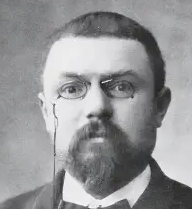
4 months 2 weeks ago
We do not have and cannot have any means of discovering whether or not we are carried along in a uniform motion of translation.
▼
Source
source
L'état actuel et l'avenir de la physique mathematique

7 months 3 weeks ago
The aggregate capital appears as the capital stock of all individual capitalists combined. This joint stock company has in common with many other stock companies that everyone knows what he puts in, but not what he will get out of it.
▼
Source
source
Vol. II, Ch. XX, p. 437.

7 months 3 weeks ago
Those only are happy (I thought) who have their minds fixed on some object other than their own happiness; on the happiness of others, on the improvement of mankind, even on some art or pursuit, followed not as a means, but as itself an ideal end. Aiming thus at something else, they find happiness by the way.
▼
Source
source
(p. 142)

4 months 2 weeks ago
Constitution,-the apex of all its intelligences and mighty instincts and dumb longings: it is I? William Conqueror's big gifts, and Edward's and Elizabeth's; Oliver's lightning soul, noble as Sinai and the thunders of the Lord: these are mine, I begin to perceive,-to a certain extent. These heroisms have I,-though rather shy of exhibiting them. These; and something withal of the huge beaver-faculty of our Arkwrights, Brindleys; touches too of the phoenix-melodies and sunny heroisms of our Shakspeares, of our Singers, Sages and inspired Thinkers all this is in me, I will hope,-though rather shy of exhibiting it on common occasions.

8 months 1 week ago
You called and cried out loud and shattered my deafness. You were radiant and resplendent, you put to flight my blindness. You were fragrant, and I drew in my breath and now pant after you. I tasted you, and I feel but hunger and thirst for you. You touched me, and I am set on fire to attain the peace which is yours.
6 months 3 weeks ago
The evil of marriage, as is it practiced in the European countries, extends further than we have yet described. The method is for a thoughtless and romantic youth of each sex, to come together, to see each other, for a few times, and under circumstances full of delusion and then to vow eternal attachment. What is the consequence of this? In almost every instance they find themselves deceived. They are reduced to make the best of an irretrievable mistake. They are led to conceive it their wiser policy, to shut their eyes upon realities, happy, if by any perversion of intellect, they can persuade themselves that they were right in their first crude opinion of each other. Thus the institution of marriage is made a system of fraud; and men who carefully mislead their judgement in the daily affair of their life, must be expected to have a crippled judgement in every other concern.
8 months 4 days ago
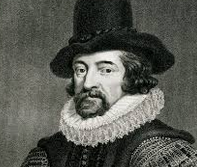
Riches are a good handmaid, but the worst mistress.
▼
Source
source
De Augmentis Scientiarum, Book II, "Antitheta"
6 months 2 weeks ago
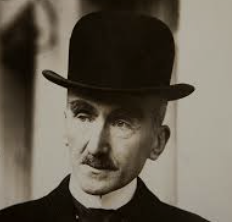
Men do not sufficiently realise that their future is in their own hands. Theirs is the task of determining first of all whether they want to go on living or not. Theirs is the responsibility, then, for deciding if they want merely to live, or intend to make just the extra effort required for fulfilling, even on their refractory planet, the essential function of the universe, which is a machine for the making of gods.
6 months 3 weeks ago
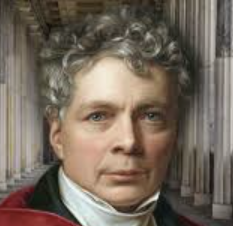
It is easy to see that this problem can be solved neither in theoretical nor in practical philosophy, but only in a higher discipline, which is the link that combines them, and neither theoretical nor practical, but both at once.
6 months 1 week ago
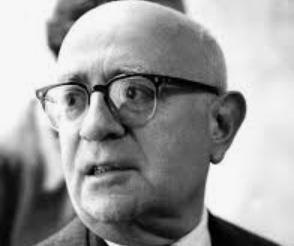
Advancing bourgeois society liquidates memory, time, recollection as irrational leftovers of the past.
▼
Source
source
"Was bedeutet Aufarbeitung der Vergangenheit"
7 months 3 weeks ago
Our age is retrospective. It builds the sepulchres of the fathers. It writes biographies, histories, and criticism. The foregoing generation beheld God and nature face to face; we, through their eyes. Why should not we also enjoy an original relation to the universe. Why should not we have a poetry and philosophy of insight and not of tradition, and a religion by revelation to us, and not the history of theirs?
▼
Source
source
Introduction
7 months 2 weeks ago
Reading the Socratic dialogues one has the feeling: what a frightful waste of time! What's the point of these arguments that prove nothing and clarify nothing?
▼
Source
source
p. 14e
3 months 3 weeks ago
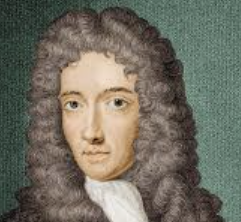
And if the matter of the Philosophers Stone, and the manner of preparing it, be such Mysteries as they would have the World believe them, they may Write Intelligibly and Clearly of the Principles of mixt Bodies in General, without Discovering what they call the Great Work.
8 months 3 weeks ago
The most elementary form of rebellion, paradoxically, expresses an aspiration for order.
CivilSimian.com created by AxiomaticPanic, CivilSimian, Kalokagathia