

8 months 2 weeks ago
The day of your birth is one day's advance towards the grave.
▼
Source
source
Ch. 20. Of the Force of Imagination (tr. Cotton, rev. W. Carew Hazlitt, 1877) Cf. Dávid Baróti Szabó, Nem kímíl meg senkit halál, wr. 1786; ed. 1914

8 months 1 week ago
All that I know about my life, it seems, I have learned in books.
7 months 3 weeks ago
He made one of Antipater's recommendation a judge; and perceiving afterwards that his hair and beard were coloured, he removed him, saying, "I could not think one that was faithless in his hair could be trusty in his deeds."
▼
Source
source
40 Philip

8 months 5 days ago
It is true: Man is the microcosm: I am my world.
▼
Source
source
Journal entry (12 October 1916), p. 84e
6 months 2 weeks ago
He who is enamored of himself will at least have the advantage of being inconvenienced by few rivals.
▼
Source
source
H 10 Variant translation: He who is in love with himself has at least this advantage - he won't encounter many rivals.
4 months 3 weeks ago
A free man must be able to endure it when his fellow men act and live otherwise than he considers proper. He must free himself from the habit, just as soon as something does not please him, of calling for the police.
▼
Source
source
Ch. 1 : The Foundations of Liberal Policy § 11 : The Limits of Governmental Activity

8 months 3 weeks ago
God judged it better to bring good out of evil than to suffer no evil to exist.
▼
Source
source
Enchiridion (c. 420 ), Ch. 27

5 months ago
I suggest that scientific knowledge, though logically more articulate and far more complex, is of this sort. The books and teachers from whom it is acquired present concrete examples together with a multitude of theoretical generalizations. Both are essential carriers of knowledge, and it is therefore Pickwickian to seek a methodological criterion that supposes the scientist can specify in advance whether each imaginable instance fits or would falsify his theory.
▼
Source
source
"Logic of Discovery or Psychology of Research?", Criticism and the growth of knowledge edited by Imre Lakatos and Alan Musgrave

7 months 1 week ago
When he entered into the Whig party, he did not conceive that they pretended to any discoveries. They did not affect to be better Whigs, than those were who lived in the days in which principle was put to the test. Some of the Whigs of those days were then living. They were what the Whigs had been at the Revolution; what they had been during the reign of queen Anne; what they had been at the accession of the present royal family.
▼
Source
source
p. 409

4 months 3 weeks ago
Mankind is born for mutual assistance, anger for mutual ruin: the former loves society, the latter estrangement.


8 months 1 week ago
Much of the modern resistance to chastity comes from men's belief that they "own" their bodies - those vast and perilous estates, pulsating with the energy that made the worlds, in which they find themselves without their consent and from which they are ejected at the pleasure of Another!
▼
Source
source
Letter XXI

8 months 1 week ago
There is something in human history like retribution; and it is a rule of historical retribution that its instrument be forged not by the offended, but by the offender himself. The first blow dealt to the French monarchy proceeded from the nobility, not from the peasants. The Indian revolt does not commence with the ryots, tortured, dishonoured and stripped naked by the British, but with the sepoys, clad, fed and petted, fatted and pampered by them.
▼
Source
source
In an article written for the New York Daily Tribune, September 16, 1857

8 months 1 week ago
Our aim as scientists is objective truth; more truth, more interesting truth, more intelligible truth. We cannot reasonably aim at certainty. Once we realize that human knowledge is fallible, we realize also that we can never be completely certain that we have not made a mistake.
5 months 3 days ago
It is by logic that we prove, but by intuition that we discover. To know how to criticize is good, to know how to create is better.
▼
Source
source
Part II. Ch. 2 : Mathematical Definitions and Education, p. 129
9 months 1 week ago
People are scarcely aware that it is a slavery they are creating; they forget this in their zeal to make people free by overthrowing dominions. They are scarcely aware that it is slavery; how could it be possible to be a slave in relation to equals?


9 months 6 days ago
I was assailed by memories of a life that wasn't mine anymore, but one in which I'd found the simplest and most lasting joys.
7 months 2 weeks ago
Happiest are the people who give most happiness to others.
▼
Source
source
As quoted in Happyology by Harald W. Tietze, p. 28
7 months ago
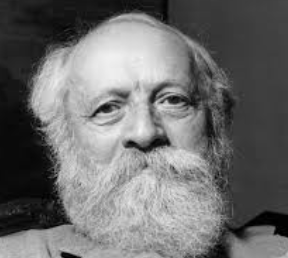
The philosophical anthropologist ... can know the wholeness of the person and through it the wholeness of man only when he does not leave his subjectivity out and does not remain an untouched observer.
▼
Source
source
p. 148
4 months 2 weeks ago
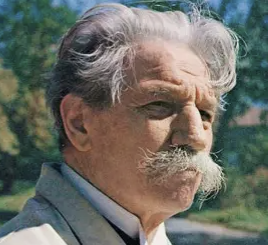
Altogether, Jesus never behaves like a man wandering in a system of delusions. He reacts in absolutely normal fashion to what is said to Him, and to the events that concern Him. He is never out of touch with reality.
▼
Source
source
Ch. 12 : Literary Work During My Medical Course, p. 133.
5 months 4 weeks ago
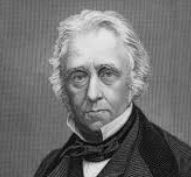
To the Whigs of the seventeenth century we owe it that we have a House of Commons. To the Whigs of the nineteenth century we owe it that the House of Commons has been purified. The abolition of the slave trade, the abolition of colonial slavery, the extension of popular education, the mitigation of the rigour of the penal code, all, all were effected by that party; and of that party, I repeat, I am a member. I look with pride on all that the Whigs have done for the cause of human freedom and of human happiness. I see them now hard pressed, struggling with difficulties, but still fighting the good fight. At their head I see men who have inherited the spirit and the virtues, as well as the blood, of old champions and martyrs of freedom... While one shred of the old banner is flying, by that banner will I at least be found.
▼
Source
source
Speech in Edinburgh (29 May 1839), quoted in Speeches of the Right Honourable T. B. Macaulay, M.P. (1854), pp. 183-184
7 months 6 days ago
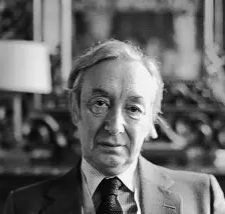
The problem of induction is, roughly speaking, the problem of finding a way to prove that certain empirical generalizations which are derived from past experience will hold good also in the future. There are only two ways of approaching this problem on the assumption that it is a genuine problem, and it is easy to see that neither of them can lead to its solution.
▼
Source
source
p. 49.


5 months 4 days ago
The invasion... exhibits in stark terms, the choice that is before us today between maintaining a liberal government that respects the rights of individuals, or moving over to a form of centralized illiberal dictatorship, even if that... illiberal government is somehow democratically legitimated. ...That's the central issue in global politics today. ...That's basically what the... Ukraine invasion is about, and that's why... all liberal societies that care about those individual freedoms... have a very powerful interest in the outcome of that war, because Putin and Russia are at the center of an international network of illiberal forces that are seeking to overturn liberal values in virtually every part of the world, and therefore... that's all part of a larger global struggle over our fundamental liberal values.
▼
Source
source
26:50 Question & Answer period follows

7 months 5 days ago
Even when nothing happens, everything seems too much for me. What can be said, then, in the presence of an event, any event?

4 months 6 days ago
Shame on the soul, to falter on the road of life while the body still perseveres.
▼
Source
source
VI. 29, trans. Maxwell Staniforth

7 months 2 days ago
Science is the knowledge of Consequences, and dependence of one fact upon another: by which, out of that we can presently do, we know how to do something else when we will, or the like, another time.
▼
Source
source
The First Part, Chapter 5, p. 21

8 months 1 week ago
We later learned that all the nineteen passengers in the non-smoking compartment had been killed. When the plane had hit the water a hole had been made in the plane and the water had rushed in. I had told a friend at Oslo who was finding me a place that he must find me a place where I could smoke, remarking jocularly, 'If I cannot smoke, I shall die'. Unexpectedly, this turned out to be true.
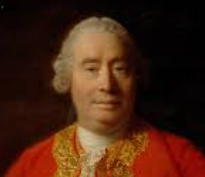
8 months 1 week ago
With regard to politics and the character of princes and great men, I think I am very moderate. My views of things are more conformable to Whig principles; my representation of persons to Tory prejudices. Nothing can so much prove that men commonly regard more persons than things, as to find that I am commonly numbered among the Tories.
▼
Source
source
E. C. Mossner, Life of David Hume (Clarendon Press, 2001), p. 311.
7 months 5 days ago
Intelligence flourishes only in the ages when belief withers.
8 months 1 week ago
She believed in nothing; only her skepticism kept her from being an atheist.
▼
Source
source
The Words (1964), speaking of his grandmother.
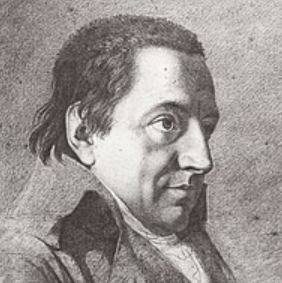
7 months 1 week ago
The conception of Rights involves that when men are to live in a community, each must so restrict his freedom as to permit the coexistence of the freedom of all others. But it does not involve that this particular person, A, is to restrict his freedom by the freedom of those particular persons, B, C, and D. That it has happened so that I, A, must conform myself particularly to the freedom of these, B, C, and D, of all other men, is purely the result of my living together with them; and I so live with them, simply by my free-will, not because there is an obligation for me to do so.
▼
Source
source
P. 23-24

6 months 3 weeks ago
Reason, that which we call reason, reflex and reflective knowledge, the distinguishing mark of man, is a social product.
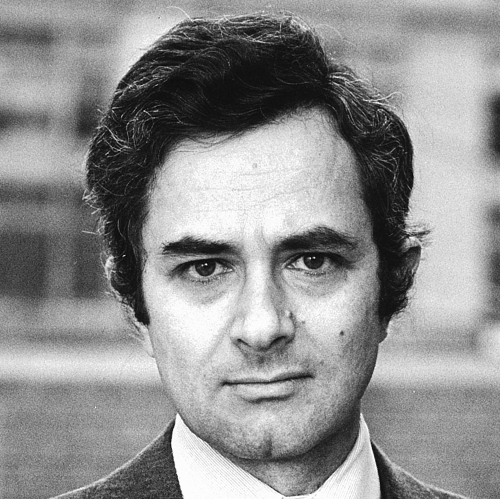
8 months ago
The essence of the belief that bats have experience is that there is something that it is like to be a bat. Now we know that most bats (the microchiroptera, to be precise) perceive the external world primarily by sonar, or echolocation. ... But bat sonar, though clearly a form of perception, is not similar in its operation to any sense that we possess, and there is no reason to suppose that it is subjectively like anything we can experience or imagine. This appears to create difficulties for the notion of what it is like to be a bat.
▼
Source
source
p. 168.
8 months 3 weeks ago
People travel to wonder at the height of mountains, at the huge waves of the sea, at the long courses of rivers, at the vast compass of the ocean, at the circular motion of the stars; and they pass by themselves without wondering.
▼
Source
source
Variant: Men go abroad to admire the heights of mountains, the mighty billows of the sea, the broad tides of rivers, the compass of the ocean, and the circuits of the stars, and pass themselves by. X

5 months 1 week ago
Heresy is a set of opinions "at variance with established or generally received principles." In this sense, heresy is the price of all originality and innovation.
8 months 3 weeks ago
Shut out the evil love of the world, that you may be filled with the love of God. You are a vessel that was already full: you must pour away what you have, that you may take in what you have not.
▼
Source
source
Second Homily, as translated by John Burnaby (1955), p. 274

6 months 1 week ago
The sense in which an automatic door "understands instructions" from its photoelectric cell is not at all the sense in which I understand English.

7 months 2 days ago
People will become faint out of fear and expectation of the things coming upon the inhabited earth, for the powers of the heavens will be shaken. And then they will see the Son of man coming in a cloud with power and great glory.
▼
Source
source
21:26-27, NWT
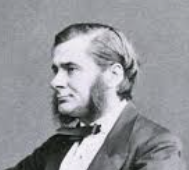
5 months 3 weeks ago
Only two suppositions seem to be open to us - Either each species of crocodile has been specially created, or it has arisen out of some pre-existing form by the operation of natural causes. Choose your hypothesis; I have chosen mine. I can find no warranty for believing in the distinct creation of a score of successive species of crocodiles in the course of countless ages of time.
1 year 1 week ago
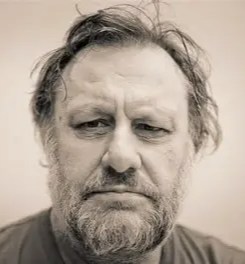
In the more sophisticated versions of the critics of ideology - that developed by the Frankfurt School, for example - it is not just a question of seeing things (that is, social reality) as they 'really are," of throwing away the distorting spectacles of ideology; the main point is to see how the reality itself cannot reproduce itself without this so-called ideological mystification. The mask is not simply hiding the real state of things; the ideological distortion is written into its very essence... the moment we see it 'as it really is,' this being dissolves itself into nothingness or, more precisely, it changes into another kind of reality. That is why we must avoid simple metaphors of demasking, of throwing away the veils which are supposed to hide the naked reality.
8 months 1 week ago
Too little liberty brings stagnation, and too much brings chaos.
▼
Source
source
Authority and the Individual (1949), p. 37
4 months 3 weeks ago
Socrates is reported to have replied, when a certain person complained of having received no benefit from his travels: "It serves you right! You travelled in your own company!"
7 months 2 days ago
I am Alpha and Omega, the beginning and the end, the first and the last.
▼
Source
source
Revelation 22:13

4 months 1 week ago
The Pythagoreans called the monad "intellect" because they thought that intellect was akin to the One; for among the virtues, they likened the monad to moral wisdom; for what is correct is one. And they called it "being," "cause of truth," "simple," "paradigm," "order," "concord," "what is equal among the greater and the lesser," "the mean between intensity and slackness," "moderation in plurality," "the instant now in time," and moreover they call it "ship," "chariot," "friend," "life," "happiness."
▼
Source
source
On the Monad


5 months ago
If we read History with any degree of thoughtfulness, we shall find that checks and balances of Profit and Loss have never been the grand agents with men, that they have never been roused into deep, thorough, all-pervading efforts by any computable prospect of Profit and Loss, for any visible, finite object; but always for some invisible and infinite one.

4 months 1 week ago
The most alarming sign of the state of our society now is that our leaders have the courage to sacrifice the lives of young people in war, but have not the courage to tell us that we must be less greedy and less wasteful.
▼
Source
source
Peaceableness Toward Enemies
CivilSimian.com created by AxiomaticPanic, CivilSimian, Kalokagathia