


4 months 2 weeks ago
One of the problems... both on the left and the right is that the... individual autonomy protected by liberalism tends to take more and more extreme versions... and... becomes self-undermining.
▼
Source
source
13:24
5 months 1 week ago
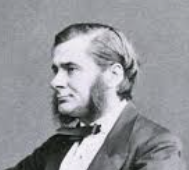
Life cannot exist without a certain conformity to the surrounding universe - that conformity involves a certain amount of happiness in excess of pain. In short, as we live we are paid for living.

5 months 3 weeks ago
There can be only one permanent revolution - a moral one; the regeneration of the inner man. How is this revolution to take place? Nobody knows how it will take place in humanity, but every man feels it clearly in himself. And yet in our world everybody thinks of changing humanity, and nobody thinks of changing himself.
▼
Source
source
"Three Methods Of Reform" in Pamphlets : Translated from the Russian (1900) as translated by Aylmer Maude, p. 29
4 months 3 weeks ago
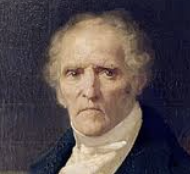
There is no idea more novel, more surprising, than that of associating three hundred families of different degrees of fortune, knowledge and capacity.
▼
Source
source
The Theory of Social Organization. Harmonian Man: Selected Writings of Charles Fourier, p. 5.

7 months 3 weeks ago
I think of death only with tranquility, as an end. I refuse to let death hamper life. Death must enter life only to define it.

6 months 4 weeks ago
Americans of all ages, all stations of life, and all types of disposition are forever forming associations... In democratic countries knowledge of how to combine is the mother of all other forms of knowledge; on its progress depends that of all the others.
▼
Source
source
Book Two, Chapter V.
6 months 4 days ago
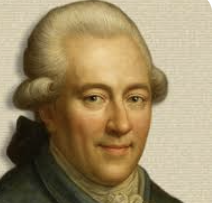
I am convinced we do not only love ourselves in others but hate ourselves in others too.
▼
Source
source
F 54

7 months 3 weeks ago
Whatever crushes individuality is despotism, by whatever name it may be called, and whether it professes to be enforcing the will of God or the injunctions of men.
▼
Source
source
Ch. III: Of Individuality, As One of the Elements of Well-Being

6 months 3 weeks ago
Nor is prescription of government formed upon blind unmeaning prejudices-for man is a most unwise, and a most wise, being. The individual is foolish. The multitude, for the moment, is foolish, when they act without deliberation; but the species is wise, and when time is given to it, as a species it almost always acts right.
▼
Source
source
Speech in the House of Commons against William Pitt's motion for parliamentary reform (7 May 1782)
7 months 4 weeks ago
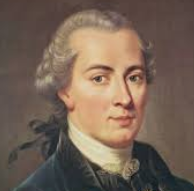
There must be a seed of every good thing in the character of men, otherwise no one can bring it out. Lacking that, analogous motives, honor, etc., are substituted. Parents are in the habit of looking out for the inclinations, for the talents and dexterity, perhaps for the disposition of their children, and not at all for their heart or character.
▼
Source
source
Part III : Selection on Education from Kant's other Writings, Ch. I Pedagogical Fragments, # 13

4 months 2 weeks ago
All that Mankind has done, thought, gained or been: it is lying as in magic preservation in the pages of Books.
6 months 1 week ago
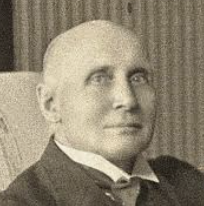
The safest general characterization of the European philosophical tradition is that it consists of a series of footnotes to Plato.
▼
Source
source
Pt. II, ch. 1, sec. 1.
6 months 2 weeks ago
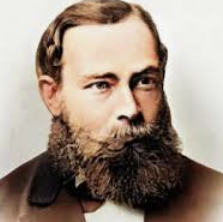
Is it always permissible to speak of the extension of a concept, of a class? And if not, how do we recognize the exceptional cases? Can we always infer from the extension of one concept's coinciding with that of a second, that every object which falls under the first concept also falls under the second?
▼
Source
source
Vol. 2, p. 127. Replying to Bertrand Russell's letter about Russell's Paradox; quoted in The Stanford Encyclopedia of Philosophy
4 months 2 weeks ago
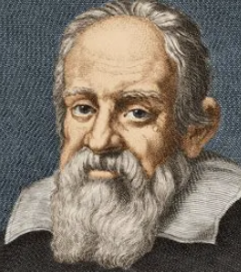
My purpose is to set forth a very new science dealing with a very ancient subject. There is, in nature, perhaps nothing older than motion, concerning which the books written by philosophers are neither few nor small; nevertheless I have discovered by experiment some properties of it which are worth knowing and which have not hitherto been either observed or demonstrated. Some superficial observations have been made, as, for instance, that the free motion [naturalem motum] of a heavy falling body is continuously accelerated; but to just what extent this acceleration occurs has not yet been announced; for so far as I know, no one has yet pointed out that the distances traversed, during equal intervals of time, by a body falling from rest, stand to one another in the same ratio as the odd numbers beginning with unity.
▼
Source
source
Author, Third Day. Change of Position

3 months 3 weeks ago
Descartes, a genius made to blaze new paths and to go astray in them, supposed with some other philosophers that God is the only efficient cause of motion, and that every instant He communicates motion to all bodies. But this opinion is but an hypothesis which he tried to adjust to the light of faith; and in so doing he was no longer attempting to speak as a philosopher or to philosophers. Above all he was not addressing those who can be convinced only by the force of evidence.
▼
Source
source
Ch. V Concerning the Moving Force of Matter
6 months 3 weeks ago
...he always firmly believed that they were purely on the defensive in that rebellion. He considered the Americans as standing at that time, and in that controversy, in the same relation to England, as England did to king James the Second, in 1688.
▼
Source
source
p. 396
4 months 2 weeks ago
What the Universities have mainly done-what I have found the University did for me, was that it taught me to read in various languages and various sciences, so that I could go into the books that treated of these things, and try anything I wanted to make myself master of gradually, as I found it suit me. Whatever you may think of all that, the clearest and most imperative duty lies on every one of you to be assiduous in your reading; and learn to be good readers, which is, perhaps, a more difficult thing than you imagine. Learn to be discriminative in your reading-to read all kinds of things that you have an interest in, and that you find to be really fit for what you are engaged in.

5 months 3 weeks ago
4 ways: Agnosticism, Relativism, Amorality, Morality. 1) I don't know. 2) Everybody is different. 3) Do whatever you can. 4) Do what you should.
8 months 1 week ago
We should never take pleasure in causing pain to others, even to those who have wronged us, but rather strive to do good to all.

7 months 3 weeks ago
An act has no ethical quality whatever unless it be chosen out of several all equally possible.
▼
Source
source
Ch. 9

7 months 3 weeks ago
The bitterest tragic element in life to be derived from an intellectual source is the belief in a brute Fate or Destiny.
▼
Source
source
"The Tragic", p. 217. From The Dial (April 1844) p. 515

3 months 3 weeks ago
On eroding, ecologically degraded, increasingly toxic landscapes, worked by failing or subsidy-dependent farmers and by the cheap labor of migrants, we have erected the tottering tower of "agribusiness," which prospers and "feeds the world" (incompletely and temporarily) by undermining its own foundations.

8 months 3 weeks ago
To two men living the same number of years, the world always provides the same sum of experiences. It is up to us to be conscious of them.
4 months 2 weeks ago
One need only open the eyes to see that the conquests of industry which have enriched so many practical men would never have seen the light, if these practical men alone had existed and if they had not been preceded by unselfish devotees who died poor, who never thought of utility, and yet had a guide far other than caprice.As Mach says, these devotees have spared their successors the trouble of thinking.
▼
Source
source
Author's Essay Prefatory to the Translation: "The Choice of Facts," p.4

7 months 3 weeks ago
For my part, while I am as convinced a Socialist as the most ardent Marxian, I do not regard Socialism as a gospel of proletarian revenge, nor even, primarily, as a means of securing economic justice. I regard it primarily as an adjustment to machine production demanded by considerations of common sense, and calculated to increase the happiness, not only of proletarians, but of all except a tiny minority of the human race.
▼
Source
source
Ch. 7: The Case for Socialism
4 months 6 days ago
Running away from fear is fear; fighting pain is pain; trying to be brave is being scared. If the mind is in pain, the mind is pain. The thinker has no other form than his thought.
8 months 4 days ago
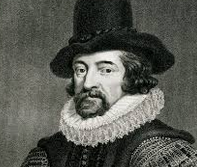
He that defers his charity 'till he is dead, is (if a man weighs it rightly) rather liberal of another man's, than of his own.
▼
Source
source
Ornamenta Rationalia, [§55]
7 months 6 days ago
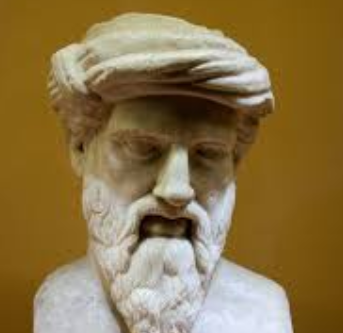
You will know that wretched men are the cause of their own suffering, who neither see nor hear the good that is near them, and few are the ones who know how to secure release from their troubles. Such is the fate that harms their minds; like pebbles they are tossed about from one thing to another with cares unceasing. For the dread companion Strife harms them unawares, whom one must not walk behind, but withdraw from and flee.
▼
Source
source
As quoted in Divine Harmony: The Life and Teachings of Pythagoras by John Strohmeier and Peter Westbrook
7 months 3 weeks ago
So long as antimilitarists propose no substitute for war's disciplinary function, no moral equivalent of war, analogous, as one might say, to the mechanical equivalent of heat, so long they fail to realize the full inwardness of the situation.
▼
Source
source
The Moral Equivalent of War

3 months 3 weeks ago
The equal rights of man, and the happiness of every individual, are now acknowledged to be the only legitimate objects of government. Modern times have the signal advantage, too, of having discovered the only device by which these rights can be secured, to wit: government by the people, acting not in person, but by representatives chosen by themselves, that is to say; by every man of ripe years and sane mind, who either contributes by his purse or person to the support of his country.
4 months 2 weeks ago
We do not have and cannot have any means of discovering whether or not we are carried along in a uniform motion of translation.
▼
Source
source
L'état actuel et l'avenir de la physique mathematique

4 months 3 days ago
When nobody in the world loves any other, naturally the strong will overpower the weak, the many will oppress the few, the wealthy will mock the poor, the honoured will disdain the humble, the cunning will deceive the simple. Therefore all the calamities, strifes, complaints, and hatred in the world have arisen out of want of mutual love. Therefore the benevolent disapproved of this want.
▼
Source
source
Book 4; Universal Love II

5 months 3 weeks ago
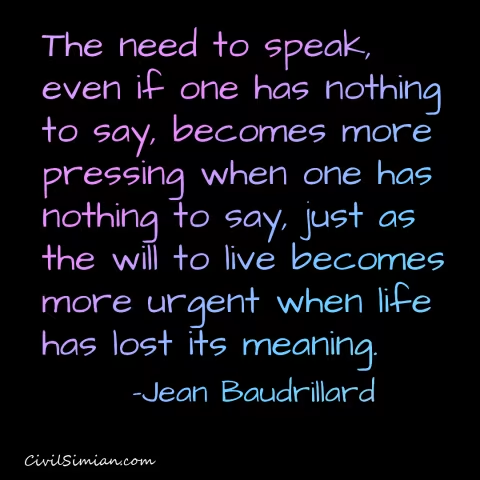
Attention spans get very weak at the speed of light, and that goes along with a very weak identity.
4 months 1 week ago
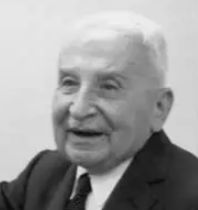
The goal of liberalism is the peaceful cooperation of all men. It aims at peace among nations too. When there is private ownership of the means of production everywhere and when laws, the tribunals and the administration treat foreigners and citizens on equal terms, it is of little importance where a country's frontiers are drawn. Nobody can derive any profit from conquest, but many can suffer losses from fighting. War no longer pays; there is no motive for aggression. The population of every territory is free to determine to which state it wishes to belong, or whether it prefers to establish a state of its own. All nations can coexist peacefully, because no nation is concerned about the size of its state.
▼
Source
source
Omnipotent Government : The Rise of the Total State and Total War
8 months 3 weeks ago
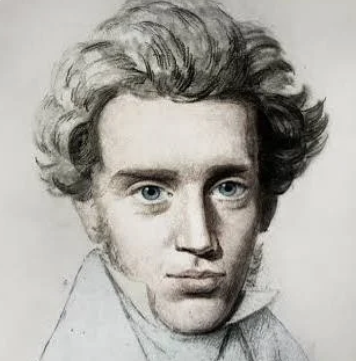
I can understand myself in believing, although in addition I can in a relative misunderstanding comprehend the human aspect of this life: but comprehend faith or comprehend Christ, I cannot.

7 months 3 weeks ago
Our aim as scientists is objective truth; more truth, more interesting truth, more intelligible truth. We cannot reasonably aim at certainty. Once we realize that human knowledge is fallible, we realize also that we can never be completely certain that we have not made a mistake.
7 months 4 weeks ago
A philosophical attempt to work out a universal history according to a natural plan directed to achieving the civic union of the human race must be regarded as possible and, indeed, as contributing to this end of Nature.
▼
Source
source
Ninth Thesis
4 months 3 weeks ago
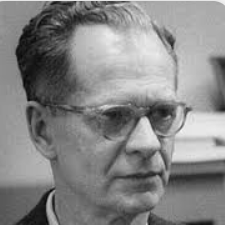
I do not admire myself as a person. My successes do not override my shortcomings.
▼
Source
source
Journal of Humanistic Psychology (Spring 1991) Vol. 31 No. 2, p. 112


7 months ago
Pursue Virtue virtuously.
▼
Source
source
These words also appear in Christian Morals, Part I, Section I
5 months 1 week ago
Within the last fifty years, the extraordinary growth of every department of physical science has spread among us mental food of so nutritious and stimulating a character that a new ecdysis seems imminent.
▼
Source
source
Ch.2, p. 73

8 months 2 weeks ago
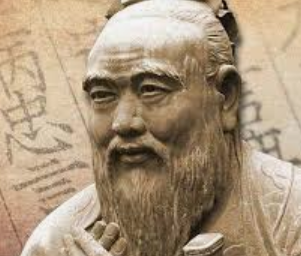
Recompense hatred with justice, and recompense kindness with kindness.

5 months 4 days ago
Why expect a false theory of the world, i.e. classical physics, to yield a true account of consciousness?
▼
Source
source
Social Media Unsorted Postings 2016
5 months 2 weeks ago
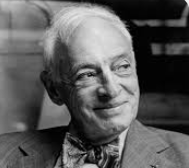
We take foreigners to be incomplete Americans - convinced that we must help and hasten their evolution.
▼
Source
source
" A Second Half Life" (1991), p. 324
6 months 3 weeks ago
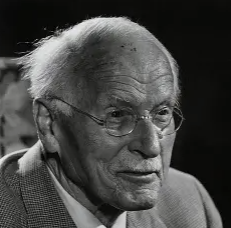
Our studies of sexual life, originating in Vienna and in England, are matched or surpassed by Hindu teachings on this subject... Psychoanalysis itself and the lines of thought to which it gives rise-surely a distinctly Western development-are only a beginner's attempt compared to what is an immemorial art in the East.
▼
Source
source
quoted in Georg Feuerstein, Subhash Kak, and David Frawley. - In search of the cradle of civilization _ new light on ancient India-Quest Books

6 months 4 days ago
Man is a masterpiece of creation if for no other reason than that, all the weight of evidence for determinism notwithstanding, he believes he has free will.
▼
Source
source
J 249
CivilSimian.com created by AxiomaticPanic, CivilSimian, Kalokagathia